Ludovico Ottaviano Burnacini|Mathäus Küsel

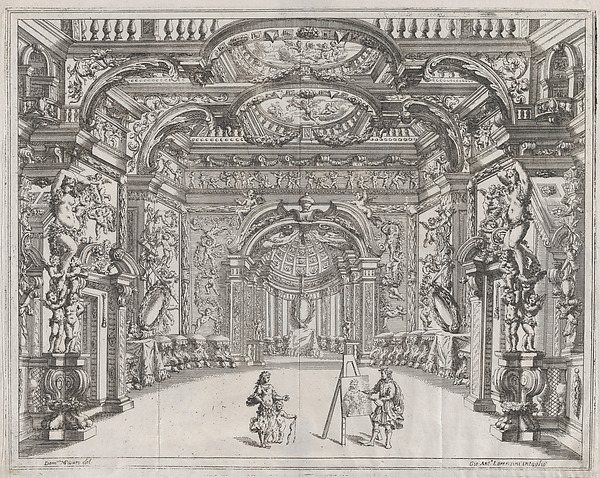
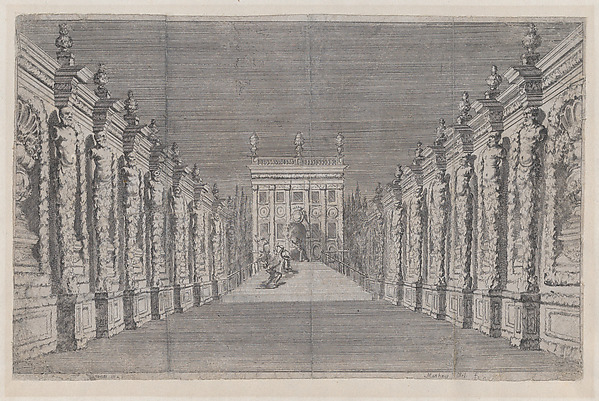
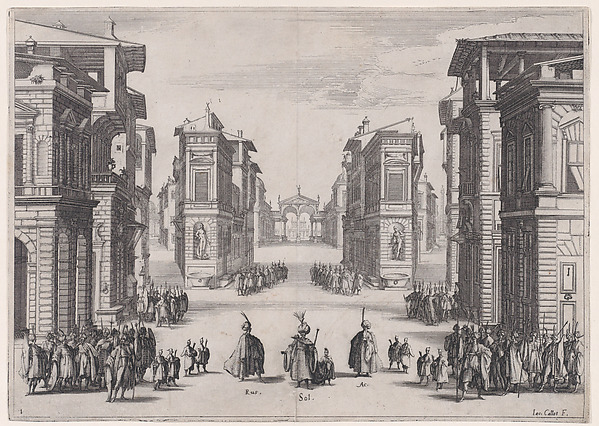
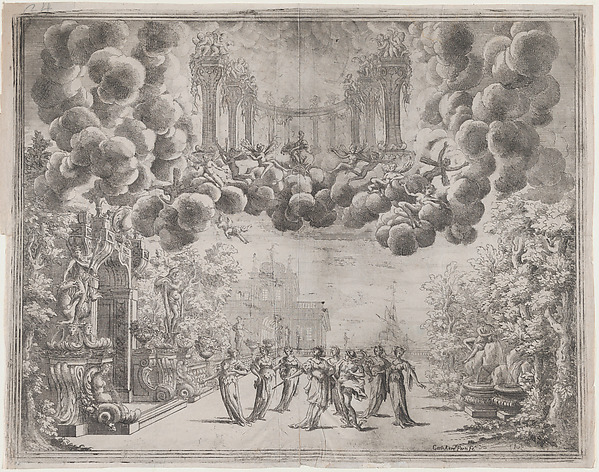
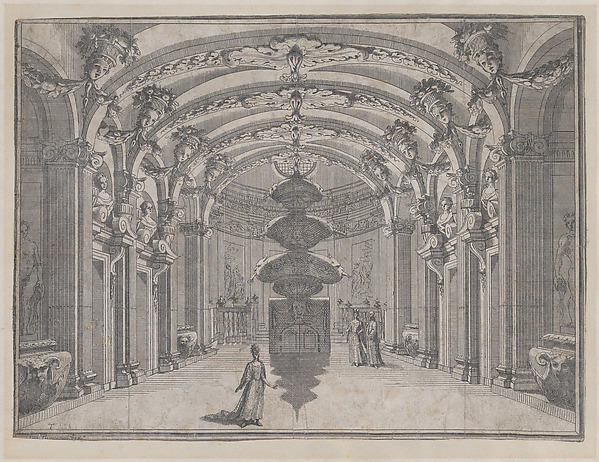
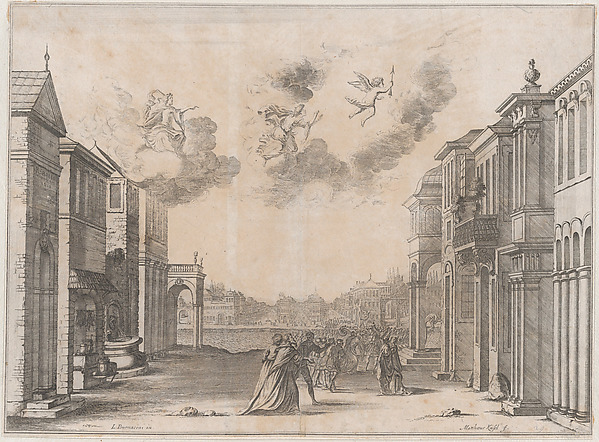
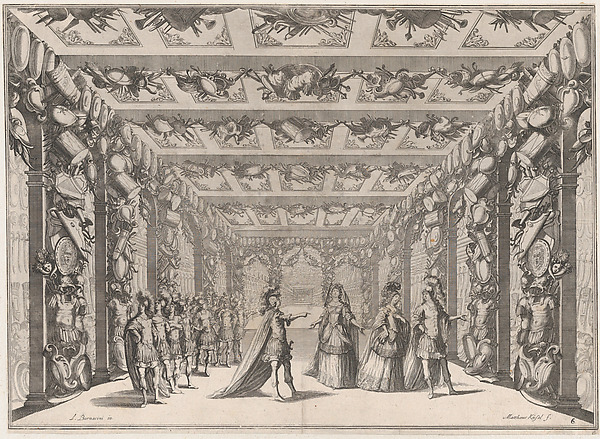
Two men in classical armor and two women looking at the mechanical devices on either side of an open courtyard; set design from 'Il Fuoco Eterno'

1674
Etching
31 × 42.8 cm (12.2 × 16.9 in)

SEE IT IN PERSON

Not currently on view

In the collection of The Metropolitan Museum of Art, New York · as of July 2026

View at metmuseum.orgPlan a visit ↗

Discussion

Be the first to share your thoughts.

Sign in to join the discussion.

Community guidelines

More by Ludovico Ottaviano Burnacini|Mathäus Küsel
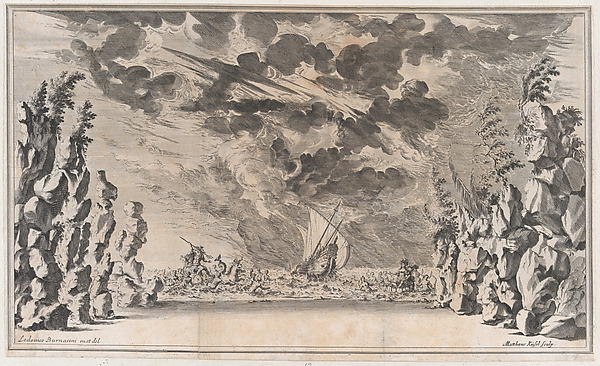
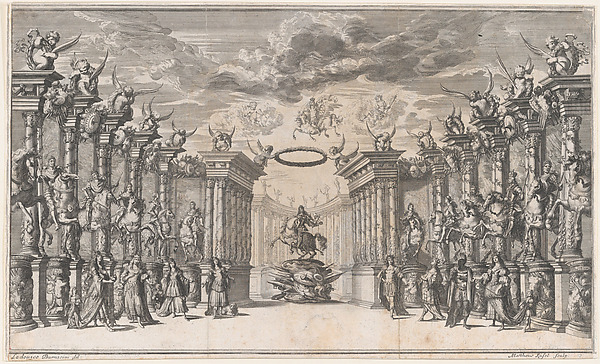
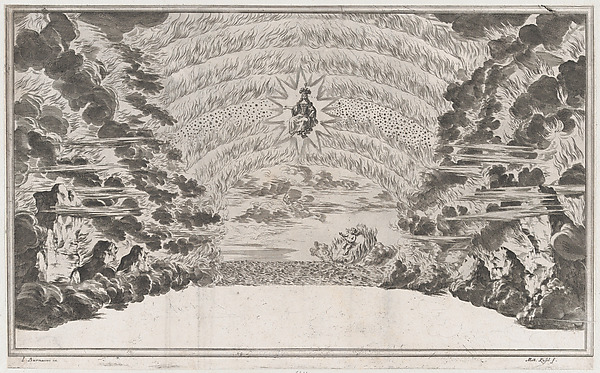
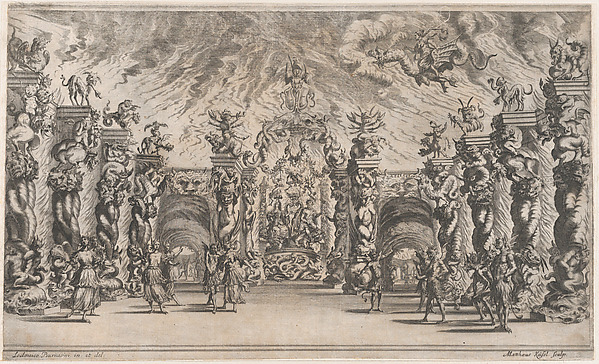
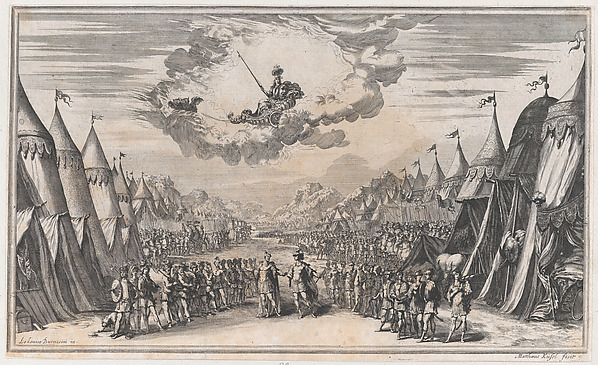
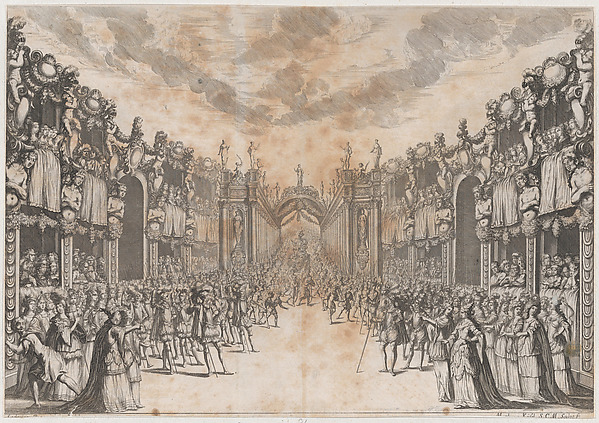
A shore framed by rocks, with Neptune in his chariot on the left and Salacia in hers on the right; at center, a ship caught in a storm; set design from 'Il Pomo D'Oro'A shore framed by rocks, with Neptune in his chariot on the The Triumph of Austria; Leopold I at center, mounted on a reared horse, atop a military trophy; surrounded by equestrian portraits of the Holy Roman Emperors; set design from 'Il Pomo D'Oro'The Triumph of Austria; Leopold I at center, mounted on a reA female figure in glory at center, surrounded by burning rocks; below Cupid sailing on a burning chariot; set design from 'Il Pomo D'Oro'A female figure in glory at center, surrounded by burning roFigures gathered at a seaport as a ship arrives; set design from 'Il Fuoco Eterno'Figures gathered at a seaport as a ship arrives; set design Kingdom of Pluto; a view of the underworld with Pluto and Proserpina enthroned at center, surrounded by demons; set design from 'Il Pomo D'Oro'Kingdom of Pluto; a view of the underworld with Pluto and PrThe leaders of two armies conversing, their respective troops and camps on either side; above, Minerva observes from her chariot; set design from 'Il Pomo D'Oro'The leaders of two armies conversing, their respective troopMen and women gathererd in the street to view the entrance of a royal figure, who is carried into the city on a throne; set design from 'La Monarchia Latina Trionfante'Men and women gathererd in the street to view the entrance oA group of young men dancing as the gods look on from above; set design from 'Il Pomo D'Oro'A group of young men dancing as the gods look on from above;
More like this

Pleasure garden, with three figures in front of a fountain at center, a row of putti to the left, and a group of women to the right; set design from 'Il Pomo D'Oro'Mathäus Küsel|Ludovico Ottaviano Burnacini — Pleasure gardenArsenal of Mars; a group of soldiers standing across from a group of women in an arsenal; ships off in the distance; set design from 'Il Pomo D'Oro'Mathäus Küsel|Ludovico Ottaviano Burnacini — Arsenal of MarsThe Arsenal; two soldiers conversing with two women on the right as a group of soldiers look on from the left; set design from 'Il Fuoco Eterno'Mathäus Küsel|Ludovico Ottaviano Burnacini — The Arsenal; twStage set with an artist painting Venus and Cupid; from Aurelio Aureli, 'Il Favore De Gli Dei'Gianantonio Lorenzini|Aurelio Aureli|Domenico Mauro — Stage Theatrical scene with four figures on a staircase in the distance, two of which are engaged in a brawlMathäus Küsel|Ludovico Ottaviano Burnacini — Theatrical scenSoliman. 1er Act (Soliman. 1st Act), from SolimanJacques Callot|Prospero Bonarelli — Soliman. 1er Act (SolimaStage design with allegorical figures; from 'L'Idea di tutti le perfezioni ... Piacenza'Carlo Antonio Forti — Stage design with allegorical figures;Triumphal Entry of KingAnonymous, German, 17th century — Triumphal Entry of KingSoliman. 3e Acte (Soliman. 3rd Act), from SolimanJacques Callot|Prospero Bonarelli — Soliman. 3e Acte (SolimaPlate 40: Design for festival architecture honoring the Spanish Prince Ferdinand's triumphal entry into the city of Ghent, January 28, 1635; from Guillielmus Becanus's 'Serenissimi Principis Ferdinandi, Hispaniarum Infantis...'Johannes Meursius — Plate 40: Design for festival architectuFuneral of Francesco de' MediciStefano della Bella — Funeral of Francesco de' MediciTheatrical scene in a great hall with a vaulted ceiling and a central sculpture; two figures converse in the background while a third stands alone in the foregroundLudovico Ottaviano Burnacini|Giacomo-Maria Giovannini — Thea