Portrait of Emmanuel Rio
SEE IT IN PERSON
● On view now — Gallery 221
Art Institute of Chicago, Chicago · verified July 2026
Discussion
FROM THE ART INSTITUTE OF CHICAGO’S CATALOG
Previously known only as “a gardener and horn player,” recent research has identified the figure in this painting as Emmanuel Rio, an enslaved Brazilian man of African descent who was sent to Emperor Francis I in Vienna around 1820. About ten years old when he arrived in Vienna, Rio was enrolled in an elite private school, where he excelled in French, Italian, drawing, and especially music. Francis fostered his talent, gifting Rio a French horn on the occasion of his graduation. Despite his aptitude for music, Rio was assigned to work in the imperial garden. In this portrait, produced a year after the emperor’s death, Rio holds his favored instrument while looking at an image of Francis, beneath which hangs a gold watch given to him by the monarch. The painting’s sentimentality does little to suggest the precariousness of its subject’s situation in Vienna, which only worsened after Francis died. For the rest of his life, Viennese officials moved Rio to various positions throughout Europe, threatened him with forced military service when he resisted, and, by the late 1840s, discussed sending him back to Brazil or to Africa.
Be the first to share your thoughts.
Sign in to join the discussion.
More like this
 Mariano Fortuny y Marsal — Cavalier
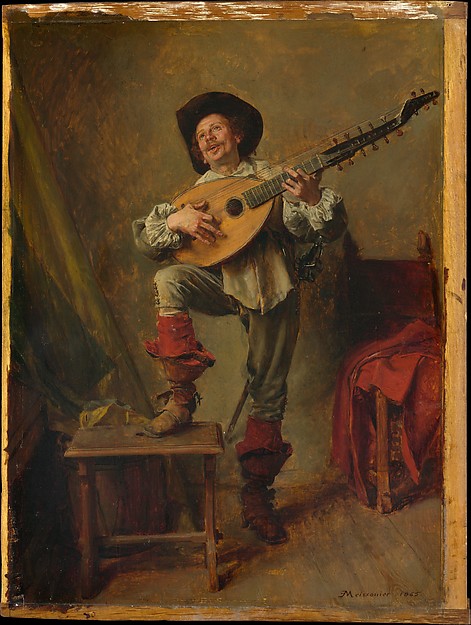 Ernest Meissonier — Soldier Playing the Theorbo
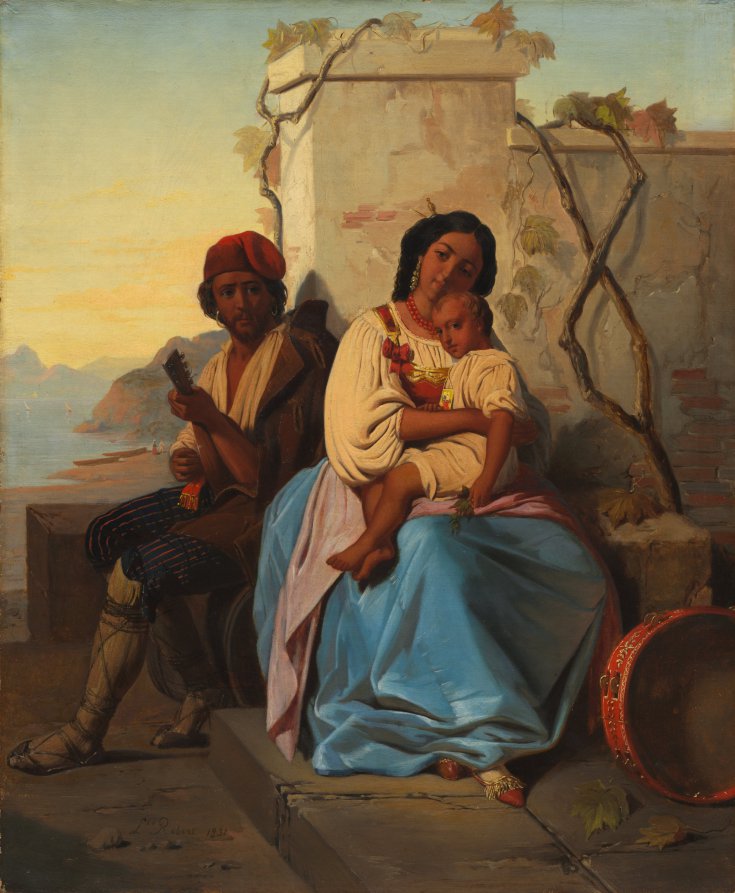 Léopold Robert (Swiss, 1794–1835) — Italian Scene
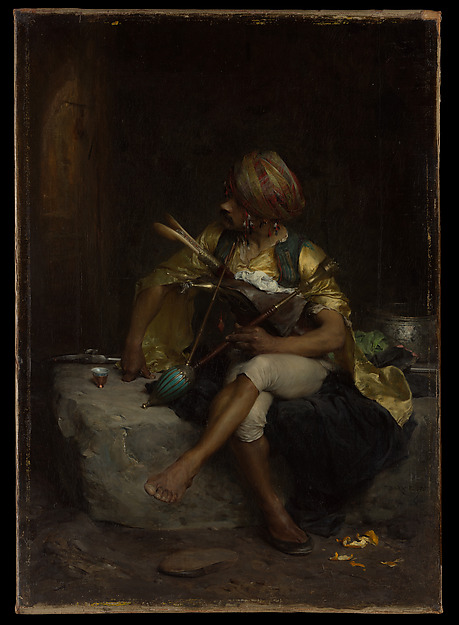 Charles Bargue — A Bashi-Bazouk
 Jean-Léon Gérôme — Bashi-Bazouk
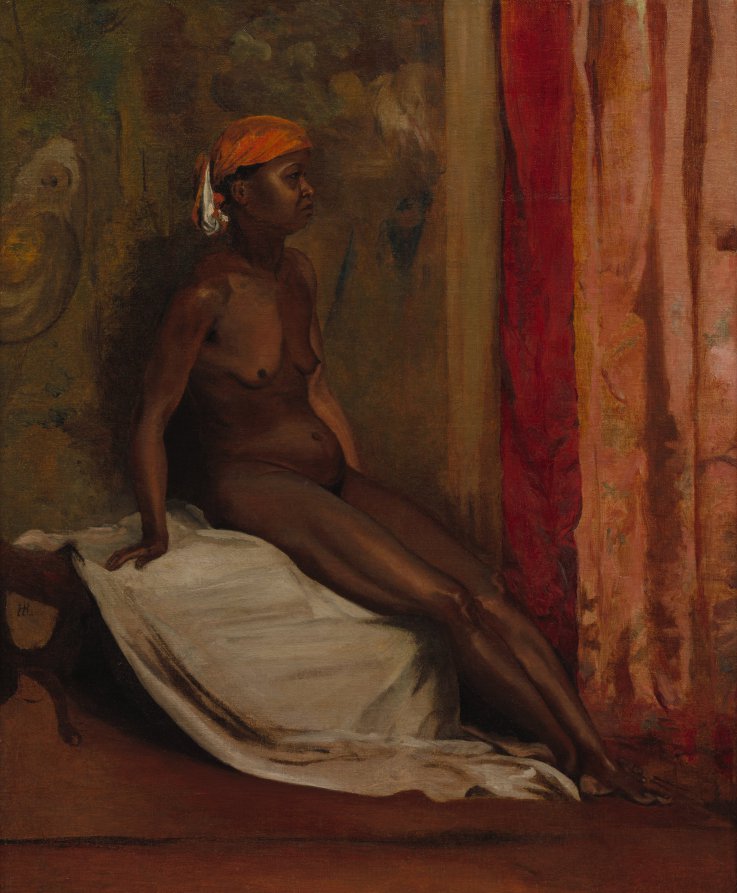 Henri Regnault (French, 1843–1871) — Seated African Woman
 Adolphe Mouilleron — Still Life with Bagpipes
 Isaac Israels — The Lady Drummer
 Samuel Marie Clédat de Lavigerie — Pierrot
 Vincent van Gogh — The Seated Zouave
 Mariano Fortuny y Marsal — African Chief
 Charles Gifford Dyer — Seventeenth-Century Interior