African Chief
SEE IT IN PERSON
Not currently on view
In the collection of Art Institute of Chicago, Chicago · as of July 2026
Discussion
FROM THE ART INSTITUTE OF CHICAGO’S CATALOG
Although this appears to be a portrait rendered quickly from direct observation, it is in fact an imagined representation of an African chief. Working in Paris, Mariano Fortuny y Marsal referenced elements from different cultures to construct this fictional scene, which is based on sketches he made and objects he collected while traveling in North Africa. The figure carries items from that region, such as the kabyle musket slung across his shoulders and a haik , the white outer garment encircling his head, neck, and lower body. The pata (gauntlet sword) and powder flask hanging from his waist, however, are of Indian origin.
Be the first to share your thoughts.
Sign in to join the discussion.
More by Mariano Fortuny y Marsal


More like this
 Jules Robert Auguste — Nubian Woman
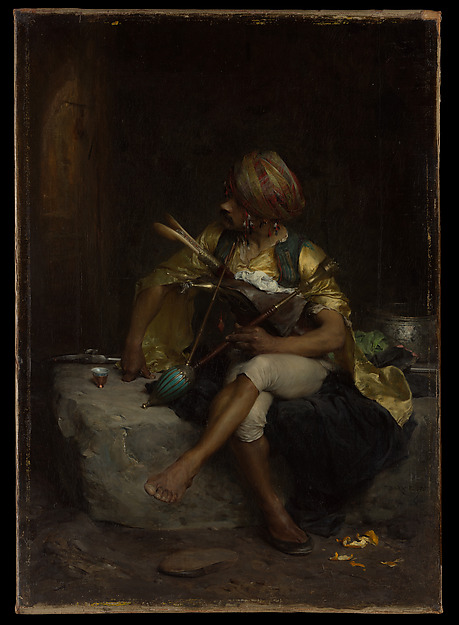 Charles Bargue — A Bashi-Bazouk
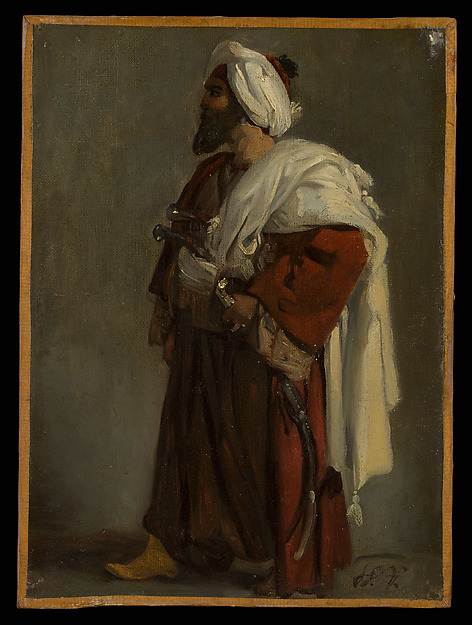 Horace Vernet — Arab Warrior
 Adolphe Joseph Thomas Monticelli — Mephisto from the Opera F
 Jean François Millet — The Little Shepherdess
 Eugène Delacroix — The Combat of the Giaour and Hassan
 Jean Charles Cazin — Theocritus
 Jacob Maris — Meisje bij een deuropening.
 Pierre Marie Beyle — Morrocan Man
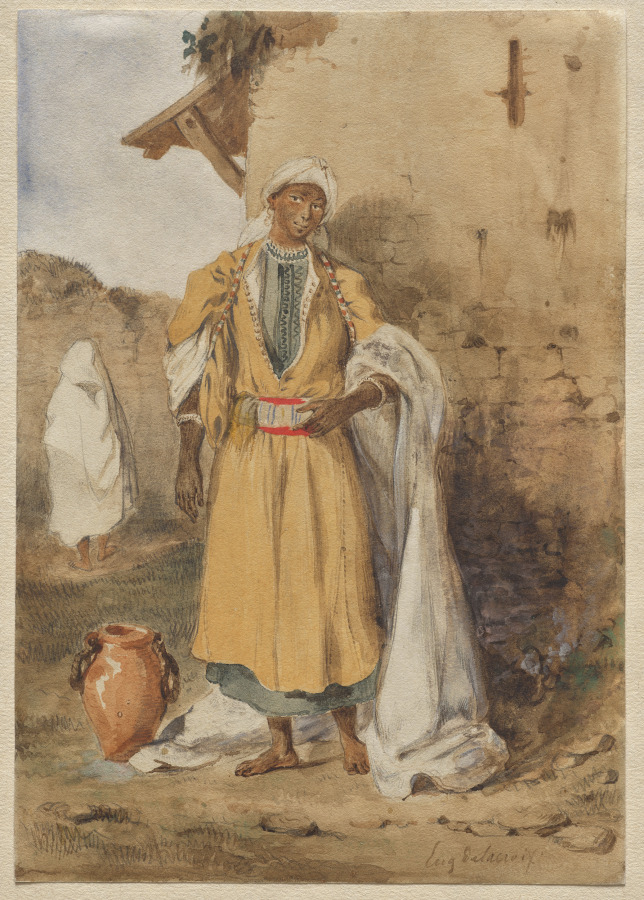 Eugène Delacroix (French, 1798–1863) — A Young Black Woman F
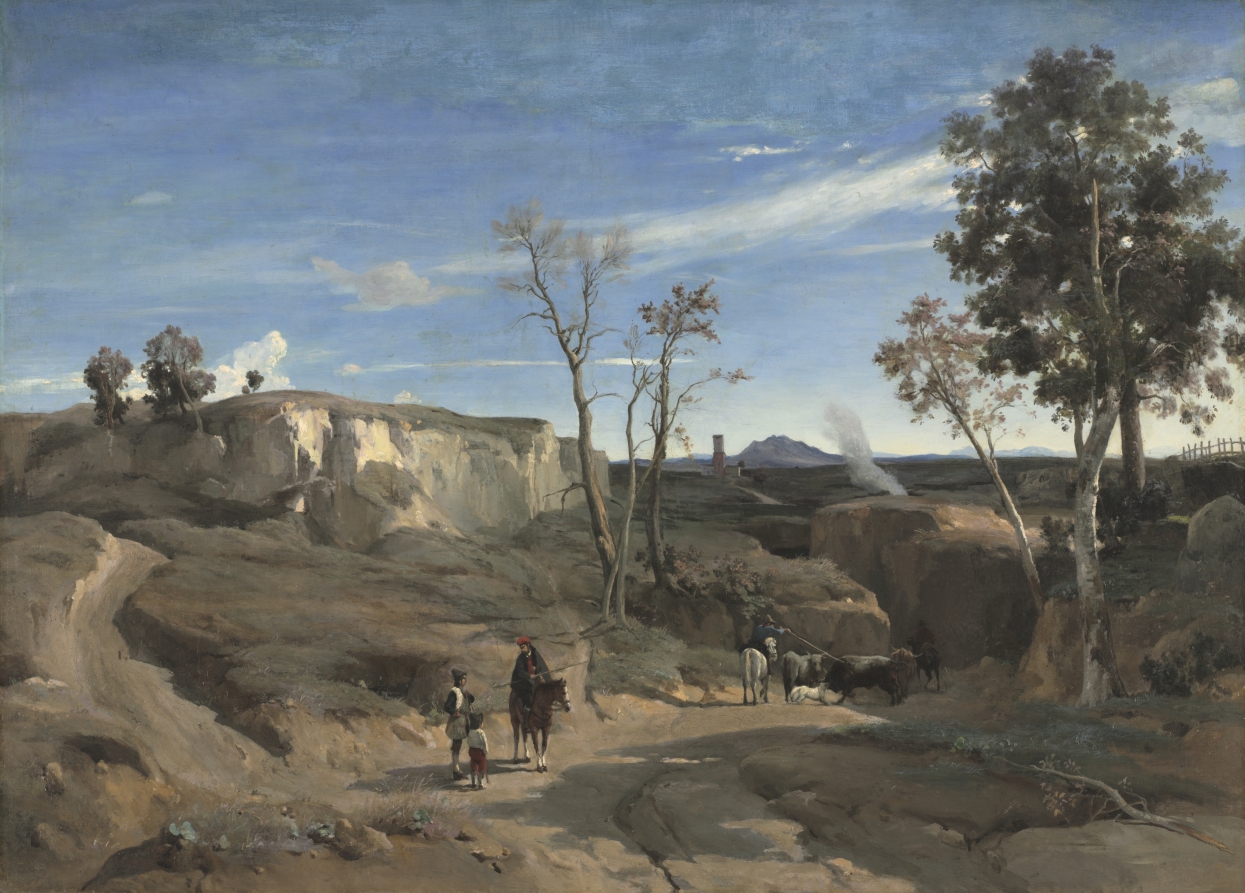 Jean Baptiste Camille Corot (French, 1796–1875) — La Cervara
 Jean-Léon Gérôme — Bashi-Bazouk