Act 2 (Nidanme), from the series "The Revenge of the Loyal Retainers (Chushingura)"
SEE IT IN PERSON
Not currently on view
In the collection of Art Institute of Chicago, Chicago · as of July 2026
Discussion
FROM THE ART INSTITUTE OF CHICAGO’S CATALOG
As in the Shunsho version of this scene, the young lovers Konami and Rikiya stand in silence. In the background, Konami’s father descends the staircase into a garden. On the right, her mother enters to receive Rikiya’s message that Lords Asano and Wakasa must appear the next day at the shogun’s court. Wakasa stands on an engawa in the background. Here and in other prints in this series, Hiroshige suggests only a small part of the play’s complex events. The tale was so well known in Hiroshige’s generation that a hint was enough for the viewer to recall the whole.
Be the first to share your thoughts.
Sign in to join the discussion.
More by Utagawa Hiroshige
 歌川広重画 「東海道五十三次 大尾 京師 三条大橋」|Kyoto: The Great Bridge at Sanjō
  Opening of the Garden at Fukagawa Hachiman Shrine (Fukagawa
  東海道五十三次之内 阪之下 筆捨嶺|Saka-no-shita, Fude-sute Mine
 Kumano Junisha Shrine in Tsunohazu, Popularly Known as Junis
 Gotenyama no yu-zakura|東都名所 御殿山之夕桜|Evening Cherry Blossoms a
 Sakanoshita: Peak of Fudesute Mountain (Sakanoshita, Fudesut
 Maisaka: View of Imagiri (Maisaka, Imagiri shinkei), from th
 Inume Pass in Kai Province (Kai Inume toge), from the series
More like this
 Kitagawa Utamaro — New Year in a Samurai Mansion, from the i
 Katsukawa Shunsho — The Actors Ichikawa Danjuro V as Miura K
 Utagawa Kunisada I (Toyokuni III) — No. 37, from the series
  Kitagawa Utamaro — Performance of a Trained Monkey, from an
  Hishikawa Sōri III (Sōji) (Japanese) — Women on a Veranda
 Yashima Gakutei — Courtesan and Kamuro Strolling at the Entr
 Katsushika Hokusai — Pages from the illustrated book "Panora
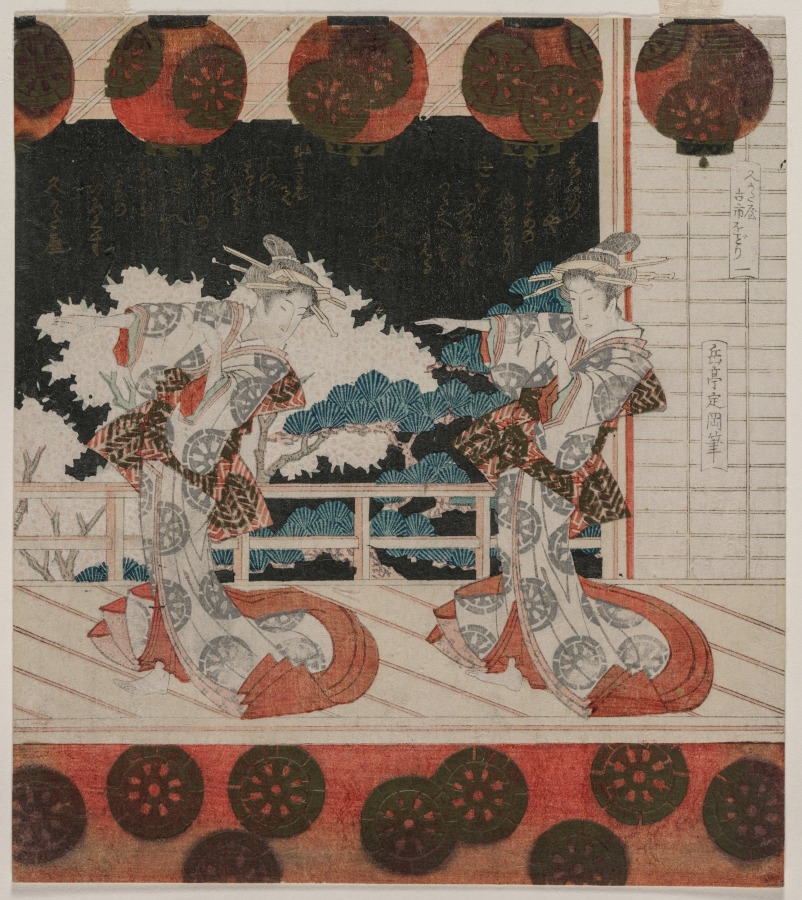 Gakutei Harunobu (Japanese, 1786(?)–1868) — Furuichi Dance a
 Katsukawa Shunsho — "Ro": Seaweed, from the series "Tales of
 Katsukawa Shunsho — The Actors Otani Hiroji III as Kawazu no
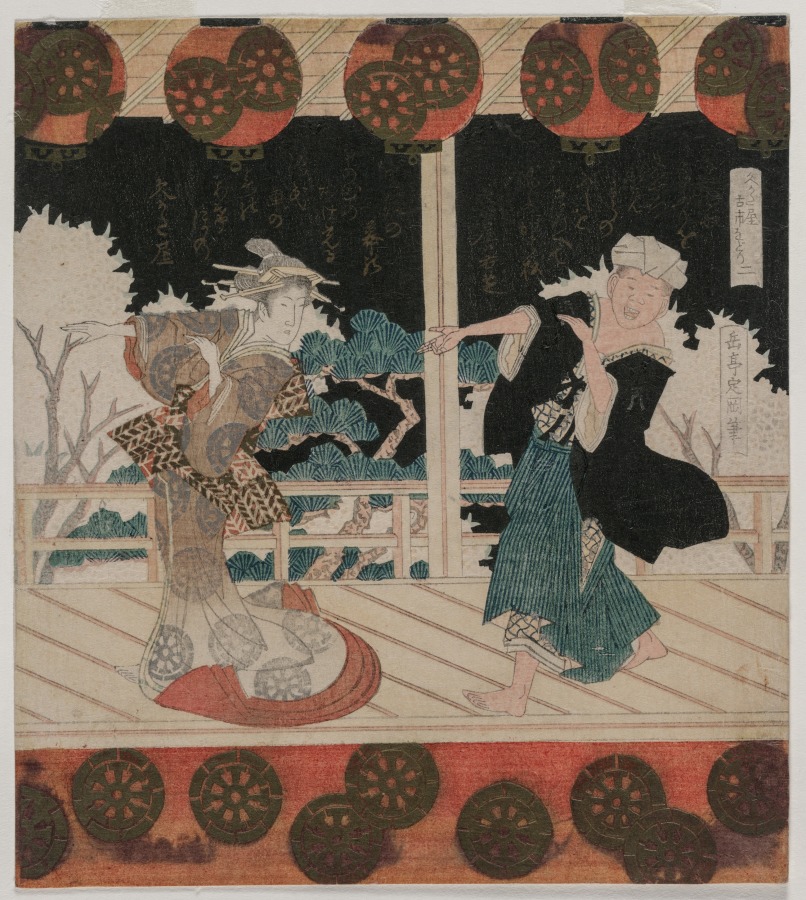 Gakutei Harunobu (Japanese, 1786(?)–1868) — Furuichi Dance a
 Ishikawa Toyonobu — Perspective Picture of a Large Room (Sen