Gakutei Harunobu (Japanese, 1786(?)–1868)

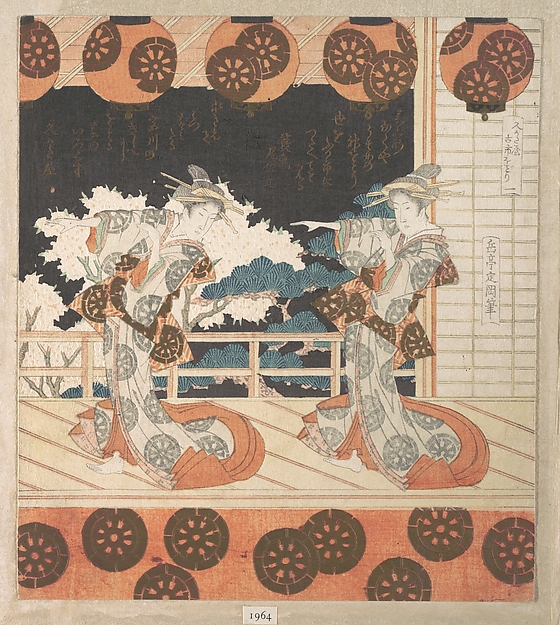
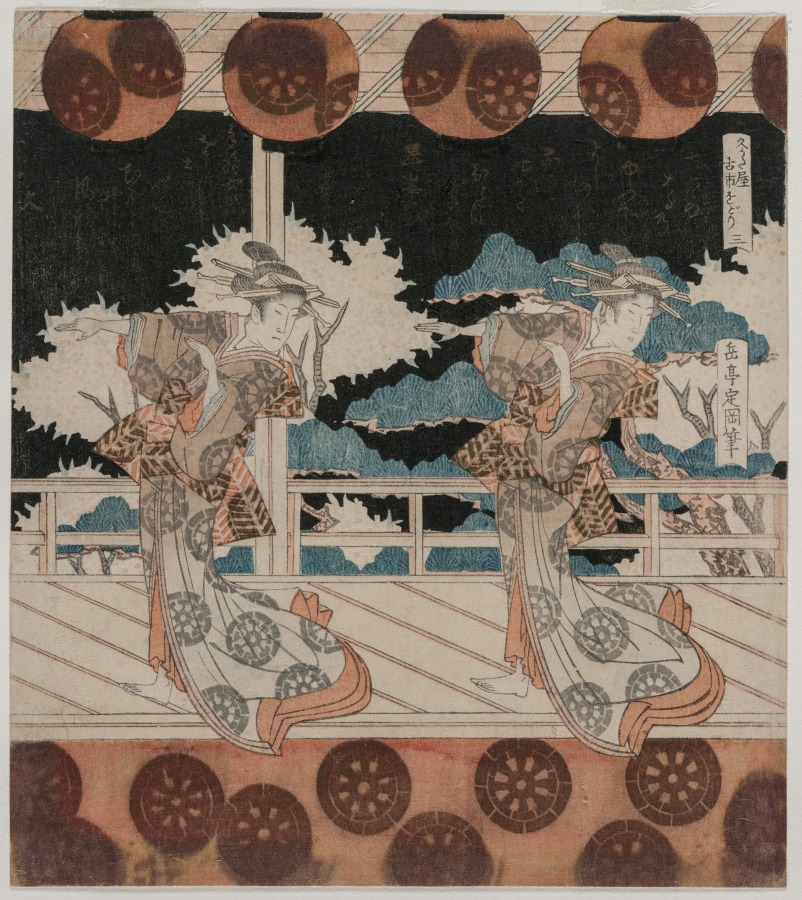
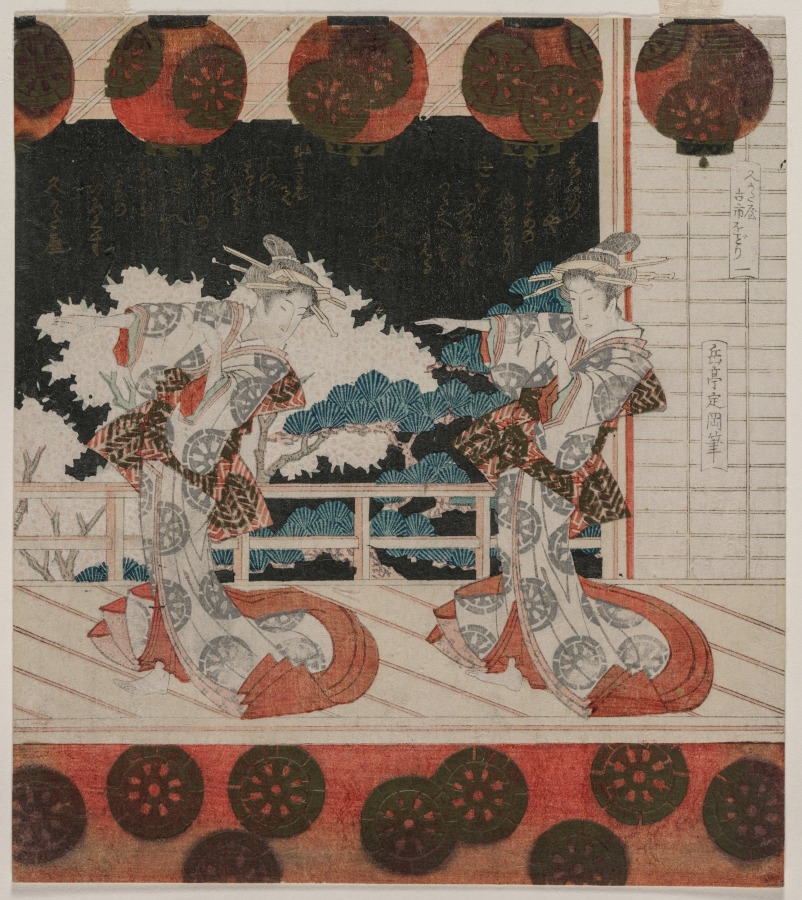
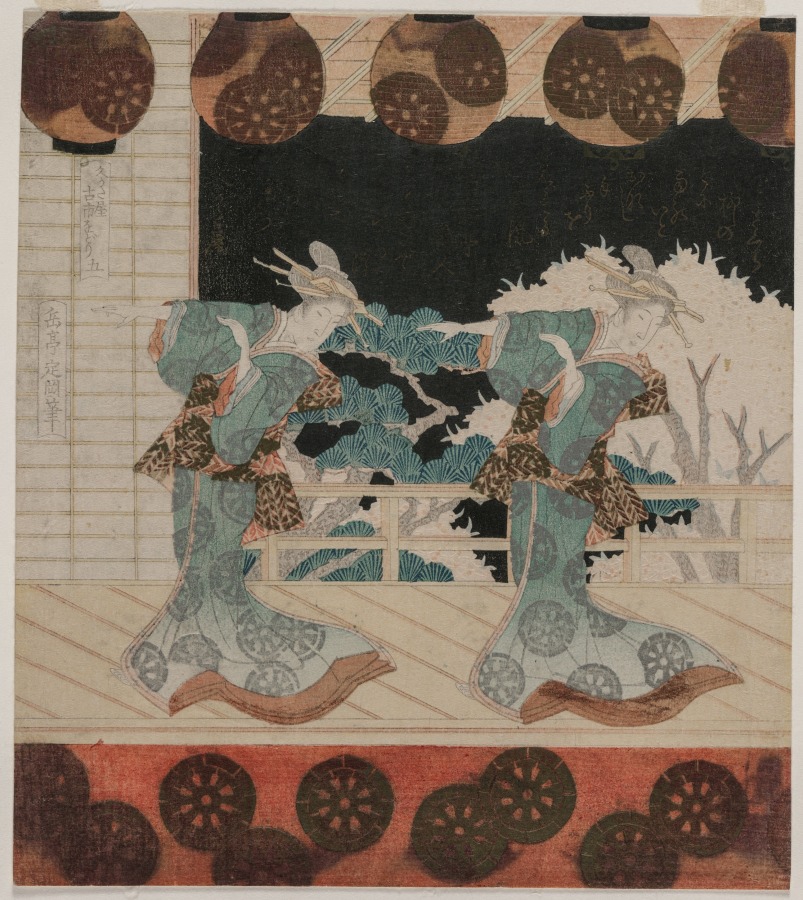
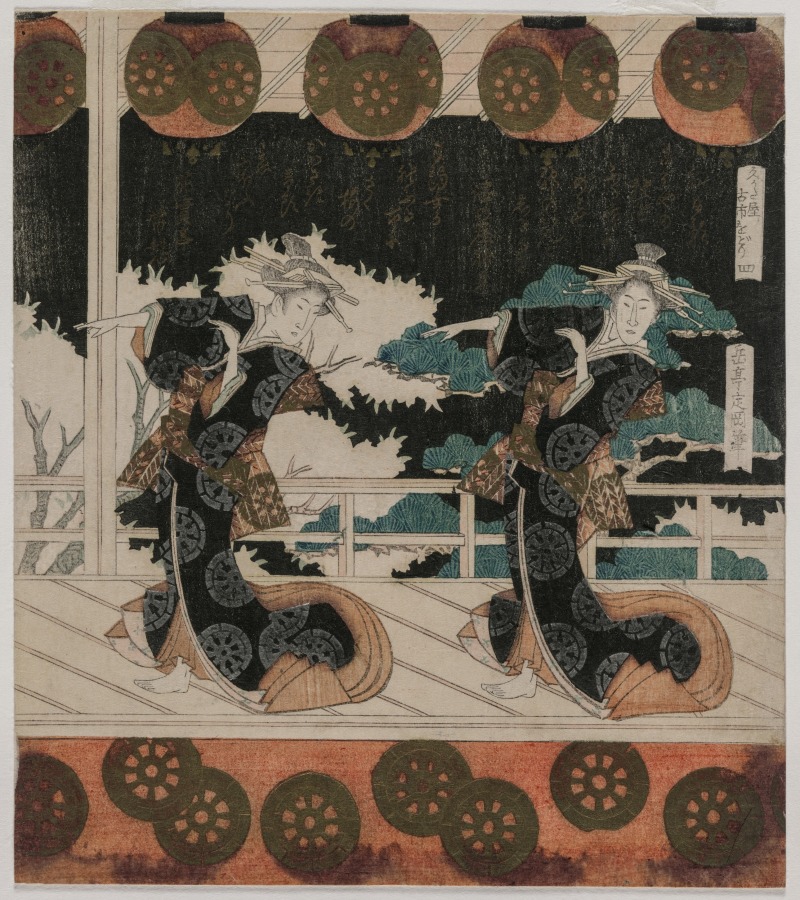
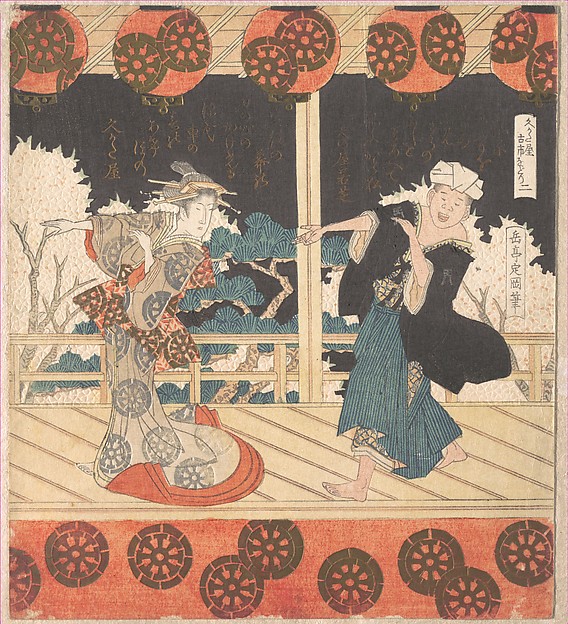
Furuichi Dance at the Hisagataya

mid 1820s
second of a pentaptych of woodblock prints; ink and color on paper

SEE IT IN PERSON

Not currently on view

In the collection of Cleveland Museum of Art, Cleveland · as of July 2026

View at clevelandart.orgPlan a visit ↗

Discussion

FROM THE CLEVELAND MUSEUM OF ART’S CATALOG

A surimono is a print in which an image is combined with poetry to celebrate a special event. This print shows the poet Hisagataya dancing with a troupe of geisha at a teahouse in the town of Furuichi near Ise.

Source ↗

Be the first to share your thoughts.

Sign in to join the discussion.
Community guidelines

More by Gakutei Harunobu (Japanese, 1786(?)–1868)

Furuichi Dance at the HisagatayaFuruichi Dance at the HisagatayaFuruichi Dance at the HisagatayaFuruichi Dance at the HisagatayaCourtesan Reading Beside a Potted Plum Tree, from the series Seven Courtesans Compared to Daoist ImmortalsCourtesan Reading Beside a Potted Plum Tree, from the seriesFuruichi Dance at the HisagatayaFuruichi Dance at the HisagatayaFuruichi Dance at the HisagatayaFuruichi Dance at the Hisagataya

More like this

ArtworkYashima GakuteiHaruka and Haruji of the Kadotamaya as Soga no Goro and Asaina Saburo in the armor-pulling scene, from the series "Comic Performances by the Entertainers of the Pleasure Quarters at the Niwaka Festival (Seiro geiko niwaka kyogen zukushi)"Isoda Koryusai — Haruka and Haruji of the Kadotamaya as SogaCourtesan and Kamuro Strolling at the Entrance Gate of the Yoshiwara Pleasure QuartersYashima Gakutei — Courtesan and Kamuro Strolling at the EntrThe Actors Nakamura Nakazo I as Chinzei Hachiro Tametomo Disguised as a Pilgrim (left), and Ichikawa Danjuro V as Kazusa no Gorobei Tadamitsu (right), in the "Silent Encounter" Scene (Dammari) from the End of Part One of the Play Kitekaeru Nishiki no Wakayaka (Returning Home in Splendor), Performed at the Nakamura Theater from the First Day of the Eleventh Month, 1780Katsukawa Shunsho — The Actors Nakamura Nakazo I as Chinzei The Actors Ichikawa Danjuro V as Momonoi Wakasanosuke (right), and Nakamura Nakazo I as Kakogawa Honzo (left), in the Play Kanadehon Chushingura, Performed at the Nakamura Theater in the Fifth Month, 1771Katsukawa Shunsho — The Actors Ichikawa Danjuro V as MomonoiThe actors Iwai Hanshiro IV (R) as Ohan of the Shinanoya and Bando Hikosaburo III (L) as Obiya ChoemonTōshūsai Sharaku — The actors Iwai Hanshiro IV (R) as Ohan oIchikawa Norinosuke and Ichikawa Yonejuro as Morihachi and Yonehachi, Two ComediansHasegawa Sadanobu (Japanese, 1809–1879) — Ichikawa NorinosukArtworkKatsukawa Shunshō 勝川春章A Woman Nomori (Onna Nomori), no. 11 from a series of 12 prints depicting parodies of playsOkumura Masanobu — A Woman Nomori (Onna Nomori), no. 11 fromThe Actors Ichikawa Danzo IV as Arakawa Taro Takesada Disguised as the Palanquin Bearer Tarobei (right), and Ichikawa Danjuro V as Abe no Sadato Disguised as the Pilgrim Kuriyagawa Jirodayu (left), in the Play Godai Genji Mitsugi no Furisode, Performed at the Nakamura Theater in the Eleventh Month, 1782Katsukawa Shunsho — The Actors Ichikawa Danzo IV as Arakawa Advertisement of the drama "Haru no Akebono Kuruwa Soga," at the Ichimura TheatreTorii Kiyomasu II — Advertisement of the drama "Haru no AkebThe actors Seki Sanjuro II, One Kikugoro III, and Ichikawa Danjuro VII on a Kabuki stageUtagawa Toyokuni I — The actors Seki Sanjuro II, One Kikugor