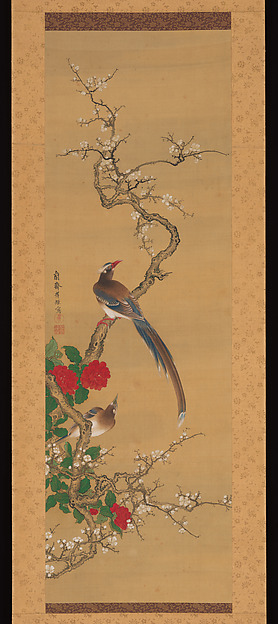
In the collection of Cleveland Museum of Art, Cleveland — check current display status with the museum.
FROM THE CLEVELAND MUSEUM OF ART’S CATALOG
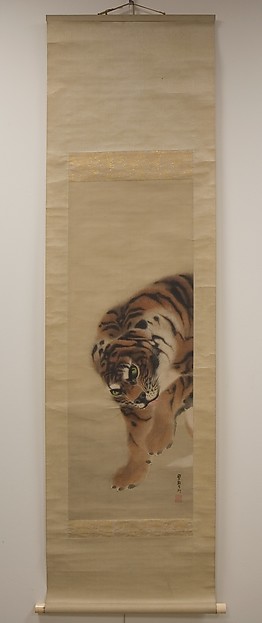
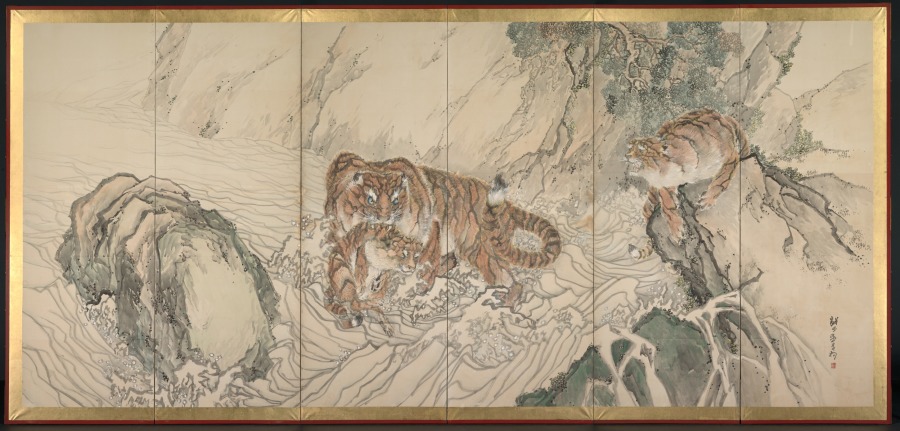
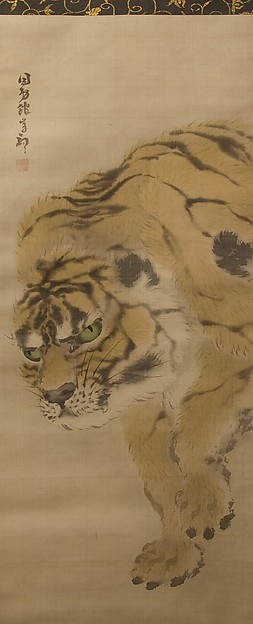
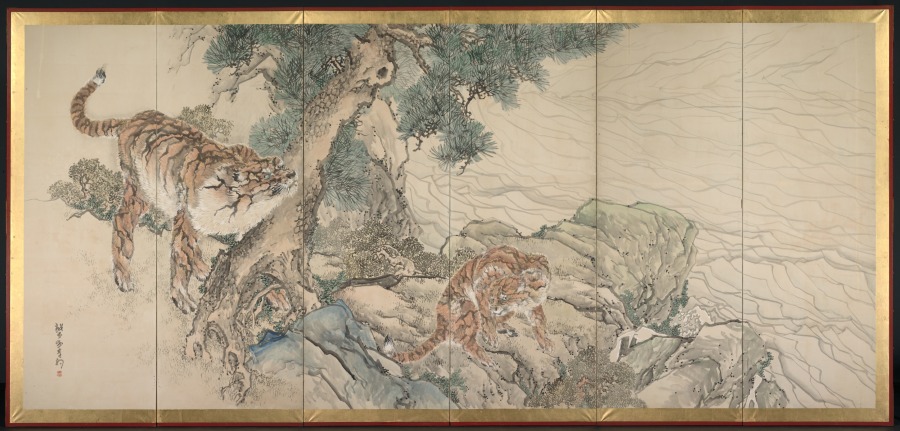
By the time this self-taught painter reached his thirties, his paintings were keenly sought after by Kyoto’s sophisticated patrons, including members of the imperial family. Judging from the surviving works, his supporters delighted in the colorful, auspicious imagery of Chinese historical figures, blossoming plum trees, cranes, peacocks, roosters, and especially tigers. Kishi Ganku was originally from the coastal town of Kanazawa, but relocated to Kyoto to work for the Arisugawa family. His work incorporates stylistic elements from the Kano school, the Maruyama school, and works by the Chinese artist Shen Nanping (1682–1760).
Be the first to share your thoughts.
Sign in to join the discussion.
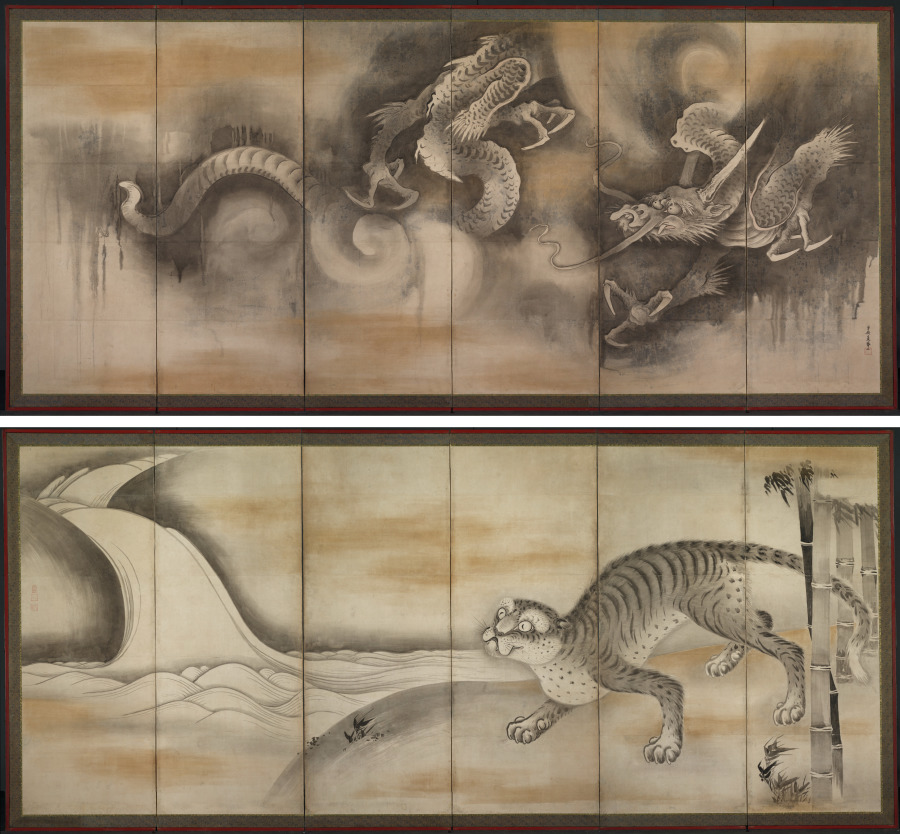 Soga Nichokuan (Japanese) — Dragon and Tiger
 Kanō Sansetsu — Tiger Drinking from a Raging River
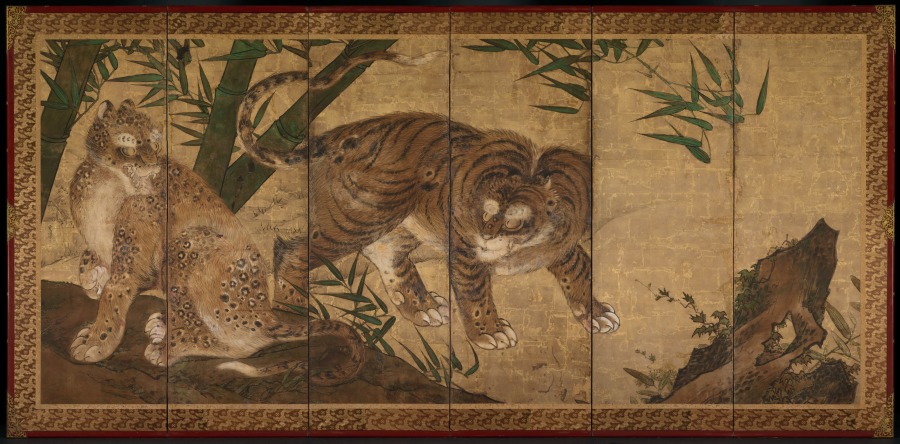 Yamaguchi Sekkei (Japanese, 1644–1732) — Lions and Tigers in
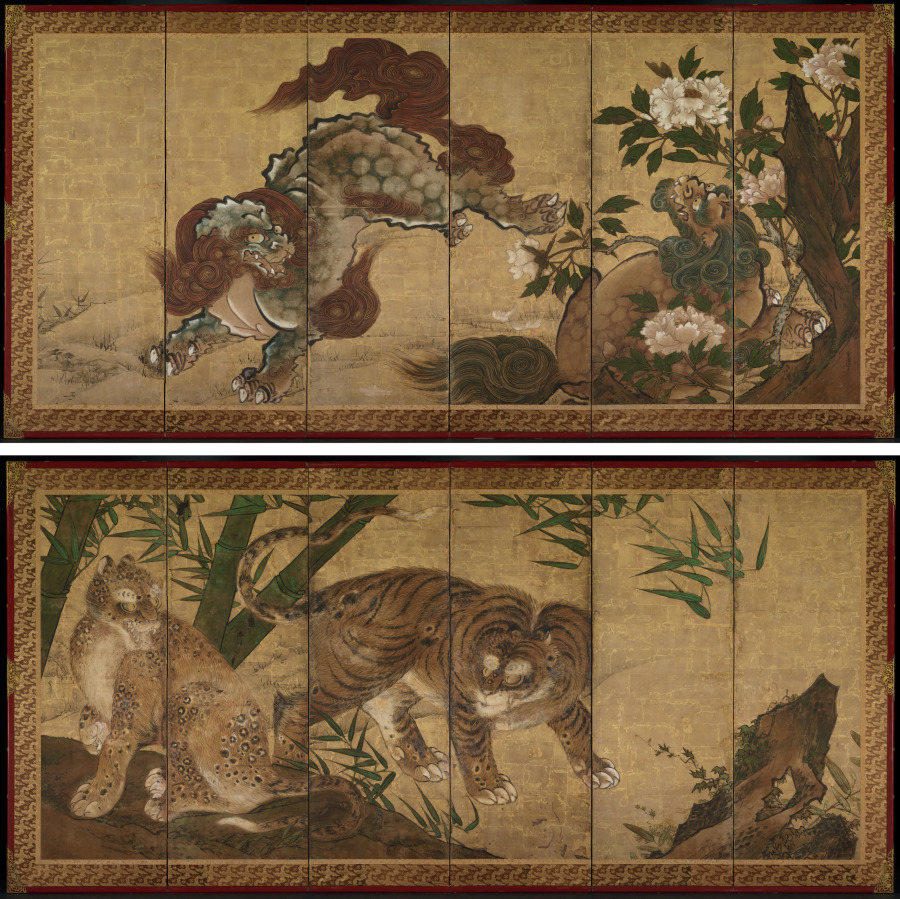 Yamaguchi Sekkei (Japanese, 1644–1732) — Lions and Tigers in
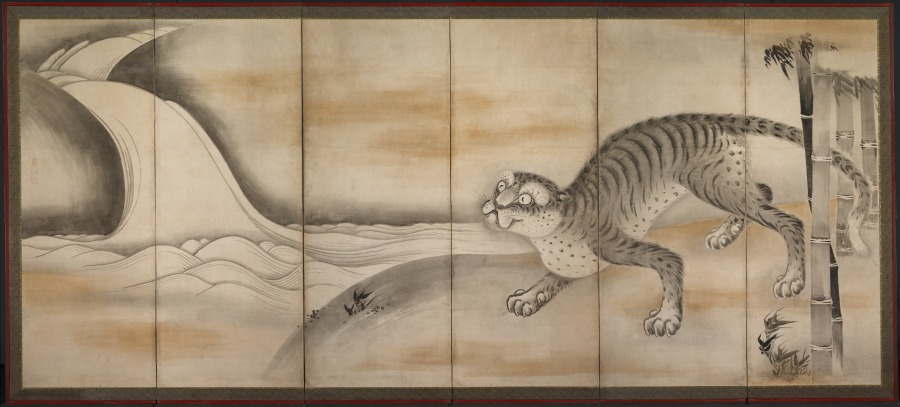 Soga Nichokuan (Japanese) — Tiger
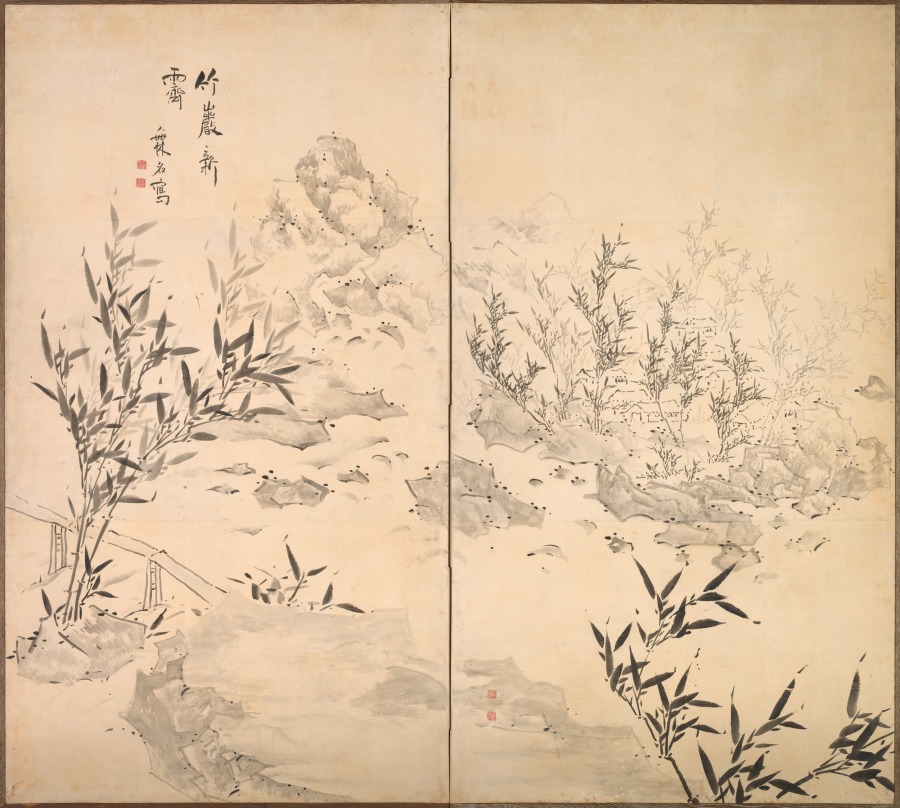 Ike Taiga (Japanese, 1723–1776) — Bamboo and Rocks in Cleari
 Landscape
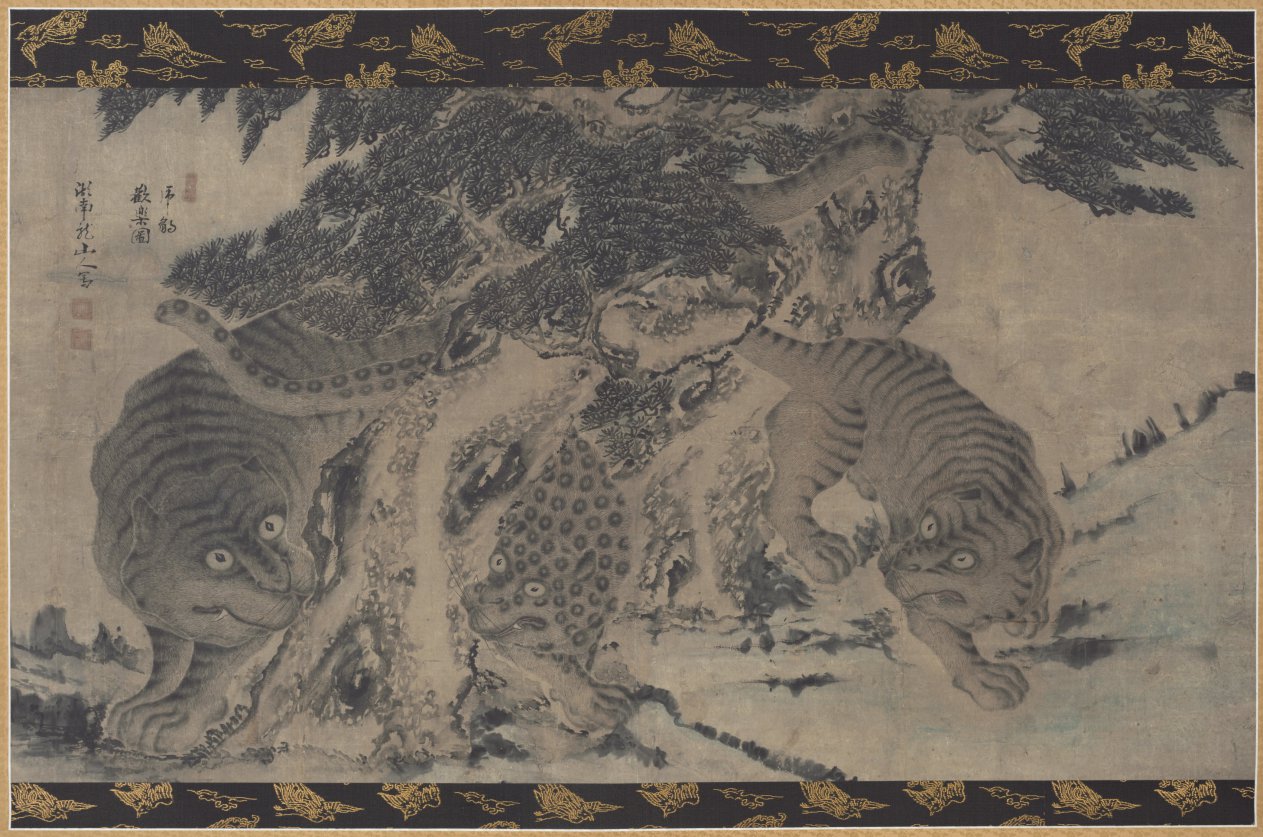 Tigers and Leopard Frolicking
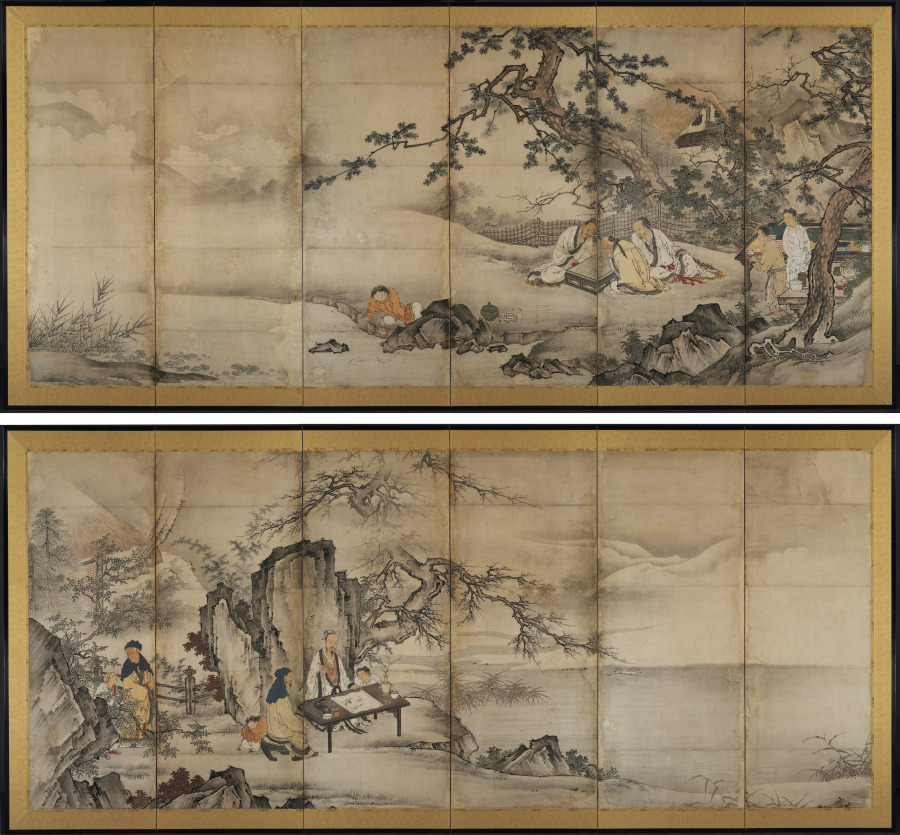 Kano Shōei (Japanese, 1519–1592) — The Four Accomplishments
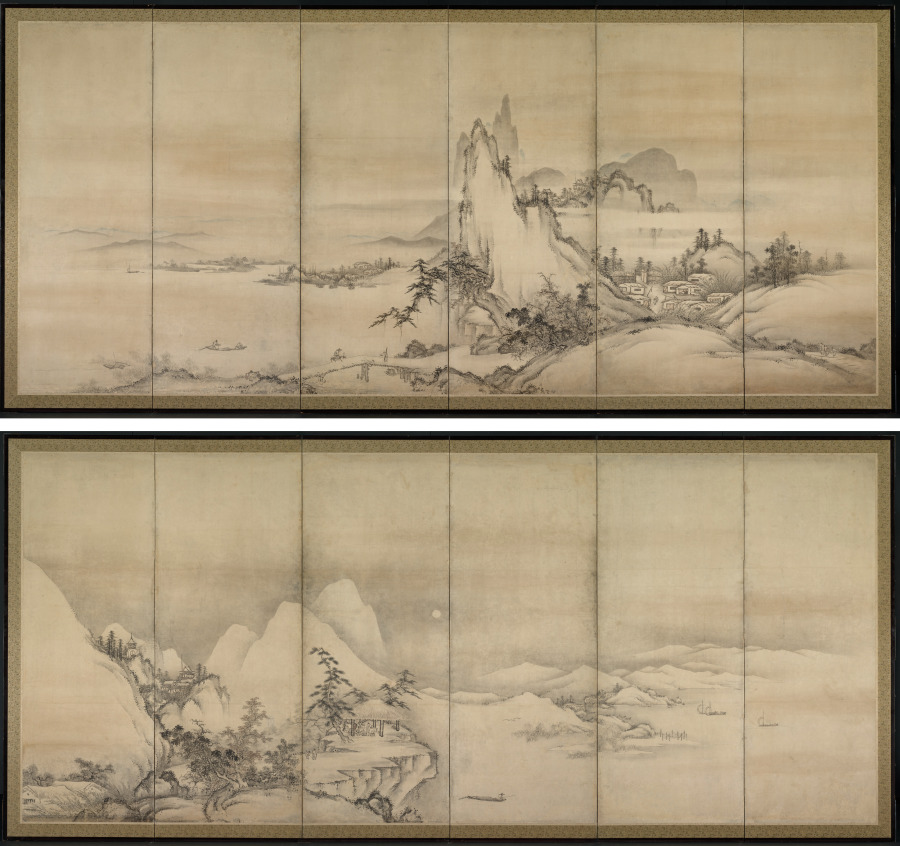 Chinese Landscape
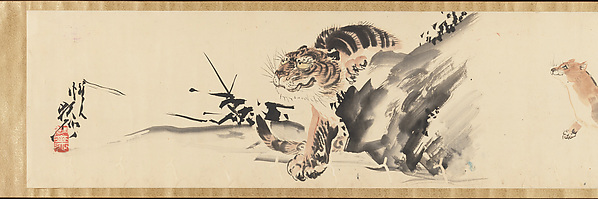 Kawanabe Kyōsai 河鍋暁斎
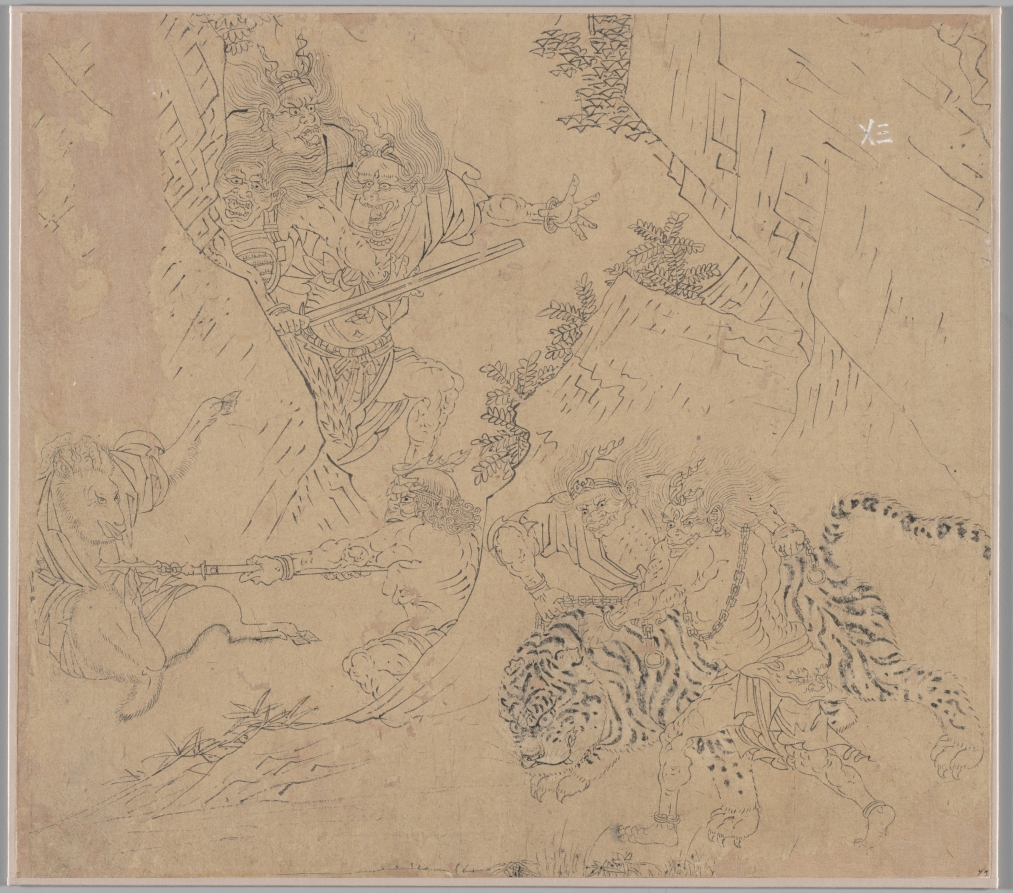 Album of Daoist and Buddhist Themes: Search the Mountain: Le