Johannes Meursius

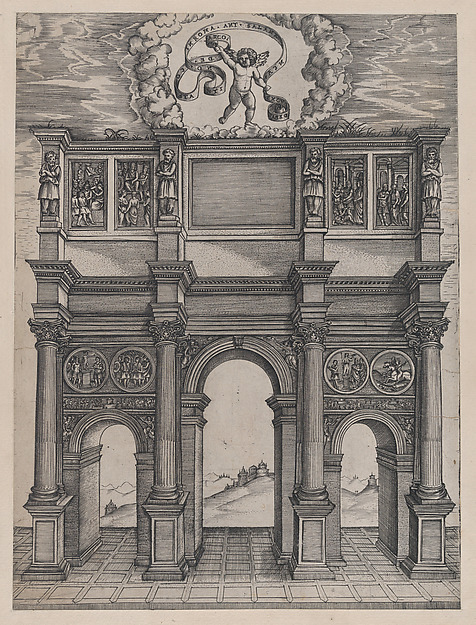
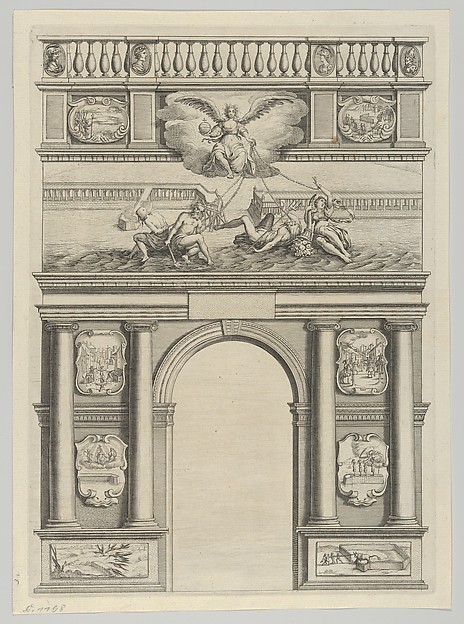
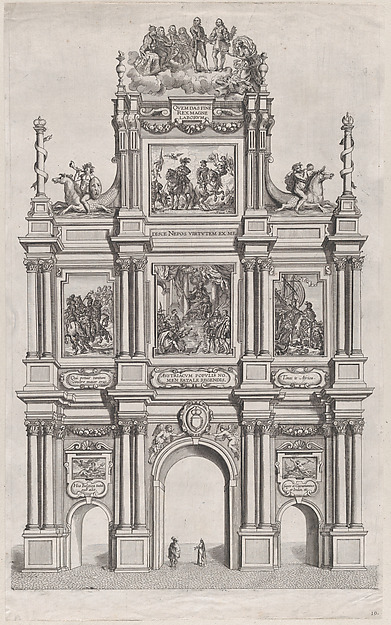
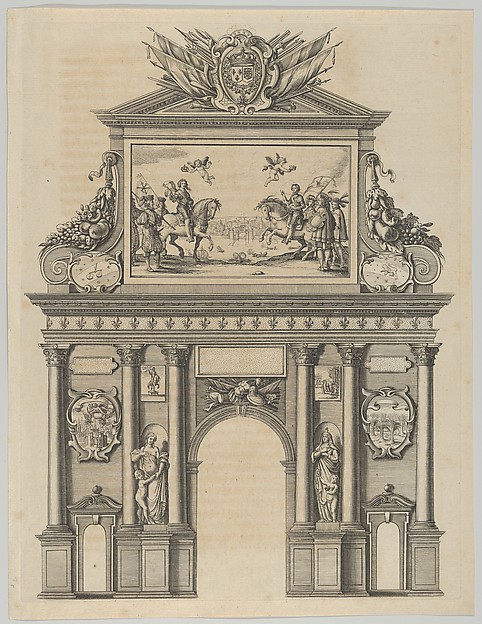
Plate 12: Triumphal arch, elevation of the back facade, surmounted with the arms of Ferdinand and decorated with five mythical or heroic scenes; from Guillielmus Becanus's 'Serenissimi Principis Ferdinandi, Hispaniarum Infantis...'

1636
Engraving
37.8 × 24.2 cm (14.9 × 9.5 in)

SEE IT IN PERSON

Not currently on view

In the collection of The Metropolitan Museum of Art, New York · as of July 2026

View at metmuseum.orgPlan a visit ↗

Discussion

Be the first to share your thoughts.

Sign in to join the discussion.

Community guidelines

More by Johannes Meursius
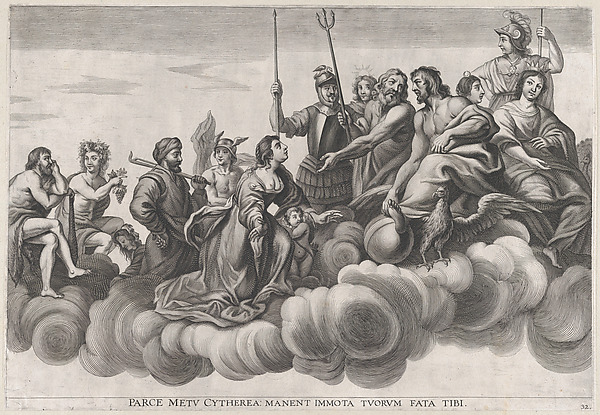
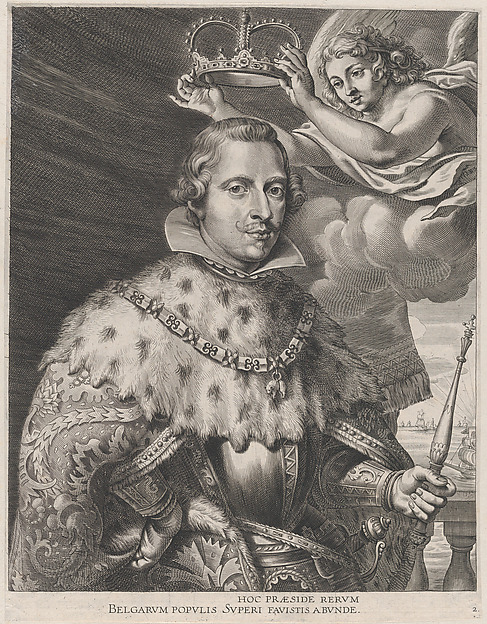
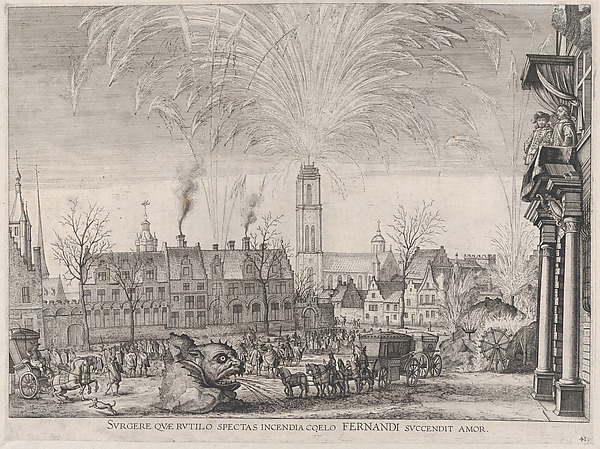
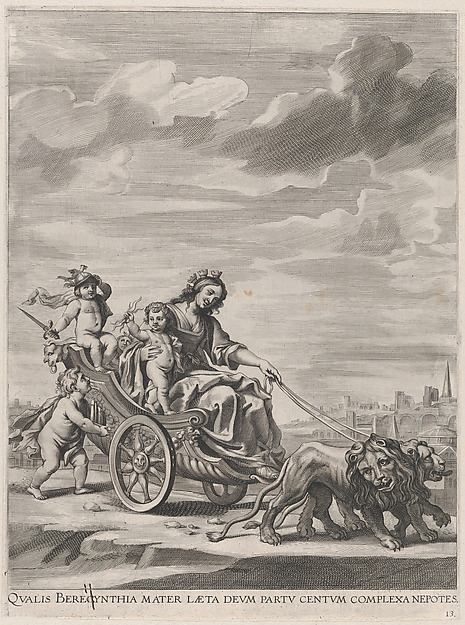
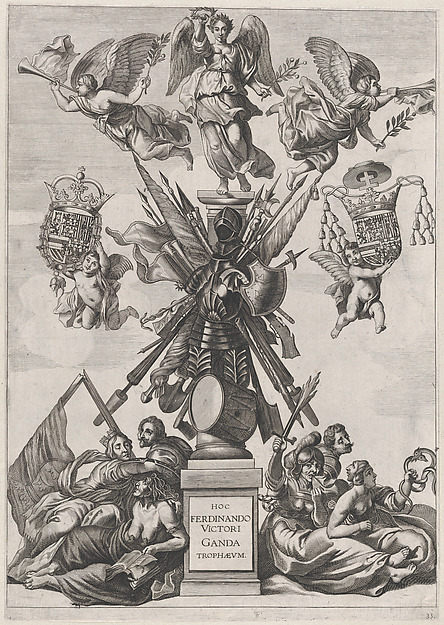
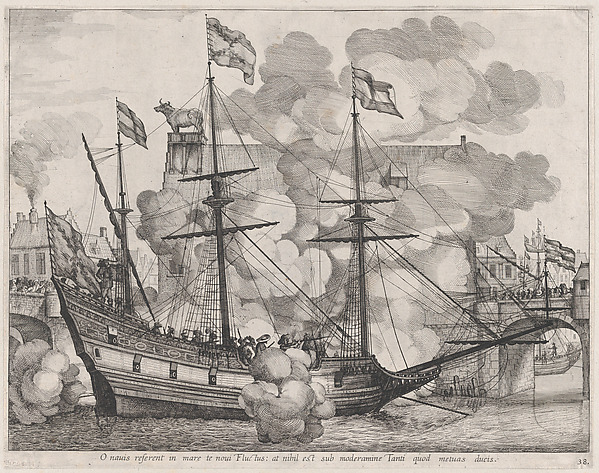
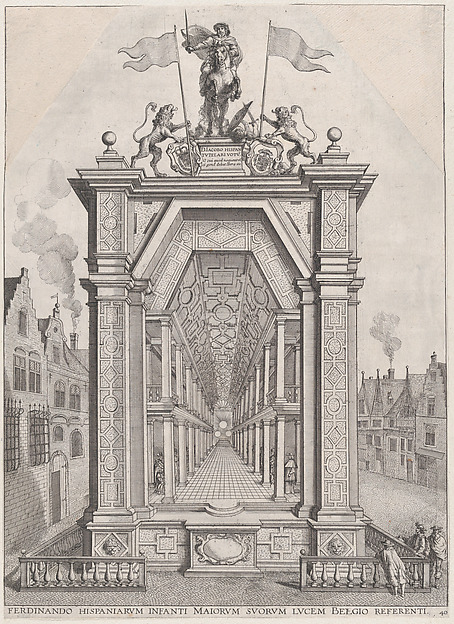
Plate 32: Venus asking Jupiter for protection; from Guillielmus Becanus's 'Serenissimi Principis Ferdinandi, Hispaniarum Infantis...'Plate 32: Venus asking Jupiter for protection; from GuillielPlate 2: Portrait of Philip IV, King of Spain, being crowned; from Guillielmus Becanus's 'Serenissimi Principis Ferdinandi, Hispaniarum Infantis...'Plate 2: Portrait of Philip IV, King of Spain, being crownedPlate 41: Fireworks display in city square with Ferdinand watching from a balcony at right; from Guillielmus Becanus's 'Serenissimi Principis Ferdinandi, Hispaniarum Infantis...'Plate 41: Fireworks display in city square with Ferdinand waPlate 13: Cybele in her chariot, drawn by lions; from Guillielmus Becanus's 'Serenissimi Principis Ferdinandi, Hispaniarum Infantis...'Plate 13: Cybele in her chariot, drawn by lions; from GuilliPlate 19: Triumphal arch, elevation of the front, surmounted by a cloud bearing Ferdinand and royal ancestors; from Guillielmus Becanus's 'Serenissimi Principis Ferdinandi, Hispaniarum Infantis...'Plate 19: Triumphal arch, elevation of the front, surmountedPlate 33: Armorial trophy on a Tuscan column, surrounded by allegorical figures and cherubs bearing the armorial shields of Ferdinand; from Guillielmus Becanus's 'Serenissimi Principis Ferdinandi, Hispaniarum Infantis...'Plate 33: Armorial trophy on a Tuscan column, surrounded by Plate 38: Triumphal ship with the city of Ghent in the background; from Guillielmus Becanus's 'Serenissimi Principis Ferdinandi, Hispaniarum Infantis...'Plate 38: Triumphal ship with the city of Ghent in the backgPlate 40: Design for festival architecture honoring the Spanish Prince Ferdinand's triumphal entry into the city of Ghent, January 28, 1635; from Guillielmus Becanus's 'Serenissimi Principis Ferdinandi, Hispaniarum Infantis...'Plate 40: Design for festival architecture honoring the Span
More like this

Triumphal arch, from 'Éloges et discours sur la triomphante réception du Roy en sa ville de Paris ...' by Jean-Baptiste de MachaultMelchior Tavernier|Jean-Baptiste de Machault|Abraham Bosse|PSpeculum Romanae Magnificentiae: Arch of ConstantineAntonio Lafreri|Anonymous|Claudio Duchetti — Speculum RomanaSpeculum Romanae Magnificentiae: The Arch of Constantine, RomeAgostino Veneziano (Agostino dei Musi)|Antonio Salamanca — SFurniture DesignJacques Androuet Du Cerceau — Furniture DesignSpeculum Romanae Magnificentiae: Arch of Septimus SeverusAnonymous|Nicolaus van Aelst — Speculum Romanae MagnificentiDesign for an Architectural Structure with a Hunting Theme , Plate 74 from Dietterlin's ArchitetturaWendel Dietterlin, the Elder — Design for an Architectural SChimney with a Bacchanal over the Mantle from 'Grandes Cheminée'Jean Le Pautre|Jean I Leblond — Chimney with a Bacchanal oveSpeculum Romanae Magnificentiae: Front view of St. Lawrence Gateway, RomeAntonio Lafreri|Anonymous — Speculum Romanae Magnificentiae:The Arch of Titus Speculum Romanae Magnificentiae)Anonymous|Antonio Salamanca — The Arch of Titus Speculum RomTriumphal arch, from 'Éloges et discours sur la triomphante réception du Roy en sa ville de Paris ...' by Jean-Baptiste de MachaultAbraham Bosse|Melchior Tavernier|Jean-Baptiste de Machault|PDesign for a Monumental Altar, Plate e from 'Unterschiedliche Neu Inventierte Altäre mit darzu gehörigen Profillen u. Grundrißen.'Martin Engelbrecht|Johann Michael Leüchte — Design for a MonCatafalque for Duke Alessandro Farnese; from 'Libro De Catafalchi, Tabernacoli, con varij designi di Porte fenestre et altri ornamenti di Architettura'Giacomo della Porta|Cavaliere d'Arpino (Giuseppe Cesari)|Gio