FROM THE CLEVELAND MUSEUM OF ART’S CATALOG
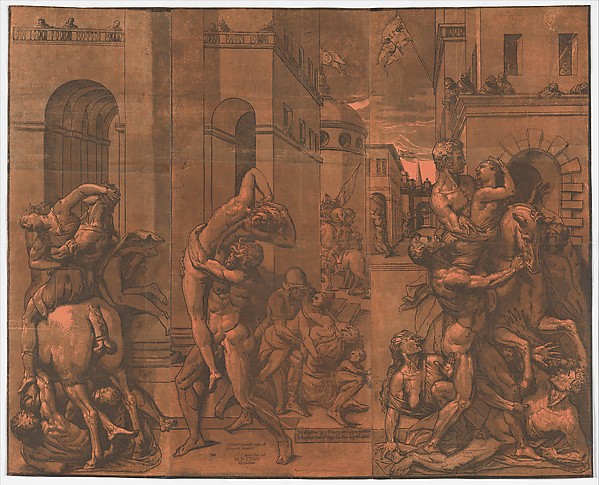
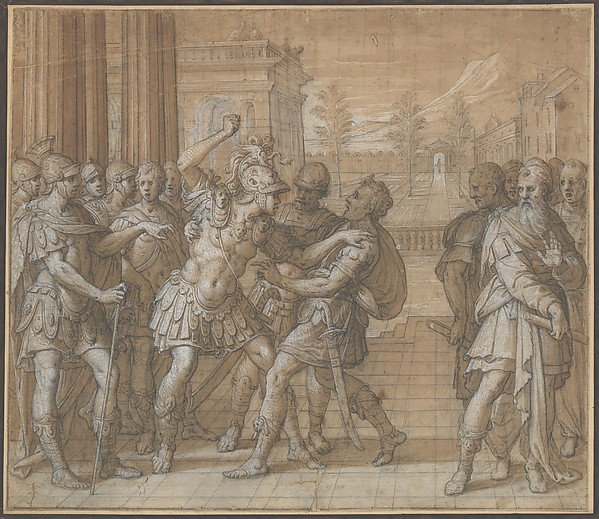
The legend of the Sabine women relates to Rome’s early history when, to ensure the future population of the city, its founder Romulus hosted a festival for neighboring peoples, including the Sabines. At an appointed moment during the festivities, each young man of Rome kidnapped an unmarried Sabine woman to be his bride. Later, when the Sabines attacked Rome, it was the abducted Sabine women who courageously stopped the brutal battle and demanded peace between their fathers, brothers, and husbands. Andreani’s chiaroscuro woodcut, with its brown-red tone, subtle shadows, and warm highlights, was a fitting choice for reproducing Giambologna’s original bronze relief, created for the pedestal of his sculpture The Abduction of a Sabine Woman.
Source ↗︎
Be the first to share your thoughts.
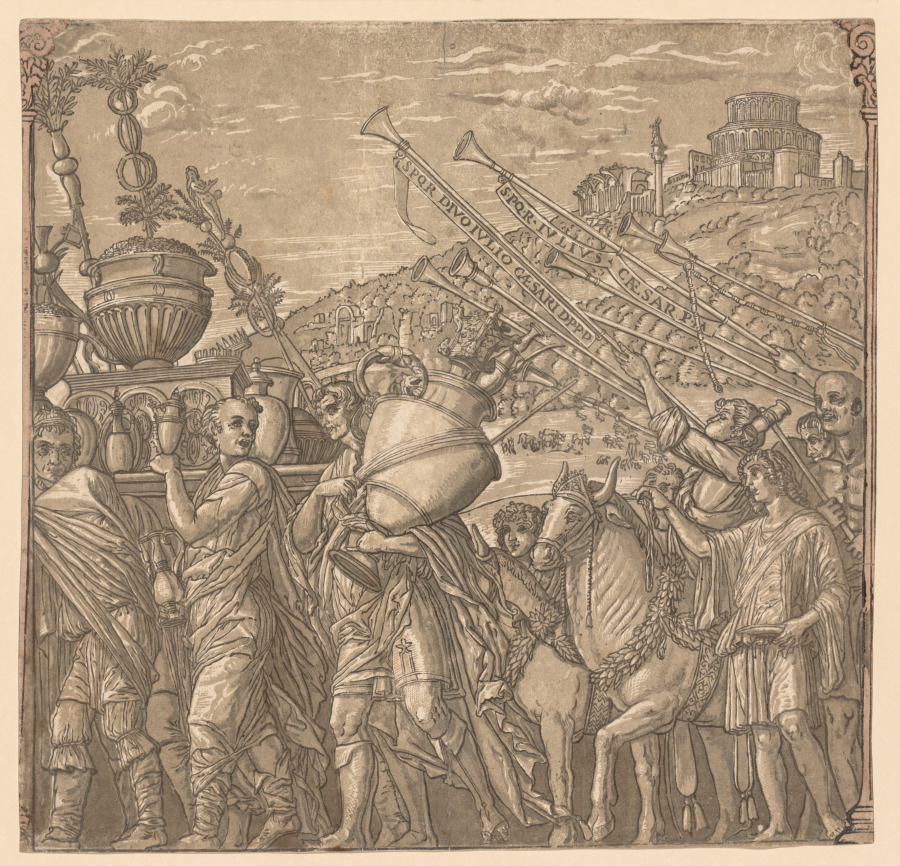 The Triumph of Julius Caesar: Soldiers Carrying Vases
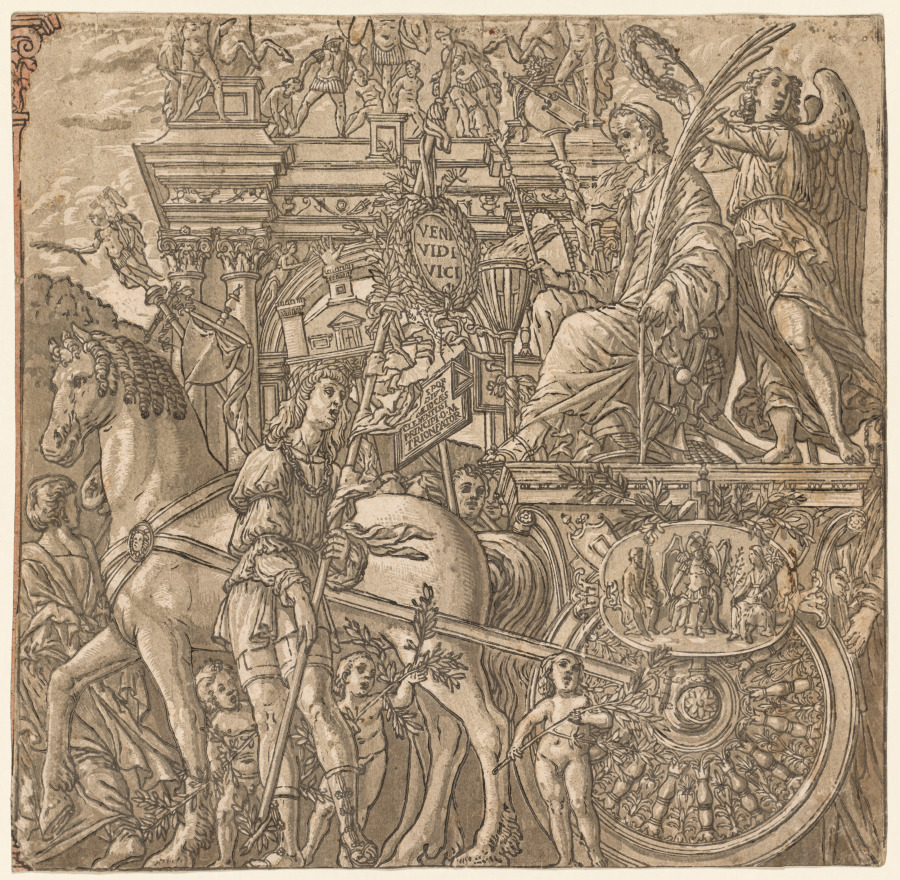 The Triumph of Julius Caesar: Caesar Triumphant
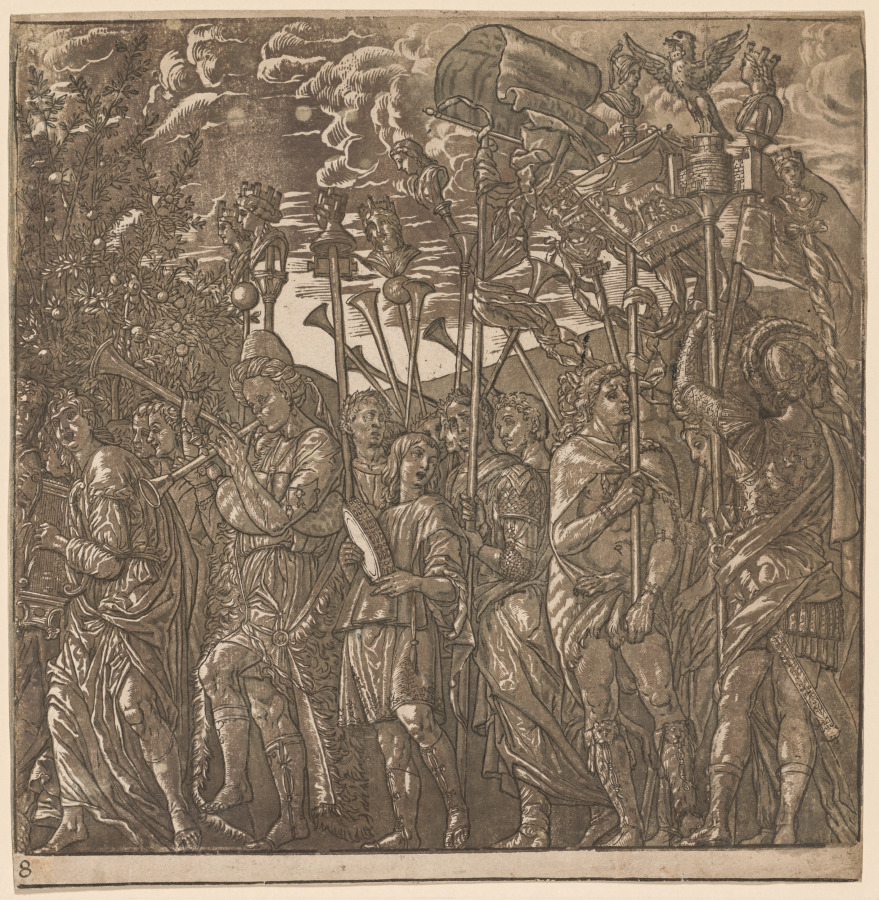 The Triumph of Julius Caesar: Soldiers Carrying Banners and
 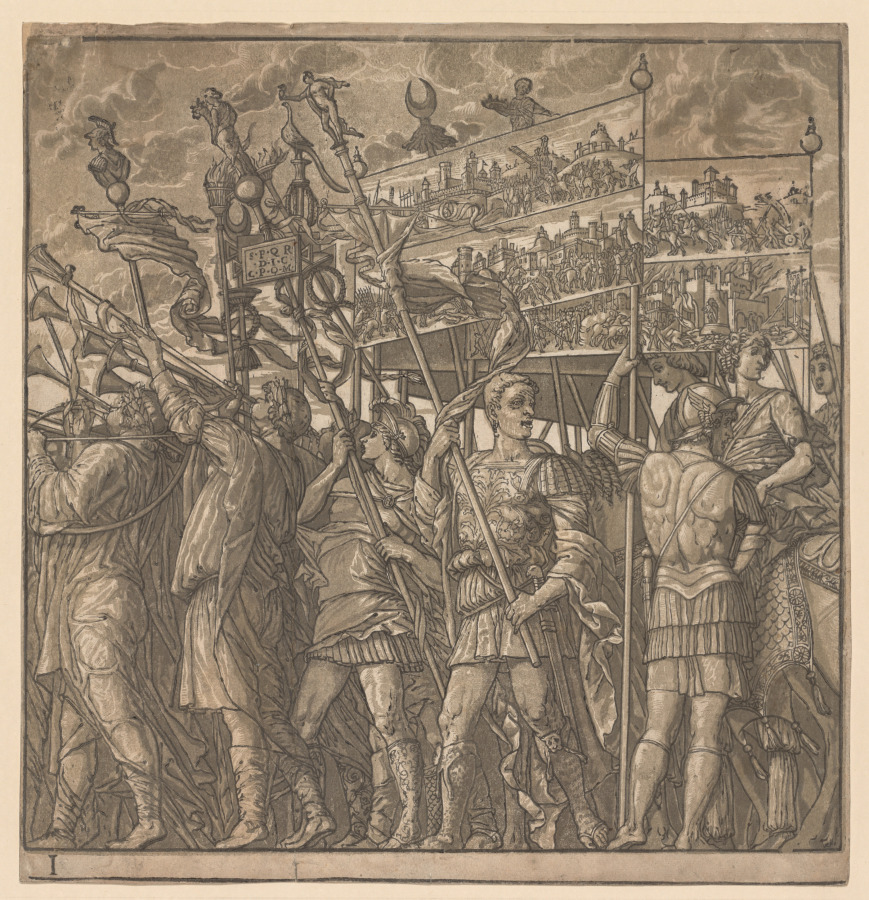 The Triumph of Julius Caesar: Soldiers Carrying the Picture
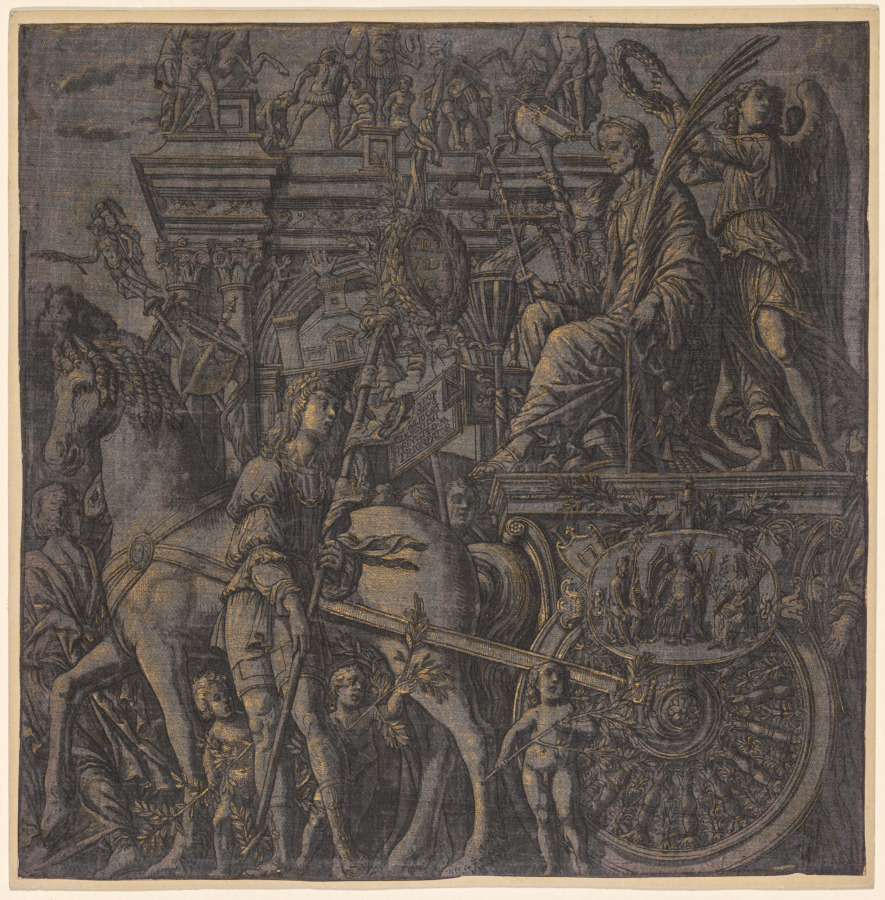 The Triumph of Julius Caesar: Caesar Triumphant
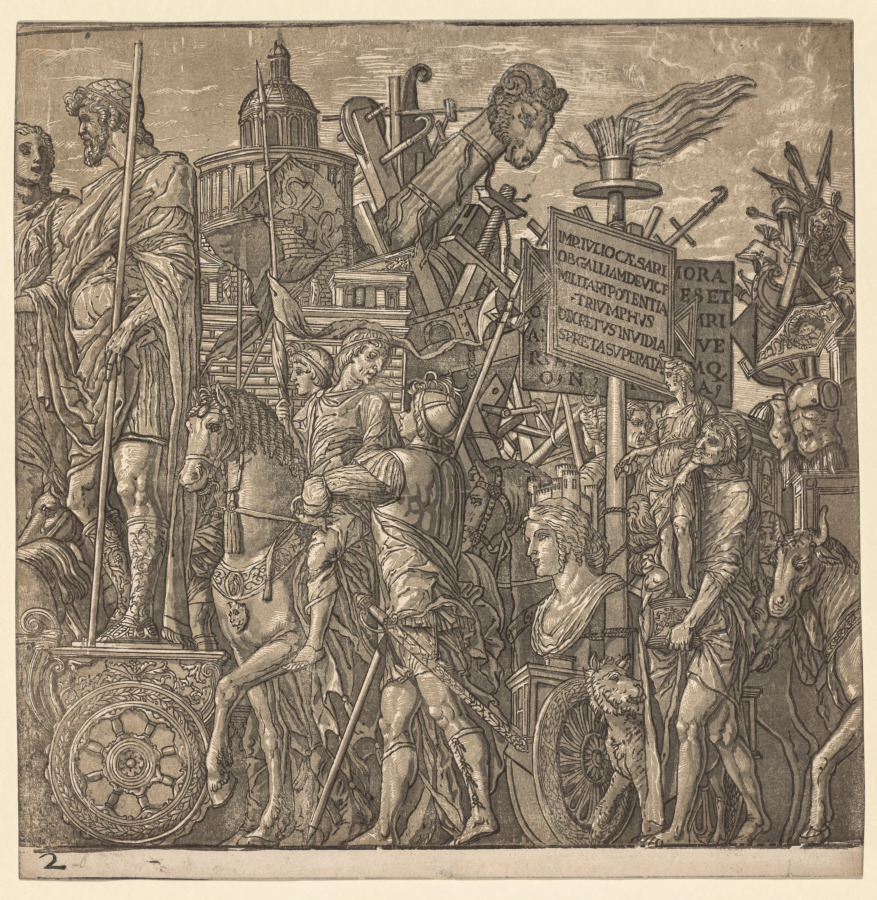 The Triumph of Julius Caesar: Colossal Statues and Siege Equ
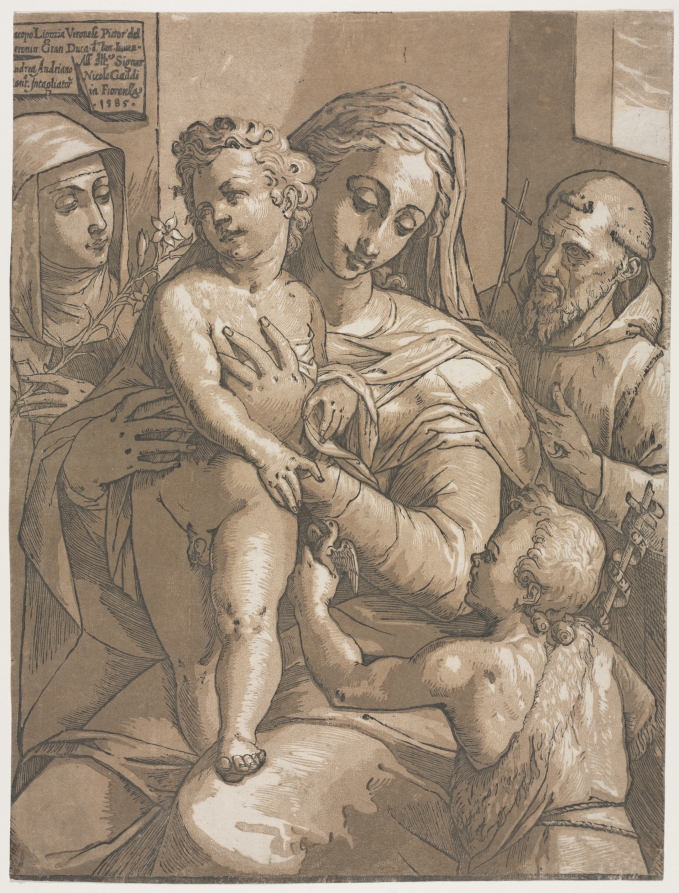 Virgin and Child with St. John, St. Catherine of Siena and S
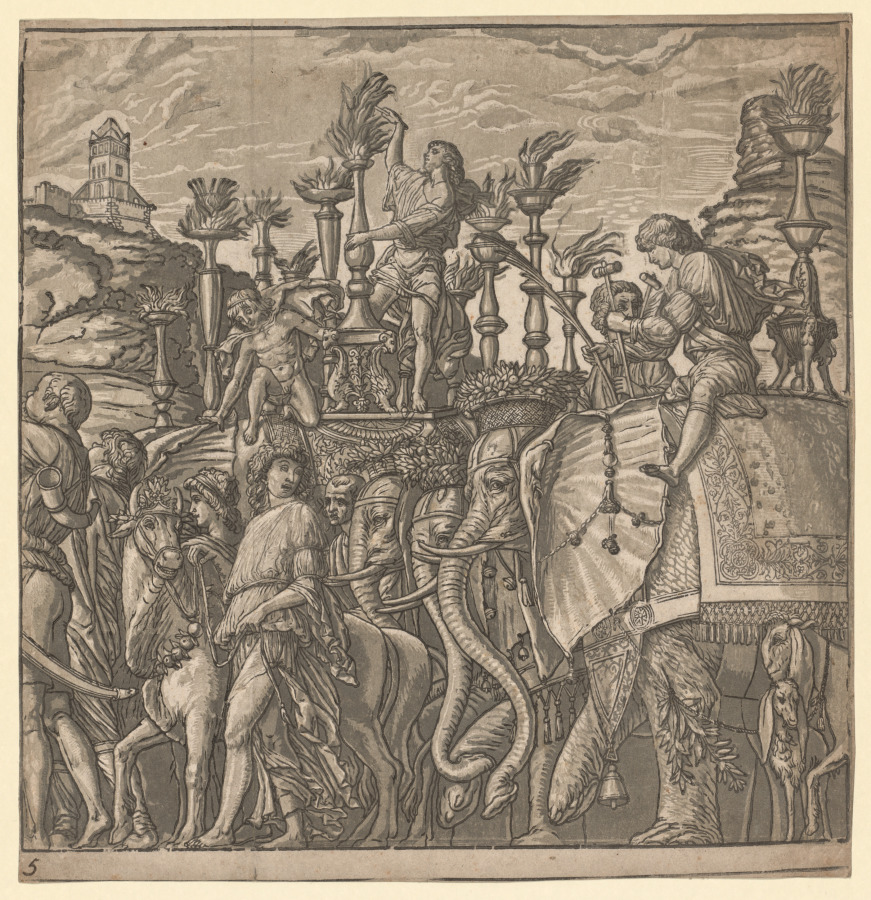 The Triumph of Julius Caesar: Elephants Carrying Torches