What Does "The Scream" by Edvard Munch Mean?
The figure isn't screaming. It's hearing one.
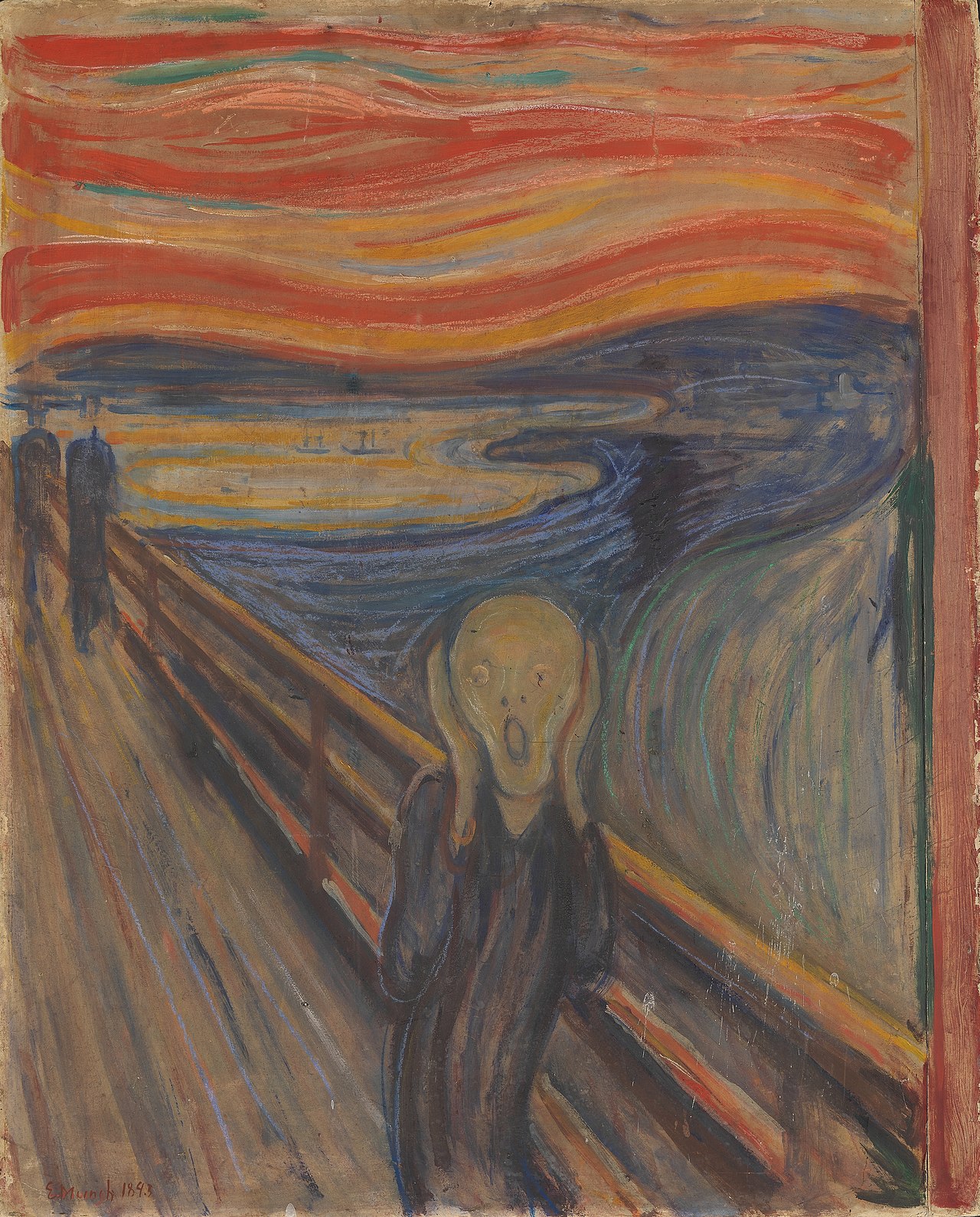
"The Scream" depicts overwhelming existential dread — but the hollow-faced figure isn't the one screaming. Munch described a walk at sunset when he felt "a scream passing through nature," and the figure covers its ears against it. Painted from 1893, it has become the modern world's universal symbol of anxiety.
It's the face we reach for whenever the modern world feels like too much: a bald, hollowed figure on a bridge, hands pressed to its cheeks, mouth open under a bloody sky. The Scream has become the universal emoji of dread. But the most common assumption about it — that the figure is screaming — is almost certainly wrong.
Is the figure screaming?
No — by Edvard Munch's own account, the figure is hearing a scream, not making one. In a diary note he described walking with two friends at sunset when he felt tired and the sky suddenly turned "blood red." He stopped, trembling, and sensed "an infinite scream passing through nature." The figure's clamped hands read, in that light, as someone shielding their ears against a sound in the world, not opening their mouth to produce it. We only have this through Munch's own retelling, so it's fairest to treat it as his account of the moment rather than a settled fact — but it reframes the whole image once you know it.
Why is the sky so red?
The sky is often linked to a real sunset Munch may have witnessed, though the exact cause is a theory rather than a certainty. One popular idea holds that the volcanic eruption of Krakatoa in 1883 threw ash around the world and lit skies over Europe in vivid reds for months, and that Munch's walk fell in that window. It's a lovely explanation and it may well be true, but it's long been debated, and other researchers point to different atmospheric effects. What isn't in doubt is that the color does the emotional work: the sky screams so the figure doesn't have to.
How many versions are there?
There are several — Munch returned to the subject obsessively across painted and pastel versions, plus a famous black-and-white lithograph he made in 1895 so the image could be printed and spread. That print is why the composition traveled so far, so fast. We hold an impression of the 1895 lithograph at the Art Institute of Chicago, stripped of the red sky and reduced to nervous black lines — which somehow makes the anxiety even sharper.
That the picture became a symbol of anxiety long before "anxiety" was everyday vocabulary is part of its strange power. Munch wasn't illustrating a diagnosis; he was trying to paint a feeling honestly, and the honesty is what still lands.
Open The Scream and try it as Munch framed it — not a face making noise, but a person absorbing it. The painting changes.
Sources
Discussion
Be the first to share your thoughts.
Sign in to join the discussion.