The Most Famous Paintings at the Musée d’Orsay, and How to See Them
Forty years after a Paris railway station became the home of Impressionism, the paintings that make the Orsay unmissable.
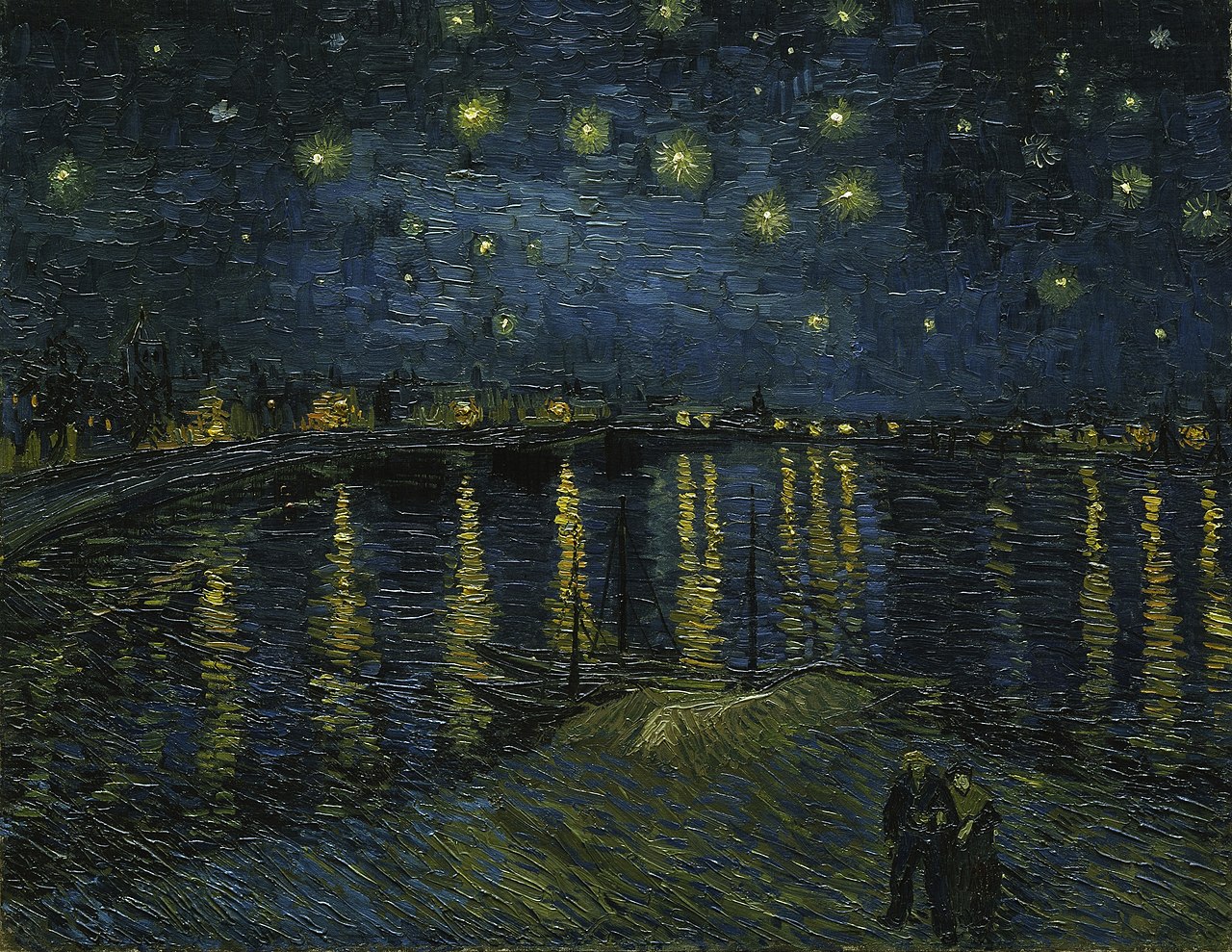
The most famous paintings at the Musée d’Orsay include Van Gogh’s Starry Night Over the Rhône and his 1889 self-portrait, Manet’s Olympia and Luncheon on the Grass, Renoir’s Bal du moulin de la Galette, Monet’s La Gare Saint-Lazare and Rouen Cathedral, Degas’s L’Absinthe, Cézanne’s The Card Players, and Millet’s The Gleaners. The museum holds the world’s largest collection of Impressionist and Post-Impressionist painting.
In December 1986 I was an art student at the university in Paris, and that earned me early access to the Musée d’Orsay as it first opened. What I remember most is standing behind one of the enormous station clocks and looking out through its face, across the Seine. It was an incredible experience. Forty years later, the Orsay is still my favorite museum in the world.
This December the museum turns forty, and it is celebrating with a free anniversary weekend on the 5th and 6th. If you are planning a visit, here are the paintings you should not leave without seeing.
A railway station that became a museum
The Orsay began life as the Gare d’Orsay, a railway station built for the Paris World’s Fair of 1900. Its long glass-roofed hall and its great clocks survived the conversion, which is why the building feels like no other art museum. It opened as a museum in December 1986, devoted to art made between 1848 and 1914: the decades when painting broke free of the academy and invented much of what we now call modern art.
1. Starry Night Over the Rhône, Vincent van Gogh (1888)
Months before he painted the swirling sky that hangs in New York, Vincent van Gogh set up his easel on the bank of the Rhône in Arles at night. The gas lamps of the town spill gold across the water, the Big Dipper hangs overhead, and a couple walks along the shore in the foreground.

2. Self-Portrait, Vincent van Gogh (1889)
Van Gogh painted this at Saint-Rémy in September 1889, and it is one of his last self-portraits. The pale blue background twists around him in the same restless strokes as his coat, so the painter and the air around him seem made of one substance.

3. Bedroom in Arles, Vincent van Gogh (1889)
Van Gogh painted his bedroom in the Yellow House three times. The Orsay’s version is the smallest, a copy he made for his mother and sister, and it keeps the flat, bright colors he hoped would express rest.

4. L’Absinthe, Edgar Degas (1875–1876)
The Orsay knows it by its plain title, Dans un café. Edgar Degas posed two friends, the actress Ellen Andrée and the painter Marcellin Desboutin, at a café table in Montmartre. The woman’s blank stare over a glass of absinthe caused a scandal when the painting was shown in London in 1893.

5. The Dance Class at the Opera, Edgar Degas (1872)
Degas returned to ballet dancers again and again, and this small painting shows the rehearsal room of the old Paris Opera on the rue Le Peletier. The opera house burned down the following year, so the painting preserves a room that no longer exists.

6. La Gare Saint-Lazare, Claude Monet (1877)
It is fitting that a museum built inside a train station holds this one. Claude Monet painted a series of views of the Saint-Lazare station in 1877, filling the glass shed with steam, smoke, and light, and showed several of them at that year’s Impressionist exhibition.

7. Rouen Cathedral, Claude Monet (1892–1894)
Monet painted the facade of Rouen Cathedral more than thirty times, at different hours and in different weather, to show that light itself was his true subject. The Orsay holds five of them, and seeing them side by side is one of the great experiences in the building.

8. The Card Players, Paul Cézanne (1890–1895)
Paul Cézanne painted card players five times. The Orsay’s version is the most concentrated: two men facing each other across a table, a bottle between them, every shape reduced to something solid and still.

9. Olympia, Édouard Manet (1863)
When Édouard Manet showed Olympia at the Salon of 1865, the public was outraged. His model, Victorine Meurent, looks straight at the viewer, and critics could not forgive a modern woman painted in the pose of a classical Venus.

10. Luncheon on the Grass, Édouard Manet (1863)
Rejected by the official Salon, this picnic of two clothed men and a nude woman was shown instead at the Salon des Refusés of 1863, where it drew crowds and ridicule in equal measure. It is now one of the founding images of modern painting.

11. Bal du moulin de la Galette, Pierre-Auguste Renoir (1876)
On Sunday afternoons Parisians danced in the open air at the Moulin de la Galette in Montmartre. Pierre-Auguste Renoir caught the scene in dappled sunlight, and the painting was shown at the Impressionist exhibition of 1877.

12. The Gleaners, Jean-François Millet (1857)
Three women bend to gather the stalks of wheat left behind after the harvest. Jean-François Millet gave the poorest workers in the countryside the scale and dignity usually reserved for history painting.

Don’t miss these, too
Gustave Courbet’s A Burial at Ornans has just come out of a major restoration, the museum reports. Gustave Caillebotte’s The Floor Scrapers, Cézanne’s Apples and Oranges, Van Gogh’s The Church at Auvers, and Monet’s The Magpie and Women in the Garden all hang here as well. You can browse the rest of the collection on our Musée d’Orsay page.
How to see them
The Impressionist and Post-Impressionist galleries are on the top floor, beside the great clocks. Go there first, before the crowds build, and leave time to look out through the clock face across the Seine. For more on the painters, read where to see Van Gogh’s paintings and where to see Monet’s Water Lilies, or start with the most famous paintings in the world.
Fame is one map of a museum, but not the only one. The best painting at the Orsay might be one no one has told you about yet. Find the paintings that are famous to you.
Sources
- 1986–2026: le musée d’Orsay fête ses 40 ans (Musée d’Orsay)
- Week-end anniversaire, 5 and 6 December 2026 (Musée d’Orsay)
- Un enterrement à Ornans: restoration completed (Musée d’Orsay)
- Musée d’Orsay, history of the building (Wikipedia)
- La Nuit étoilée, Vincent van Gogh (Musée d’Orsay collection)
- Portrait de l’artiste, Vincent van Gogh (Musée d’Orsay collection)
- La Chambre de Van Gogh à Arles (Musée d’Orsay collection)
- Dans un café, Edgar Degas (Musée d’Orsay collection)
- Le Foyer de la danse à l’Opéra de la rue Le Peletier, Edgar Degas (Musée d’Orsay collection)
- La Gare Saint-Lazare, Claude Monet (Musée d’Orsay collection)
- La Cathédrale de Rouen, le portail vu de face, Claude Monet (Musée d’Orsay collection)
- Les Joueurs de cartes, Paul Cézanne (Musée d’Orsay collection)
- Olympia, Edouard Manet (Musée d’Orsay collection)
- Le Déjeuner sur l’herbe, Edouard Manet (Musée d’Orsay collection)
- Bal du moulin de la Galette, Auguste Renoir (Musée d’Orsay collection)
- Des glaneuses, Jean-François Millet (Musée d’Orsay collection)
Discussion
Be the first to share your thoughts.
Sign in to join the discussion.