In the collection of Cleveland Museum of Art, Cleveland — check current display status with the museum.
FROM THE CLEVELAND MUSEUM OF ART’S CATALOG
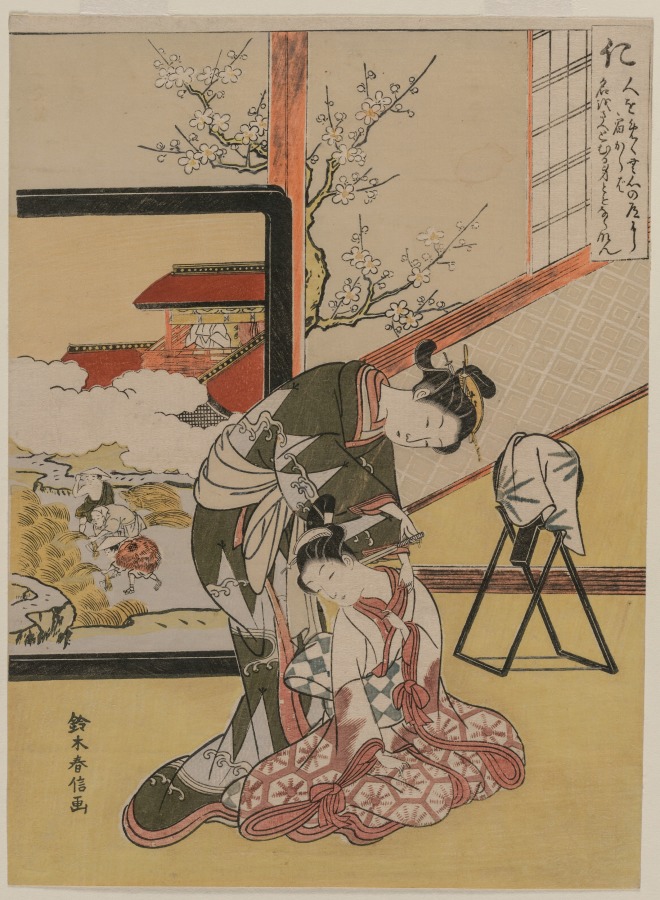
Courtesan Hatsuito of a brothel named Yamashiroya is likened to autumnal bush clover in this series comparing the qualities of courtesans to flowers. Hatsuito ties her servant’s obi sash while a gibbon emerges from a painting in the room’s viewing alcove to offer a love letter on which Hatsuito’s name appears. Gibbons reaching in vain for the moon’s reflection in water is a common metaphor for the deluded mind, and bush clover in moonlight is a popular seasonal motif. Here, the ideas are combined as the gibbon woos this unattainable beauty.
Be the first to share your thoughts.
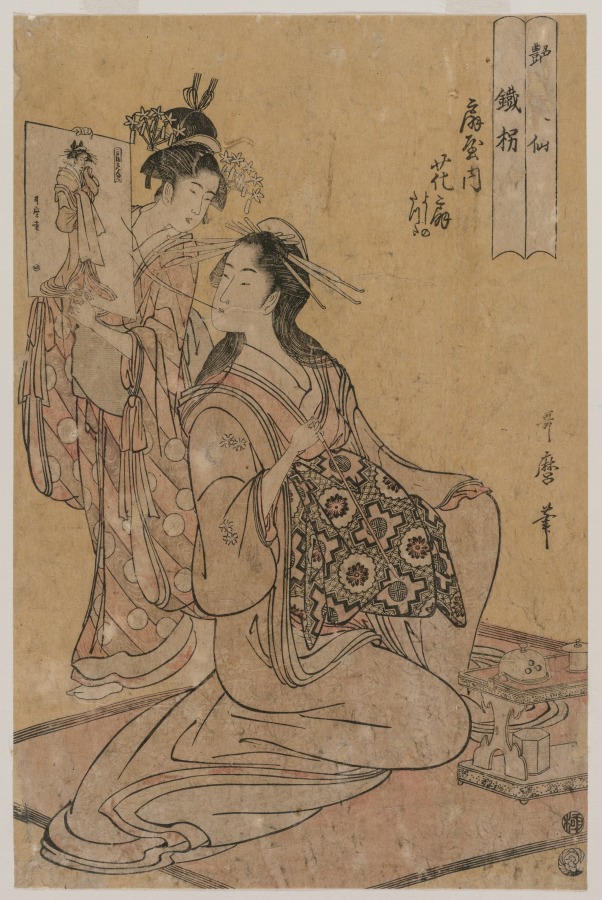 Kitagawa Utamaro (Japanese, c. 1754–1806) — The Courtesan Ha
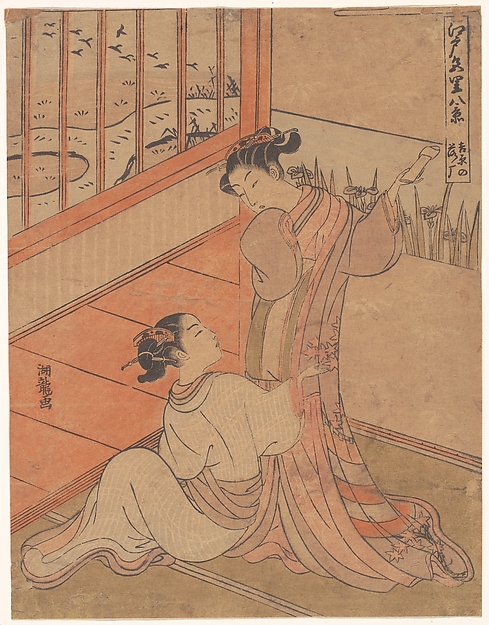 Isoda Koryūsai
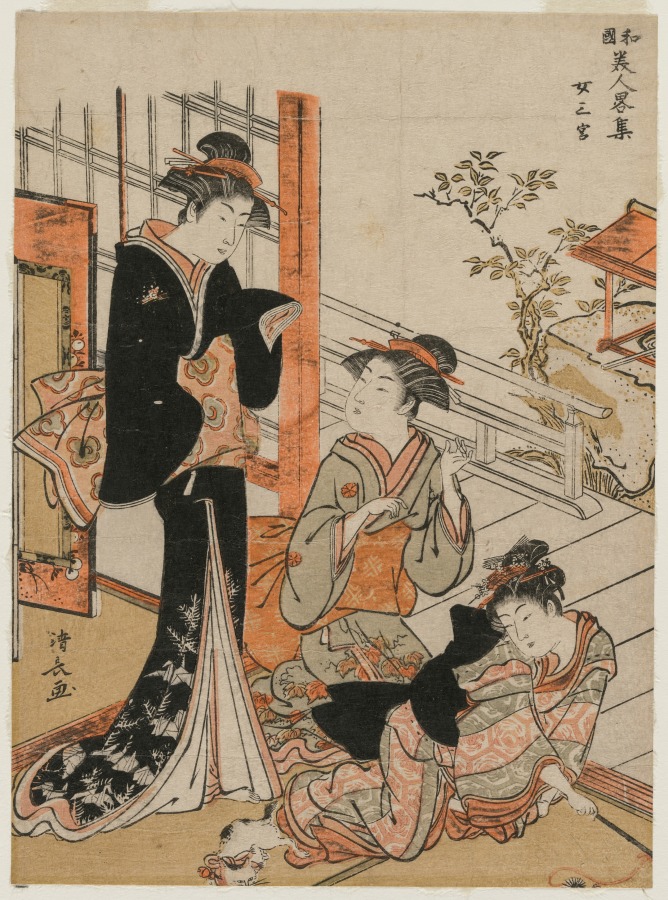 Torii Kiyonaga (Japanese, 1752–1815) — Three Women (from the
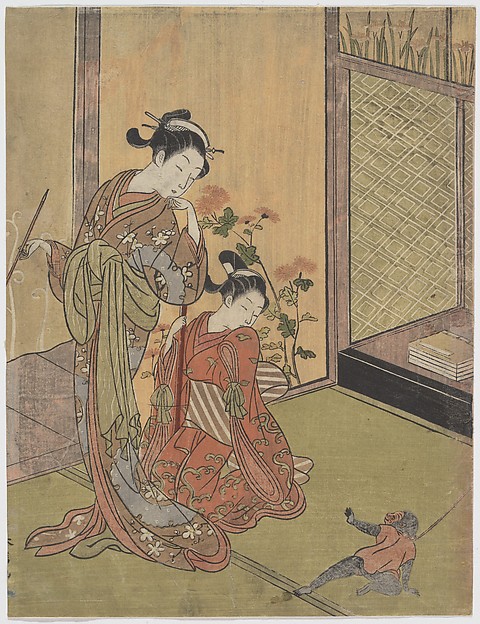 Suzuki Harunobu
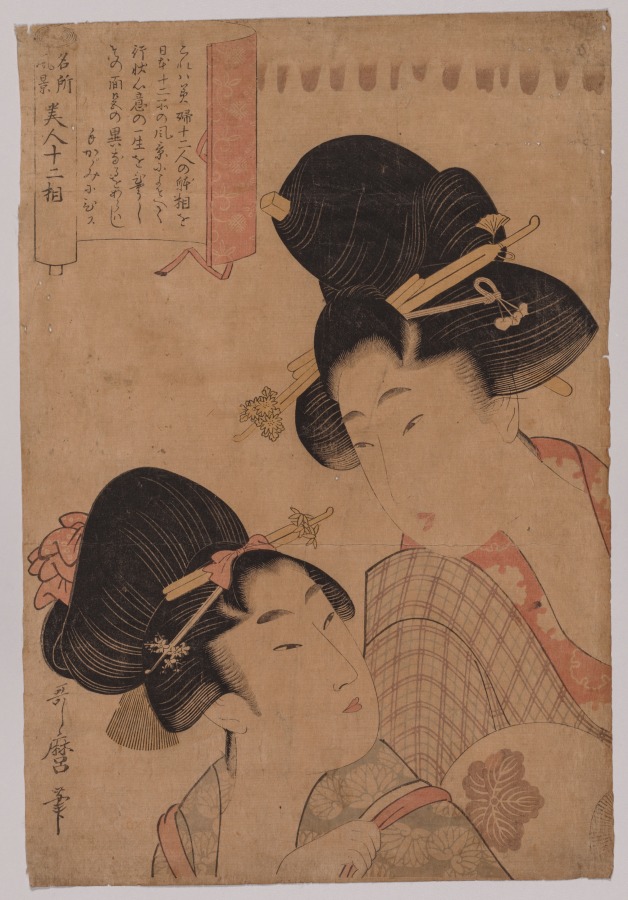 Kitagawa Utamaro (Japanese, c. 1754–1806) — Two Courtesans
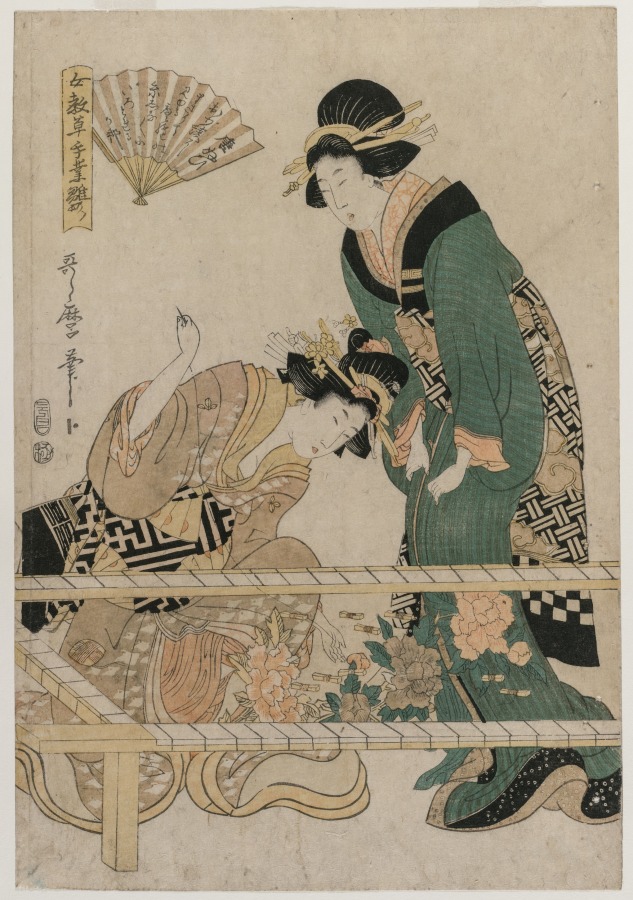 Kitagawa Utamaro II (Japanese, d. 1831?) — Chinese Embroider
 Suzuki Harunobu
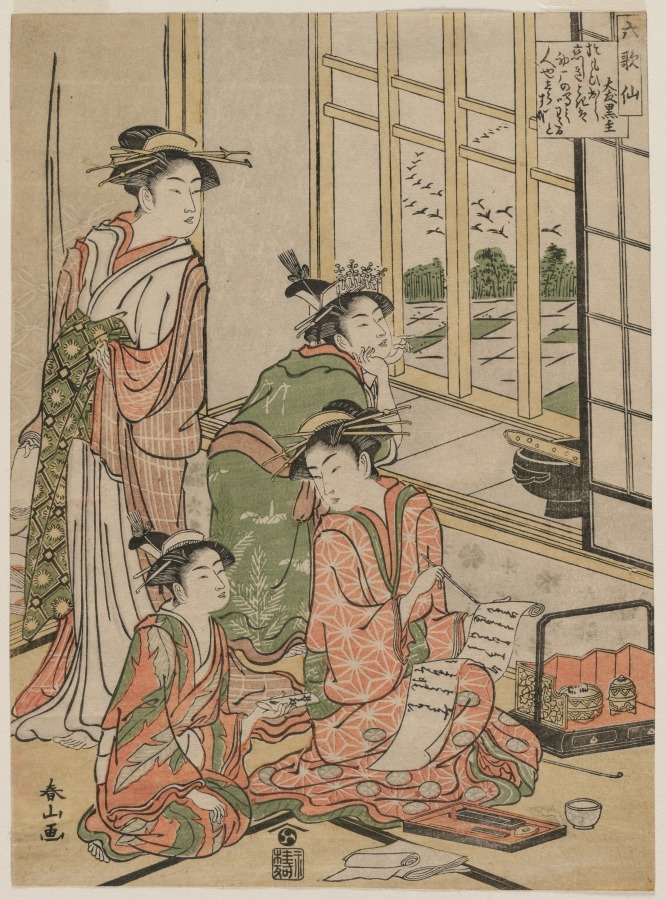 Katsukawa Shunzan (Japanese, active c. 1782–98) — Courtesans
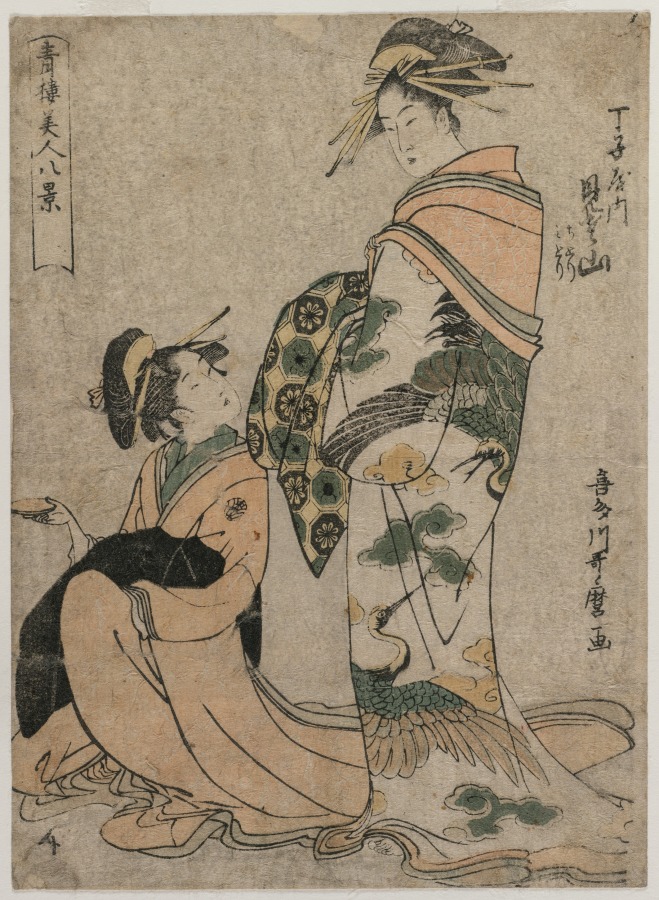 Kitagawa Utamaro (Japanese, c. 1754–1806) — The Courtesan Mi
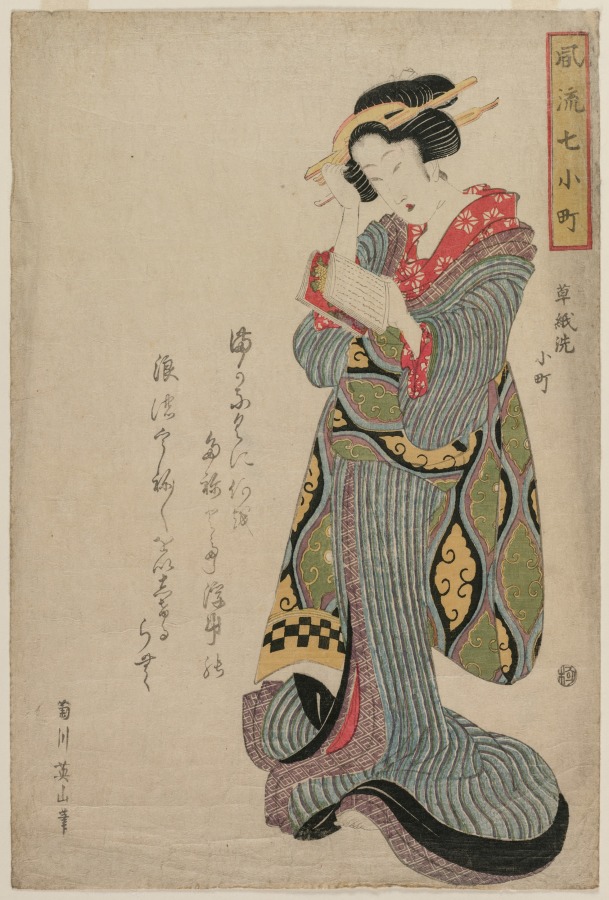 Kikukawa Eizan (Japanese, 1787–1867) — Komachi Washes the Bo
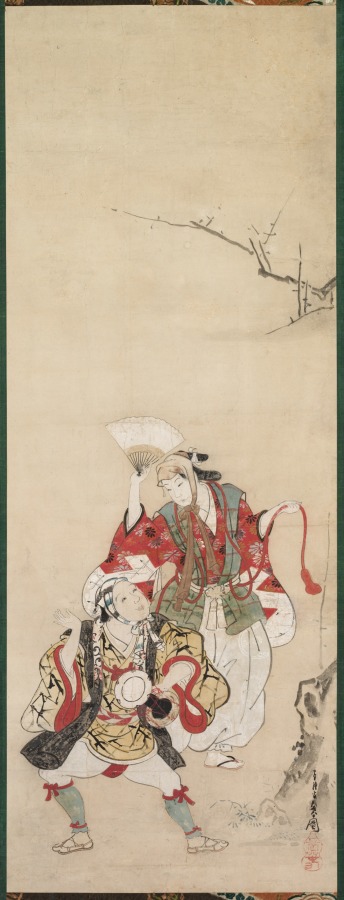 Miyagawa Chōshun (Japanese, 1683–1753) — Spring Dancers (Man
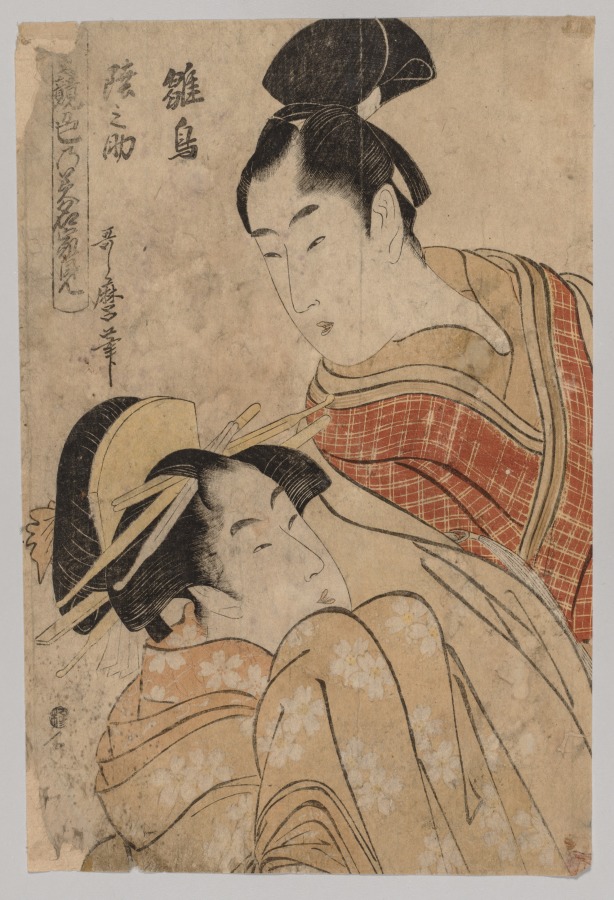 Kitagawa Utamaro (Japanese, c. 1754–1806) — Making Love