Still Life with Game Fowl
SEE IT IN PERSON
● On view now — Gallery 211
Art Institute of Chicago, Chicago · verified July 2026
Discussion
FROM THE ART INSTITUTE OF CHICAGO’S CATALOG
Still Life with Game Fowl is the Art Institute’s earliest European still-life painting. Still life emerged as an independent genre in European art in the sixteenth century, when artists began to specialize in such categories as landscape, portraiture, and scenes of everyday life. Some, like Juan Sánchez Cotán, became interested in displaying their skill at depicting inanimate objects, in part as an expression of the order and variety of the natural world. The painter’s focus changed in 1603, however, when he left a successful, two-decade artistic career in the Spanish city of Toledo to become a lay brother of the Carthusian order at the Charterhouse of Granada. Accordingly, he changed his focus from still lifes to religious images. This painting was executed just before Sánchez Cotán left Toledo. It follows the conventional format of his still lifes: precisely rendered forms displayed in a shallow niche. In some works, he depicted few objects; in others, such as this example, he filled the space with them. The artist rigorously organized the composition so that the complex symmetry of the objects echoes the elegant geometry of the spherical quince, cabbage, and melon and the conical
Be the first to share your thoughts.
Sign in to join the discussion.
More like this
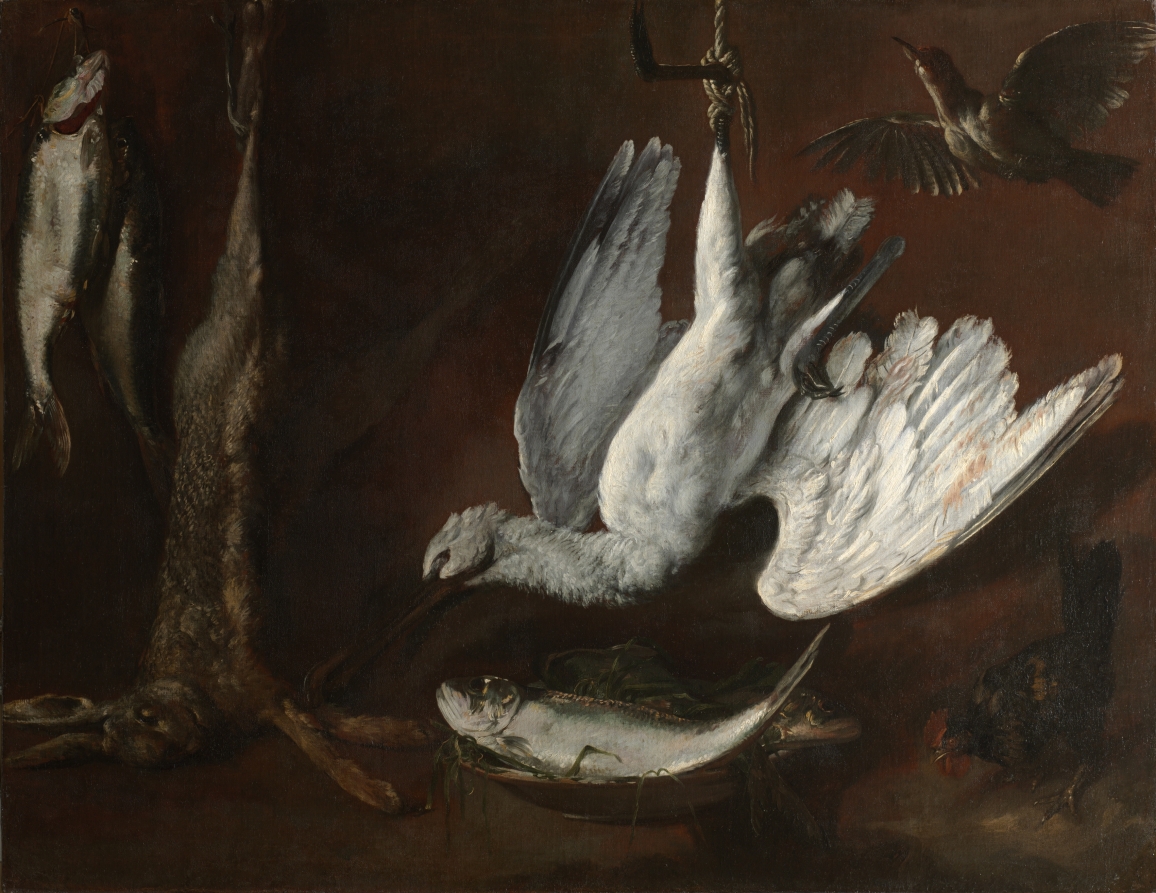 Hare, Spoonbill, and Fish
 Alexander Adriaenssen — Still Life with Wild Fowl
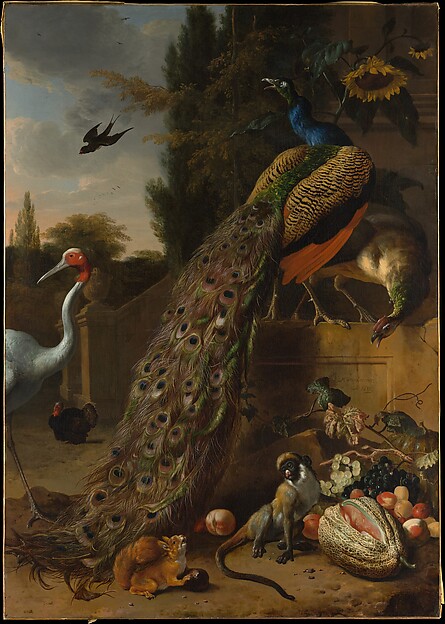 Melchior d' Hondecoeter — Peacocks
 Christoffel Puytlinck — Still life with meat and dead birds
 Giovanni Battista Recco — Still Life with Chickens and Eggs
 Michiel Simons (II) — Still Life with Fruit
 Adriaen van Utrecht — Banquet Still Life
 Frans Snijders — Still Life with Dead Game, Fruit and Vegeta
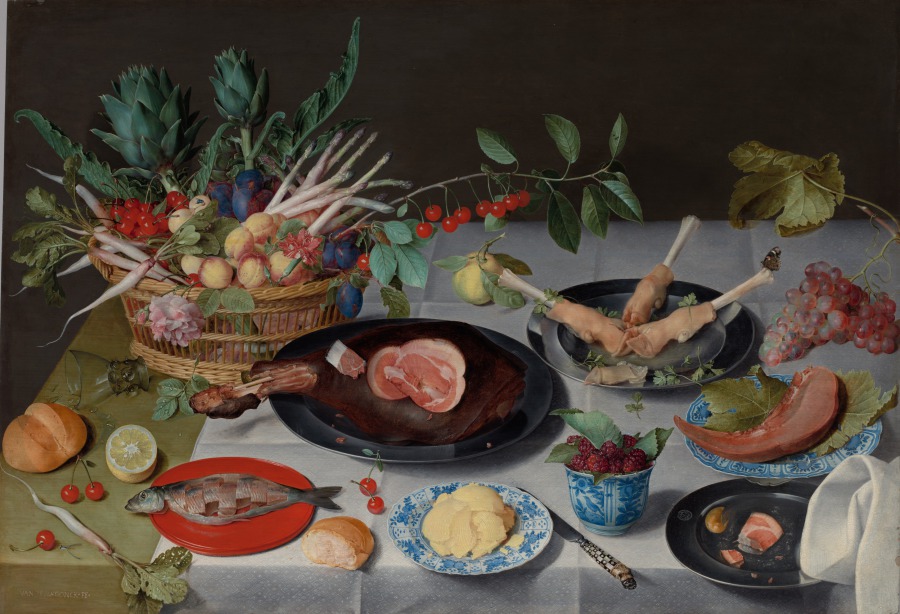 Jacob van Hulsdonck (Flemish, 1582–1647) — Still Life with M
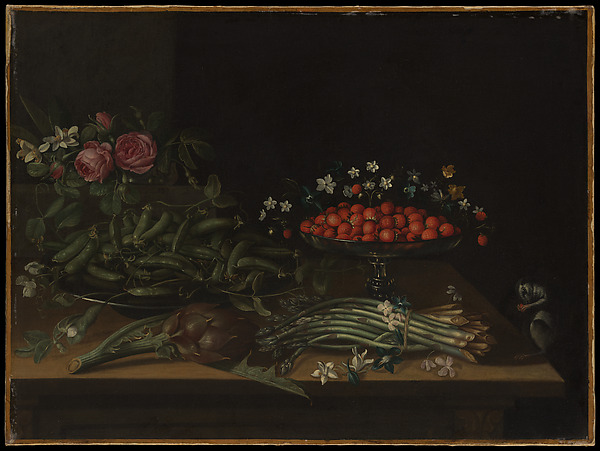 French Painter — Still Life with Strawberries
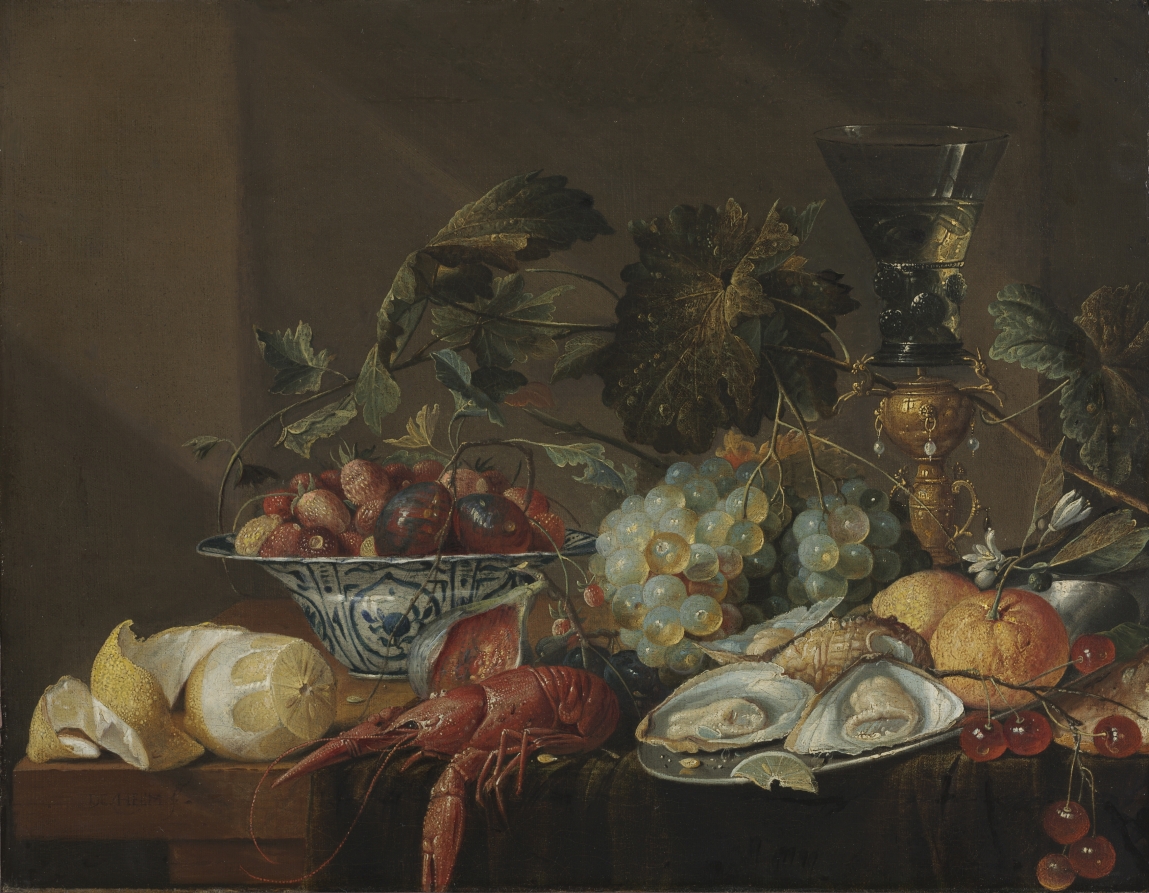 Cornelis de Heem (Flemish, 1631–1695) — Still-Life with Cray
 Willem van Aelst — Still Life with Fowl