FROM THE CLEVELAND MUSEUM OF ART’S CATALOG
Prints helped disseminate design ideas and establish a taste for decorative objects and styles, especially when endorsed with royal insignia. Adapted from Greek architecture, two caryatids—draped female figures used as pillars—hold aloft an ornamental incense burner designed by Raphael about 1515–20 for King François I (reigned 1515–1547). The lily-shaped fleurs-de-lis on its lid allude to the French monarchy. The salamanders adorning the side of the vessel specifically refer to François I, who chose this amphibian as his personal emblem. According to legend, salamanders could survive fire, making them even more meaningful on a burner.
Source ↗︎
Be the first to share your thoughts.
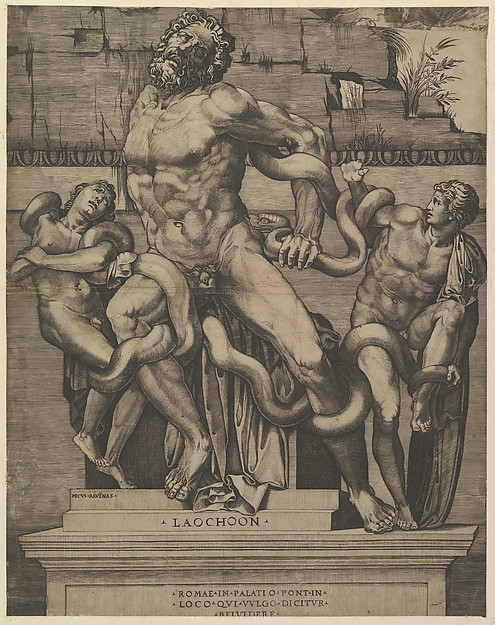 Speculum Romanae Magnificentiae: Laocoon
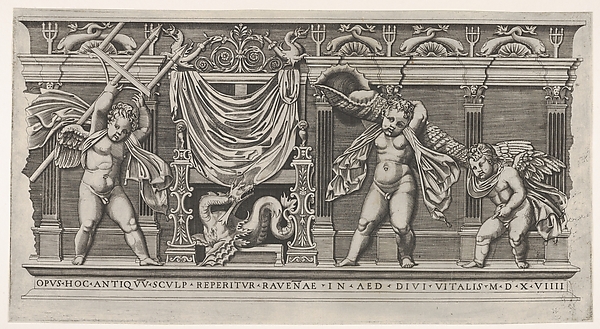 Le Bas Relief aux Trois Amours (The Throne of Neptune)
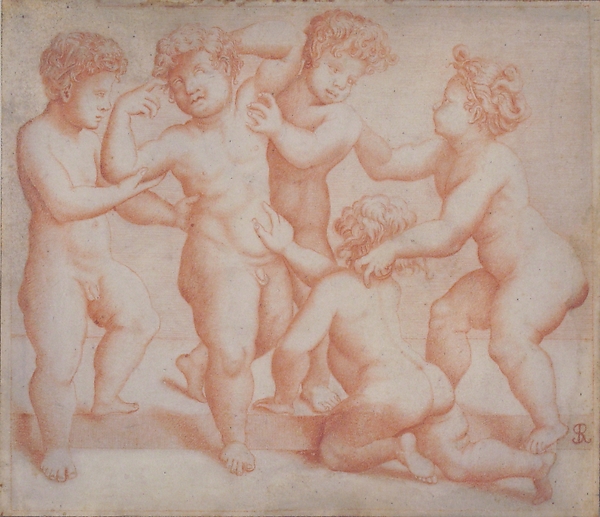 Frieze of Five Putti
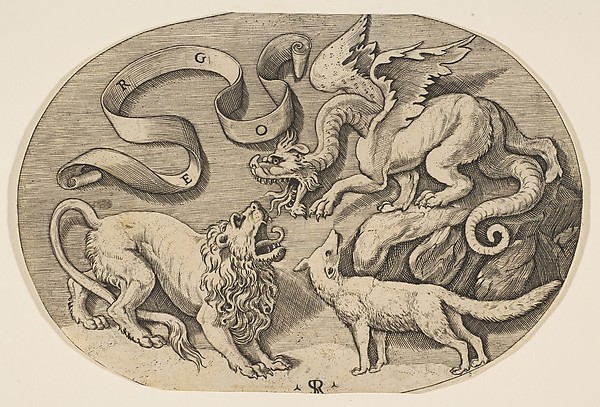 A lion, dragon and fox fighting each other, an inscribed ban
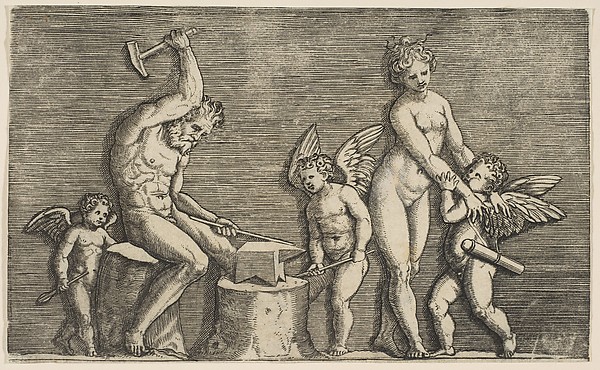 Vulcan seated hammering on an anvil flanked by Venus and thr
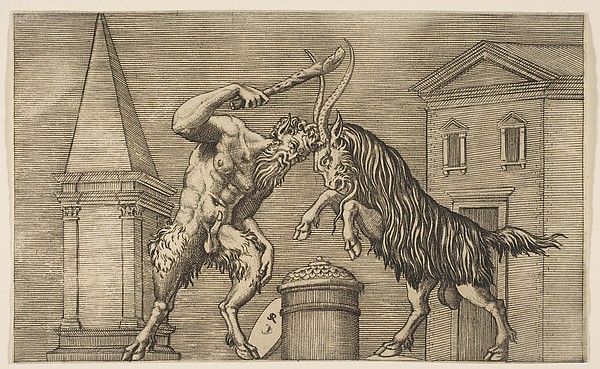 A satyr and a ram attacking each other, the satyr weilding a
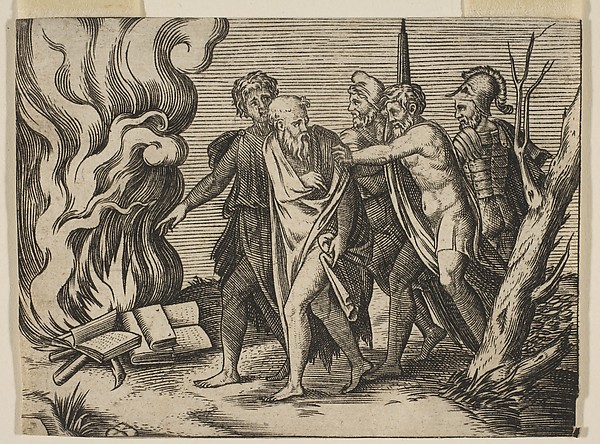 A group of men at right pushing philosophers toward a fire w
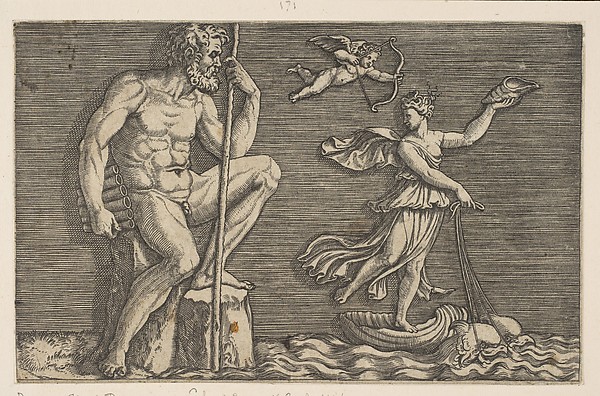 Galatea escaping Polyphemus; he is seated on a rock holding