FROM THE CLEVELAND MUSEUM OF ART’S CATALOG
The 15th-century poet Matsuo Basho is still considered Japan’s greatest master of the haiku poem, a short, 17-syllable verse form that relates some aspect of nature to the human experience. Although he was one of the most celebrated men of his day, he pursued a simple life of self-imposed poverty and solitude. In this portrait, Ichijun alluded to Matsuo’s haiku about the transient life: warau beshi naku beshi, waga asagao no, shibomu toki (to smile or to cry when my face in the morning [glory] is wilted).
Source ↗︎
Be the first to share your thoughts.
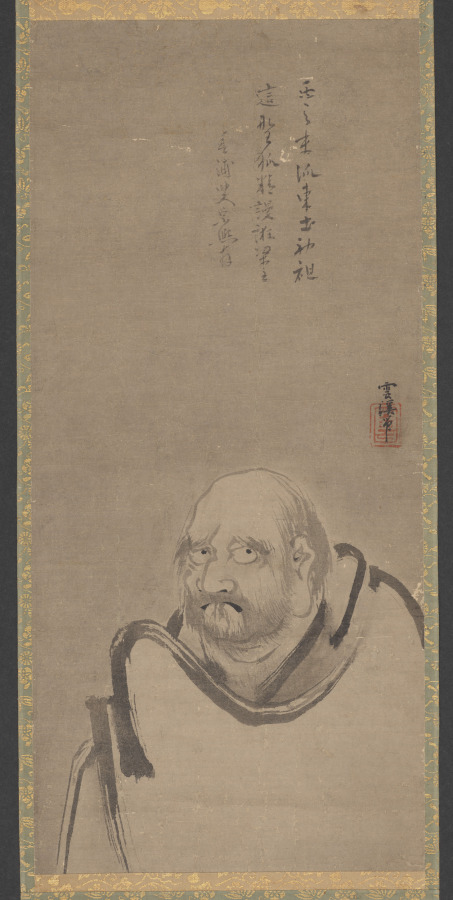 Unkei Eii (Japanese, active 1504–1520) — Bodhidharma
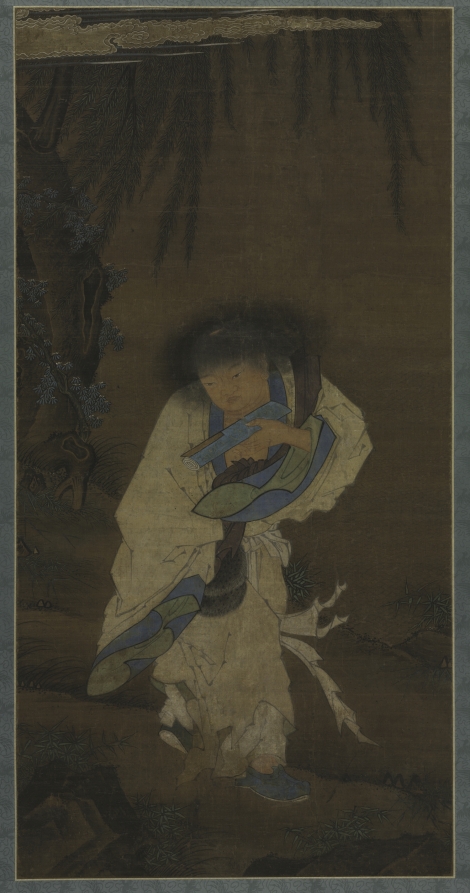 Poet and Recluse Hanshan
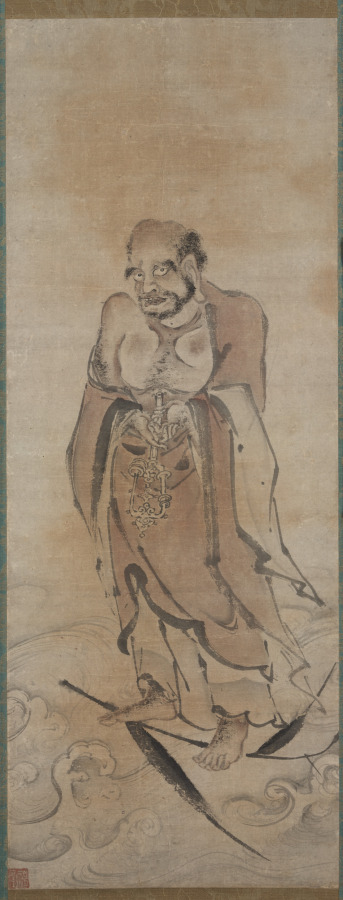 Shingo (Japanese) — Bodhidharma on a Reed
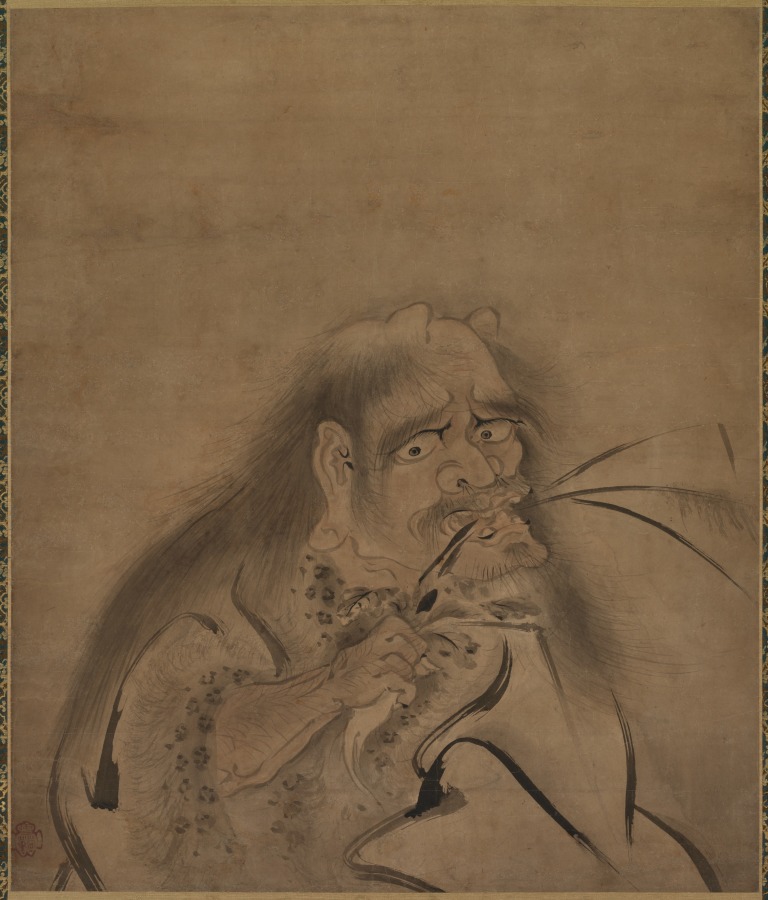 Shōryō (Japanese) — Shennong (Shinnō)
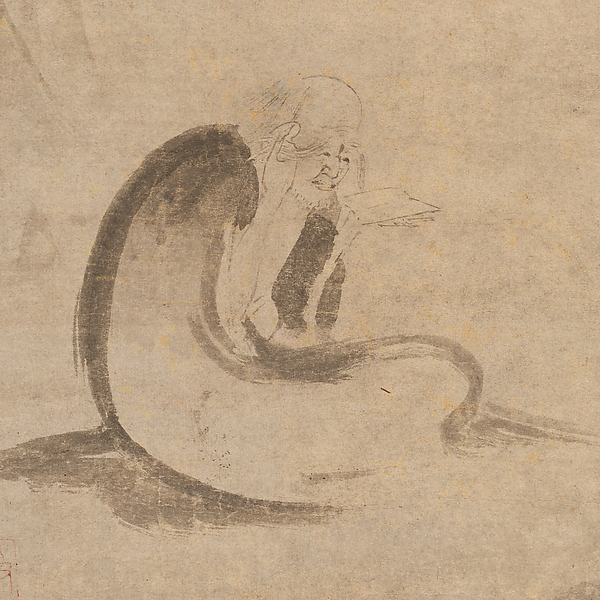 Unidentified artist — 元 佚名 玉谿思珉題贊 對月圖 軸|Reading a Sut
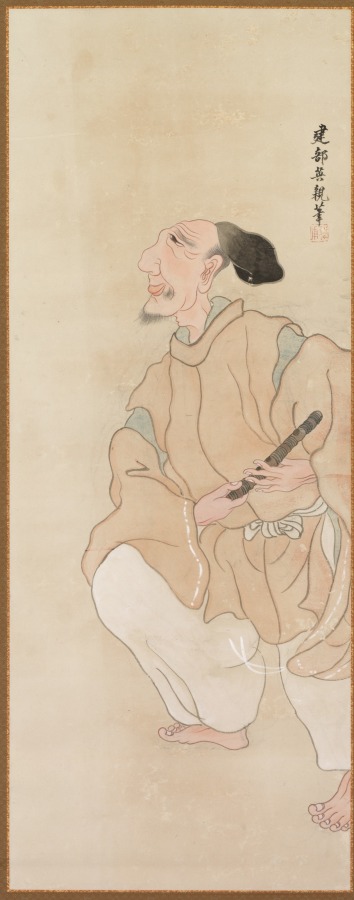 Takebe Sōchō (Japanese, 1760–1814) — Genre Figures
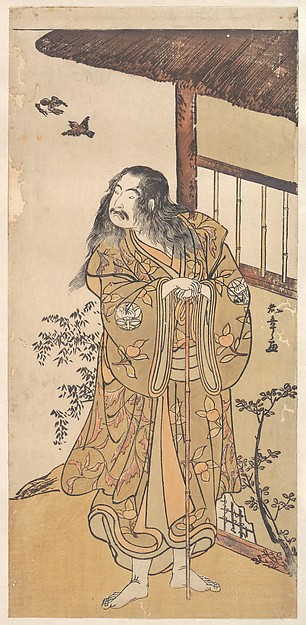 Katsukawa Shunshō 勝川春章
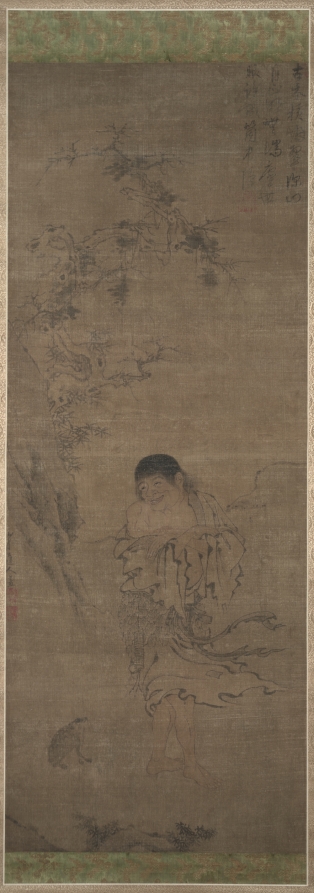 Liu Haichan
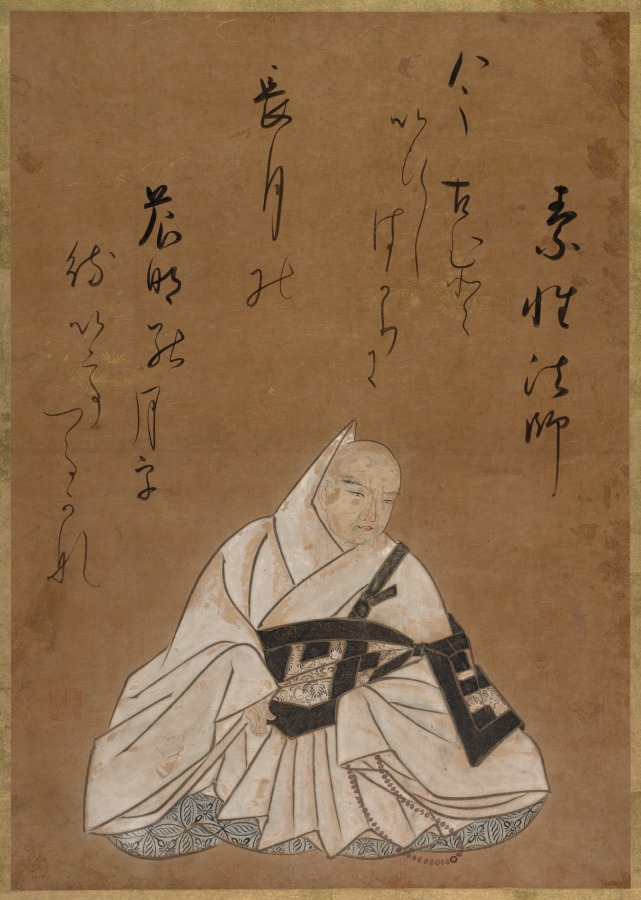 Shokadō Shōjō (Japanese, 1584–1639) — The Poet Sōsei
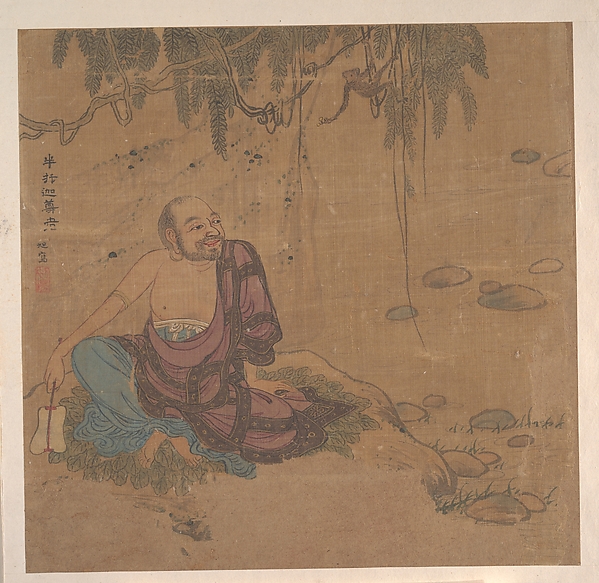 Song Xu|Unidentified artist — 明 宋旭 羅漢圖 冊|Ten Paintings
 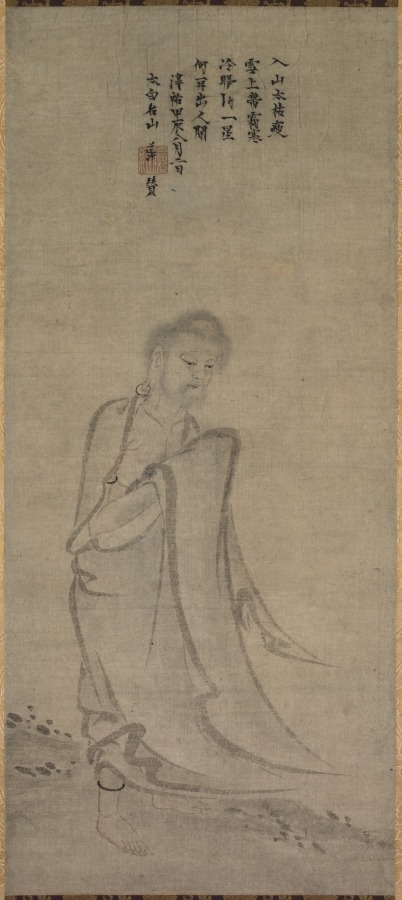 Shakyamuni Emerging from the Mountains
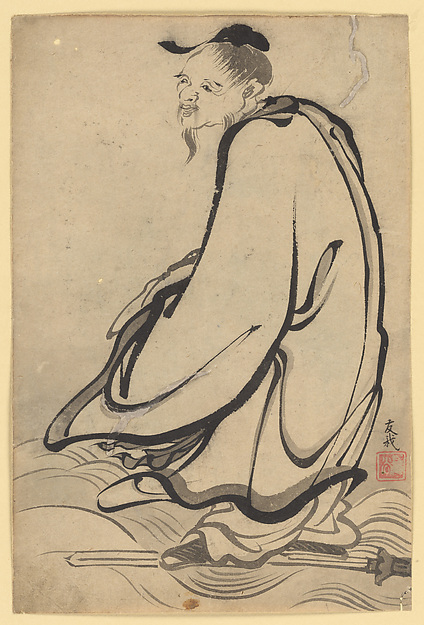 Katsushika Hokusai