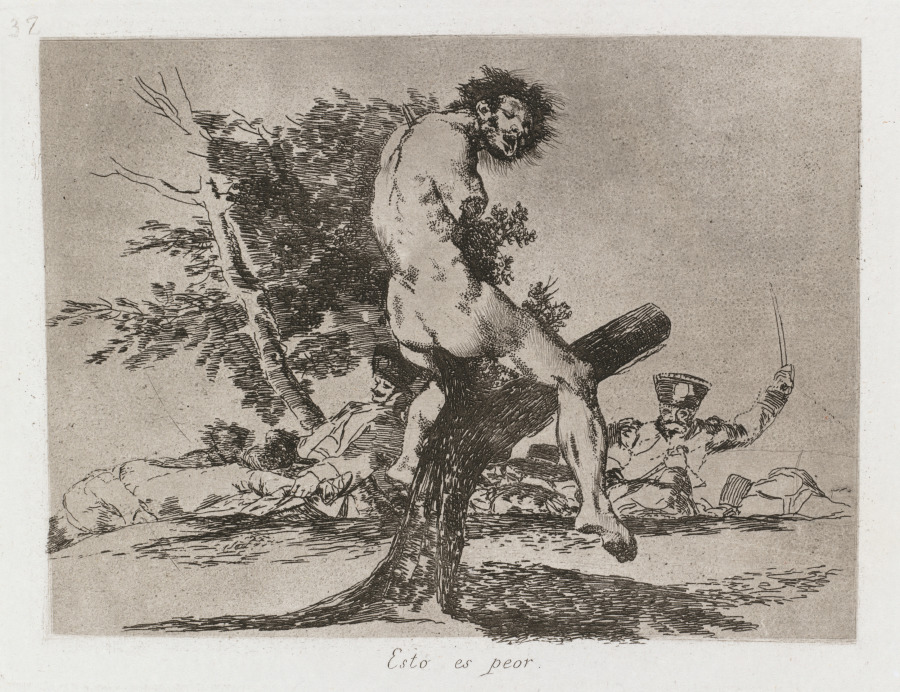
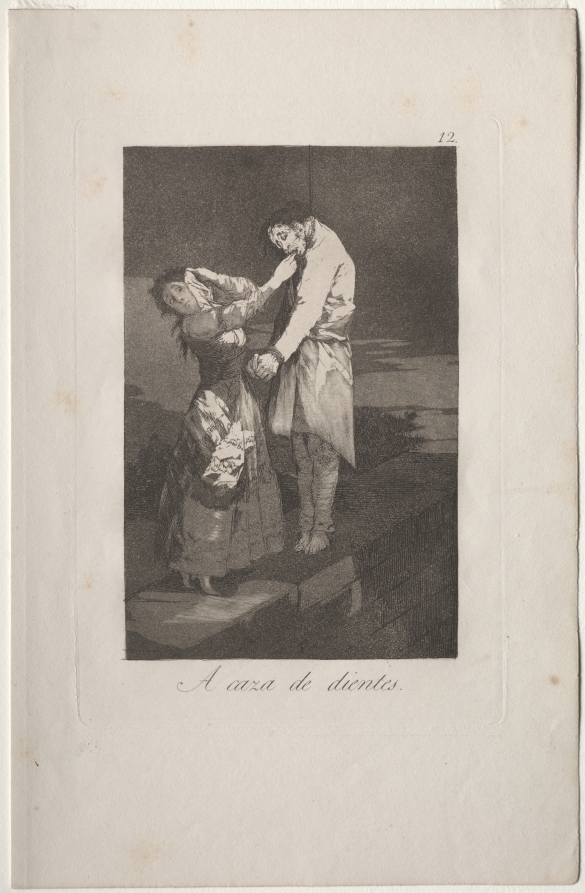
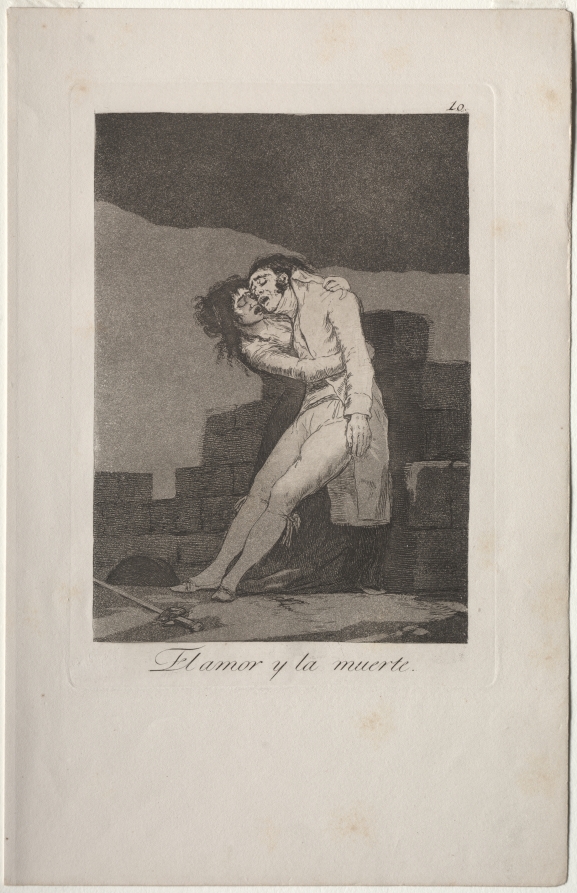
In the collection of Cleveland Museum of Art, Cleveland — check current display status with the museum.
FROM THE CLEVELAND MUSEUM OF ART’S CATALOG
The Proverbs are a group of 22 prints that are among the most powerful, original, and enigmatic of Goya's etchings. Although many of the scenes can be identified with proverbs, it is hard to judge the political, religious, or social connotations of these works. Many of the prints represent carnival themes, which Goya may have used as an allegory to express ideas concerning the state of Spain and his personal life.
Be the first to share your thoughts.
Sign in to join the discussion.
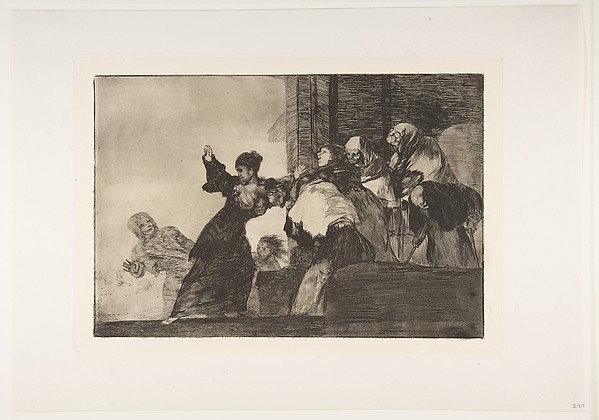 Goya (Francisco de Goya y Lucientes) — 'Poor Folly' from the
 Goya (Francisco de Goya y Lucientes) — 'Well-Known Folly' fr
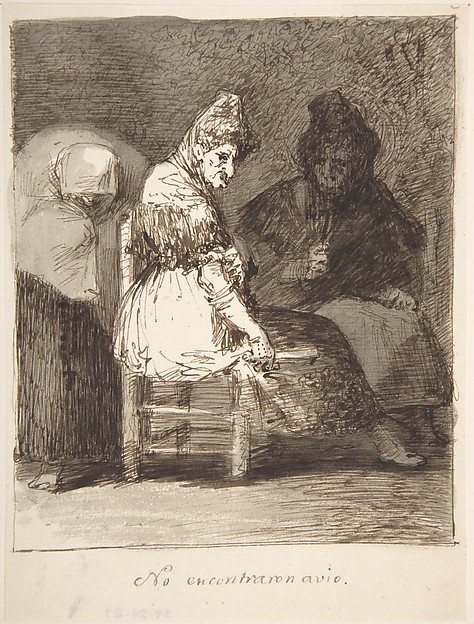 Leonardo Alenza y Nieto — There Was No Business ("No encontr
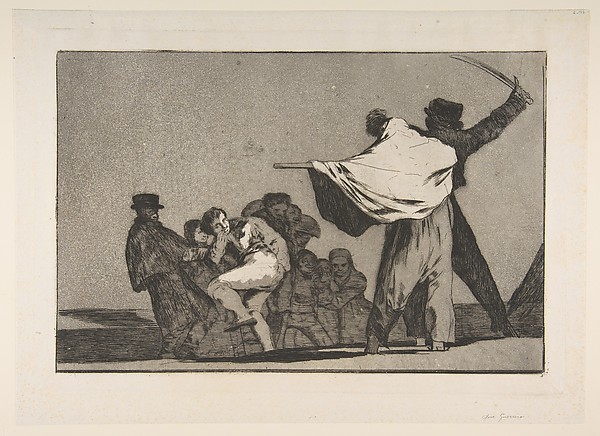 Goya (Francisco de Goya y Lucientes) — 'Well-Known Folly' fr
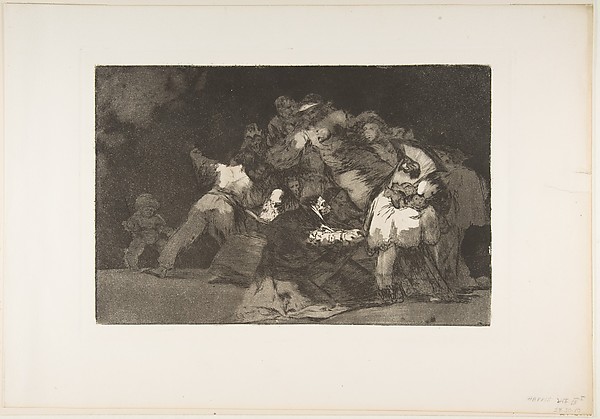 Goya (Francisco de Goya y Lucientes) — 'General Folly' from
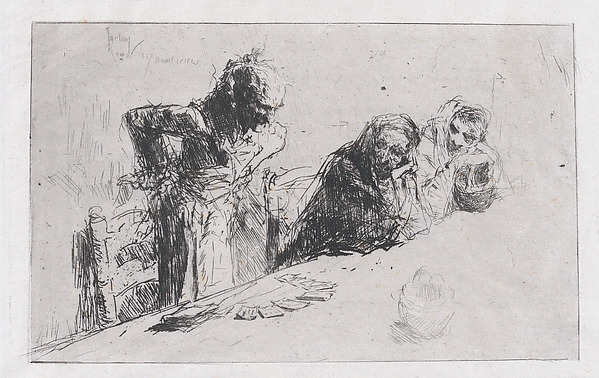 Mariano Fortuny Marsal — Cardplayers: three men, two seated
 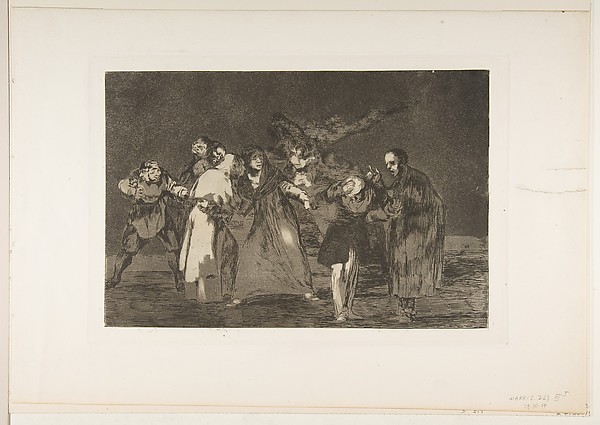 Goya (Francisco de Goya y Lucientes) — 'The Exhortations' fr
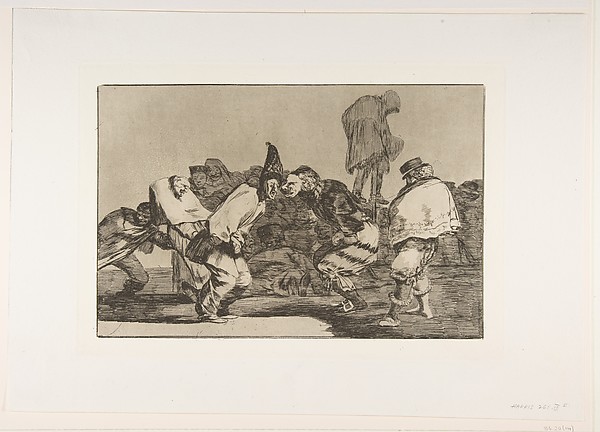 Goya (Francisco de Goya y Lucientes) — 'Carnival Folly' from
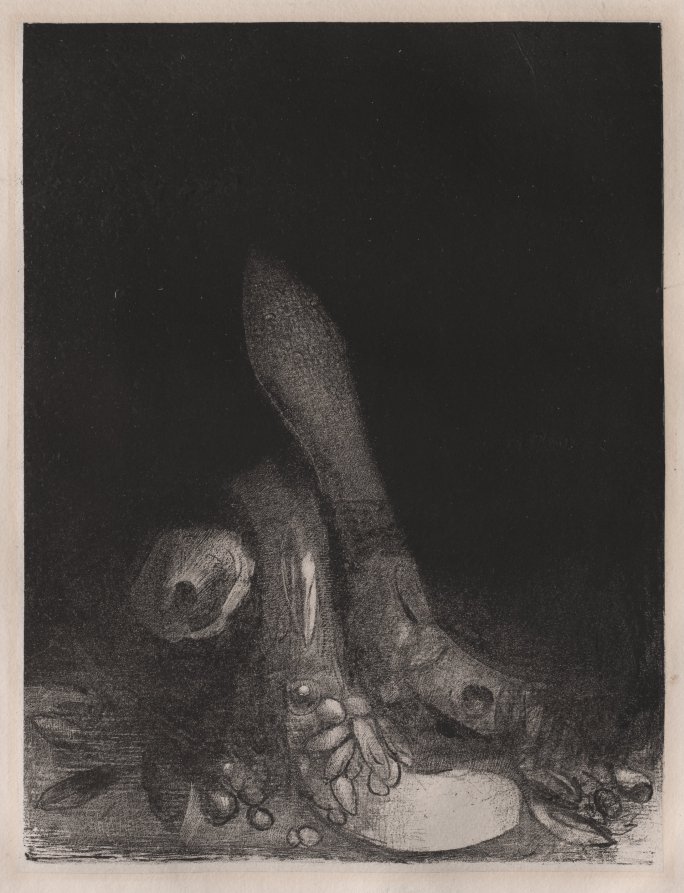 Odilon Redon (French, 1840–1916) — Flowers Fall and the Head
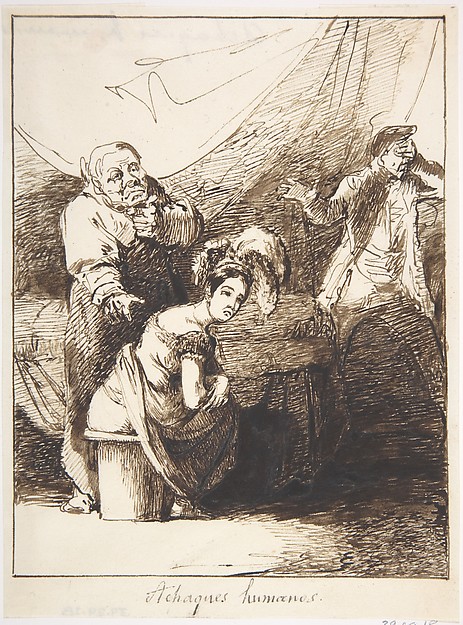 Leonardo Alenza y Nieto — Human Ailments ("Achaques humanos"
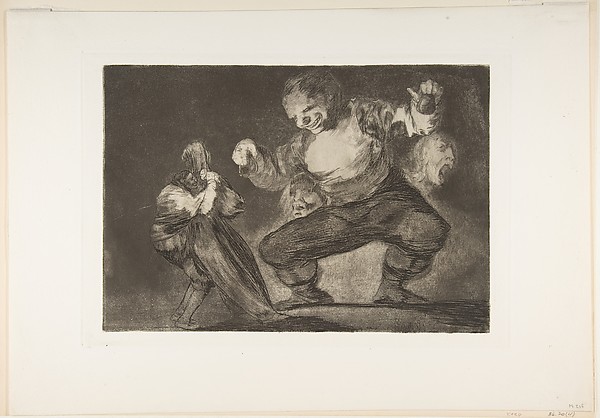 Goya (Francisco de Goya y Lucientes) — 'Dancing Giant' from
 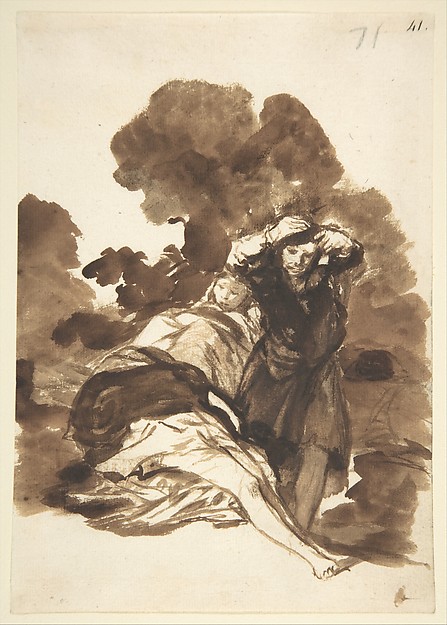 Goya (Francisco de Goya y Lucientes) — Figures waking from s