Oak Branch
SEE IT IN PERSON
Not currently on view
In the collection of Art Institute of Chicago, Chicago · as of July 2026
Discussion
FROM THE ART INSTITUTE OF CHICAGO’S CATALOG
According to his close friend, artist Robert Delaunay, all of Rousseau’s drawings were destroyed after his death. However, as the inscription indicates, this rare drawing was a gift from the artist to a certain “Mademoiselle Herminie,” and it survived as a result. Rousseau often used flowers in his work for their symbolic meanings. He was particularly fond of daisies, which traditionally represent innocence and purity. Perhaps a more heartfelt message was intended here, as the petals of daisies are often plucked, one by one, to find out if one is loved: “she loves me, she loves me not.”
Be the first to share your thoughts.
Sign in to join the discussion.
More by Henri Rousseau
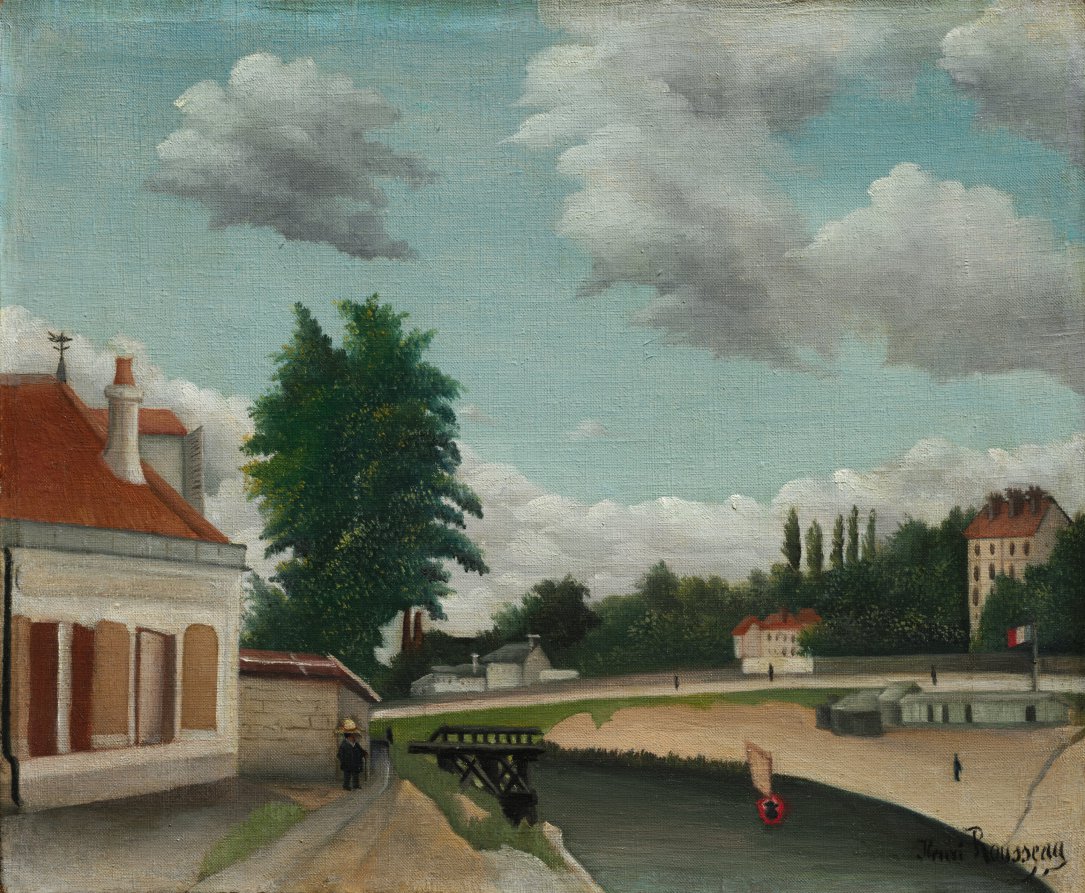 Outskirts of Paris
 View of the Quai d'Asnières (Vue du quai d'Asnières)
 View of Montsouris Park, the Kiosk (Vue du parc Montsouris,
  The Great Laundry Boat at Charenton Bridge (Le Grand Bateau-
 Landscape and Four Young Girls (Paysage et quatre jeunes fil
 Outskirts of Paris (Environs de Paris)
 Sawmill, Outskirts of Paris
 Landscape and Four Fisherman (Paysage et quatre pêcheurs à l
More like this
 Joseph Addenbrooke — Wilt Thou Be Mine Love? (valentine)
 Harry Fenn (American, 1838/45–1911) — Daffodils
 Walter Ruttmann (German, 1887–1941) — The Promenade
 John La Farge (American, 1835–1910) — Anemone
 Charles François Daubigny (French, 1817–1878) — The Orchard
 Joseph Addenbrooke — True Love's Fond Token (Valentine)
 John Edwards (British) — A Collection of Flowers Drawn from
  George Kershaw — Love True (Valentine)
 James McNeill Whistler — Three Butterflies
 Unknown Artist
English, 19th century — Untitled Valentine (P
Unknown Artist
English, 19th century — Untitled Valentine (P George Kershaw — Valentine envelope
 Unknown artist — Spray of Flowers