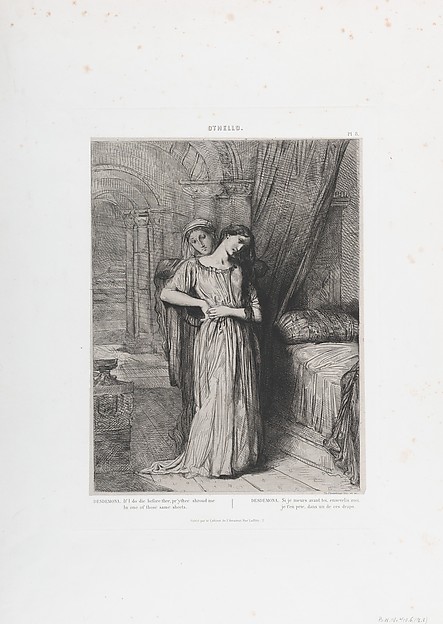
The Willow Song, plate nine from Othello
SEE IT IN PERSON
Not currently on view
In the collection of Art Institute of Chicago, Chicago · as of July 2026
Discussion
FROM THE ART INSTITUTE OF CHICAGO’S CATALOG
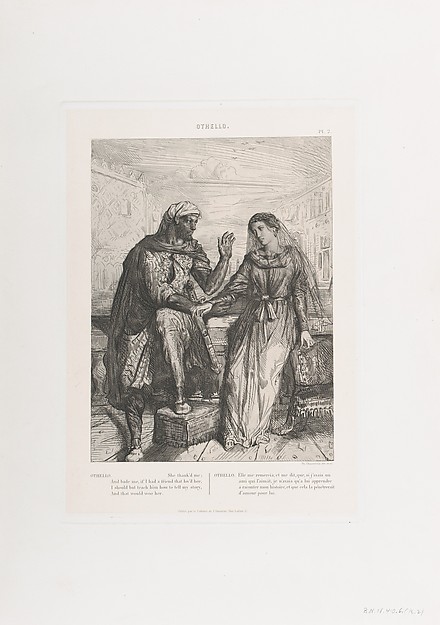
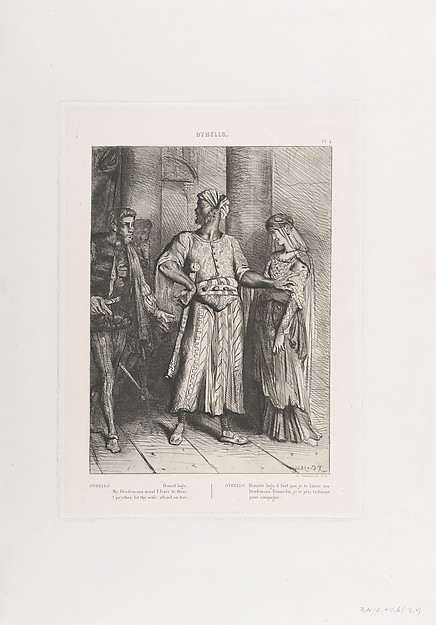
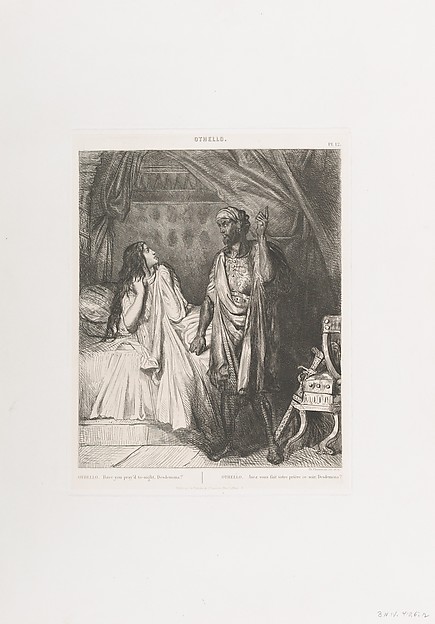
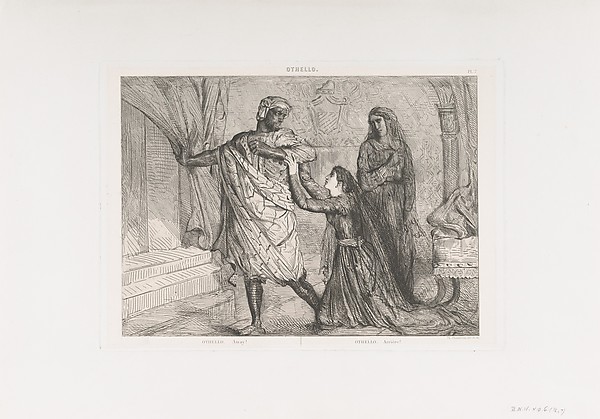
Shakespeare’s tragic tale of the Moorish general Othello, his bride, Desdemona, and the scheming Iago explores the timeless themes of racism, love, jealously, and betrayal. The play had gained considerable popularity in France by 1844. Though little is known of the specifics of this particular commission, it was a project that captivated Théodore Chassériau for years. These two prints, from Chassériau’s series of 15 plates, illustrate the emotional crescendo of Desdemona and Othello’s relationship. Plate 9 tenderly represents Desdemona’s despair when she sings the Willow Song. Her words—“Let nobody blame him; his scorn I approve”—are prophetic. Later, convinced of her infidelity, Othello smothers her with a pillow. Plate 14 shows the moment Emilia tells Othello of Desdemona’s innocence and Iago’s treachery. Chassériau’s use of gesture links the three central characters in a dramatic pyramidal composition that conveys the poignant meaning of the scene.
Be the first to share your thoughts.
Sign in to join the discussion.
More by Théodore Chassériau
 Comtesse de La Tour-Maubourg (Marie-Louise-Charlotte-Gabriel
 Scene in the Jewish Quarter of Constantine
 Scene from the Gallic Wars: The Gaul Littavicus, Betraying t
 Jewish Woman of Algiers Seated on the Ground
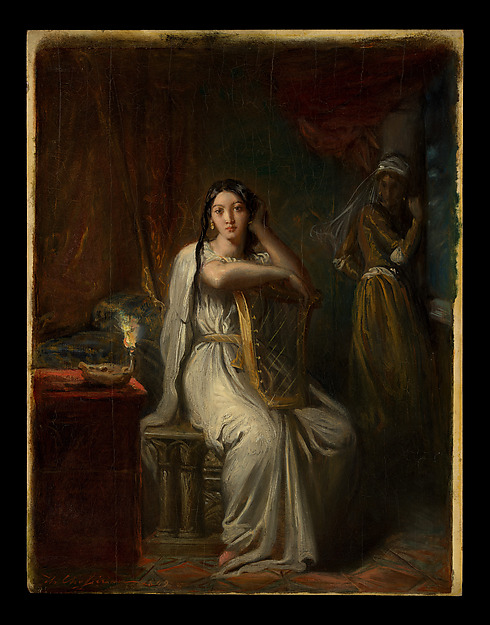 Desdemona (The Song of the Willow)
 Portrait of the Baroness Chassériau
 Count Philibert-Oscar de Ranchicourt
 Portrait of Félix Ravaisson
More like this
 Eugène Delacroix — Ophelia's Song
 Eugène Delacroix — Ophelia's Song, plate 12 from Hamlet
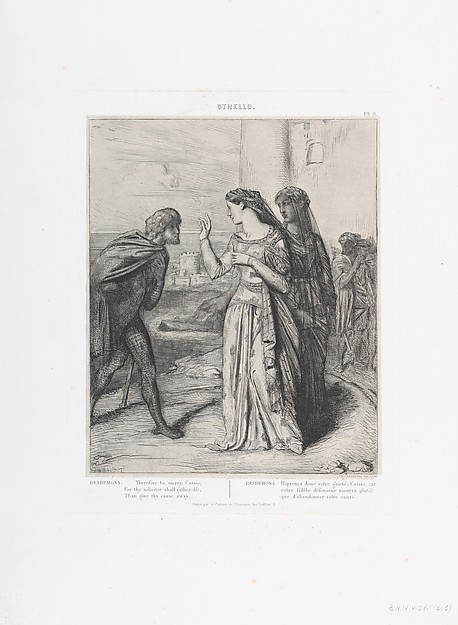 Théodore Chassériau|William Shakespeare — "Therefore, be mer
 Théodore Chassériau|William Shakespeare — "If I do die befor
 Théodore Chassériau|William Shakespeare — "She thank'd me":
  Théodore Chassériau|William Shakespeare — "Honest Iago, my D
 Auguste-Thomas-Marie Blanchard|Pilgeram & Lefèvre|Daniel Mac
 Henri Fantin-Latour — The Mastersingers of Nuremberg, Act I:
 Théodore Chassériau|William Shakespeare — "Have you pray'd t
 Théodore Chassériau|William Shakespeare — "Away!": plate 7 f