In the collection of Cleveland Museum of Art, Cleveland — check current display status with the museum.
FROM THE CLEVELAND MUSEUM OF ART’S CATALOG
The print illustrates the typical interior of a Kabuki theater. The stage was connected to the audience by the hanamichi , the ramp or runway extending from the stage to the rear of the theater over which the actors would strut in dramatic roles. Patrons often stayed all day for the plays. Unlike quiet Western audiences, Kabuki fans were spirited, buying food from vendors and even shouting praises to their favorite actors as they came onto the stage. In 1734, the first Japanese manual on perspective was printed. Masanobu was probably the first printmaker to use this method of describing three-dimensional space on a two-dimensional support. He helped popularize the perspective print, and he introduced other innovations such as two-color printing and hand-coloring—this print is hand-colored using yellow, red (tan), and red-brown.
Be the first to share your thoughts.
Sign in to join the discussion.
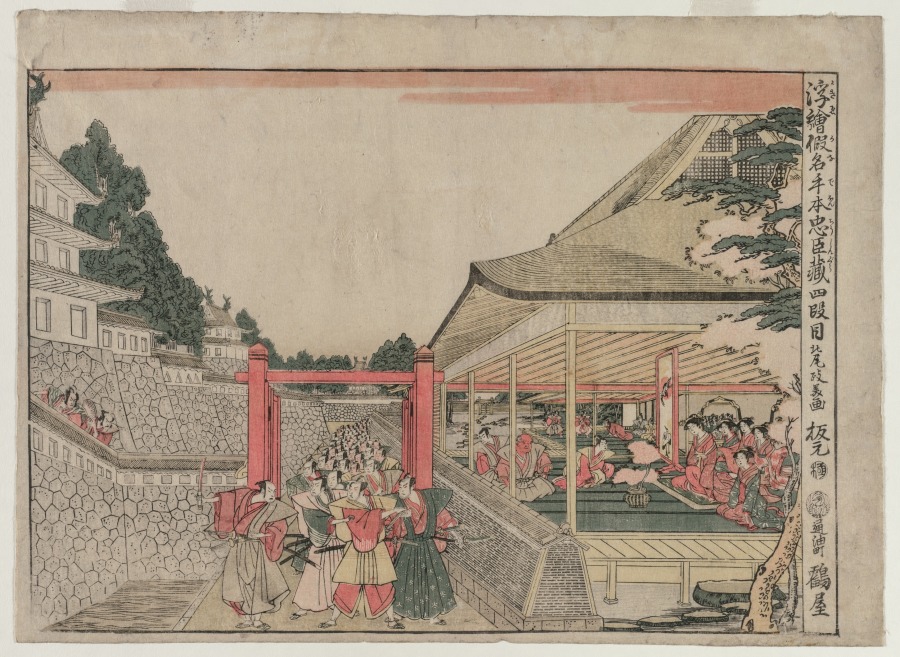 Kitao Masayoshi (Japanese, 1764–1824) — Chushingura: Act IV
 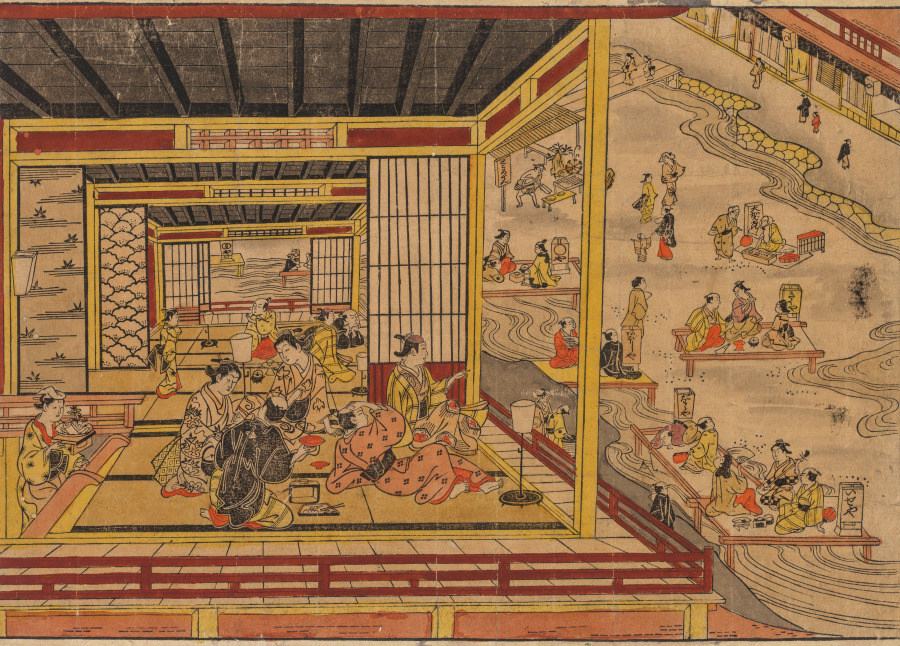 Nishimura Shigenaga (Japanese, 1697(?)-1756) — Tea House Bes
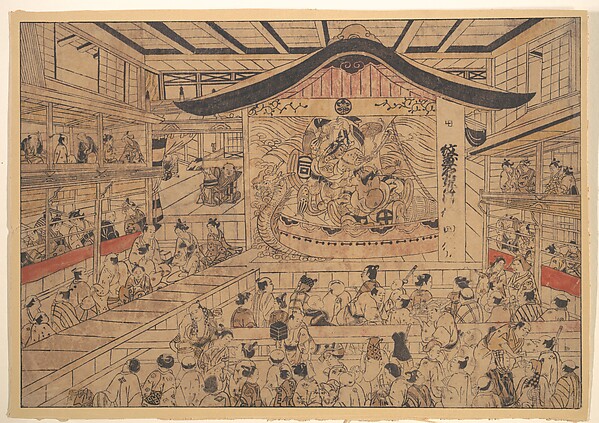 Okumura Masanobu — 浮絵 「紋尽名古屋曽我」|Perpsective View (uki-e) of
 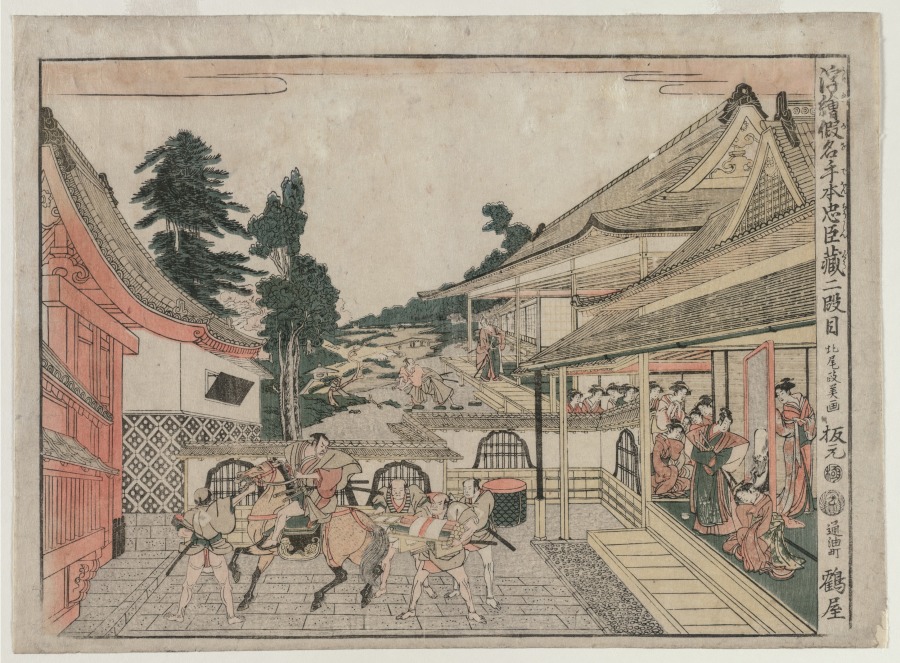 Kitao Masayoshi (Japanese, 1761–1824) — Chushingura: Act II
 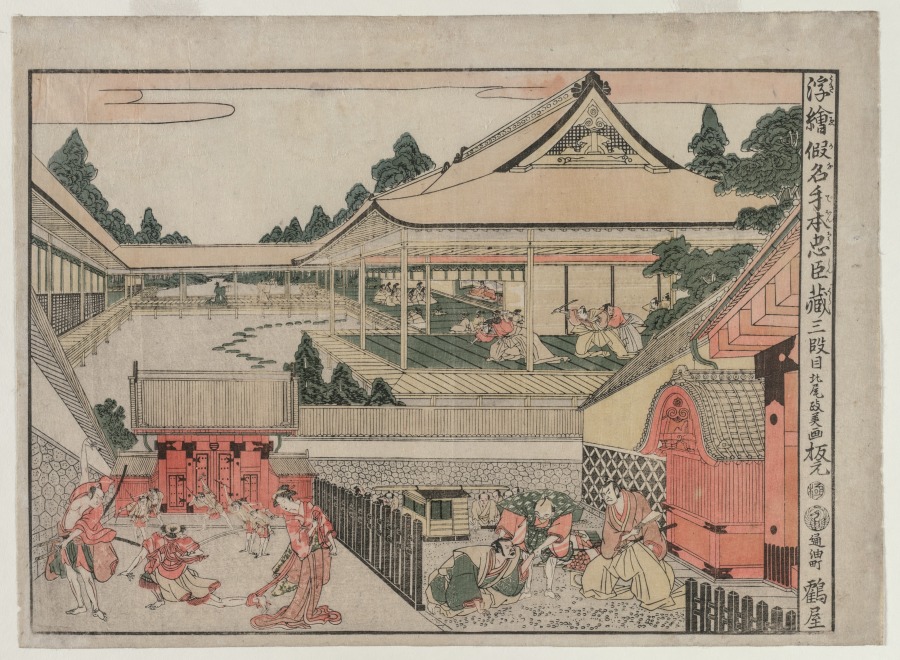 Kitao Masayoshi (Japanese, 1761–1824) — Chushingura: Act III
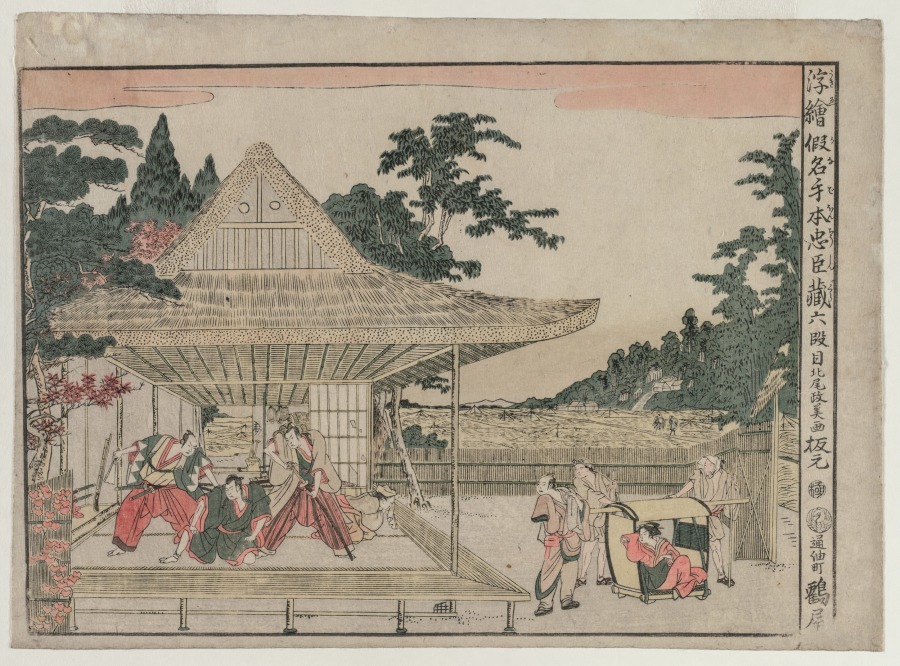 Kitao Masayoshi (Japanese, 1761–1824) — Chushingura: Act VI
 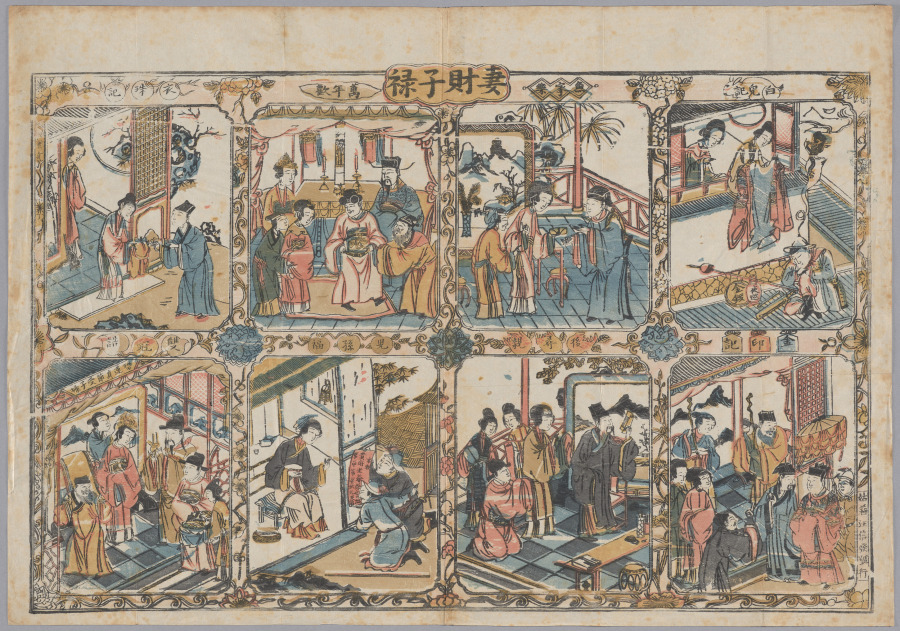 Wife, Wealth, Sons, and a Salary
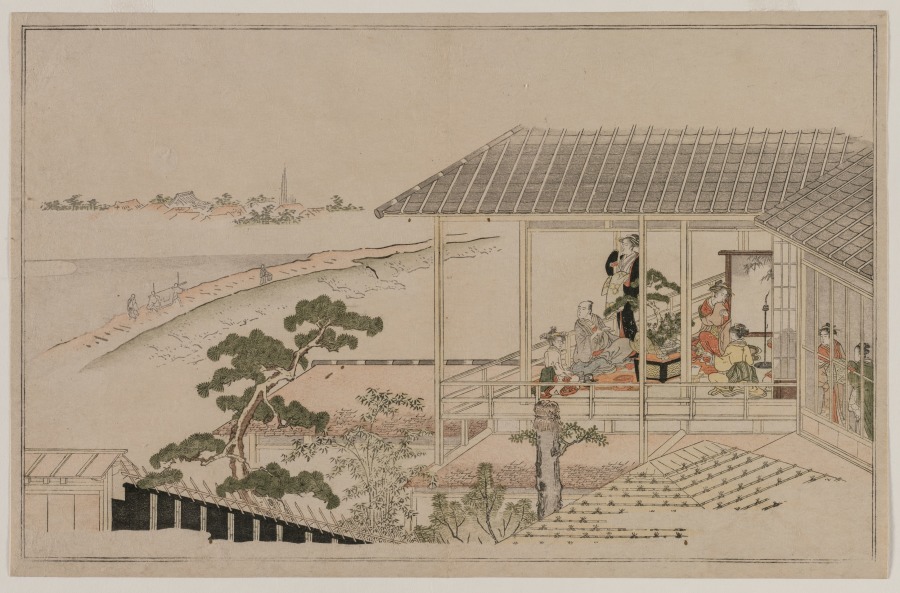 Kitagawa Utamaro (Japanese, c. 1754–1806) — Moonrise Over th
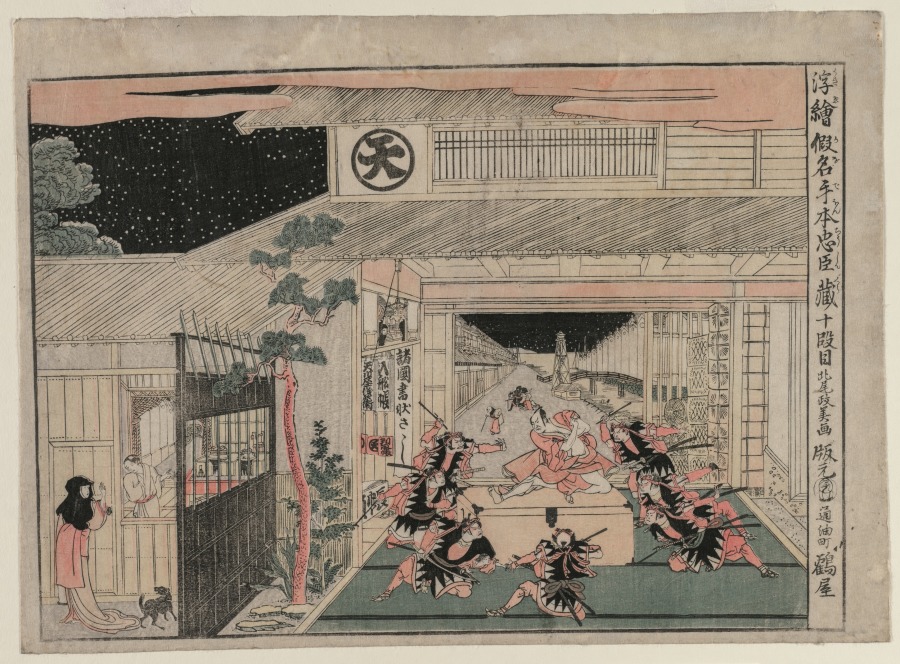 Kitao Masayoshi (Japanese, 1761–1824) — Chushingura: Act X (
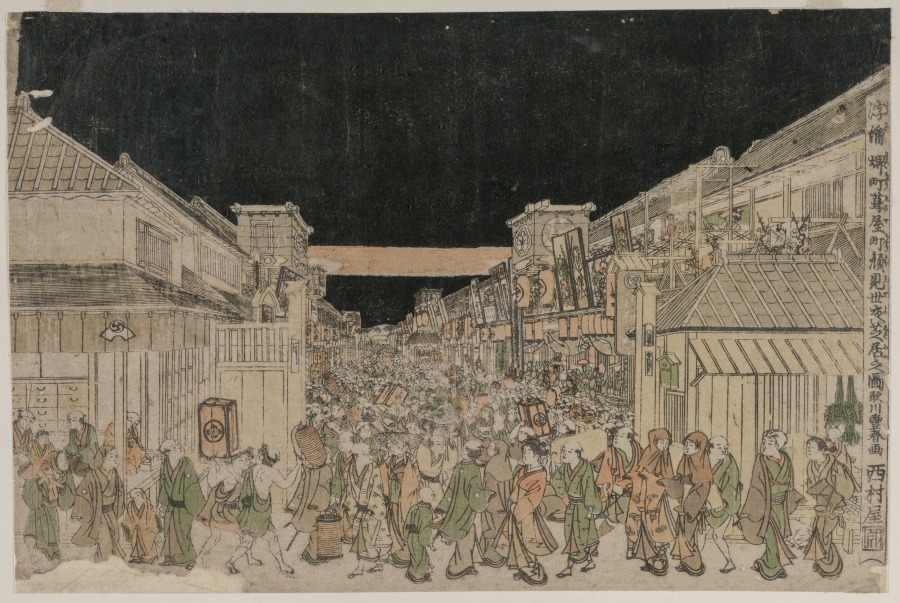 Night Scene, Street of Theatres
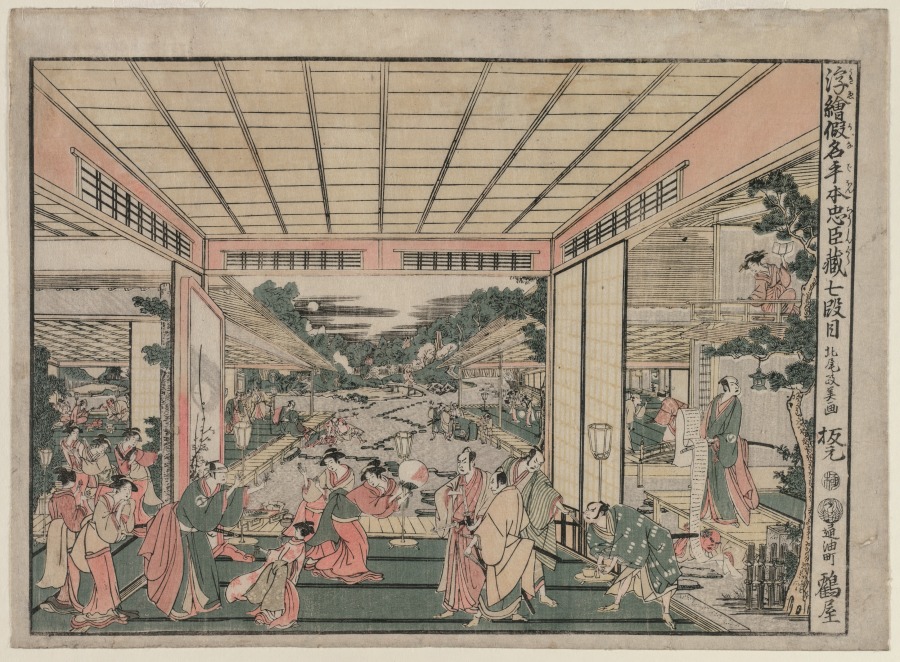 Kitao Masayoshi (Japanese, 1761–1824) — Chushingura: Act VII
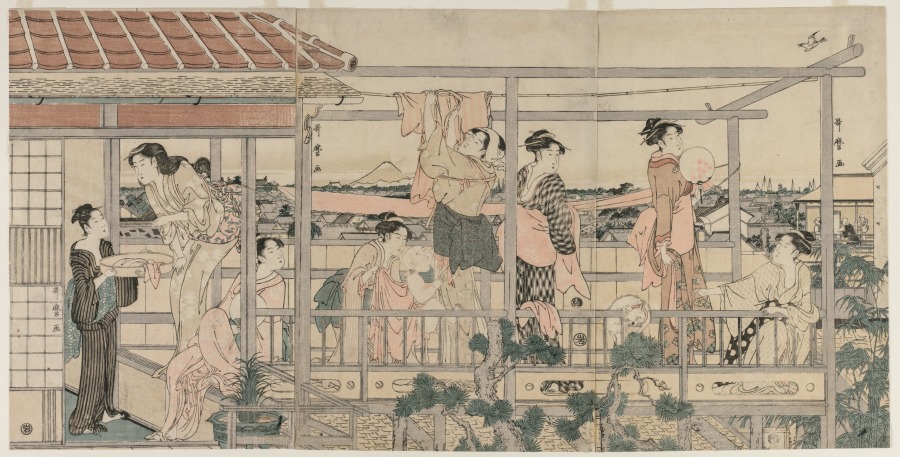 Kitagawa Utamaro (Japanese, c. 1754–1806) — Women Hanging La