FROM THE CLEVELAND MUSEUM OF ART’S CATALOG
This engraving is part of the Tarocchi group marked with the letter “D,” and named Apollo and the Muses . In Greek mythology, the nine Muses (Calliope, Urania, Terpsichore, Erato, Polyhymnia, Thalia, Melpomene, Euterpe, and Clio) were the daughters of Zeus, king of the gods, and Mnemosyne, the Titaness of memory. The Muses were goddesses presiding over different branches of the arts and sciences. Their leader and supervisor was Apollo, the god of light, music, prophecy, and poetry. Here, Polimnia (Polyhymnia) is personified as a full-length female figure, turned to the right, and set in an imaginary hilly landscape. She is playing a portative organ. Polyhymnia was regarded as the Muse of heroic hymns.
Source ↗︎
Be the first to share your thoughts.
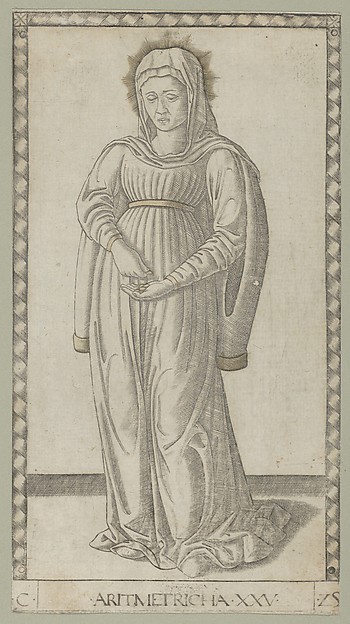 Arithmetic
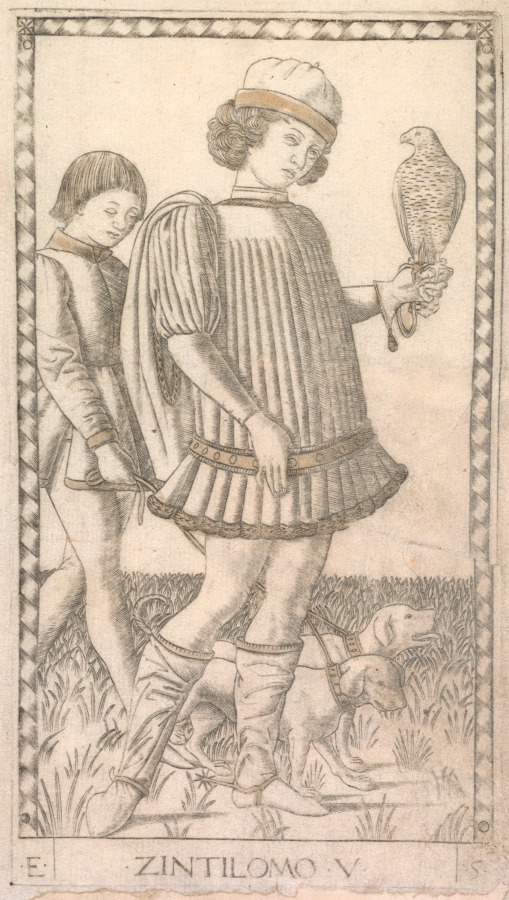 Gentleman (from the Tarocchi series E: Conditions of Man, #5
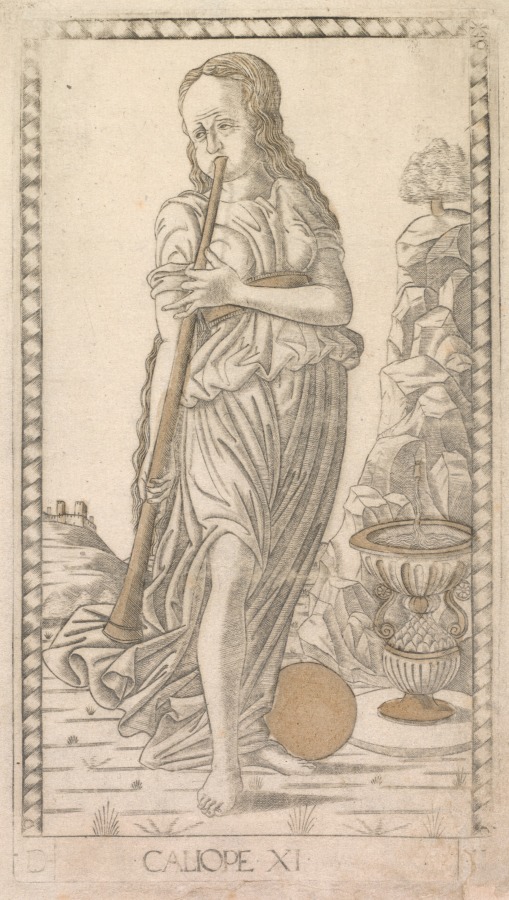 Calliope (from the Tarocchi series D: Apollo and the Muses,
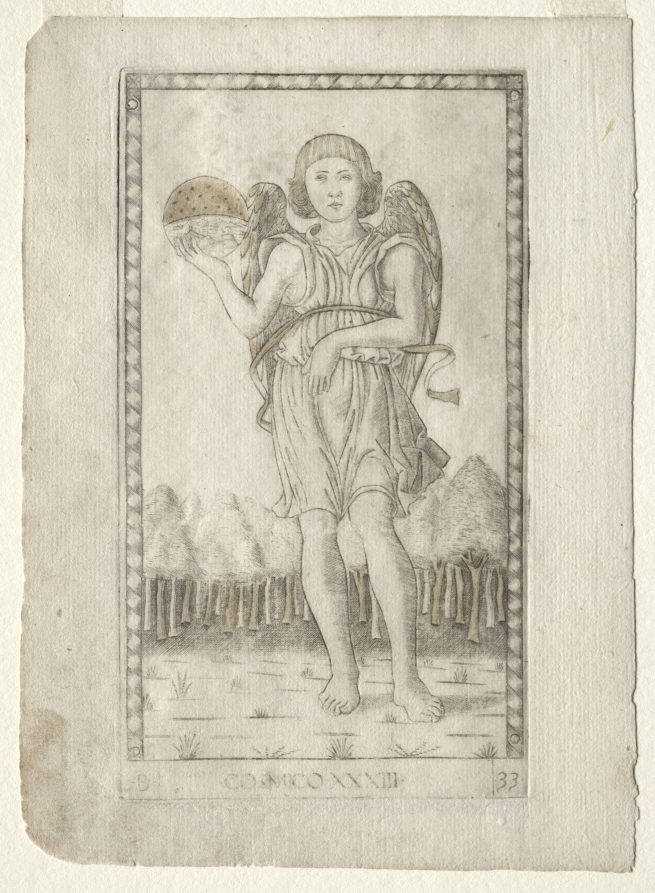 Genius of the World (from the Tarocchi, series B: Cosmic Pri
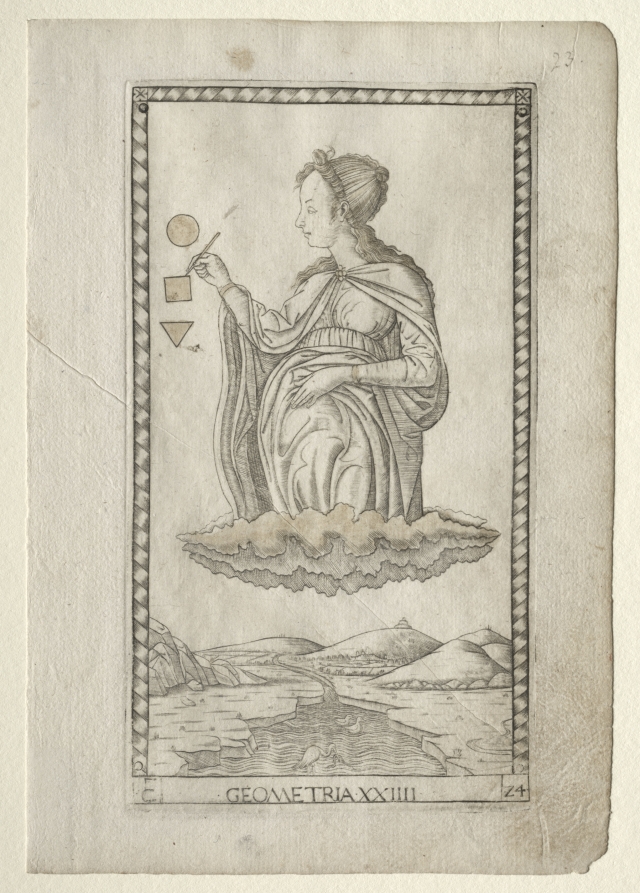 Geometry (from the Tarocchi, series C: Liberal Arts, #24)
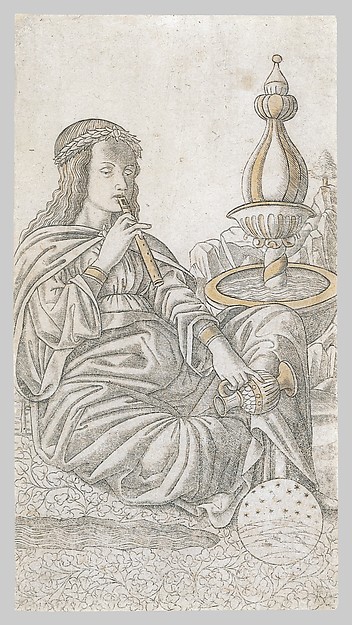 Poetry (Poesia XXVII)
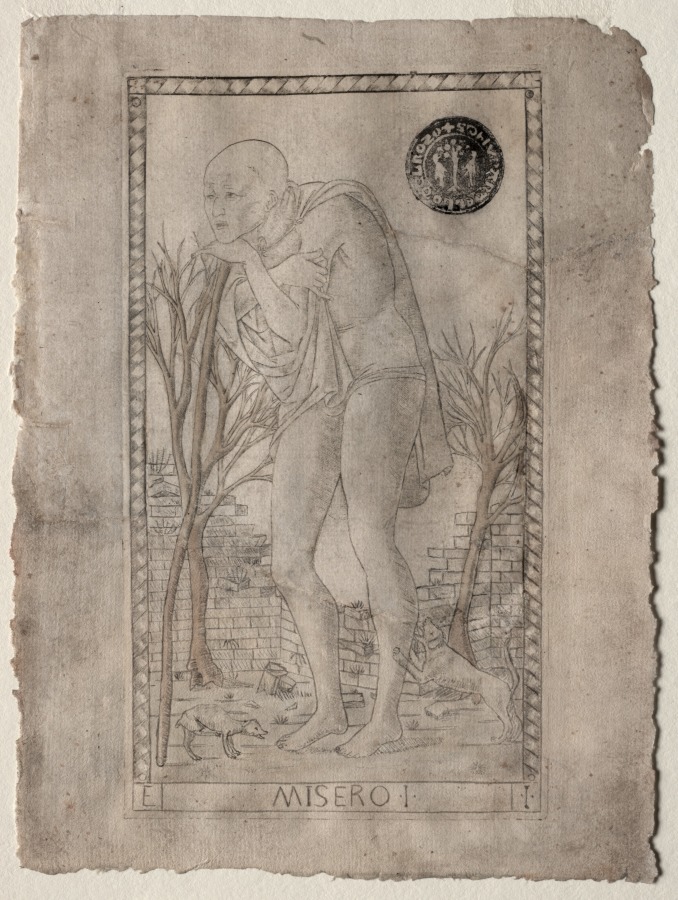 Tarocchi
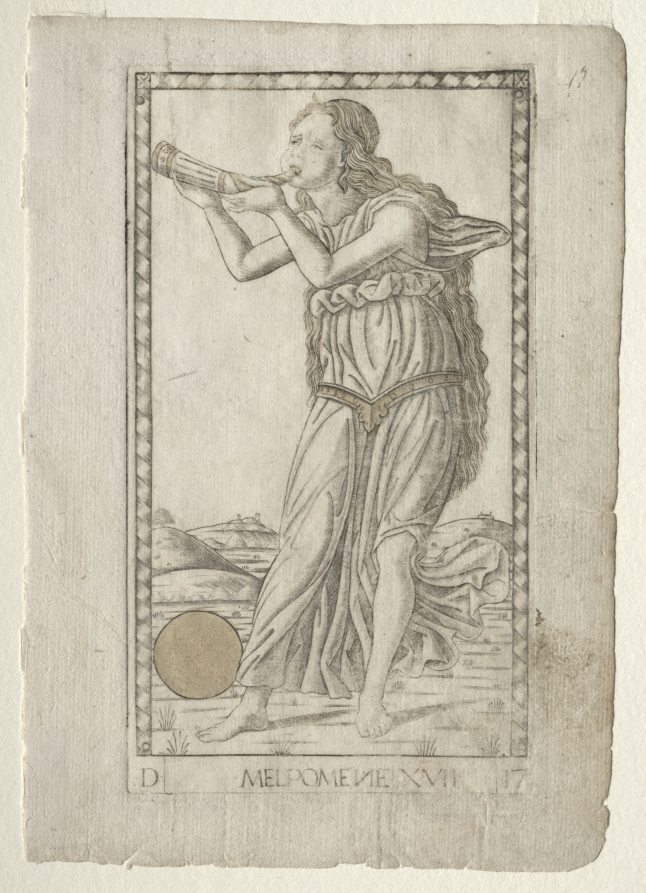 Melpomene (tragedy) (from the Tarocchi series D: Apollo and