In the collection of Cleveland Museum of Art, Cleveland — check current display status with the museum.
FROM THE CLEVELAND MUSEUM OF ART’S CATALOG
Since the 1400s, scenes of country peasants celebrating and dancing were common in northern art; such images often pictured the rural classes as rowdy, uncivilized, and prone to indulgence. In contrast, Dürer presented the country folk displayed here as monumental figures in extraordinary detail, thus elevating the subject. Dürer’s depictions are commentaries on social order and demonstrate his interests in humanity as well as the study of human proportion. Even though the role of gender in Dürer’s peasant scenes is scarcely discussed, he clearly locates the woman as the focal point of this engraving. As her companion hollers and waves his arm in reckless abandon, the stout woman appears deliberate in her movements. She gazes assertively at the viewer while drawing attention to the keys, purse, and knife at her waist—symbols of authority and power.
Be the first to share your thoughts.
Sign in to join the discussion.
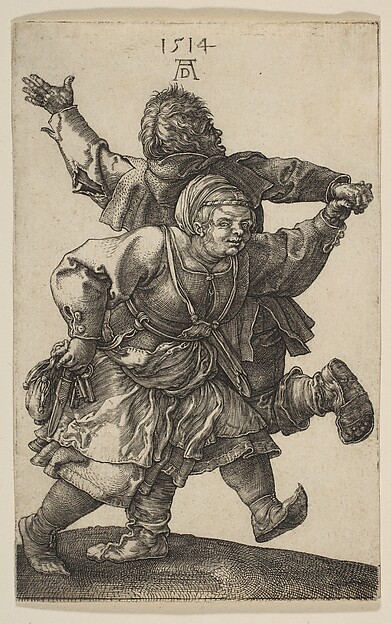 Albrecht Dürer — Peasant Couple Dancing
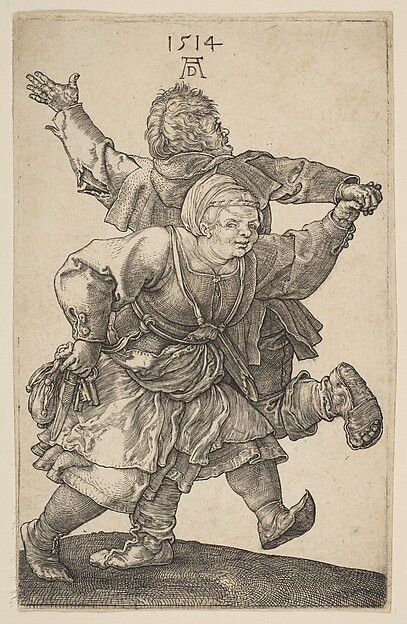 Albrecht Dürer — Peasant Couple Dancing
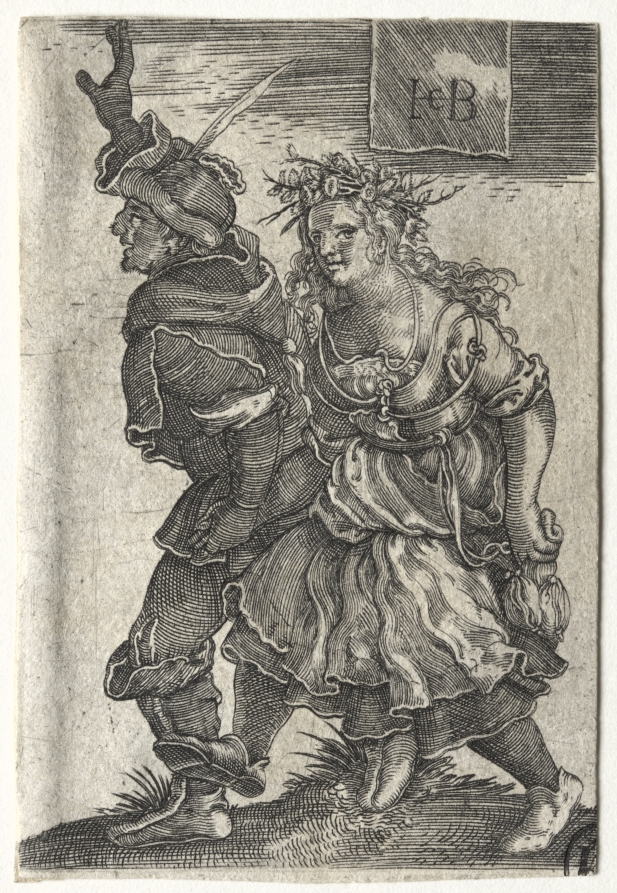 Jacob Binck (German, 1500–1569) — A Dancing Couple of Peasan
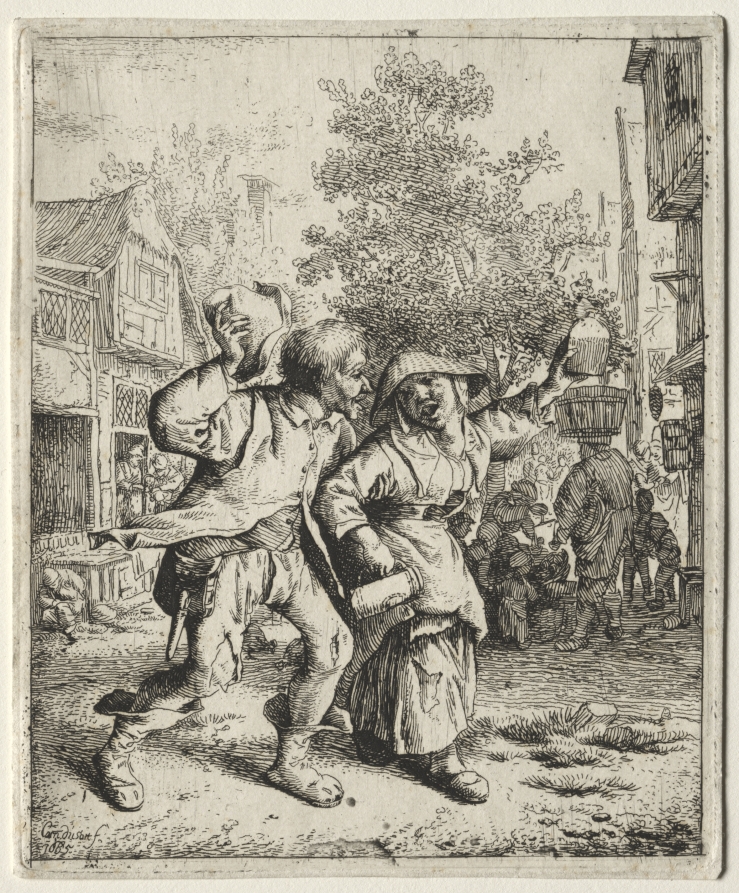 Cornelis Dusart (Dutch, 1660–1704) — The Drunken Couple
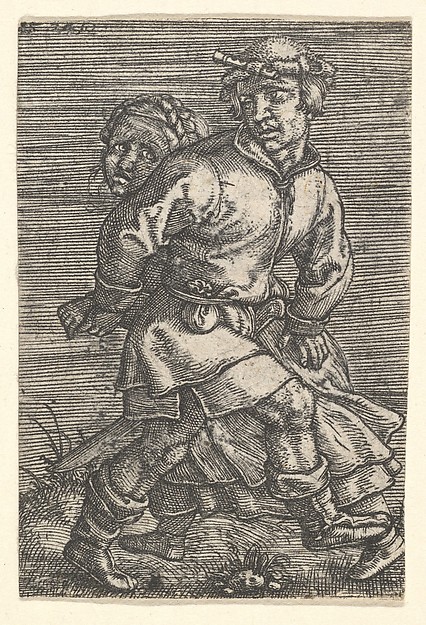 Barthel Beham — Peasant Couple Dancing
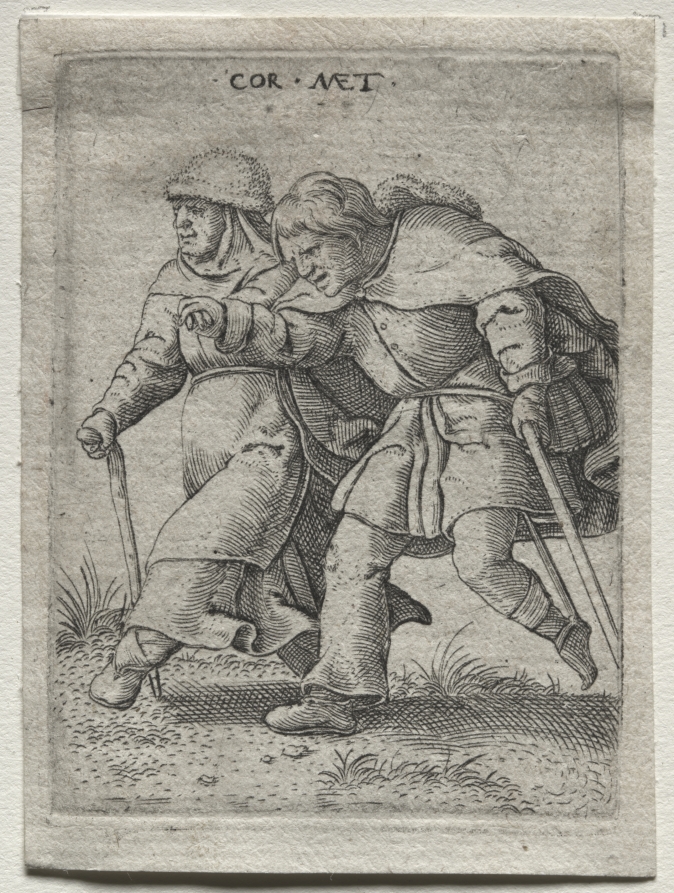 Cornelis Massys (Flemish, 1510/11–1556/57) — Dancing Cripple
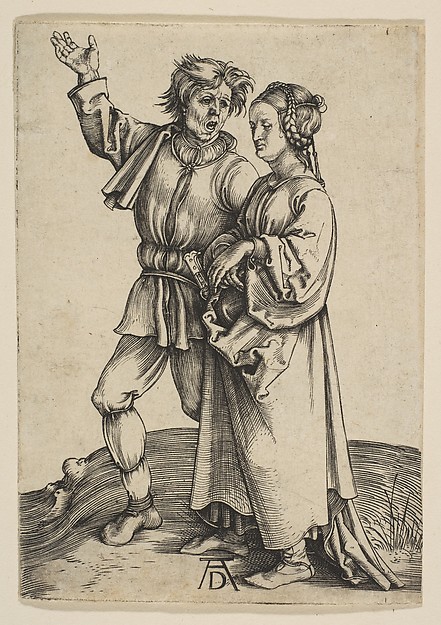 Albrecht Dürer — The Peasant and His Wife
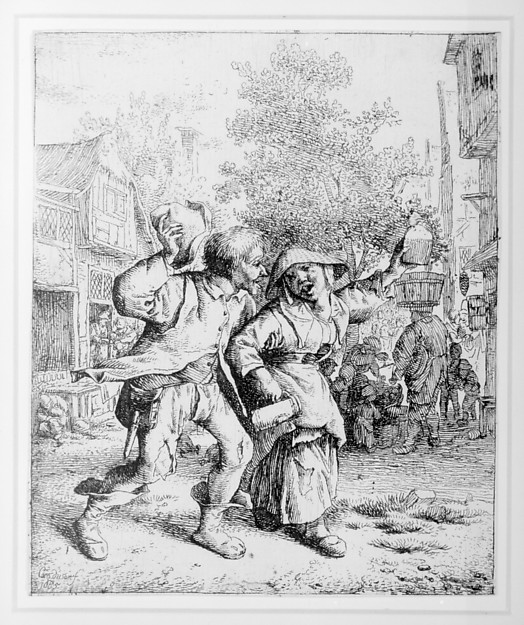 Cornelis Dusart — The Drunken Couple
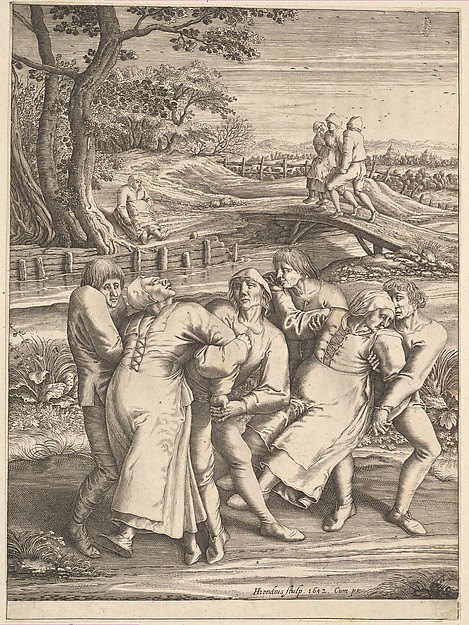 Pieter Bruegel the Elder|Hendrick Hondius I — Epileptics Wal
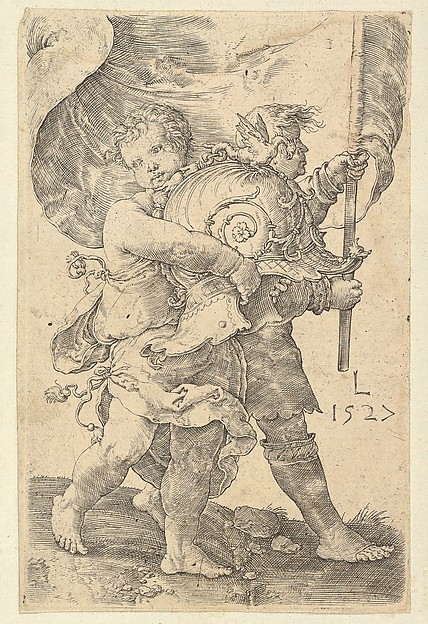 Lucas van Leyden — Two Boys with a Helmet and Standard
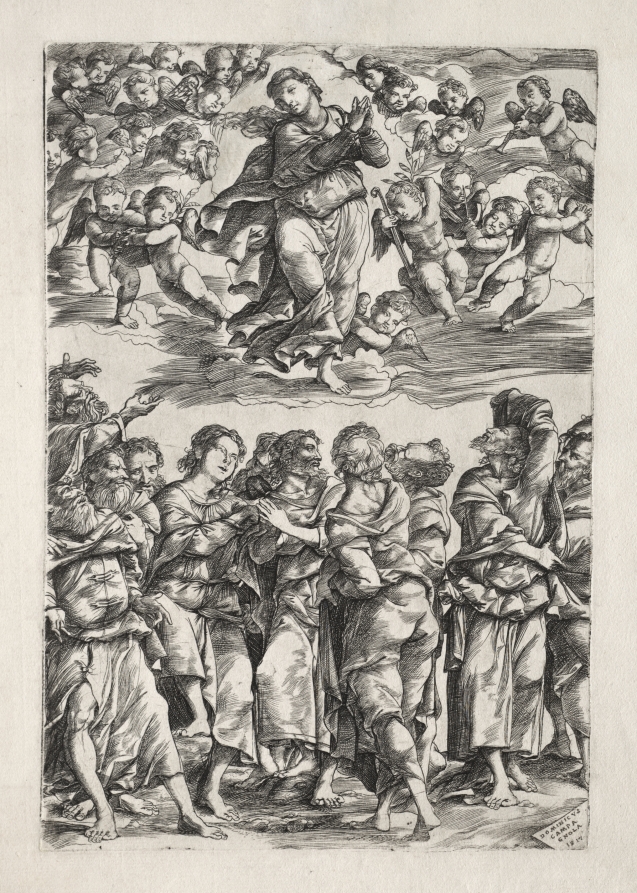 Domenico Campagnola (Italian, 1500–1564) — The Assumption of
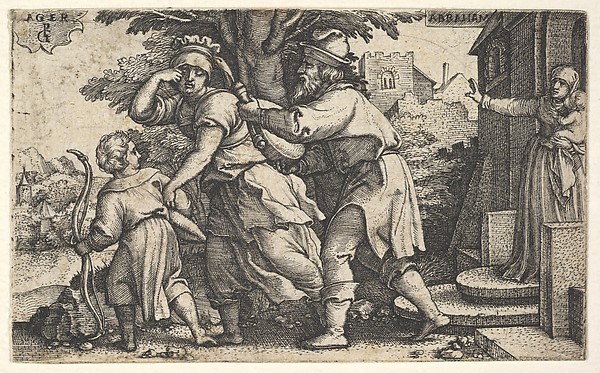 Georg Pencz — Abraham sending away Hagar and Ishmael: Abraha
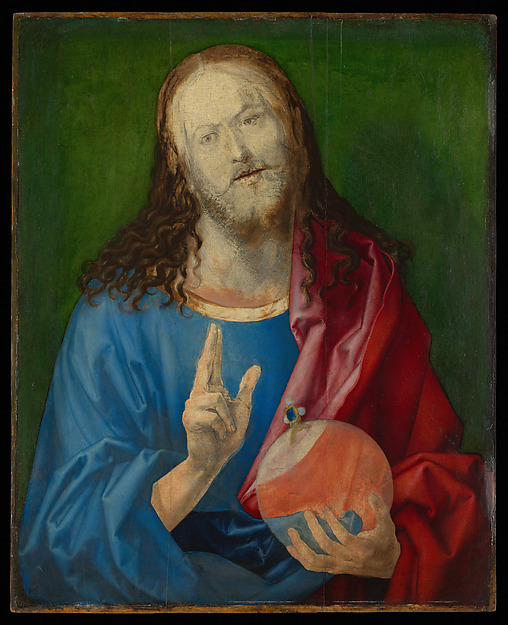
![Madonna and Child [obverse]](https://api.nga.gov/iiif/878db7e6-10ae-4cae-ba5d-6d6f5c413ae8/full/!500,500/0/default.jpg)
![Lot and His Daughters [reverse]](https://api.nga.gov/iiif/7565a449-f82a-414b-9bda-c93f55a51b4d/full/!500,500/0/default.jpg)