Telemachus Describes How He Was Admitted into the Assembly in Crete, from The Adventures of Telemachus, Book 5
SEE IT IN PERSON
Not currently on view
In the collection of Art Institute of Chicago, Chicago · as of July 2026
Discussion
FROM THE ART INSTITUTE OF CHICAGO’S CATALOG
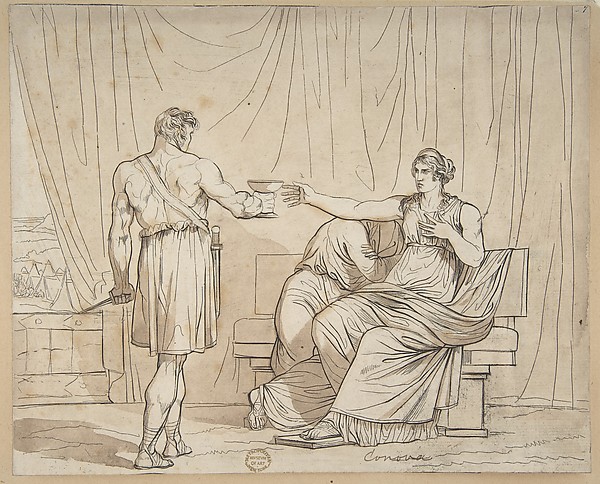
These twelve drawings depict scenes from the French novel The Adventures of Telemachus (Les aventures de Télémaque) by François Fénelon. First published in 1699, it was one of the most popular books of the 1700s and 1800s. Telemachus is the son of Ulysses from Homer’s Odyssey , the first four books of which describe the hero’s search for his father. Fénelon invented further adventures for Telemachus, in which he undergoes many trials while accompanied by his tutor, Mentor, who is actually the goddess Minerva (the embodiment of wisdom) in human disguise. A scathing critique of autocratic government and a diatribe against war, the book denounces luxury and decadence and calls for the simplicity and equality Fénelon believed ancient Greece best exemplified. Pinelli illustrated scenes from books 1–8 and one scene from book 18, and probably planned to illustrate more from the 24 books of the text. Throughout, he celebrates the heroic nude, displaying a deep knowledge of ancient Roman sculpture. His style, influenced by Jacques-Louis David and John Flaxman, is characterized by bold, almost cartoonish contours, monochromatic washes, and frieze-like arrangements of figures. Having now arri
Be the first to share your thoughts.
Sign in to join the discussion.
More by Bartolomeo Pinelli




More like this
 James Barry — The Conversion of Polemon
 Giovanni Battista Cipriani — Ulysses and Nausicaa
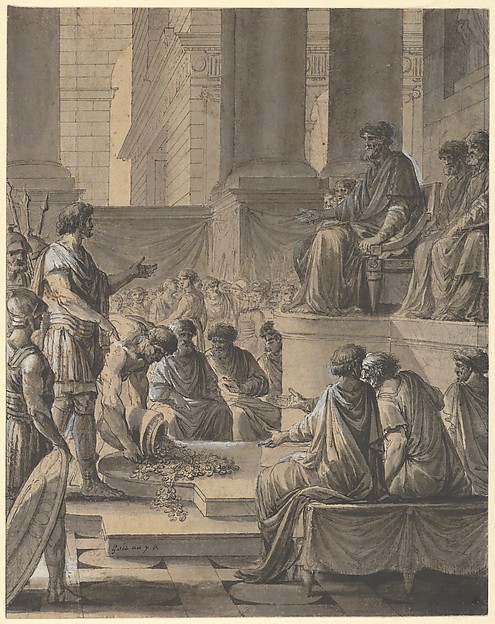 Etienne Pierre Adrien Gois — Hannibal Before the Senate in C
 Jan Saenredam — The Wounded Scipio Carried from Battle by hi
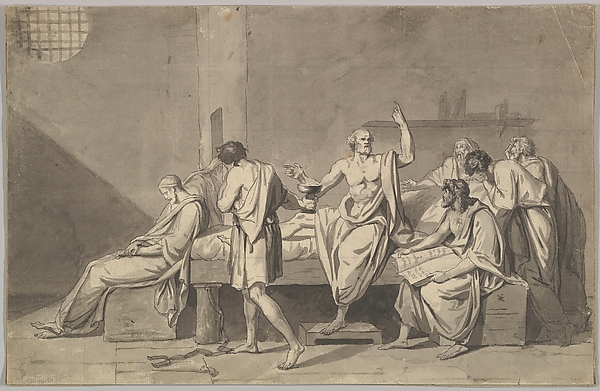 Jacques Louis David — The Death of Socrates
 Thomas Bewick — Fable: The Boasting Traveler
 Adam Friedrich Oeser — The Death of Scipio
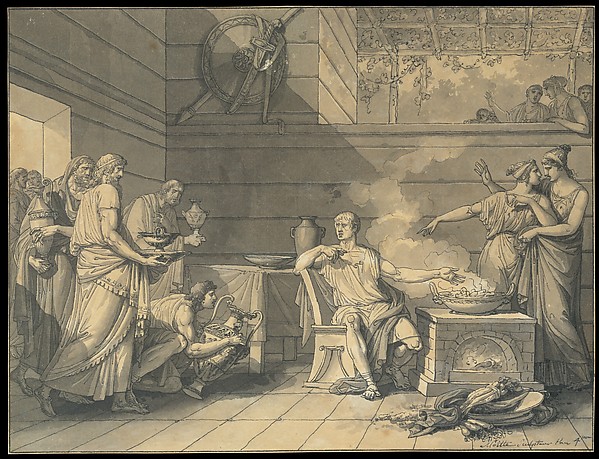 Jean Guillaume Moitte — Manius Curius Dentatus Refusing the
  Jacques Stella — Marriage of the Virgin
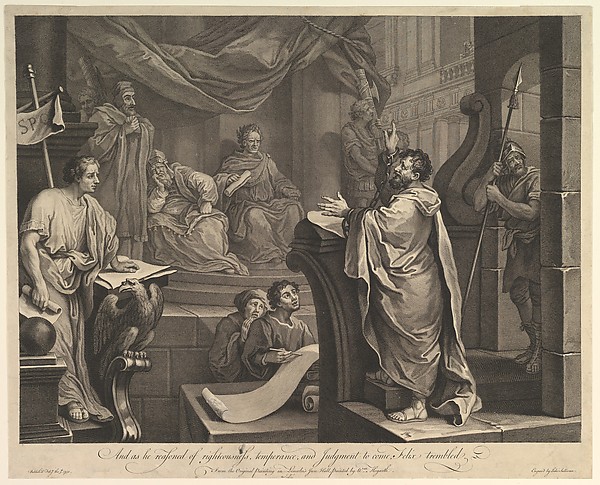 Luke Sullivan — Paul Before Felix
 Franz von Hauslab the Younger — Assembly of Roman Figures, f
 Heinrich Friedrich Füger — Belisarius Begging for Alms