In the collection of Cleveland Museum of Art, Cleveland — check current display status with the museum.
FROM THE CLEVELAND MUSEUM OF ART’S CATALOG
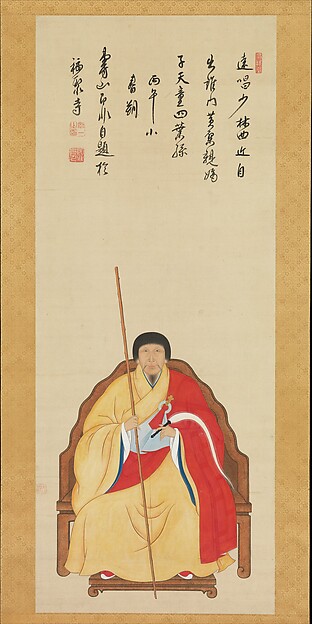
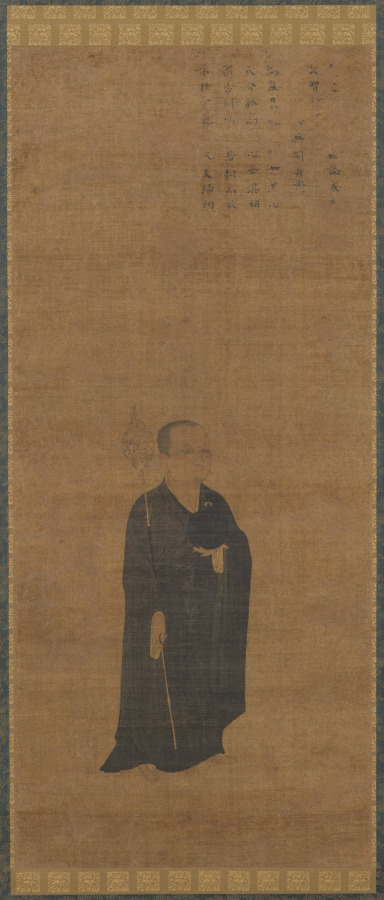
In this portrait, the Ōbaku school Buddhist monk Duli Xingyi (born Tai Li, 1596–1672), whose name is pronounced Dokuryū Shōeki in Japanese, sits upon a woven mat holding a ceremonial scepter known as a ruyi , or nyoi in Japanese. Above his head is an insciption he added to the painting in 1671, the year before his death. It may be translated to read: Contemplative emptiness: the moon suspended over the village at midnight. Suddenly my soul is startled by the howl of an ape. Who could know that it would arouse me beyond my senses, and bring me an inner vision from Mt. Sumeru. (translated by Stephen Addiss and Kwan S. Wong) Originally from what is now the city of Hangzhou in China, Duli emigrated to Japan in 1653, where he took monastic vows. His skills in calligraphy and seal carving were formidable. Painter Kita Genki combined Chinese brush styles he learned in Nagasaki with Western painting techniques to capture Duli's likeness.
Be the first to share your thoughts.
Sign in to join the discussion.
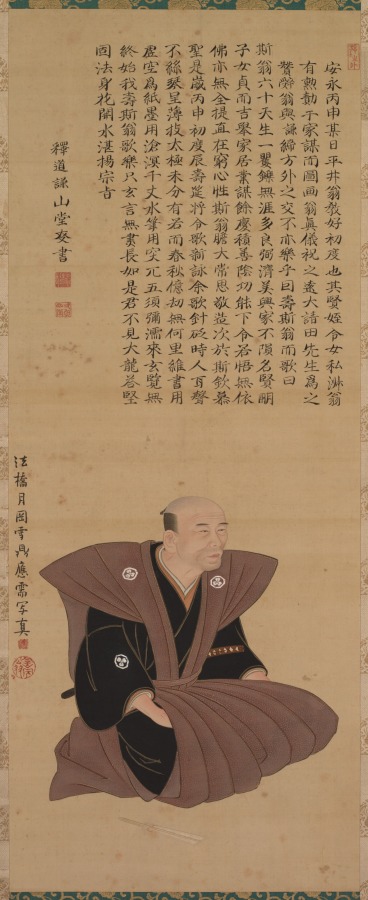 Tsukioka Settei (Japanese, 1710–1786) — Portrait of Samurai-
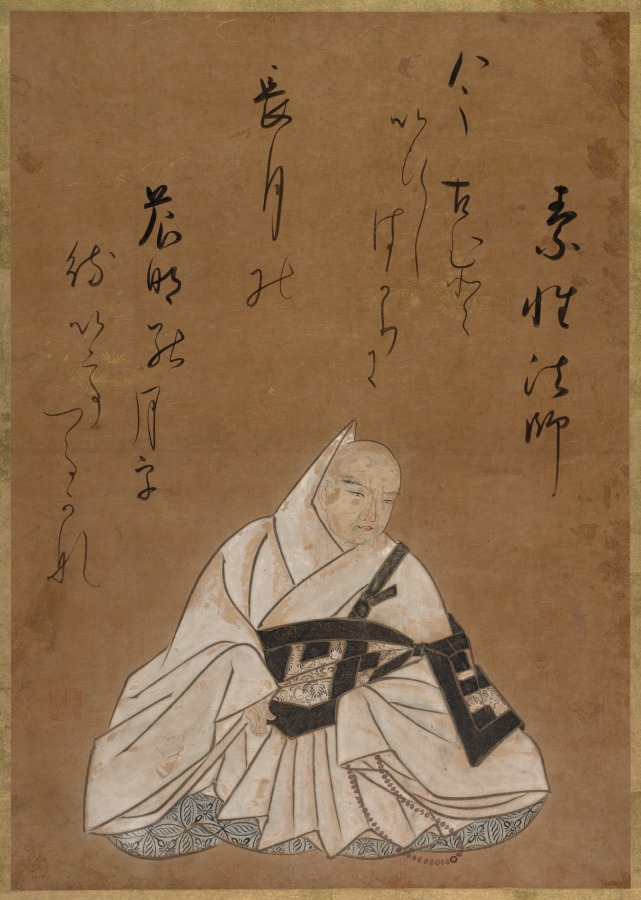 Shokadō Shōjō (Japanese, 1584–1639) — The Poet Sōsei
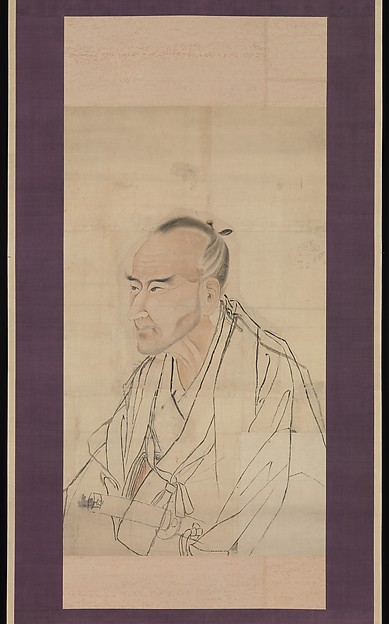 Watanabe Kazan
 Iwasa Matabei 岩佐又兵衛 — 僧正遍照「道蘊本」三十六歌仙絵巻断簡|Archbishop Henjō (S
 Tani Bunchō (Japanese, 1763–1841) — Imaginary Portrait of Sh
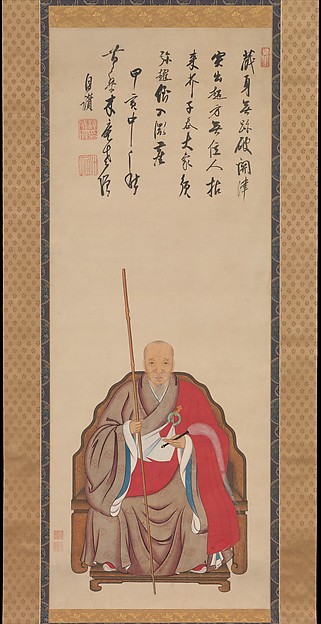 Kita Genki
 Tsukioka Settei (Japanese, 1710–1786) — Portrait of Samurai-
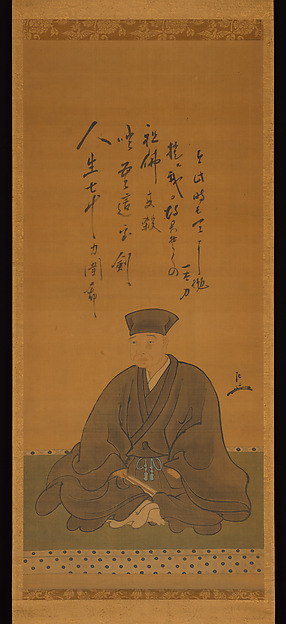 Unidentified artist|Joshinsai Sōsa 如心斎宗左 — 千利休像に遺偈 (Sen no R
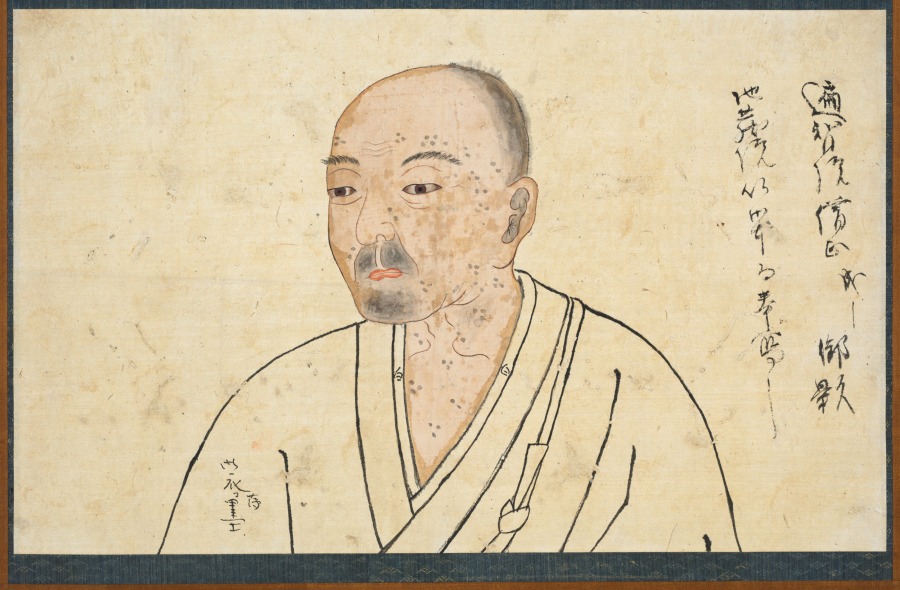 Portrait Study of Seigen
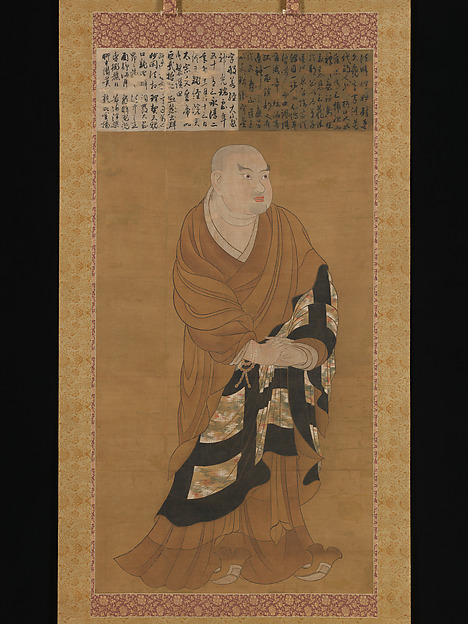 慈恩大師像|Portrait of Jion Daishi (Guiji)
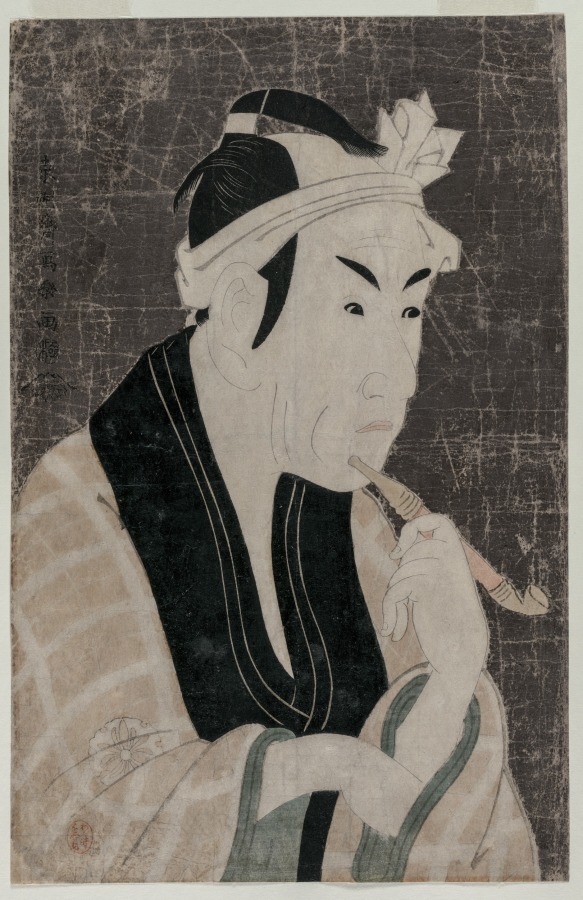 Tōshūsai Sharaku (Japanese, active 1794–95) — Matsumoto Kosh
 Liu Tao (Chinese, late 1000s–early 1100s) — Portrait of Pri