In the collection of Cleveland Museum of Art, Cleveland — check current display status with the museum.
FROM THE CLEVELAND MUSEUM OF ART’S CATALOG
As more photographers shot the same monuments,depictions became formulaic.Numerous photographers produced almost identical images,as demonstrated in these two views of the Colossi of Memnon. Shot from different sides but about the same distance, both images employ an angled view and use Egyptian servants and guides as local color and indexes of scale. Captions and artists’ signatures were often written in reverse on the negatives so that they would automatically become part of each print. Sometimes, as in the Beato image, the artist or his assistant was care less.
Be the first to share your thoughts.
Sign in to join the discussion.
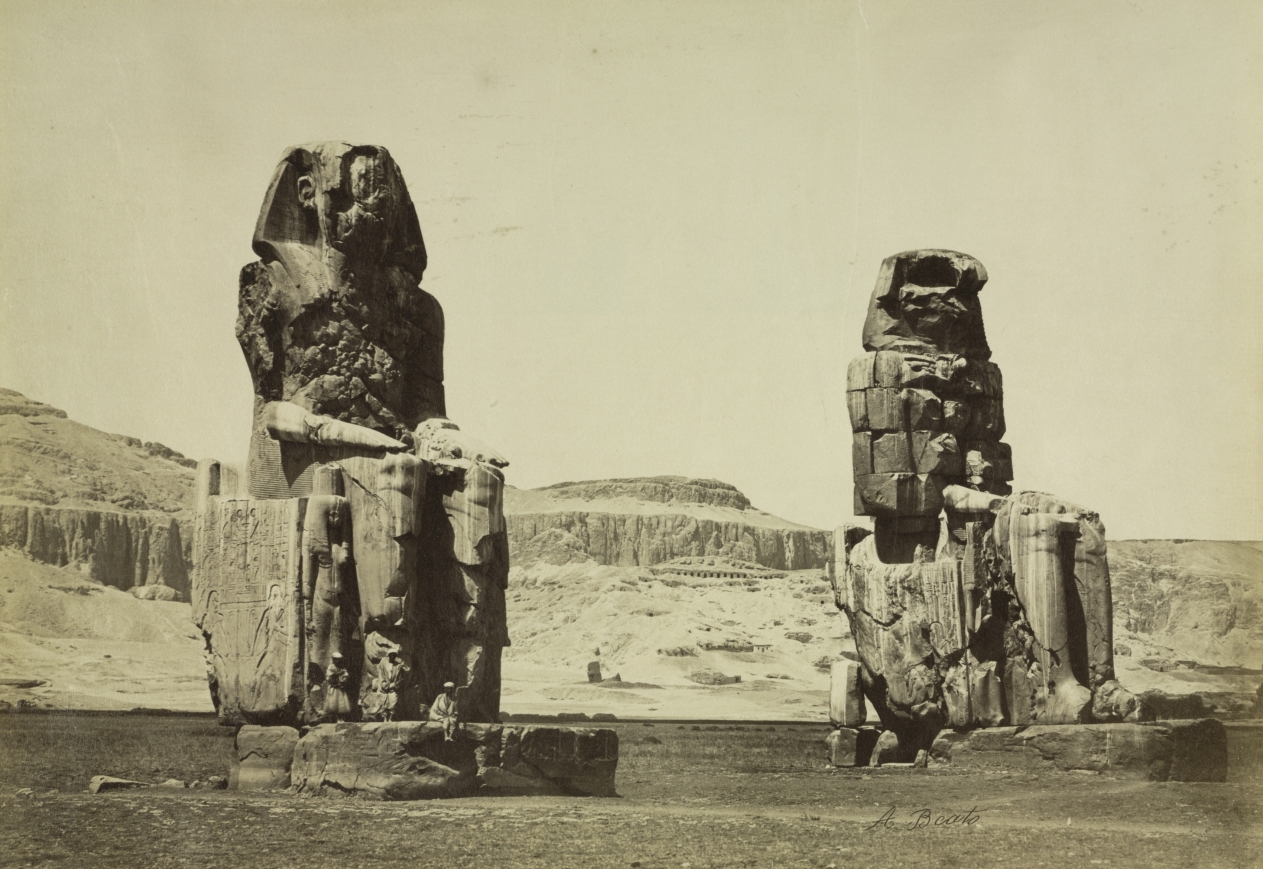 Antonio Beato (British, c. 1825–1903) — The Colossi of Memno
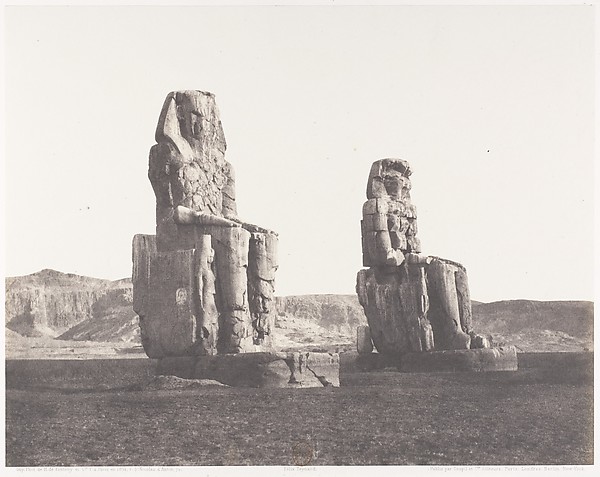 Félix Teynard|Imprimerie Photographique de H. de Fonteny et
 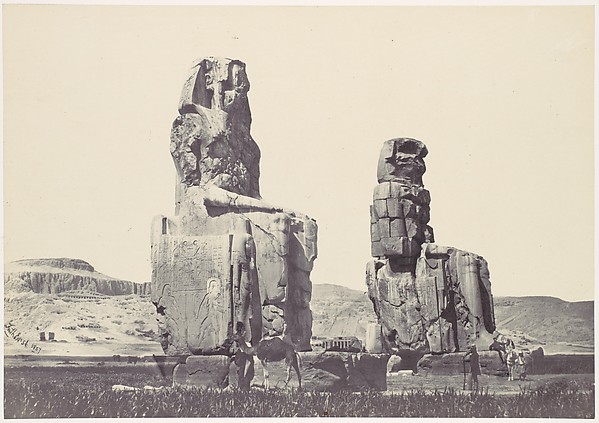 Francis Frith — The Statues of Memnon. Plain of Thebes
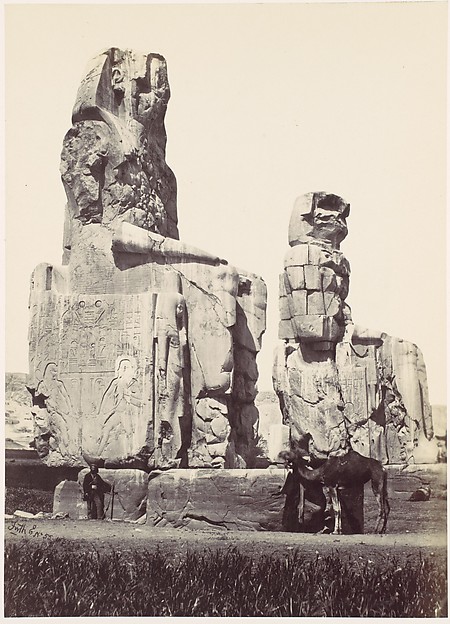 Francis Frith — The Statues of Memnon. Plain of Thebes
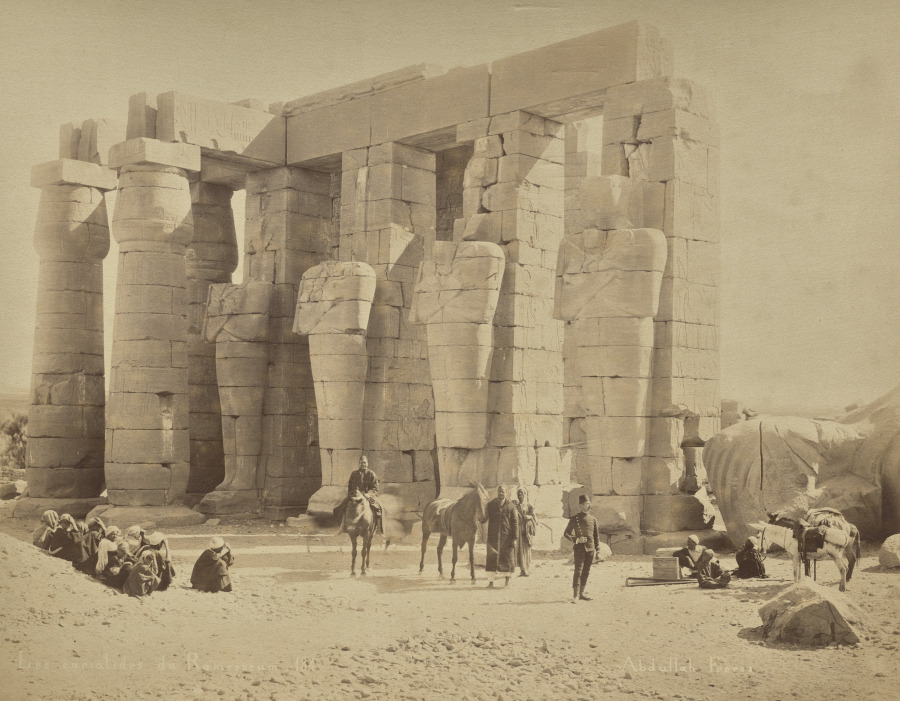 Abdullah Frères (Turkish, 1858–1899) — Les cariatides du Ram
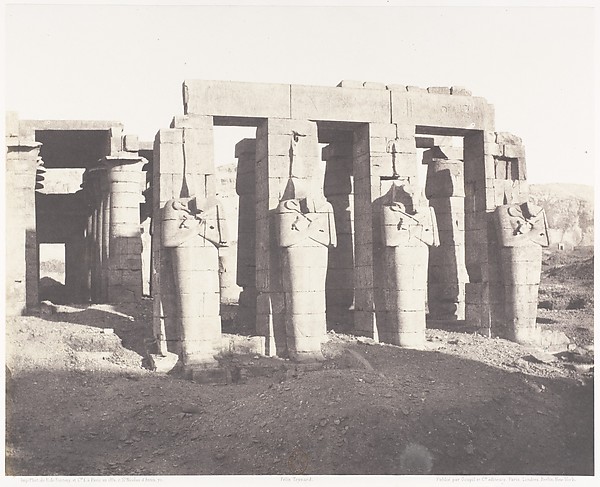 Félix Teynard|Imprimerie Photographique de H. de Fonteny et
 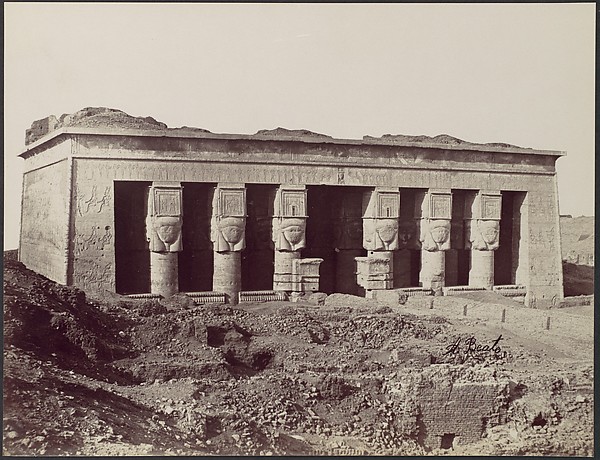 Antonio Beato — Temple a Denderah
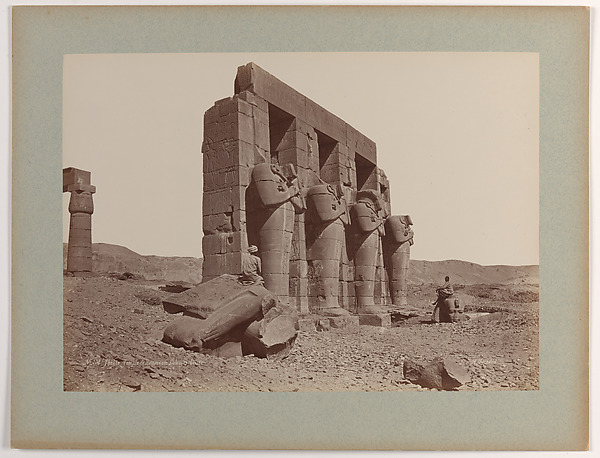 Emile Béchard — Thèbes, Temple de Ramasseum, Colosses brisés
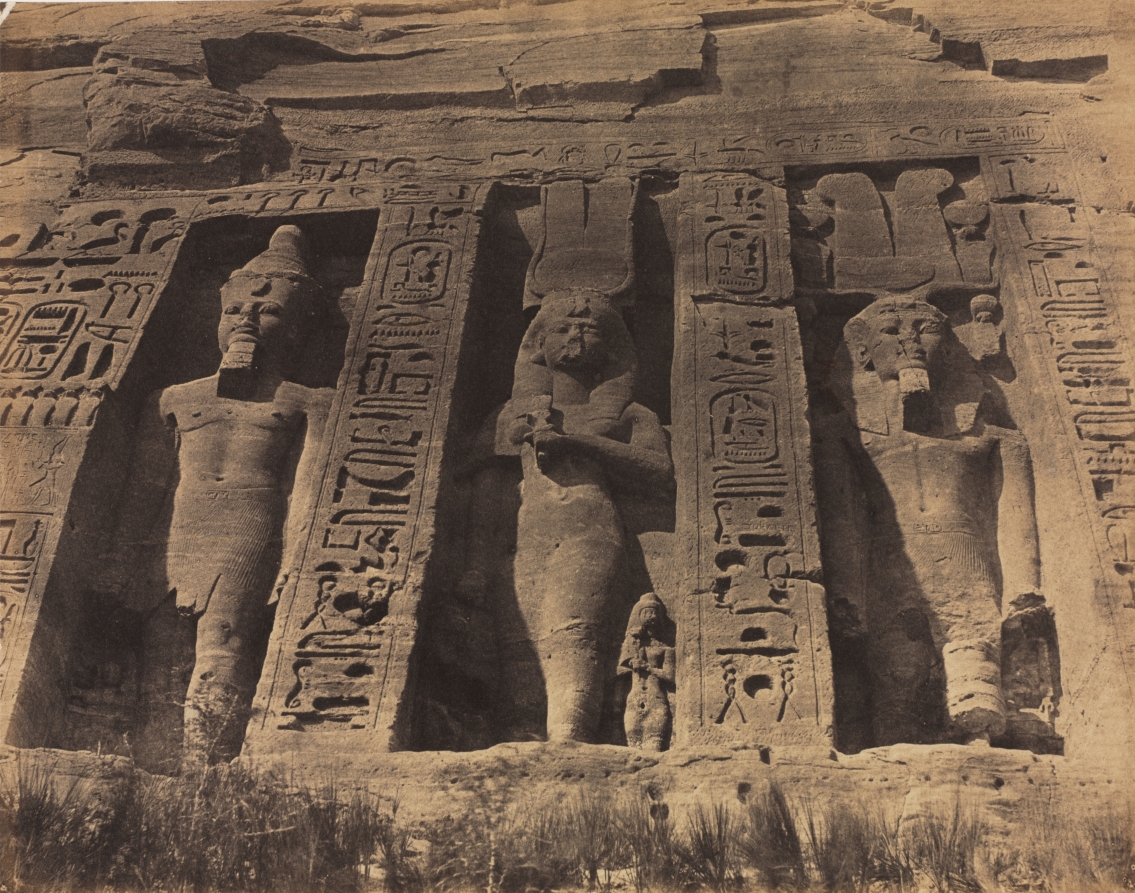 Robert Murray (British, 1822–1893) — Temple of Abu Simbel
 Francis Frith — The Rameseum of El-Kurneh, Thebes
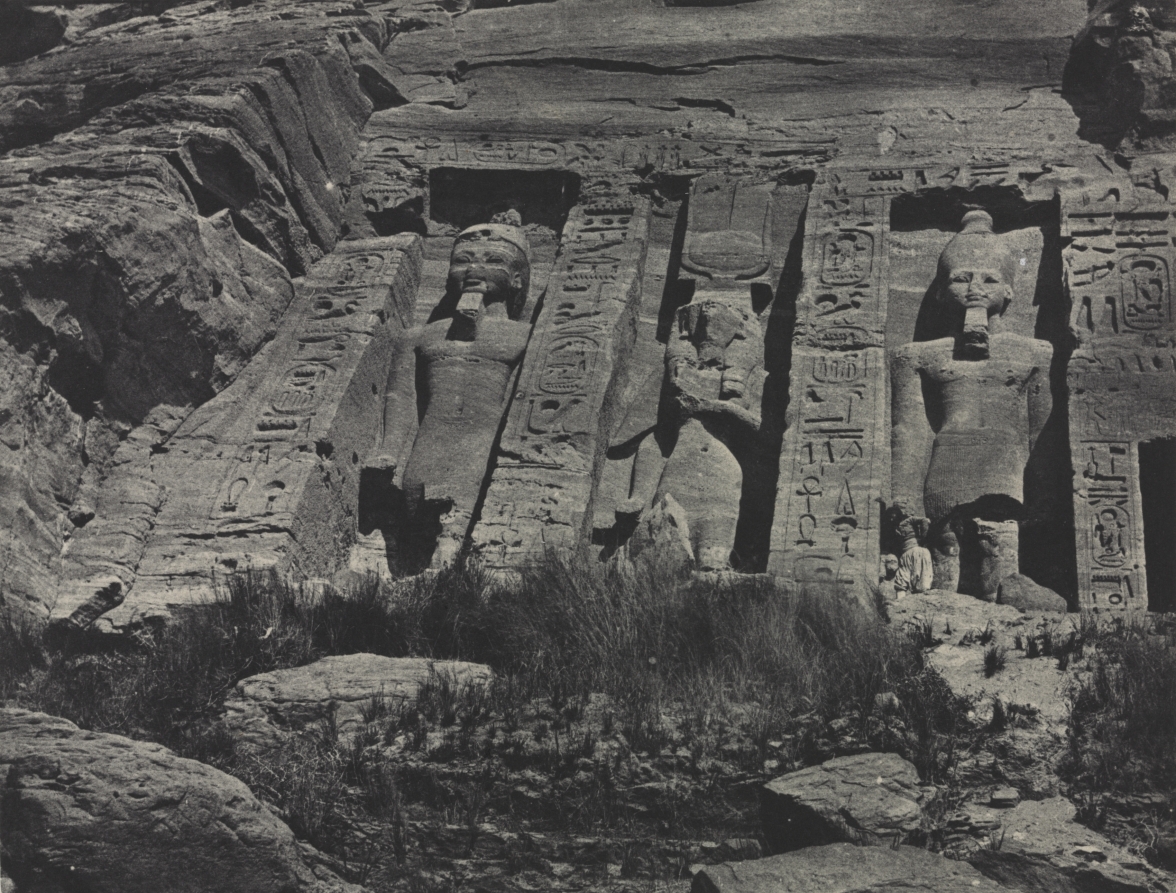 Maxime Du Camp (French, 1822–1894) — Southern Portion of the
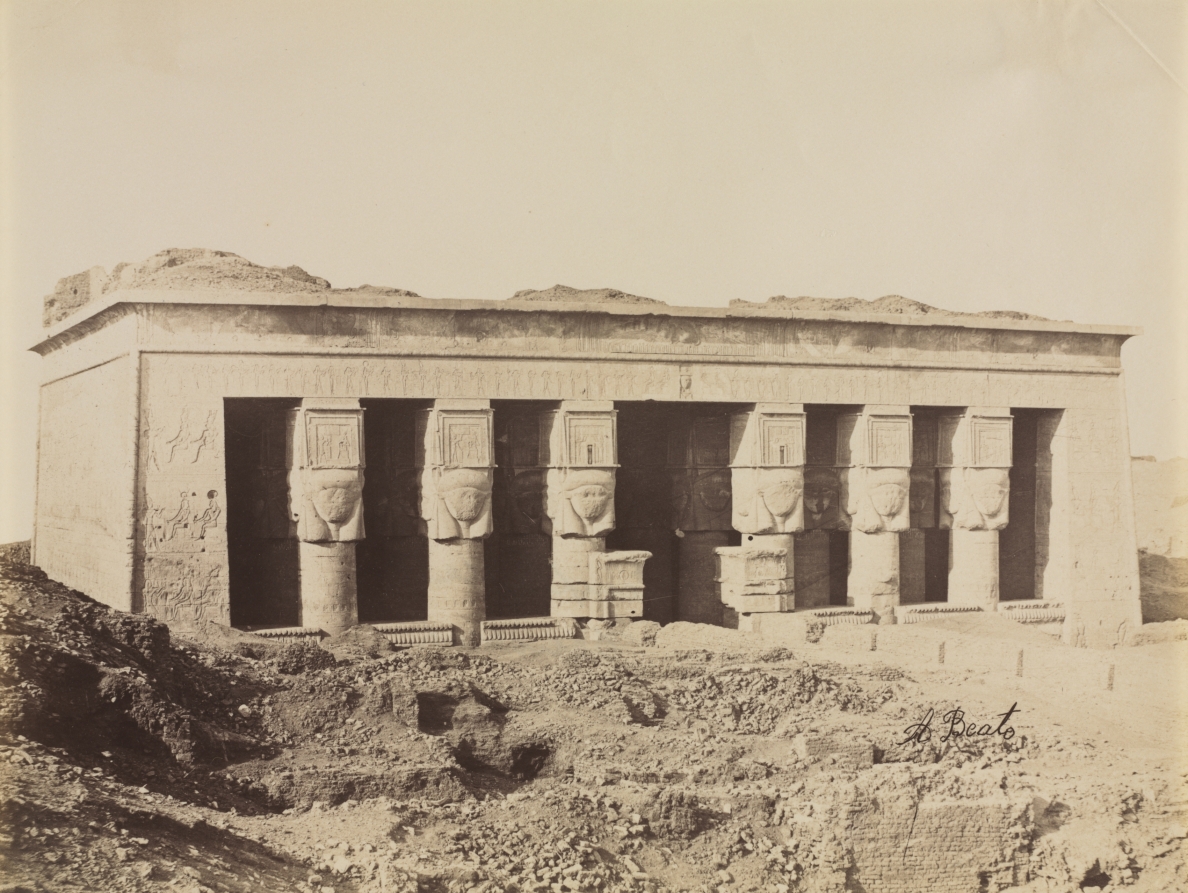 Antonio Beato (British, c. 1825–1903) — Temple of Dendera