Master of the Schlägl Altarpiece
In the collection of Cleveland Museum of Art, Cleveland — check current display status with the museum.
FROM THE CLEVELAND MUSEUM OF ART’S CATALOG
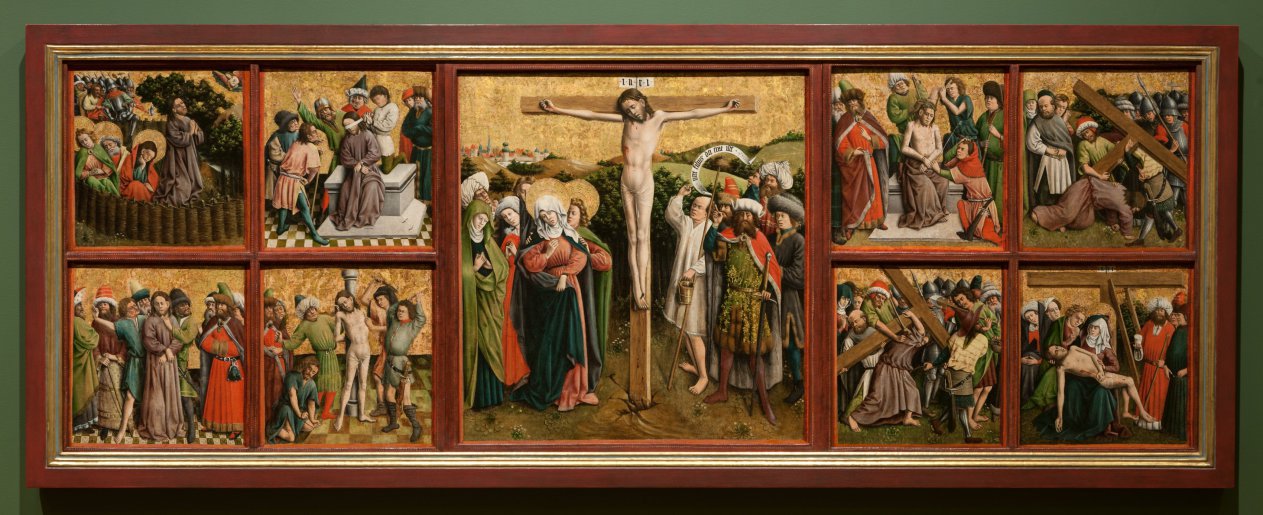
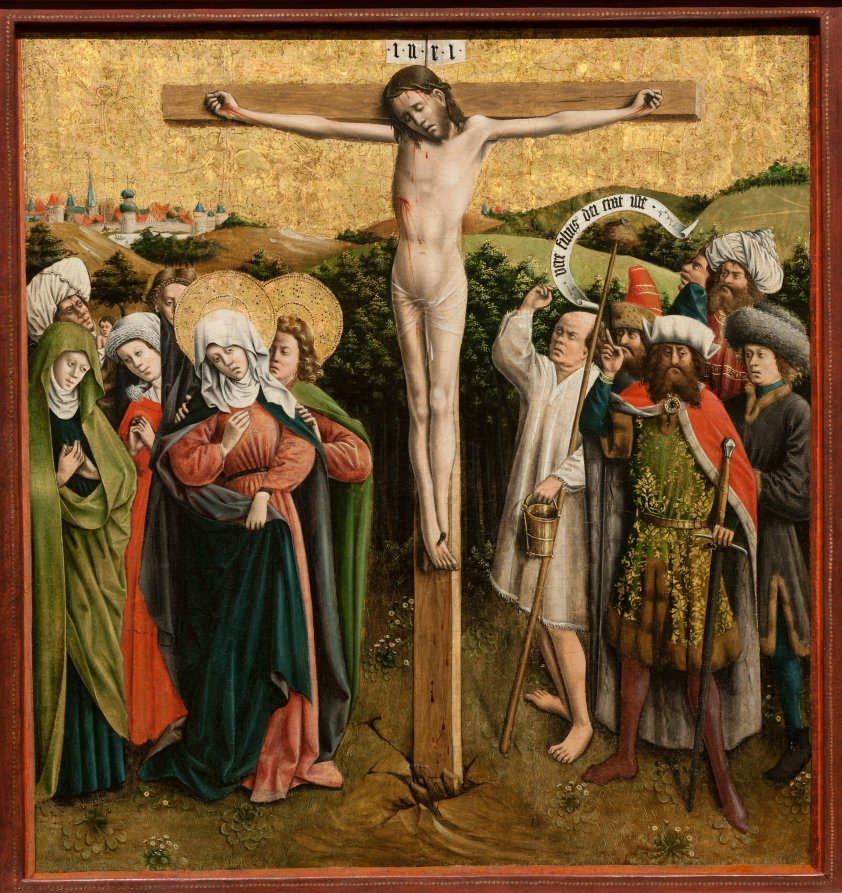
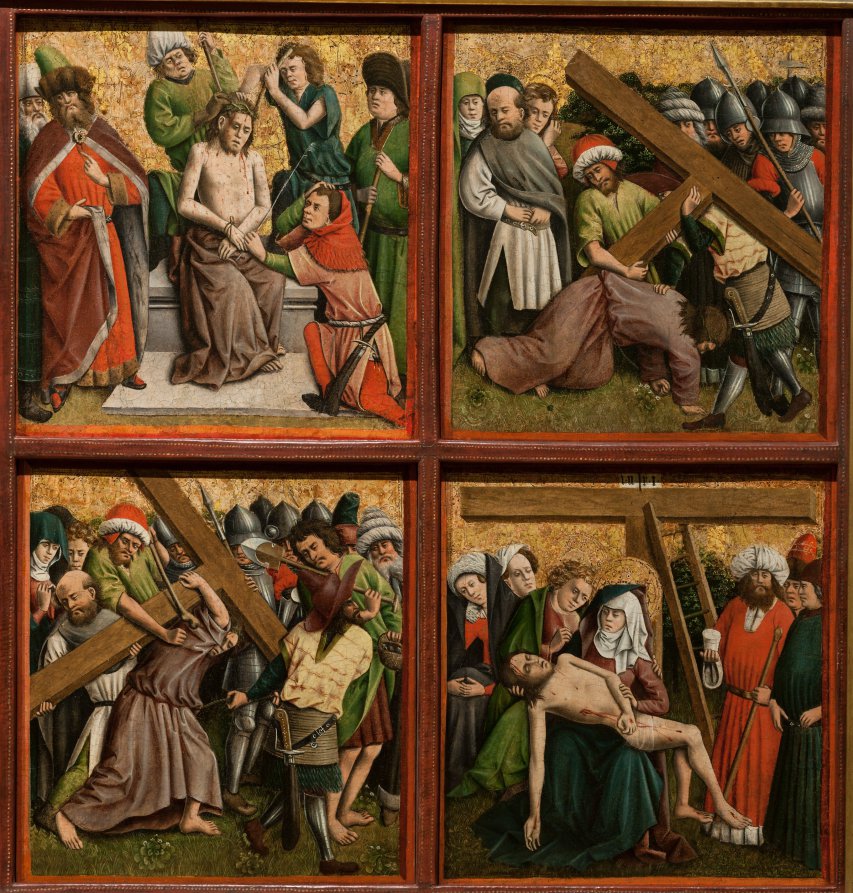
The visual focus of this altarpiece is the suffering and death of Christ on the cross. So-called Passion cycles in art include the events leading up to and following the Crucifixion, not only as single subjects but as scenes meant to be read in sequence. Passion cycles were promoted by the two great teaching orders, the Franciscans and the Dominicans, for whom this subject represented the main religious drama of their churches, and also by the German mystics who advocated private contemplation on the humanity and suffering of Christ. The original context for this altarpiece remains unknown, but it was probably made for a religious institution in Westphalia in the Rhine Valley. During the 1870s it was given to the Abbey of Schlägl, near Linz in Upper Austria, from which both altarpiece and artist take their names. The altarpiece is not preserved today in its original format, and some of the individual scenes are missing. Scholars continue to debate the original number of scenes and their sequencing; nine of the original panels have survived.
Be the first to share your thoughts.
Sign in to join the discussion.
 Ecce Homo
 anonymous — Ecce Homo
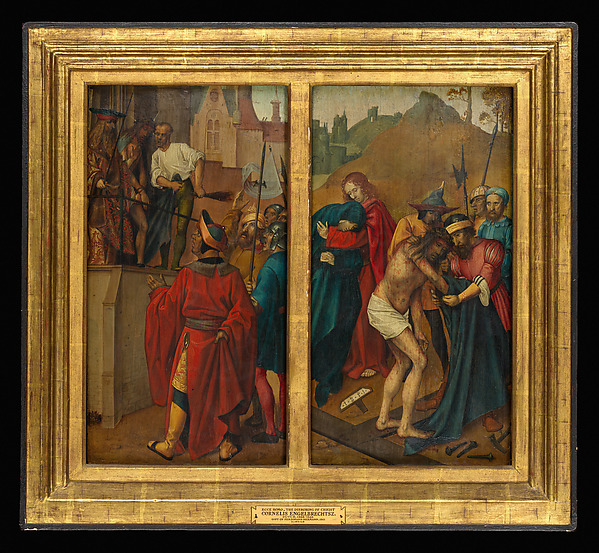 Cornelis Engebrechtsz — Ecce Homo, (reverse) Christ Blessing
 Master of the Holy Kinship the Younger — Sebastian-Altar: De
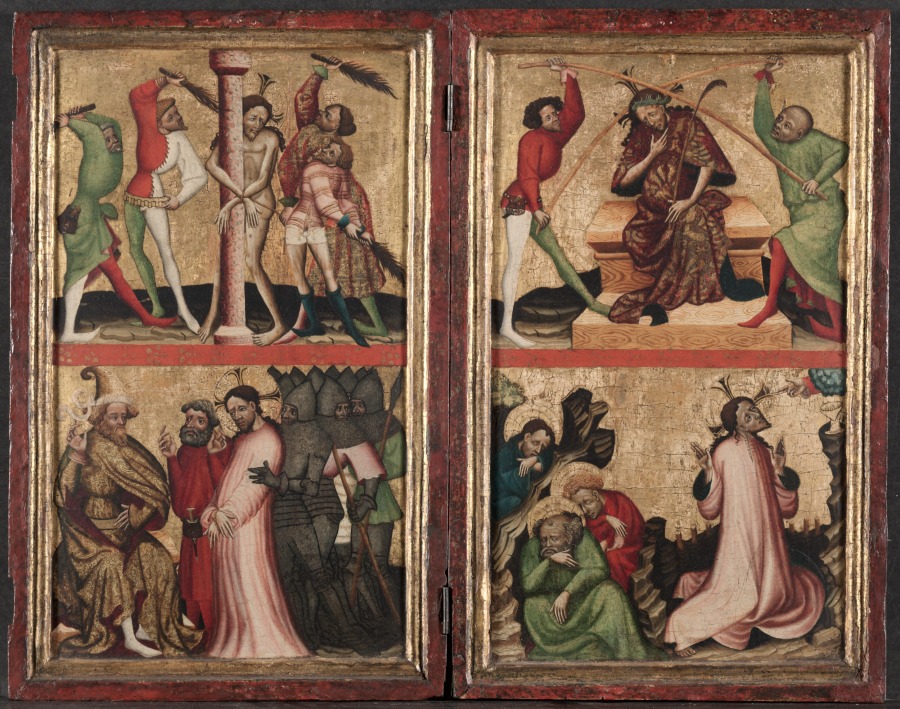 Diptych with the Passion of Christ
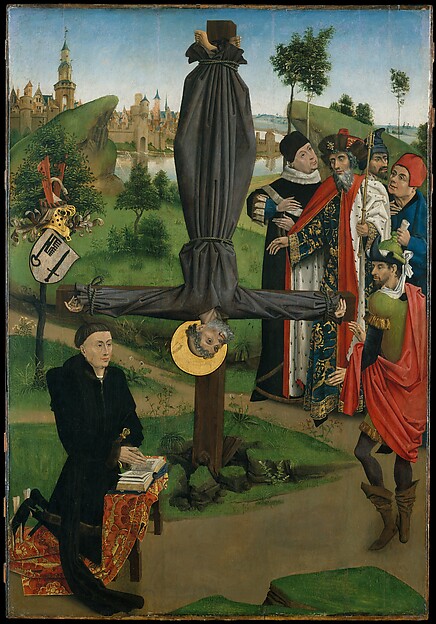 Northern French Painter — The Crucifixion of Saint Peter wit
 anonymous — Crucifixion with Saints Cosmas and Damian
 Jacob Cornelisz van Oostsanen — De kruisiging
 De boom van Jesse
 Hieronymus Bosch — Crucifixion with a Donor
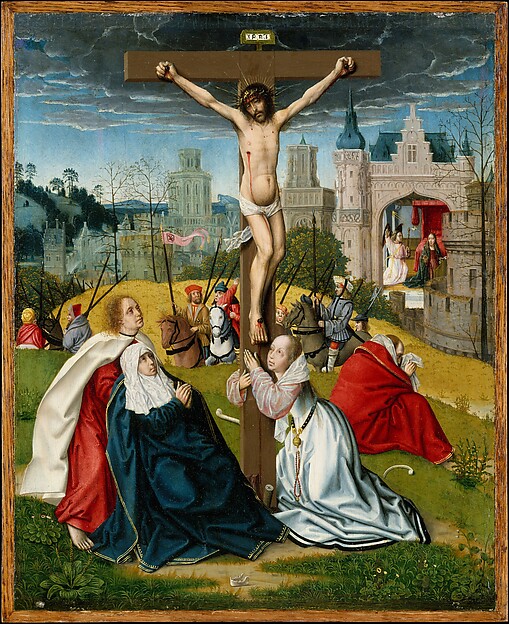 Jan Provost — The Crucifixion
 Hieronymus Bosch — Ecce Homo