In the collection of Cleveland Museum of Art, Cleveland — check current display status with the museum.
FROM THE CLEVELAND MUSEUM OF ART’S CATALOG
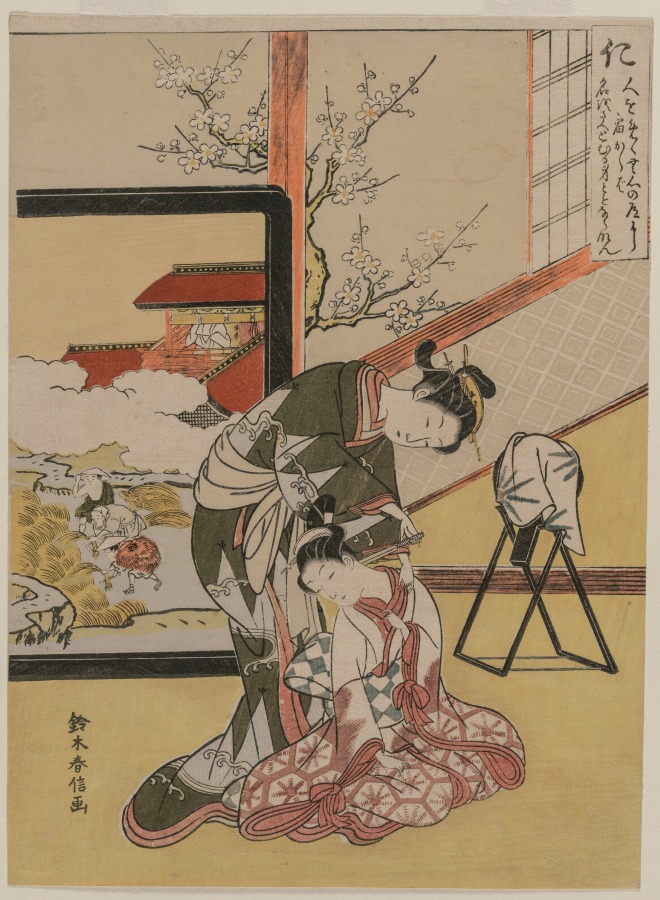
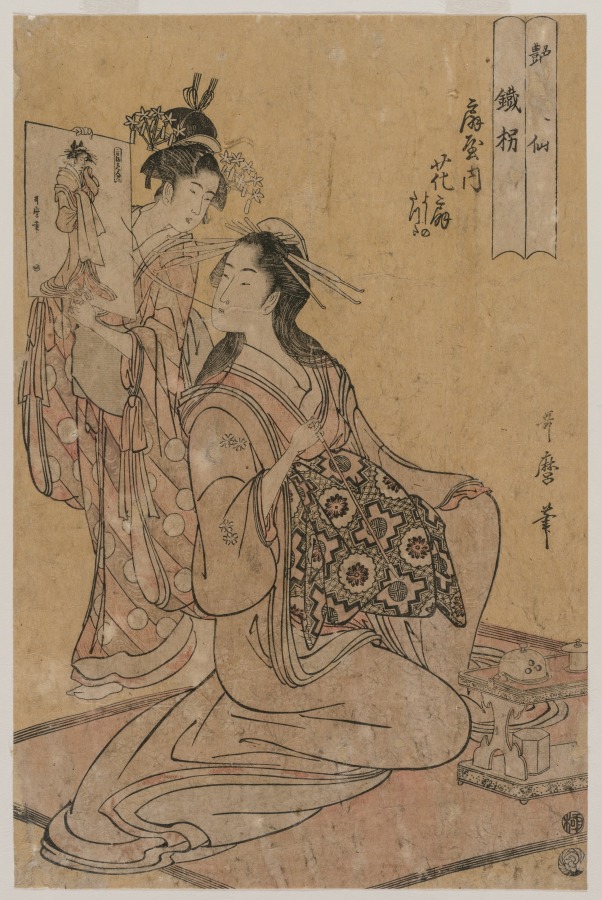
Courtesan Hatsuito of a brothel named Yamashiroya is likened to autumnal bush clover in this series comparing the qualities of courtesans to flowers. Hatsuito ties her servant’s obi sash while a gibbon emerges from a painting in the room’s viewing alcove to offer a love letter on which Hatsuito’s name appears. Gibbons reaching in vain for the moon’s reflection in water is a common metaphor for the deluded mind, and bush clover in moonlight is a popular seasonal motif. Here, the ideas are combined as the gibbon woos this unattainable beauty.
Be the first to share your thoughts.
Sign in to join the discussion.
 Kitagawa Utamaro (Japanese, c. 1754–1806) — The Courtesan Ha
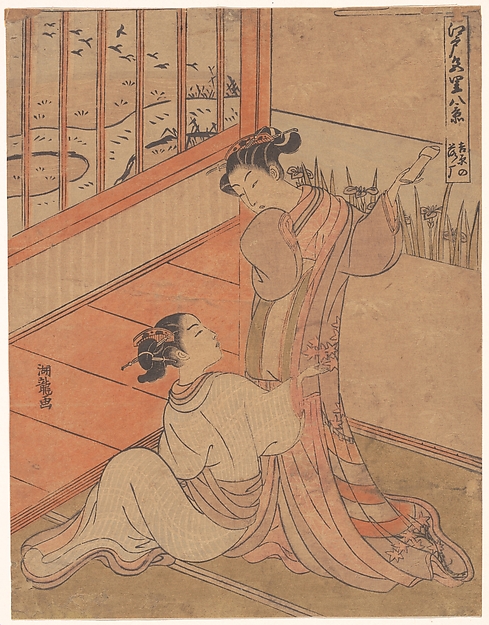 Isoda Koryūsai
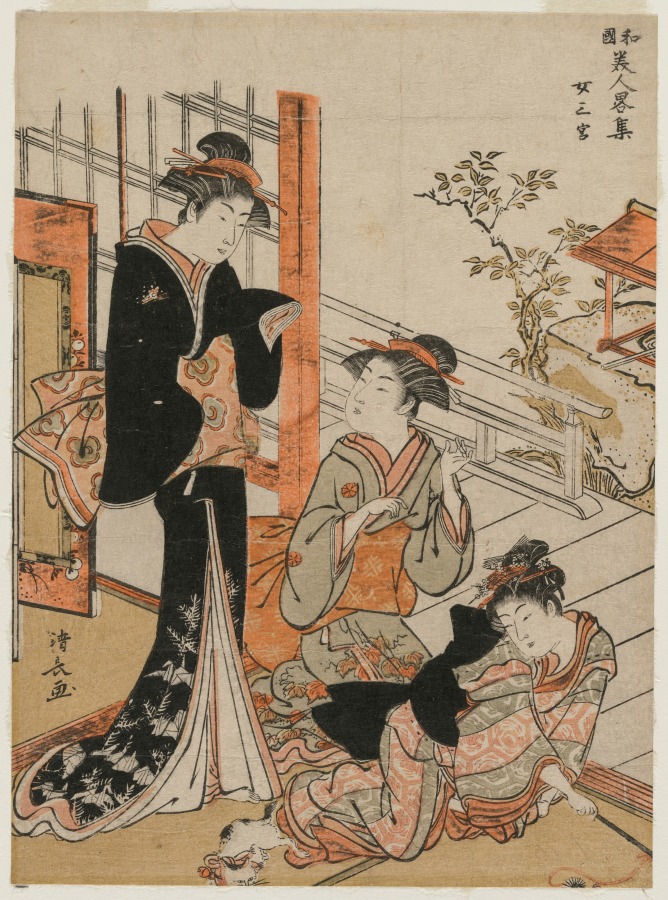 Torii Kiyonaga (Japanese, 1752–1815) — Three Women (from the
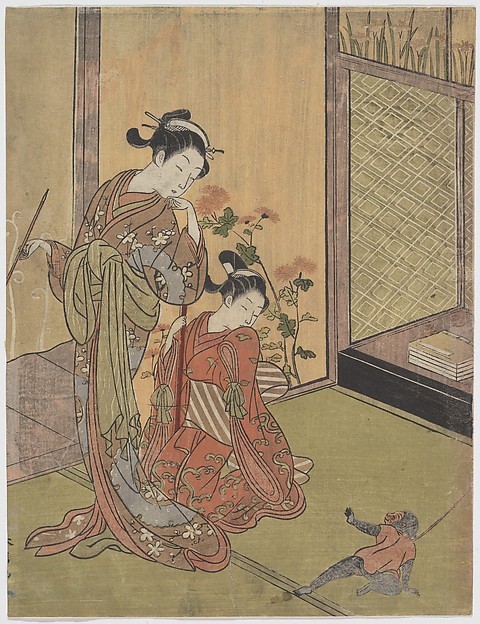 Suzuki Harunobu
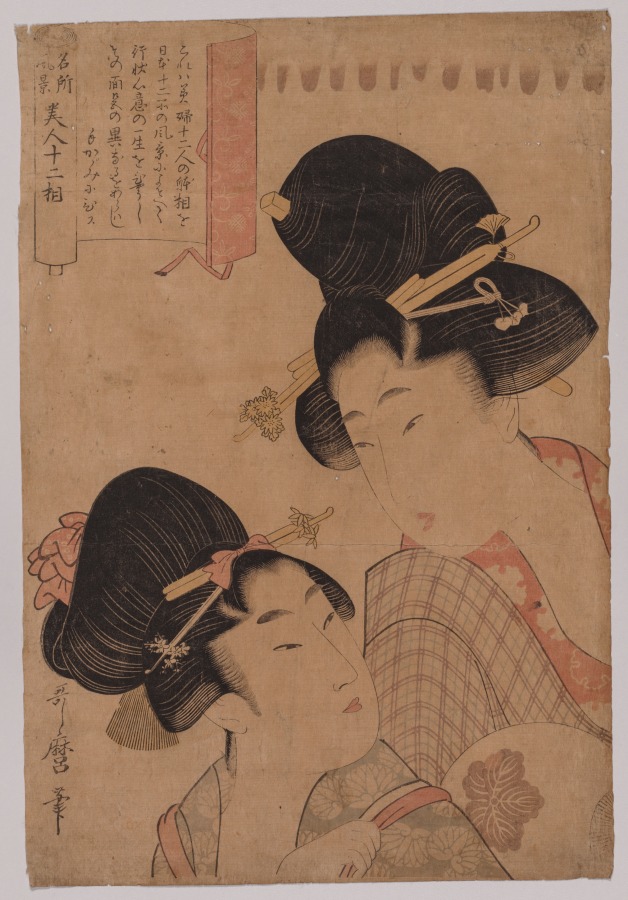 Kitagawa Utamaro (Japanese, c. 1754–1806) — Two Courtesans
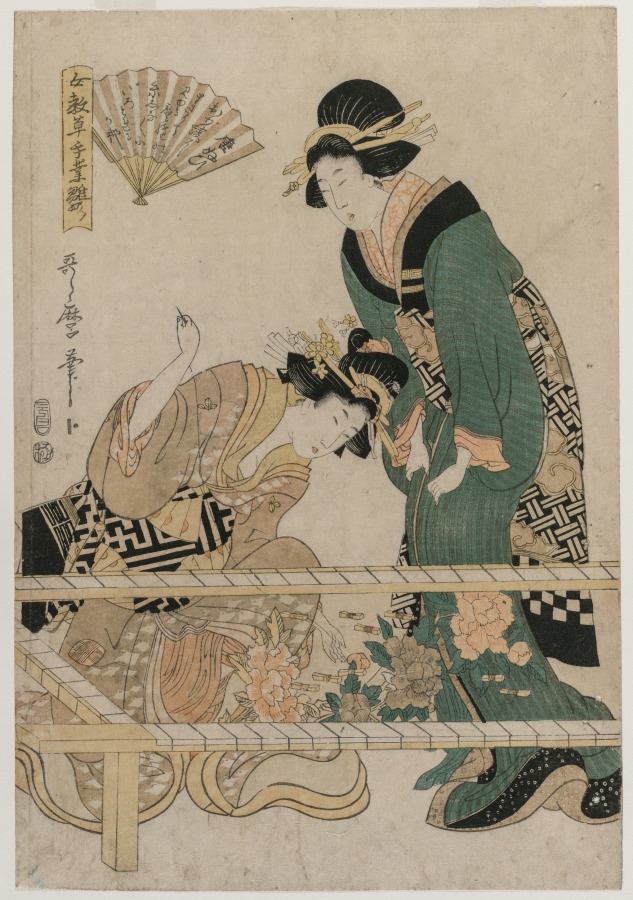 Kitagawa Utamaro II (Japanese, d. 1831?) — Chinese Embroider
 Suzuki Harunobu
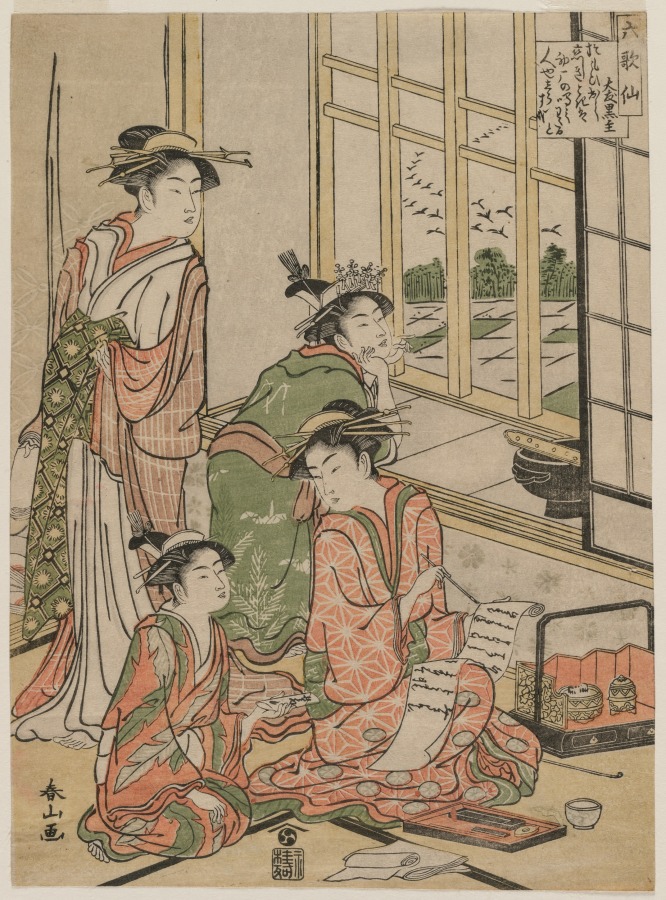 Katsukawa Shunzan (Japanese, active c. 1782–98) — Courtesans
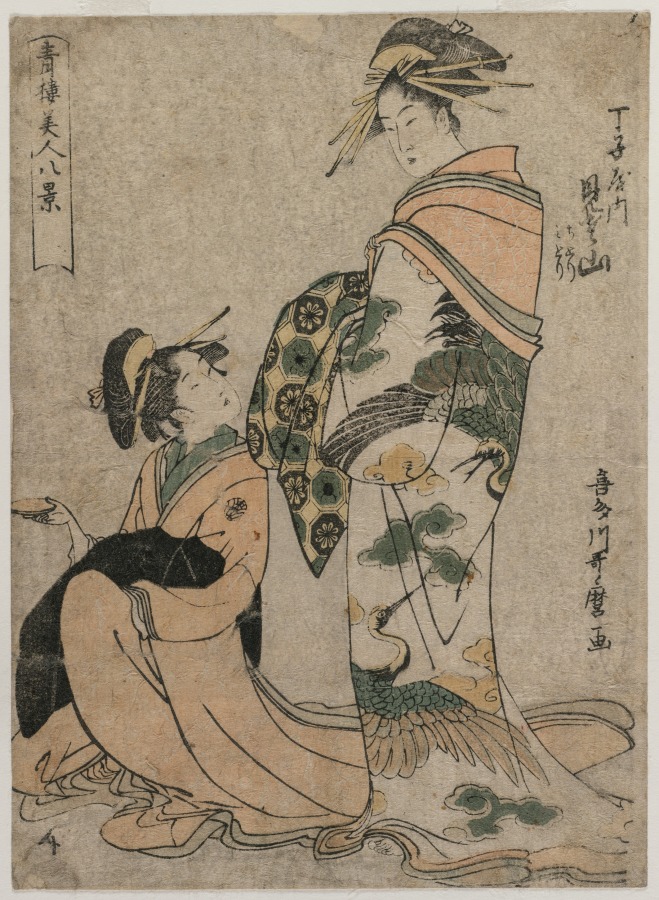 Kitagawa Utamaro (Japanese, c. 1754–1806) — The Courtesan Mi
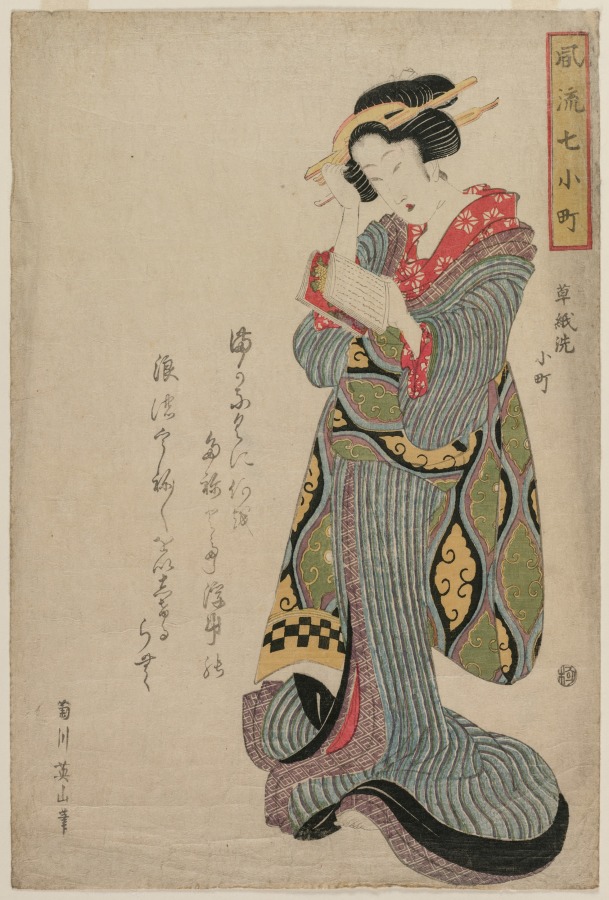 Kikukawa Eizan (Japanese, 1787–1867) — Komachi Washes the Bo
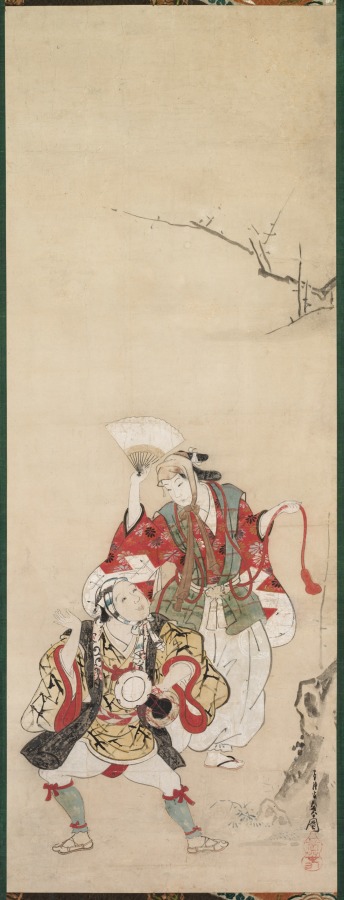 Miyagawa Chōshun (Japanese, 1683–1753) — Spring Dancers (Man
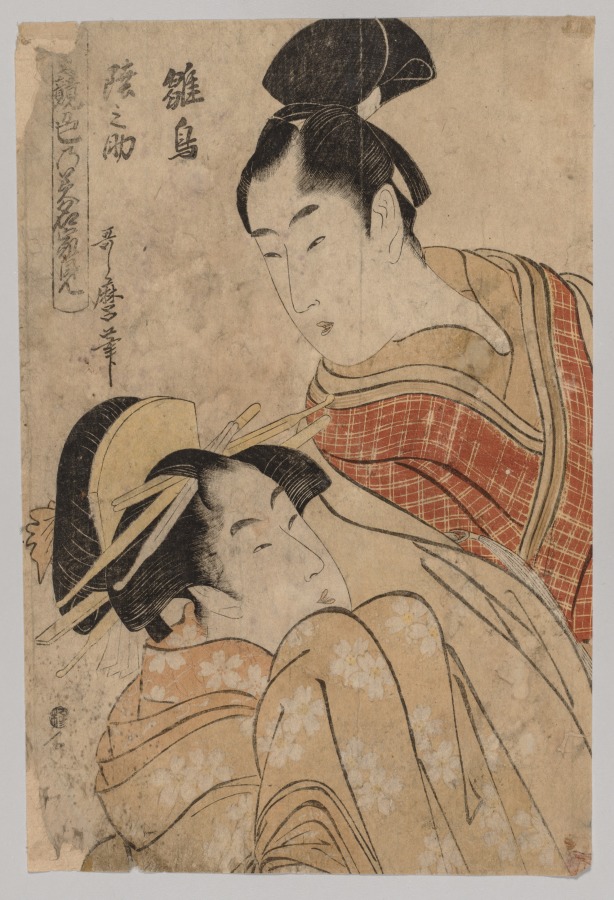 Kitagawa Utamaro (Japanese, c. 1754–1806) — Making Love