Giovanni Benedetto Castiglione
The Creation of Adam
SEE IT IN PERSON
Not currently on view
In the collection of Art Institute of Chicago, Chicago · as of July 2026
Discussion
FROM THE ART INSTITUTE OF CHICAGO’S CATALOG
Considered one of the most original and innovative Italian artists of the Baroque period, Giovanni Benedetto Castiglione literally separated light from darkness, creating form out of chaos in this work, his earliest known monotype. In a perfect match of medium and message, Castiglione, the Genoese artist credited with inventing the technique, used this new method to portray the central act of Genesis: the creation of man. He produced this electrifying image by subtracting the design from the inked surface of a copperplate with a blunt instrument, such as a stick or paintbrush handle, and then printing directly on a sheet of paper. Broad, angular strokes of white depict God emerging from a cloud, while thin, fluid lines extract the languid body of Adam from velvety blackness. Castiglione’s monotypes employ both this dark-ground technique, which naturally lends itself to dramatic and mysterious imagery, and the light-ground manner, in which the design is drawn in ink directly on a clean plate. Both processes yield only one fine impression. It was not until the nineteenth century that such versatile artists as Edgar Degas explored the monotype’s full potential.
Be the first to share your thoughts.
Sign in to join the discussion.
More by Giovanni Benedetto Castiglione


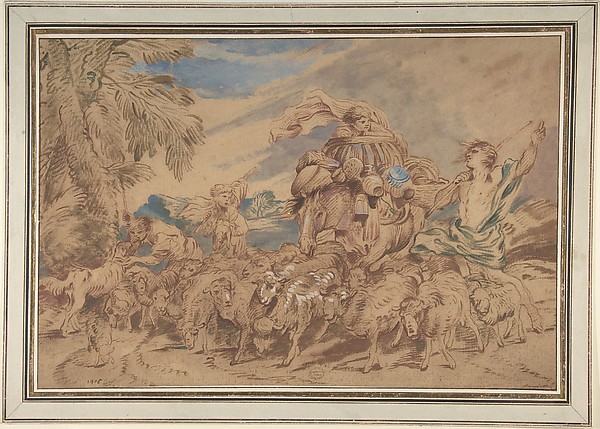
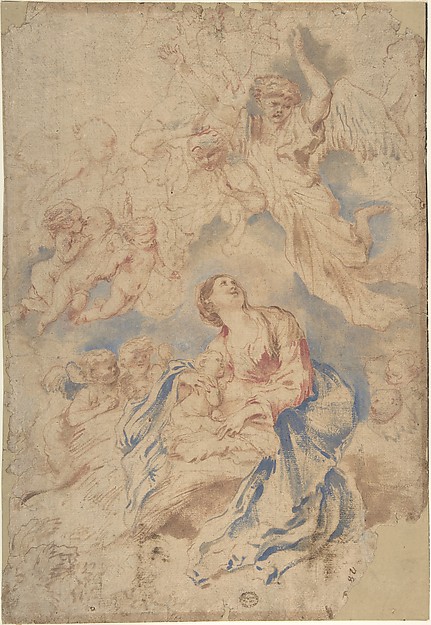
More like this
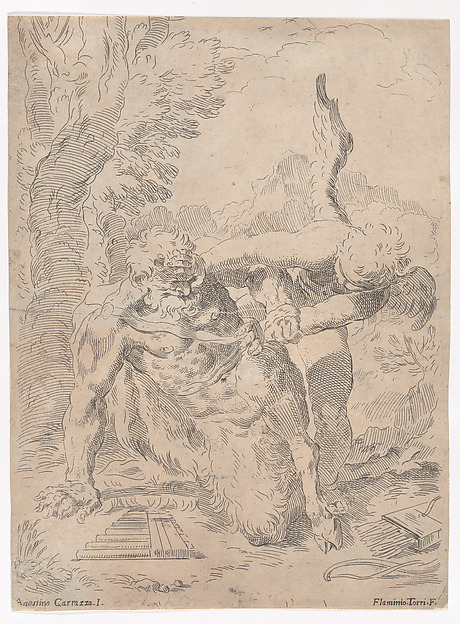 Flaminio Torre (Torri)|Agostino Carracci — Pan and Cupid
 Guido Reni — Apollo Killing Lion
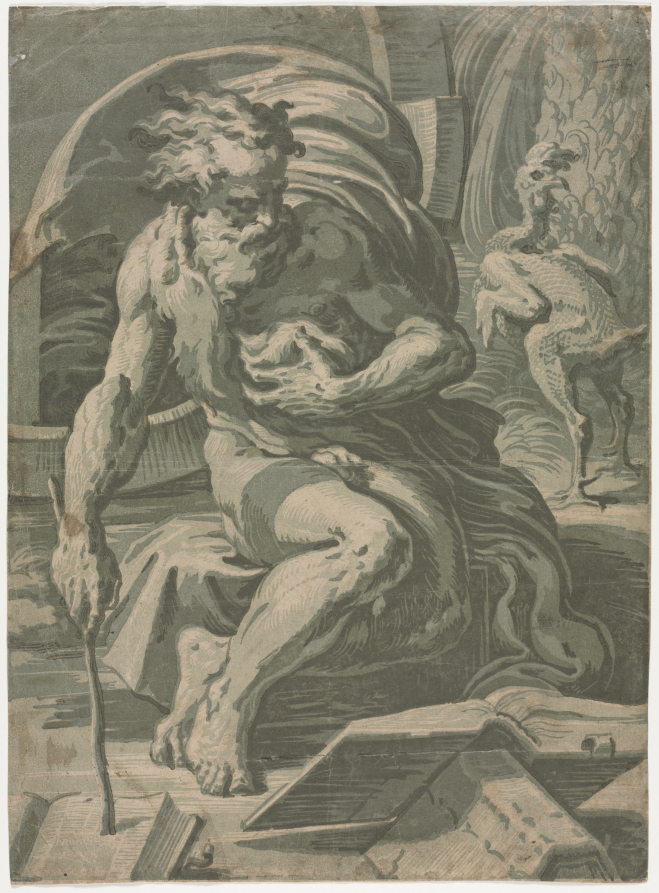 Ugo da Carpi (Italian, c. 1479–c. 1532) — Diogenes
 Hendrick Goltzius — Hercules and Cacus
 Girolamo da Carpi (Girolamo Sellari)|Matthias Oesterreich —
  Hendrick Goltzius — Demogorgon in the Cave of Eternity, from
 Stefano della Bella|Jean Desmarets de Saint-Sorlin|Henri Le
  Antonio Fantuzzi|Francesco Primaticcio — The Fall of Phaeton
 Maria Catharina Prestel (German, 1747–1794) — The Triumph of
 Anonymous, Italian, 16th century|Parmigianino (Girolamo Fran
 Hendrick Goltzius — Hercules and Cacus
 Giuseppe Diamantini — The Fall of Icarus