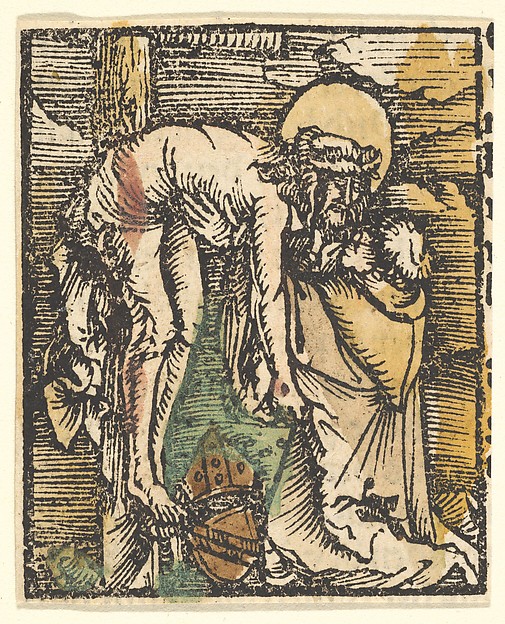
The Man of Sorrows
SEE IT IN PERSON
Not currently on view
In the collection of Art Institute of Chicago, Chicago · as of July 2026
Discussion
FROM THE ART INSTITUTE OF CHICAGO’S CATALOG
Devotional woodcuts were heavily used in 15th-century Europe, variously folded and carried as talismans, pasted on bedroom walls, and kept in family Bibles. While hundreds were printed at the time, only a handful of impressions have survived to today. The only remaining extant copy of the image, this impression was pasted into the frontispiece of a book from a German Augustine nunnery, where viewers would have imagined Christ’s pain through repeated study and imitation. The woodcut offers an intensely personal focal point of meditation on Christ’s suffering. Like the nearby Thirteen Buddhas (1925.1697), he appears as a floating vision. Nearly naked after his Crucifixion, blood streams from his nail wounds and crown of thorns.
Be the first to share your thoughts.
Sign in to join the discussion.
More by Unknown artist




More like this
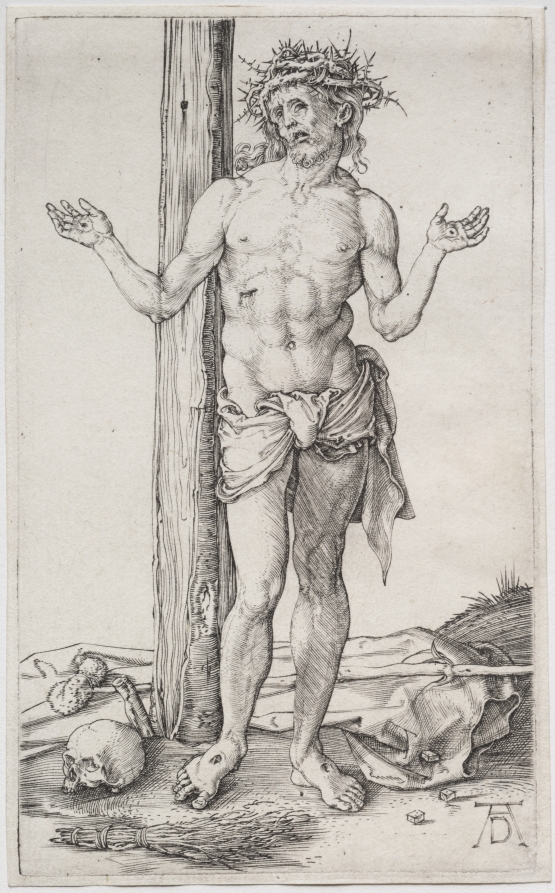 Albrecht Dürer (German, 1471–1528) — The Man of Sorrows Stan
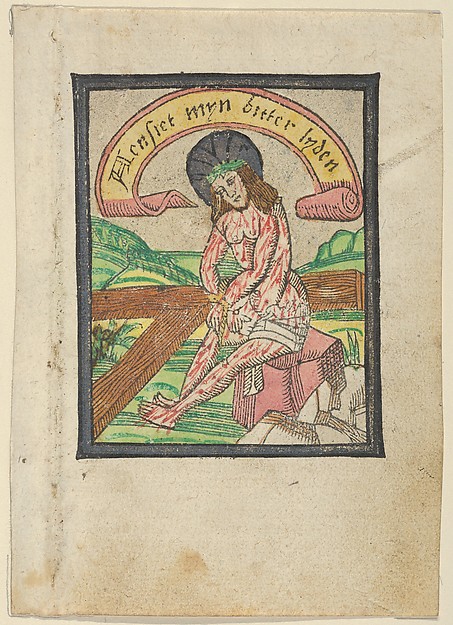 Anonymous, Netherlandish, 15th century — Man of Sorrows
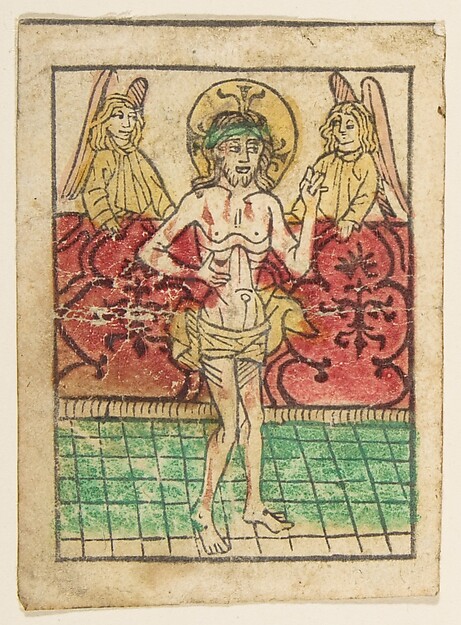 Anonymous, German, 15th century — The Man of Sorrows between
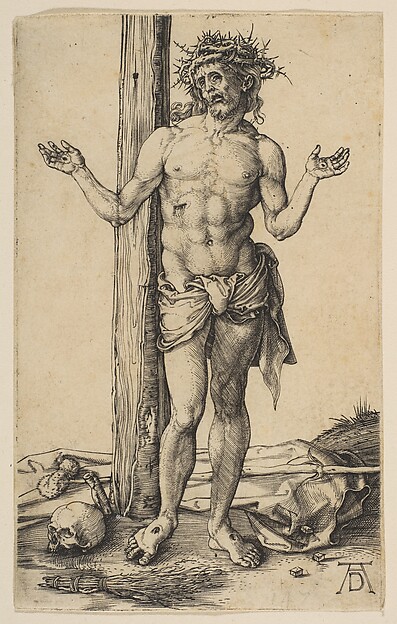 Albrecht Dürer — Man of Sorrows with Arms Outstretched
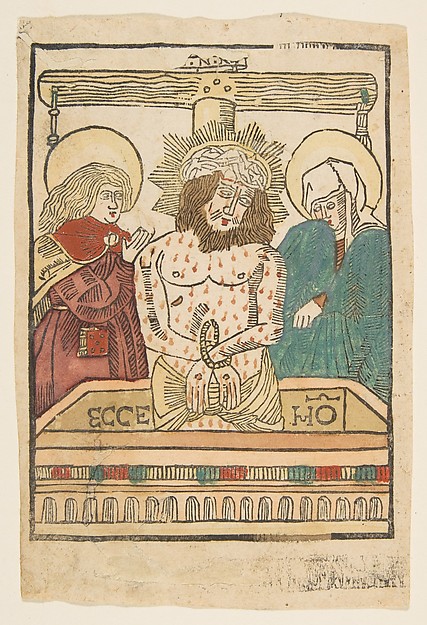 Anonymous, German, 15th century — The Man of Sorrows between
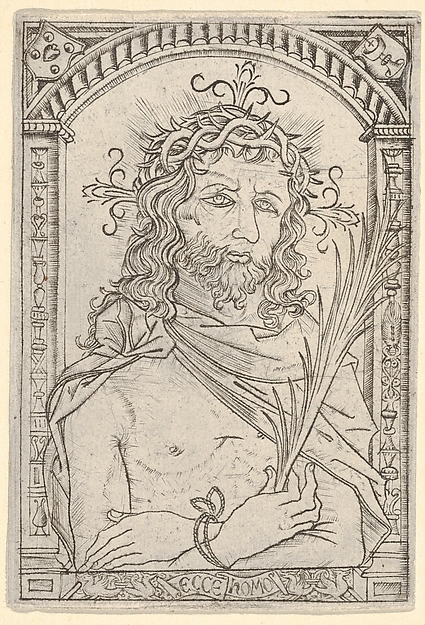 Nicoletto da Modena — Christ as the man of sorrows set withi
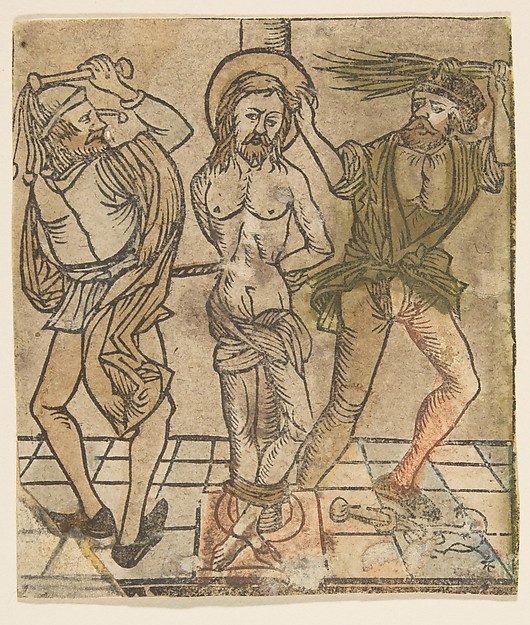 Anonymous, German, 15th century — The Flagellation
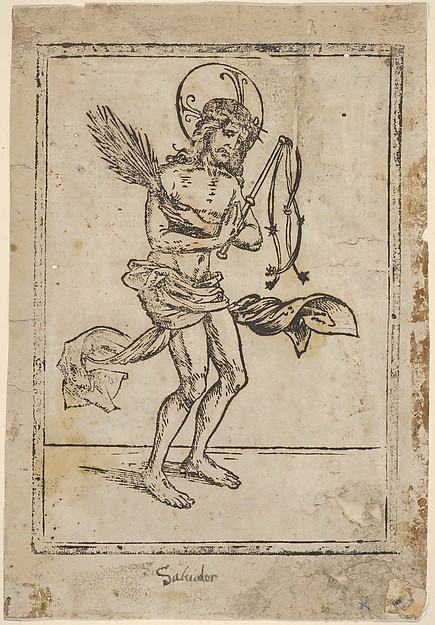 Hans Burgkmair — The Man of Sorrows Standing
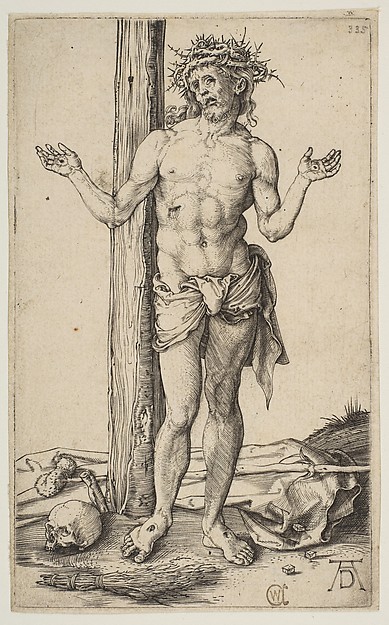 Albrecht Dürer — Man of Sorrows with Arms Outstretched
 Albrecht Dürer — Saint Sebastian Bound to the Column
 Albrecht Dürer — Saint Sebastian Bound to the Column
 Hans Baldung (called Hans Baldung Grien) — The Miracle of St