The Monstrous Sow of Landser
SEE IT IN PERSON
Not currently on view
In the collection of Art Institute of Chicago, Chicago · as of July 2026
Discussion
FROM THE ART INSTITUTE OF CHICAGO’S CATALOG
Just as he never saw the rhinoceros he portrayed in another woodcut, Albrecht Dürer never witnessed the female pig born at Landser in Germany in 1496 with two conjoined bodies. He did very likely read about it in a broadsheet with a rudimentary woodcut and a more extensive text description. His surprisingly realistic rendering of how the unseen pig—which died soon after birth—might have looked is similarly convincing but inaccurate. While the engraving does not insist on a religious interpretation, misbirths and other unusual natural occurrences were interpreted as signs during this period, either of the imminent Apocalypse or the need for new crusades against the Turks.
Be the first to share your thoughts.
Sign in to join the discussion.
More by Albrecht Dürer

More like this
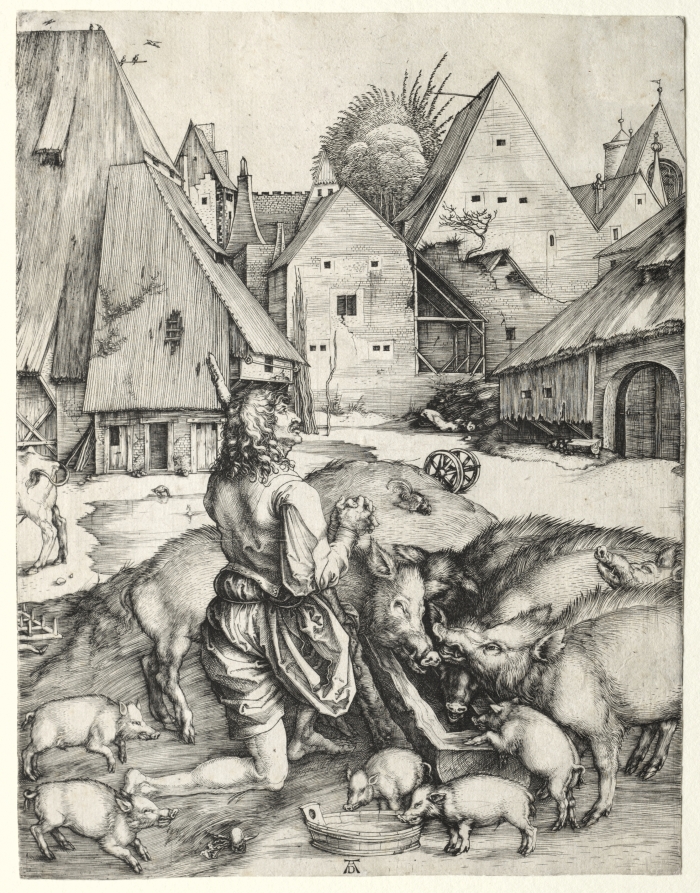 Albrecht Dürer (German, 1471–1528) — The Prodigal Son
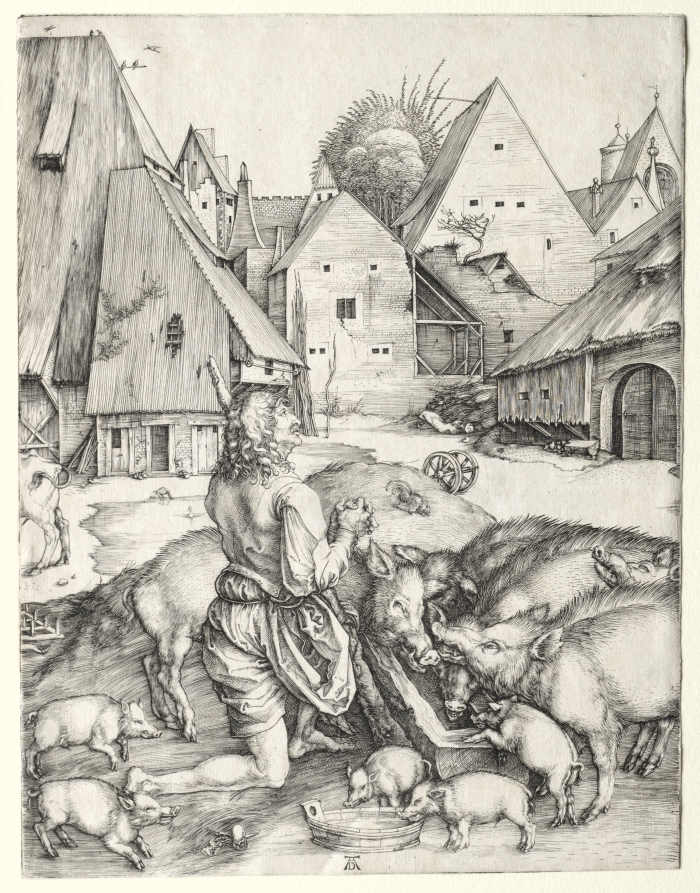 Albrecht Dürer (German, 1471–1528) — The Prodigal Son
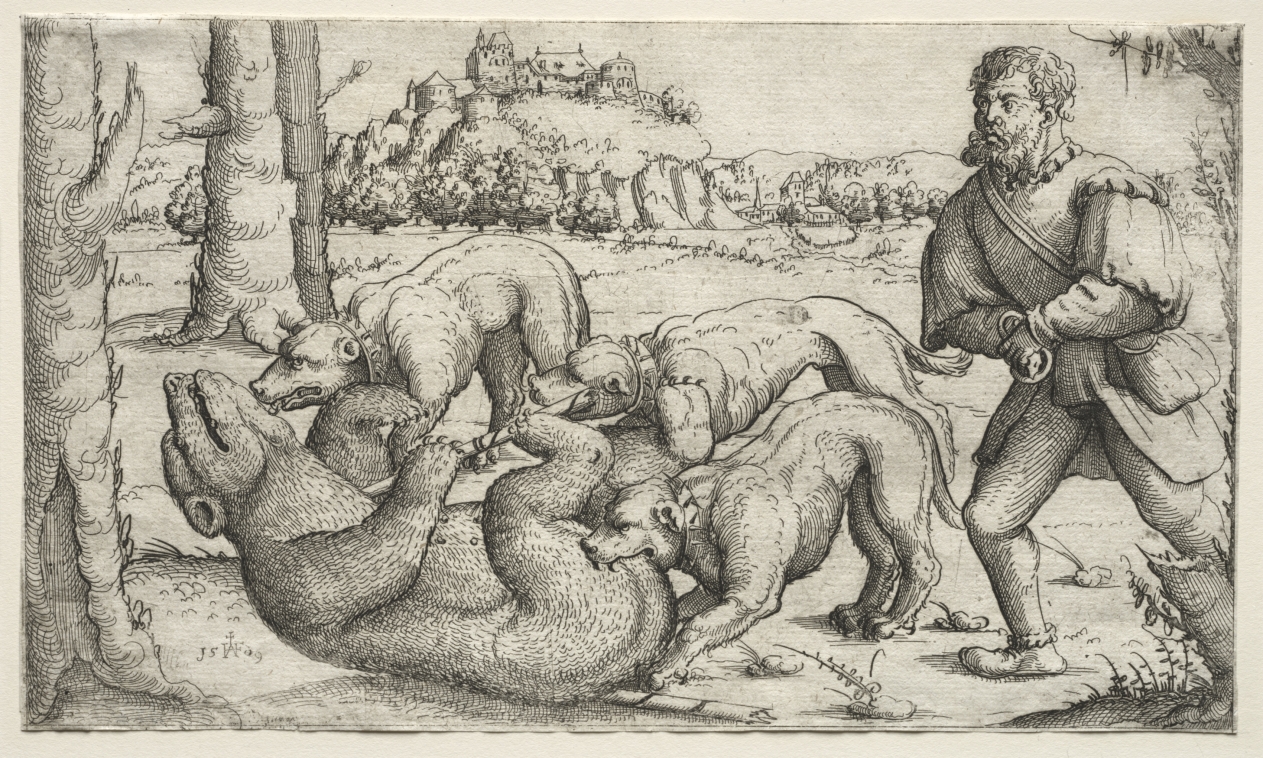 Augustin Hirschvogel (German, 1503–1553) — A Bear Hunt
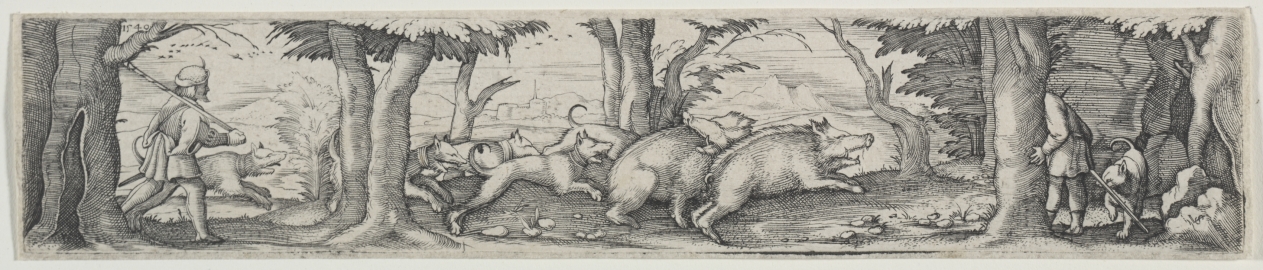 Virgil Solis (German, 1514–1562) — Boar Hunt
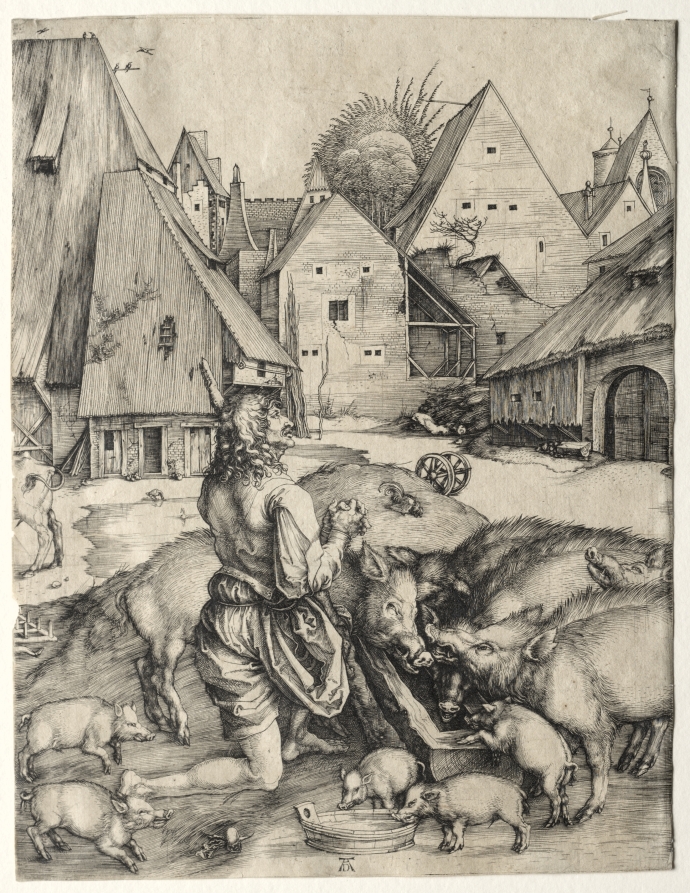 Albrecht Dürer (German, 1471–1528) — The Prodigal Son
 Antonio Tempesta — Hercules and the Boar of Erymanthus: Herc
 Hans Sebald Beham — The Prodigal Son with the Swine, plate t
 Giovanni Pietro da Birago|Giovanni Antonio da Brescia — Cupi
 Hans Sebald Beham (German, 1500–1550) — The Prodigal Son: T
 Giovanni Domenico Tiepolo — A Boar, Galloping to the Left, a
 Israhel van Meckenem|Martin Schongauer — St. George
 Hieronymous Hopfer — Abduction of Proserpine on a Unicorn