Green and Blue: The Dancer
SEE IT IN PERSON
Not currently on view
In the collection of Art Institute of Chicago, Chicago · as of July 2026
Discussion
FROM THE ART INSTITUTE OF CHICAGO’S CATALOG
Inspired by Greek sculpture and Japanese prints, James McNeill Whistler became entranced with portraying the female form clad in diaphanous drapery in the 1890s. He developed this theme in all the media in which he worked, including transfer lithography, oil, pastel, and watercolor. The artist usually provided garments for his models to wear, often classical gossamer gowns with high waists and crossed bodices paired with brightly colored kerchiefs. His models needed a certain degree of strength and agility, as he sometimes asked them to dance about his studio until he found a suitable pose. In Green and Blue: The Dancer , Whistler employed thin watercolor washes to distill the graceful movements of his lissome young model. The brown paper on which he painted lends opacity to the washes, thereby adding subtle weight to the thin veils of fabric draping the figure.
Be the first to share your thoughts.
Sign in to join the discussion.
More by James McNeill Whistler




More like this
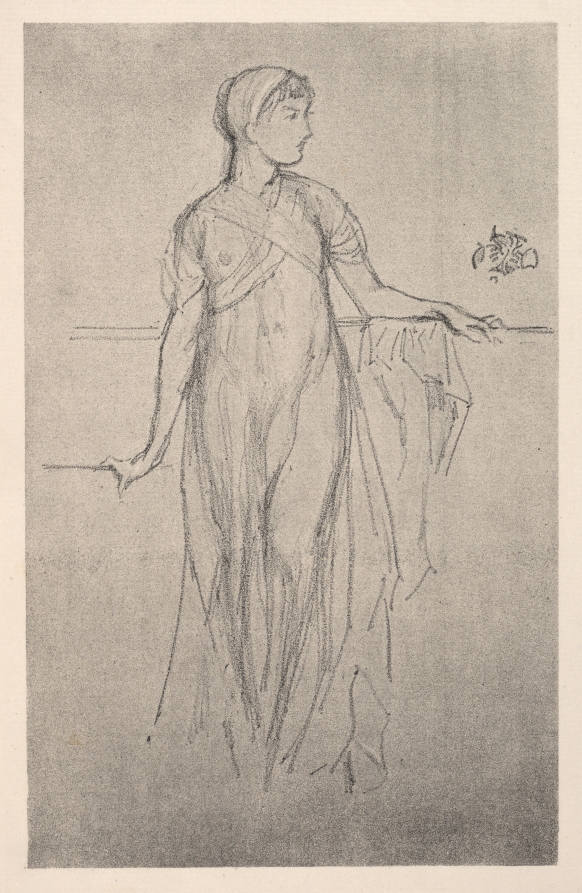 James McNeill Whistler (American, 1834–1903) — Study
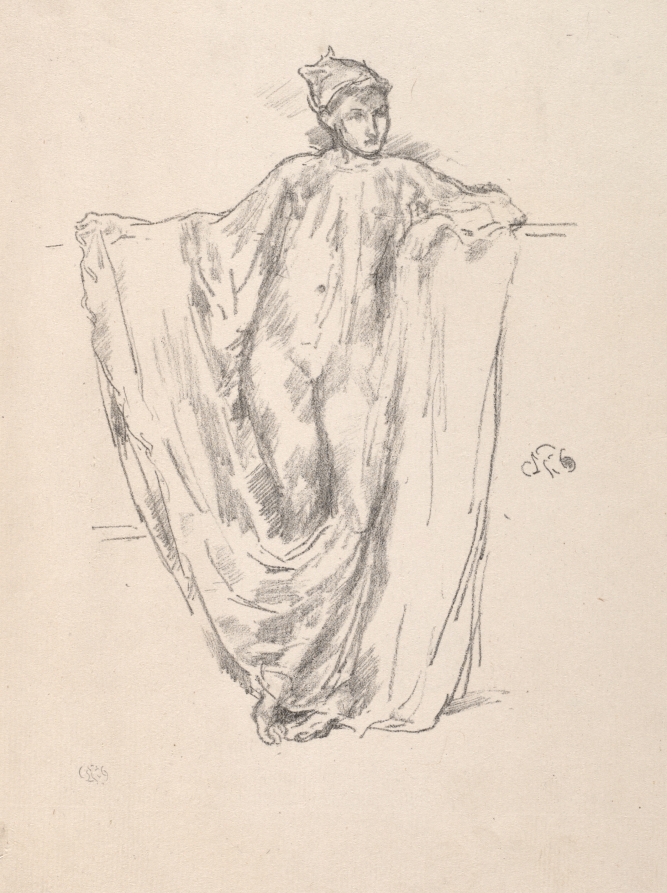 James McNeill Whistler (American, 1834–1903) — Figure Study
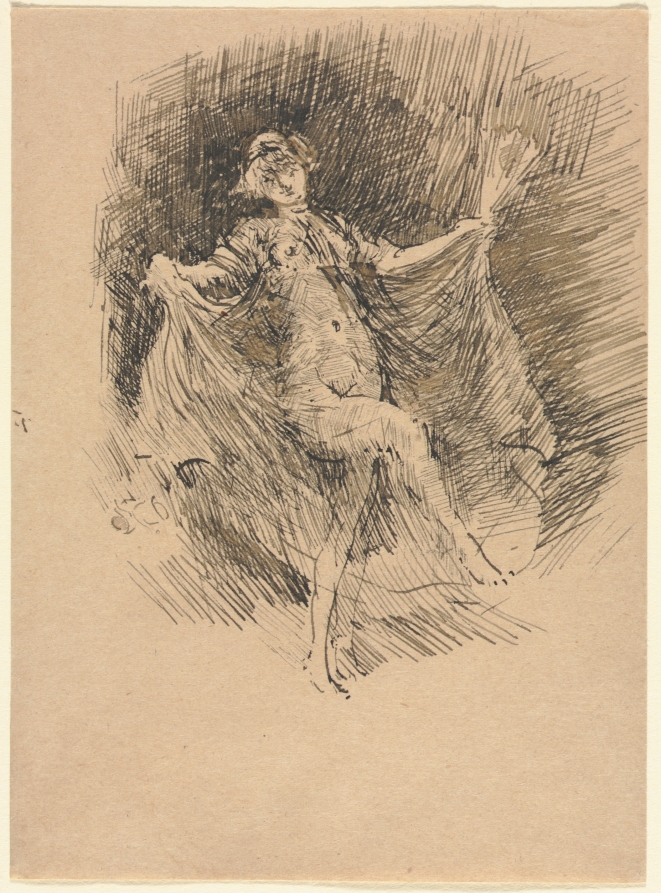 James McNeill Whistler (American, 1834–1903) — The Dancer, N
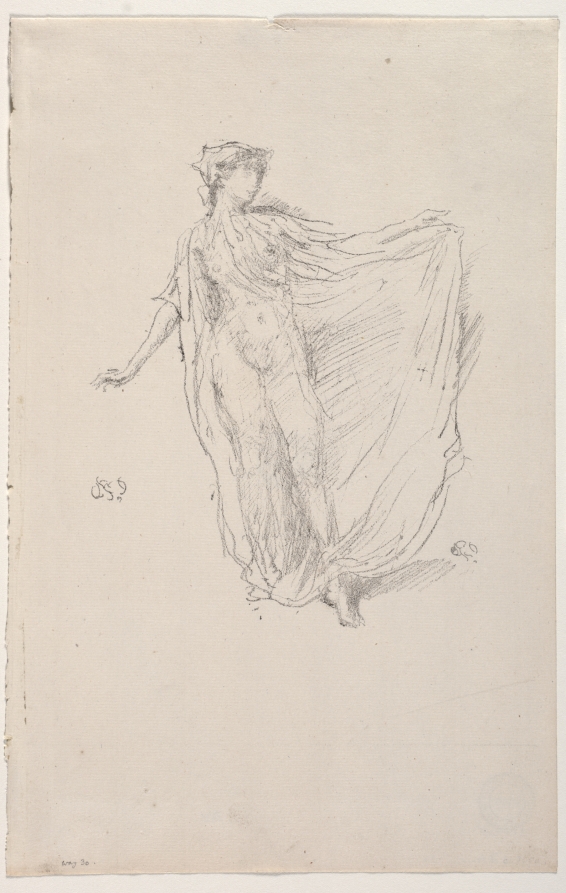 James McNeill Whistler (American, 1834–1903) — The Dancing G
 Sir Edward Burne-Jones — Kneeling Draped Figure
 Charles Bargue — Study for "The Almeh"
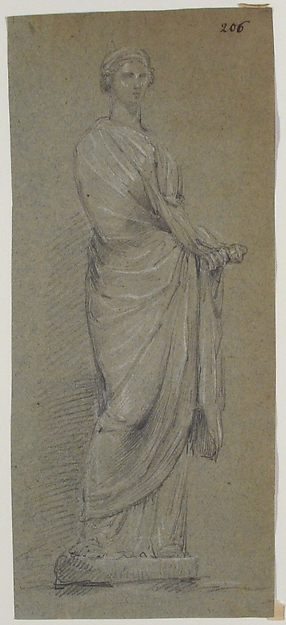 Anonymous, French, 18th century — Drawing of Female Statue
 Biagio Pupini — Standing Woman with Laurel Wreath
 Sir Edward Burne-Jones — Draped Figure of Woman Playing on a
 Sir Edward Burne-Jones — Study for Pilgrim in Romaunt of the
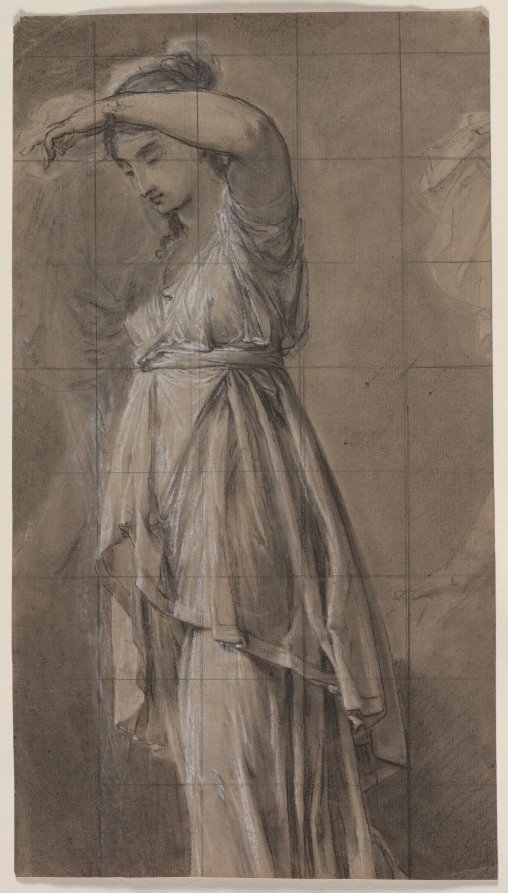 Anicet Charles Gabriel Lemonnier (French, 1743–1824) — Study