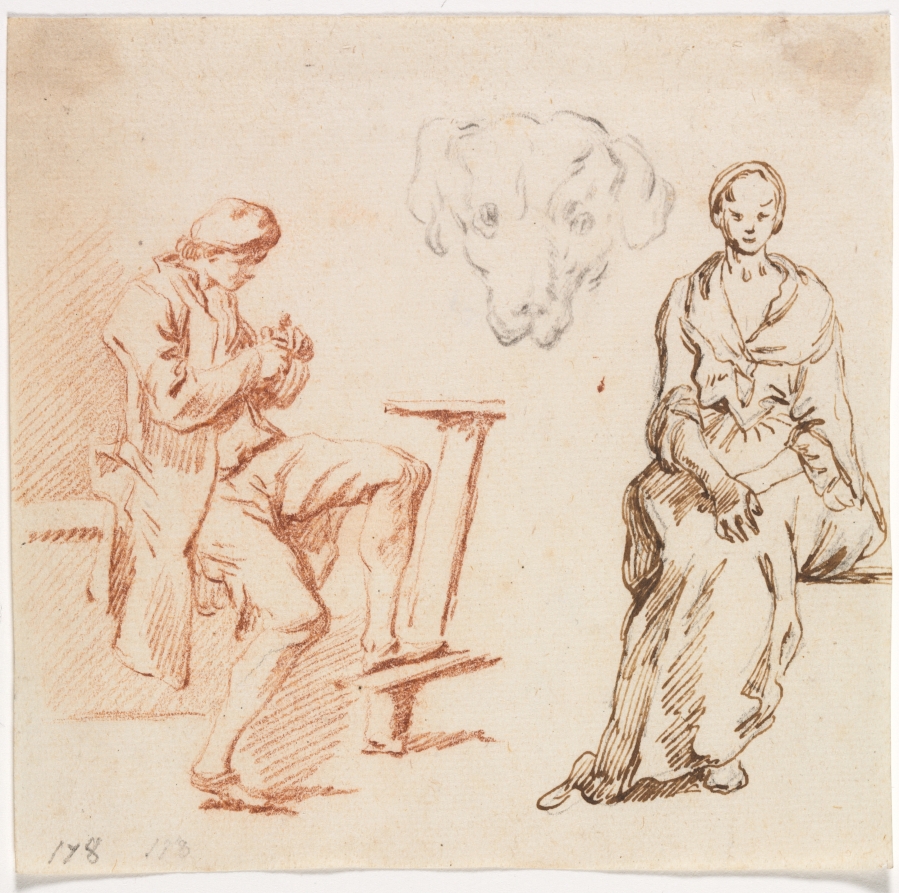
In the collection of Cleveland Museum of Art, Cleveland — check current display status with the museum.
FROM THE CLEVELAND MUSEUM OF ART’S CATALOG
Likely Vernet's first major work during his study in Rome, this landscape demonstrates his signature style. Vernet preferred and is remembered for marine subjects and water is also a central theme in this painting. Vernet became the predominant French landscape painter of the 18th century, contributing to a long French tradition. While in Rome, he absorbed the Italian tradition of dramatic, rugged landscape paintings, established by Salvador Rosa in the 1600s. This influence is reflected in Vernet's presentation of the craggy rock formations and cascades that made Tivoli, a small town twenty miles east of Rome, famous. Vernet here synthesizes this style with the calmer pastoral mode, more typical of the French landscape tradition, with its roots in the work of Claude Lorrain. Vernet generally inserted elements of humanity in his work, here evident in the touches of civilization in the background and the fishermen in the foreground. Vernet enjoyed considerable popularity, evidenced by the fact that Napoleon's brother Lucien Bonaparte held this painting as a part of his impressive collection.
Be the first to share your thoughts.
Sign in to join the discussion.
 Jacob Isaacksz van Ruisdael — Mountainous Landscape with Wat
 Cornelis Apostool — The Anio Valley with the Waterfalls of T
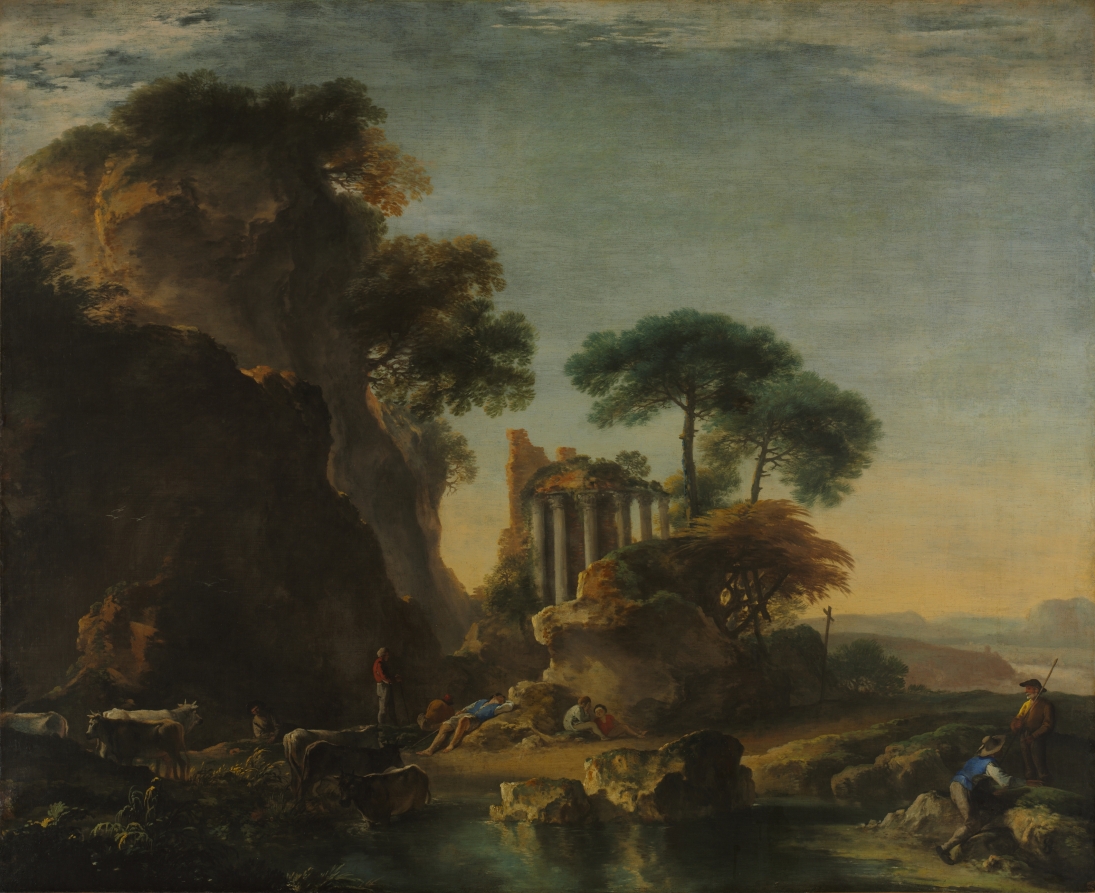 Salvator Rosa (Italian, 1615–1673) — Ruins in a Rocky Landsc
 Adam Pijnacker — A waterfall
 Abraham Teerlink — De waterval van Tivoli
 Isaac de Moucheron — View of Tivoli
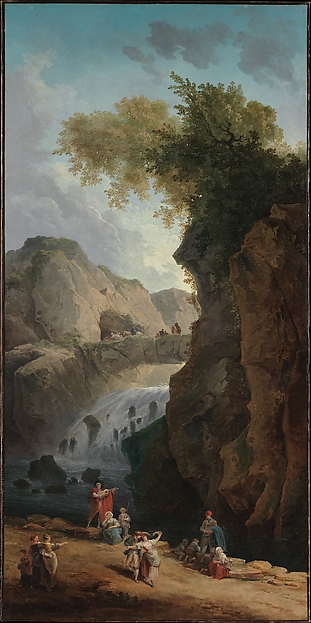 Hubert Robert — The Dance
 Johann Christian Reinhart — Felslandschaft mit Wasserfall
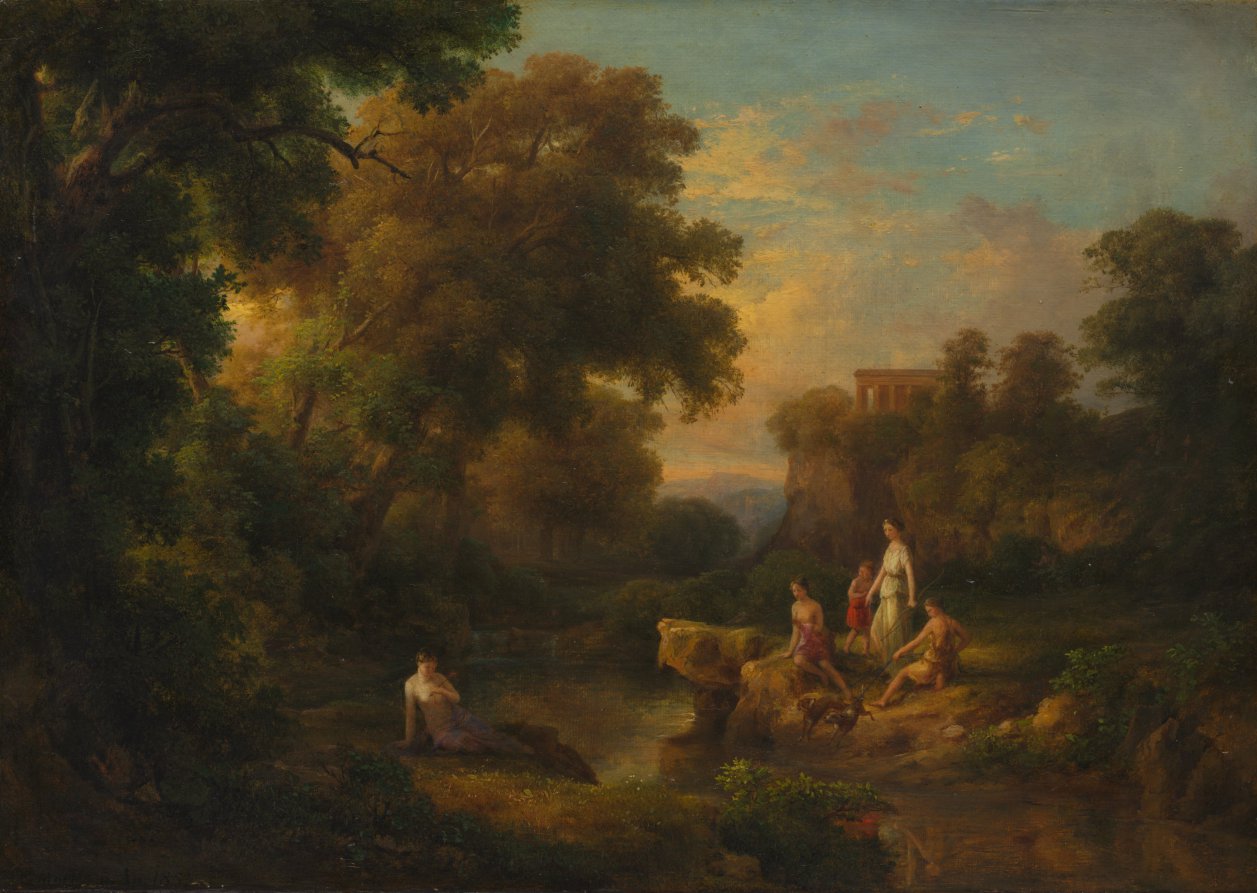 Károly Markó (Hungarian, 1791–1860) — Diana and Her Nymphs
 Joseph Vernet — Landscape with Waterfall and Figures
 Roelant Roghman — Mountainous landscape with waterfall
 Heinrich Wüest — Schaffhauser Rheinfall