Act 11, Part 1: The Approach to the Night Attack (Juichidanme ichi, yochi oshiyose), from the series "The Revenge of the Loyal Retainers (Chushingura)"
SEE IT IN PERSON
Not currently on view
In the collection of Art Institute of Chicago, Chicago · as of July 2026
Discussion
FROM THE ART INSTITUTE OF CHICAGO’S CATALOG
The story of The Forty-seven Samurai is based on events that occurred at the beginning of the 18th century and is one of the longest plays in the Kabuki repertoire that is still performed. The drama recounts the death of Enya Hangan, who was forced to commit suicide by the evil Moronao, and the revenge sought by Hangan’s loyal retainers for their lord’s death. In the scene depicted here (which occurs toward the end of the play), the forty-seven loyal samurai are crossing Ryogoku Bridge on their way to Moronao’s mansion where they will eventually slay him. In the foreground, two of the samurai stand guard in a boat.
Be the first to share your thoughts.
Sign in to join the discussion.
More by Utagawa Hiroshige
 歌川広重画 「東海道五十三次 大尾 京師 三条大橋」|Kyoto: The Great Bridge at Sanjō
  Opening of the Garden at Fukagawa Hachiman Shrine (Fukagawa
  東海道五十三次之内 阪之下 筆捨嶺|Saka-no-shita, Fude-sute Mine
 Kumano Junisha Shrine in Tsunohazu, Popularly Known as Junis
 Gotenyama no yu-zakura|東都名所 御殿山之夕桜|Evening Cherry Blossoms a
 Sakanoshita: Peak of Fudesute Mountain (Sakanoshita, Fudesut
 Maisaka: View of Imagiri (Maisaka, Imagiri shinkei), from th
 Inume Pass in Kai Province (Kai Inume toge), from the series
More like this
 Ikeda Eisen (Japanese, 1790–1848) — A Distant View of Snow o
 Keisai Eisen — No. 15: Itahana (Jugo: Itahana), from the ser
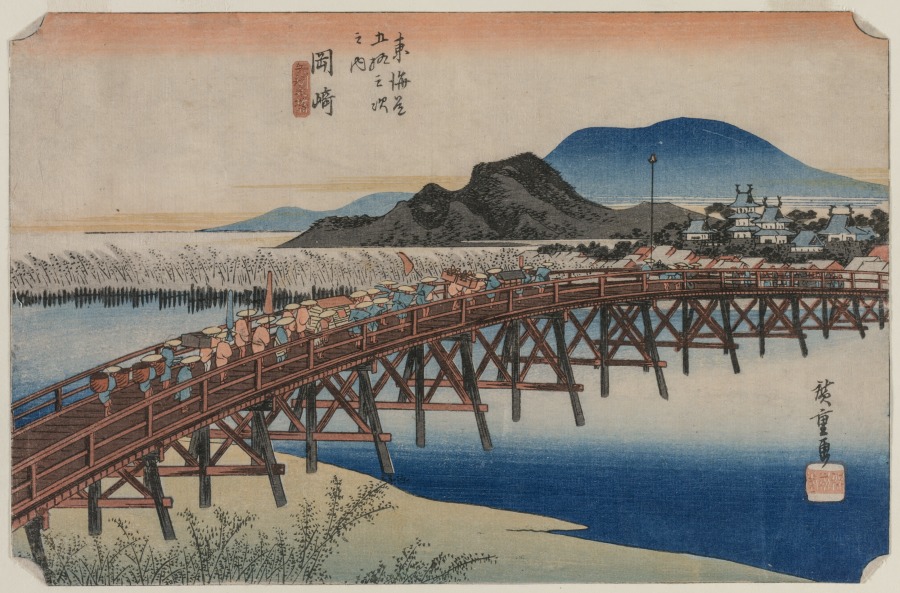 Utagawa Hiroshige (Japanese, 1797–1858) — Yahagi Bridge at O
 Katsushika Hokusai — Ariwara no Narihirafrom the series One
  Keisai Eisen — Distant View of Snow on the Sumida River in E
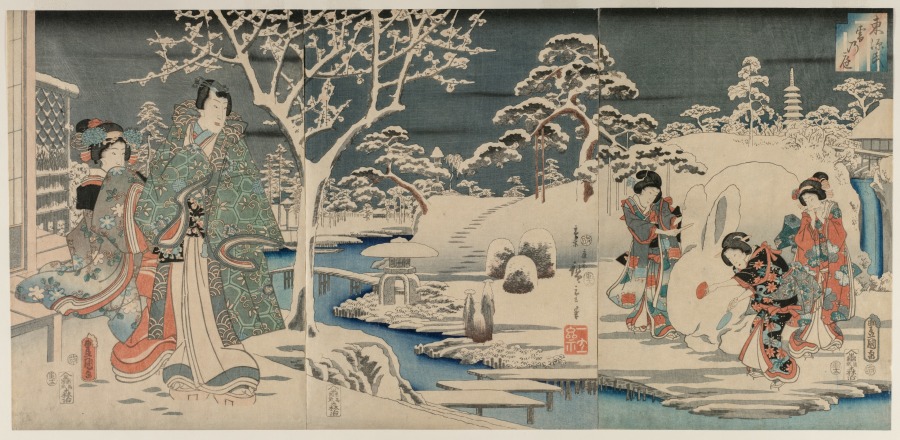 Utagawa Hiroshige (Japanese, 1797–1858) — The Snowy Garden
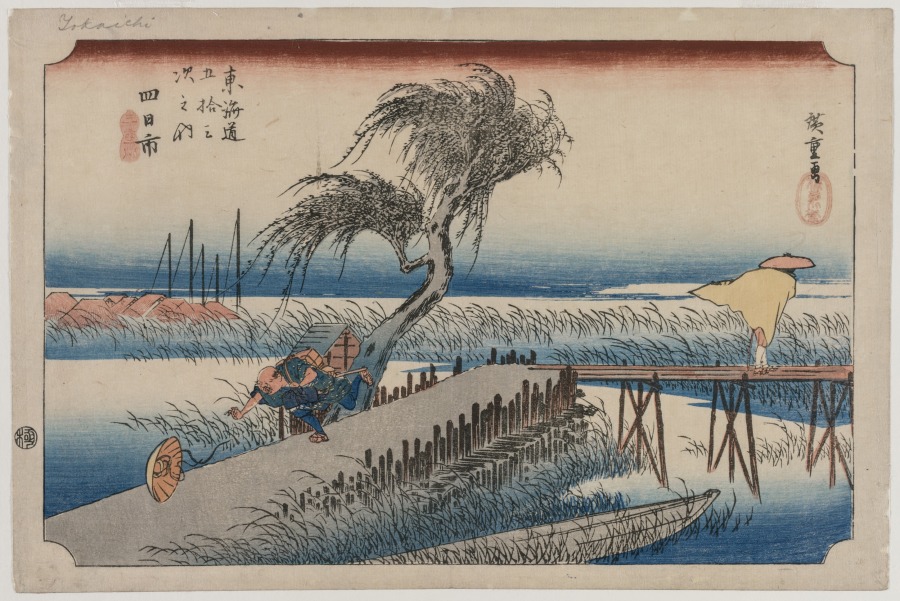 Utagawa Hiroshige (Japanese, 1797–1858) — Yokkaichi: View of
 Utagawa Hiroshige II (Shigenobu) — Kintai Bridge at Iwakuni
 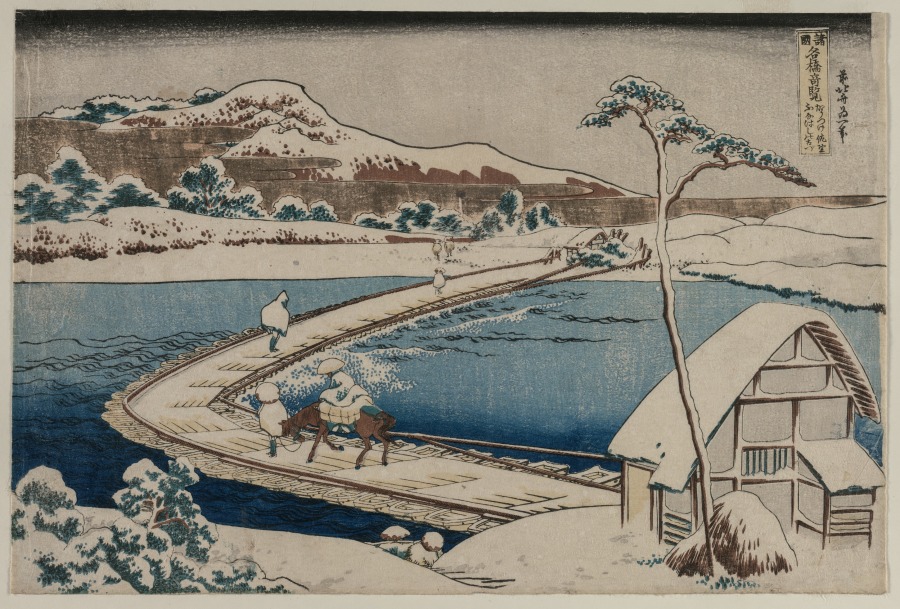 Katsushika Hokusai (Japanese, 1760–1849) — An Ancient Pictur