Printed Fabric
SEE IT IN PERSON
Not currently on view
In the collection of Art Institute of Chicago, Chicago · as of July 2026
Discussion
FROM THE ART INSTITUTE OF CHICAGO’S CATALOG
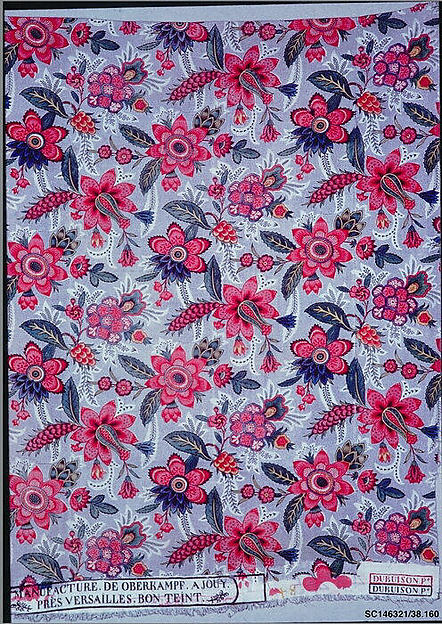
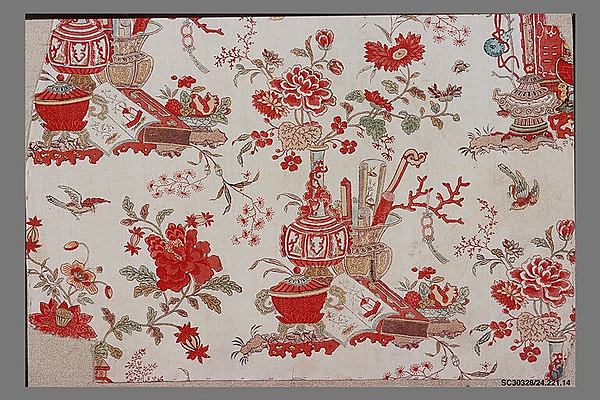
European manufacturers never successfully replicated Indian techniques for hand painting chintz (derived from the Hindi name for them, chint ) fabrics, which were labor intensive and required thorough knowledge of the complex chemistry of natural dyes. After struggling with technical challenges for decades, Europeans improved color block printing techniques during the late 18th century. These advances enabled manufacturers to print multiple colors on a single fabric to more successfully imitate the brilliantly colored chintzes made in India.
Be the first to share your thoughts.
Sign in to join the discussion.
More by Oberkampf Manufactory


More like this
 Jean Baptiste Pillement — Panel
 Turkey — Cover
 France, probably Jouy-en-Josas — Panel
 English — Crewel Work Curtain
 Panel
Panel William Morris — Cray
 England, Spitalfields — Panel (From a Dress)
 Anna Maria Garthwaite — Panel
 Harvey Nichols & Co. Limited — Panel
 Netherlands — Fragment
 Fragment
 France — Fragment (Furnishing Fabric)