In the collection of Cleveland Museum of Art, Cleveland — check current display status with the museum.
FROM THE CLEVELAND MUSEUM OF ART’S CATALOG
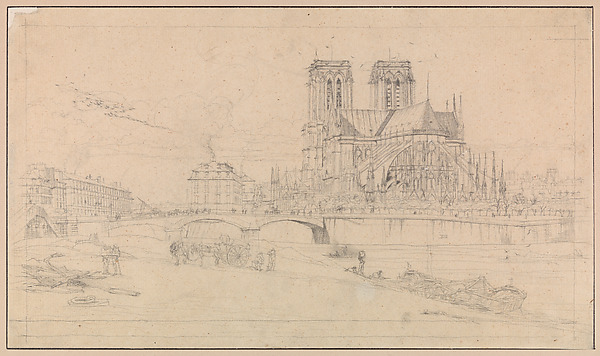
Although Meryon made the first study for this scene with a camera lucida (an apparatus containing a prism or an arrangement of mirrors that reflects the image on a surface so that its outlines may be traced), the artist then made changes to improve the composition—extending the height of the towers of Notre-Dame, for instance. Meryon did not mean his plates to have the precision of a photograph. Rather, he combined two views—a sketch from a low point at the water's edge and a view from the parapet—which, although not totally accurate, are believable. Charles Baudelaire (1821–1867) reported in a letter that he discussed this print with the artist who claimed "that the shadow cast by a portion of the stonework on the side wall of the Pont Neuf looked exactly like the profile of a sphinx; that this was entirely coincidence on his part and only later did he take note of this peculiarity."
Be the first to share your thoughts.
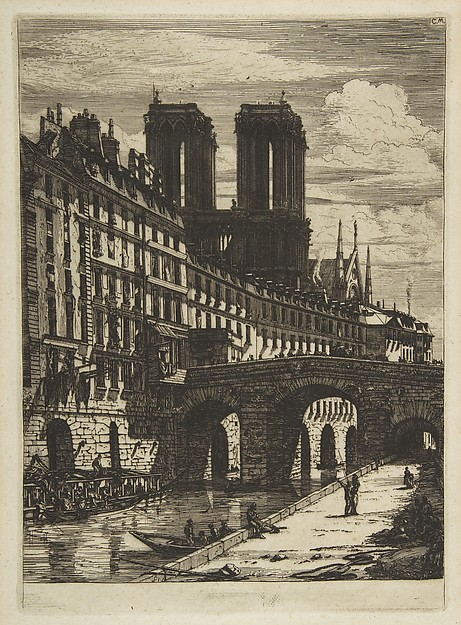 Charles Meryon — The Petit Pont, Paris
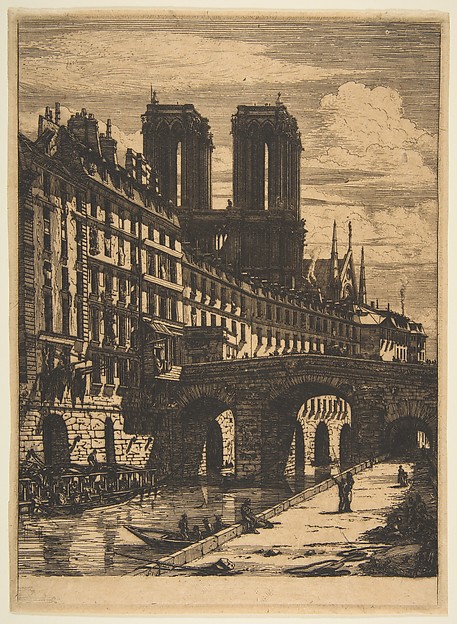 Charles Meryon — The Petit Pont, Paris
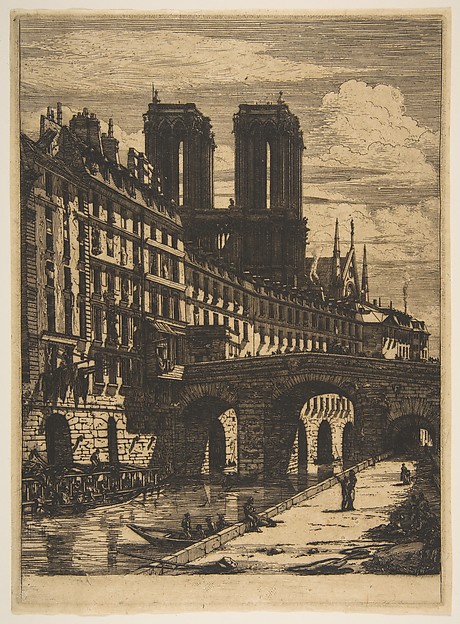 Charles Meryon — The Petit Pont, Paris
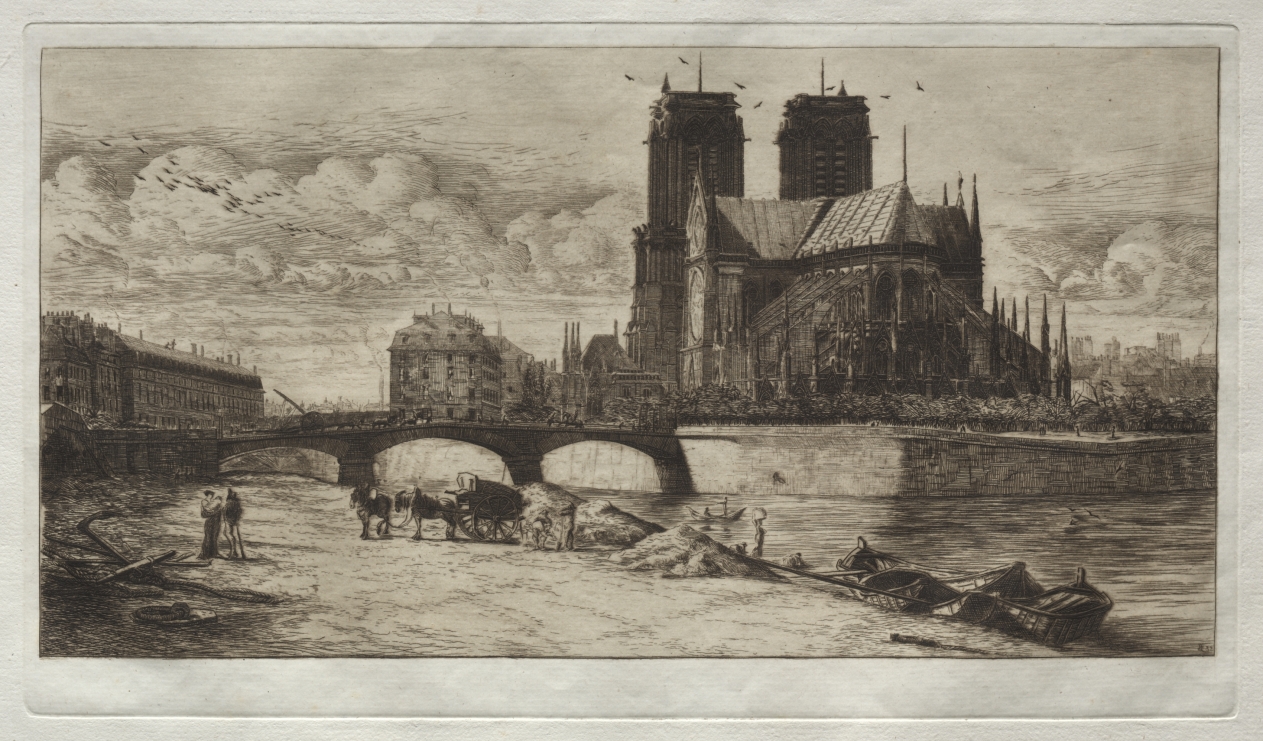 Edmond Gosselin (French) — L'Abside de Notre Dame de Paris
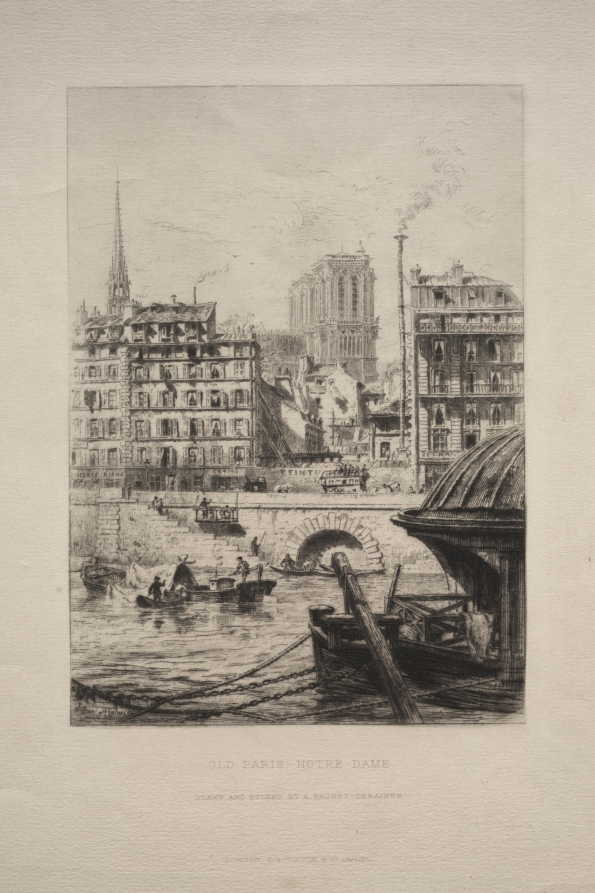 Alfred Brunet-Debaines (French, 1845–1939) — Old Paris: Not
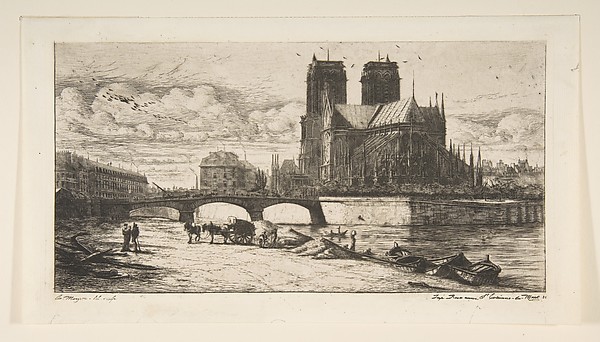 Charles Meryon — The Apse of Notre-Dame, Paris
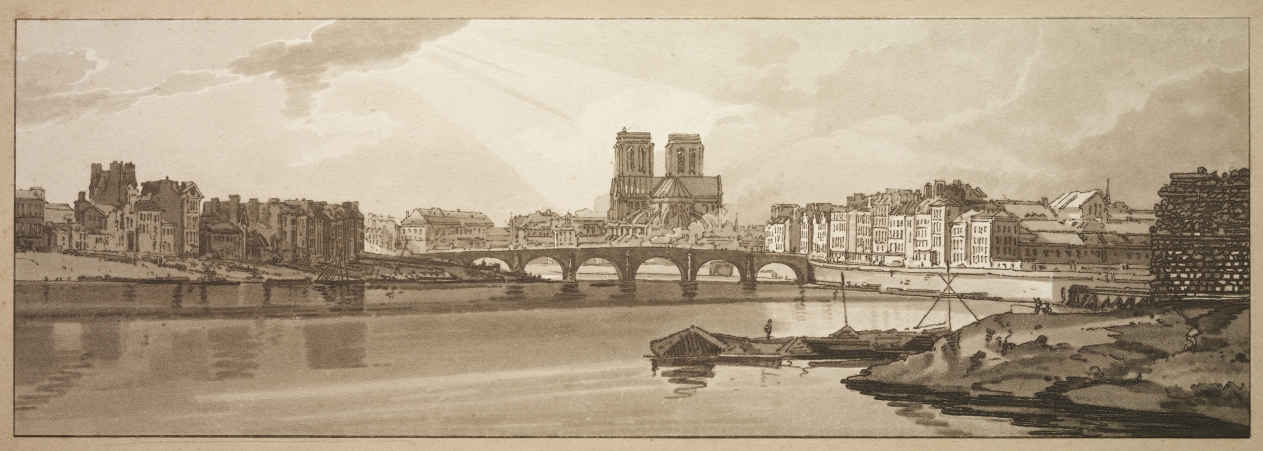 Thomas Girtin (British, 1775–1802) — A Selection of Twenty o
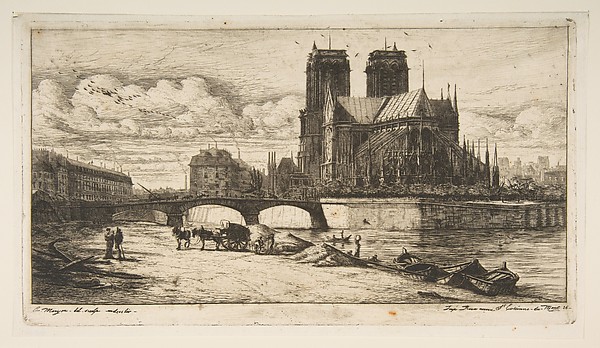 Charles Meryon — The Apse of Nôtre-Dame, Paris
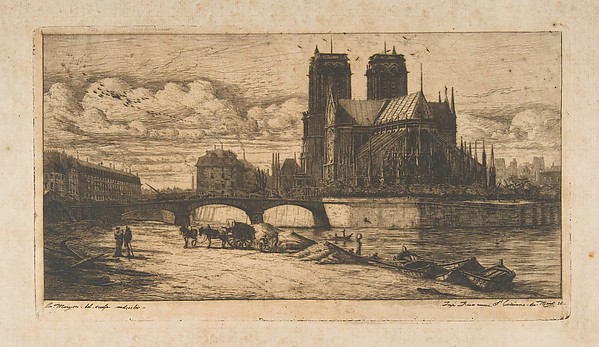 Charles Meryon — The Apse of Notre-Dame, Paris
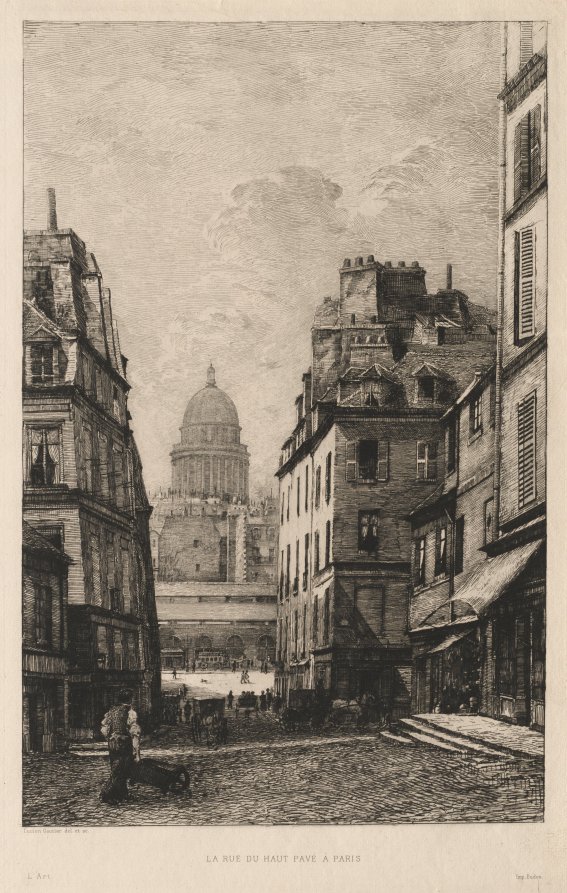 Lucien Gautier (French, 1850–1925) — La rue du Haut Pavé à P
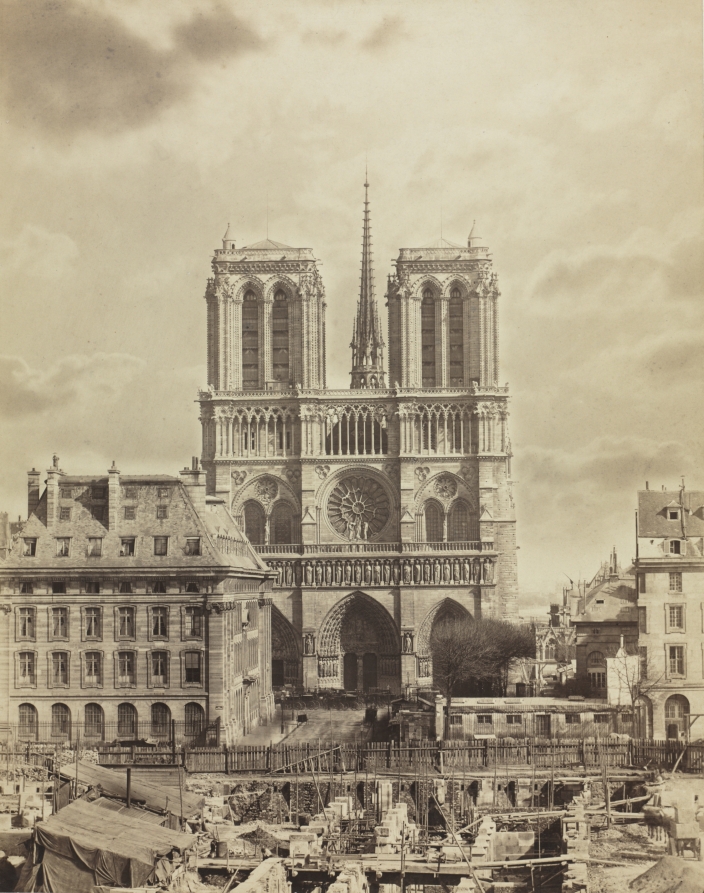 Charles Soulier (French, 1840–1875) — Notre Dame de Paris
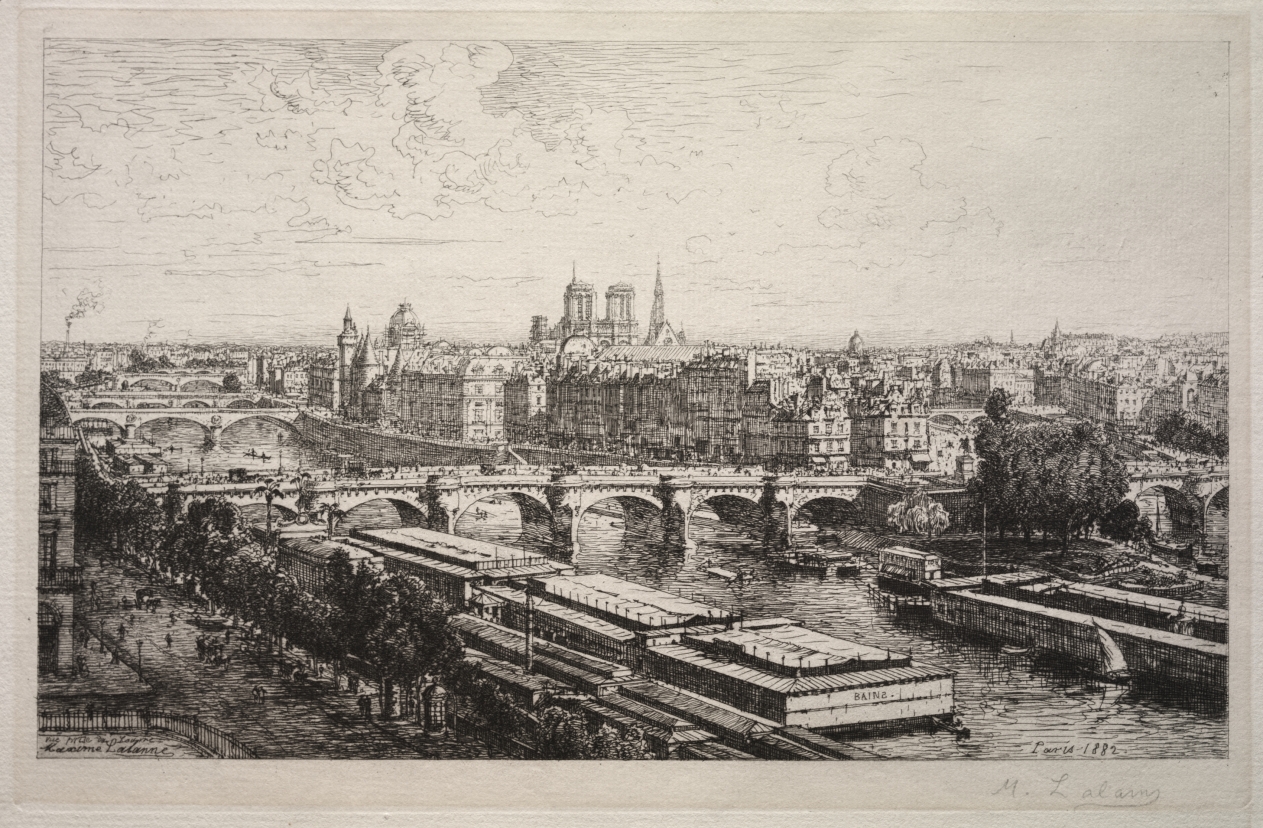 Maxime Lalanne (French, 1827–1886) — View from the Louvre