In the collection of Cleveland Museum of Art, Cleveland — check current display status with the museum.
FROM THE CLEVELAND MUSEUM OF ART’S CATALOG
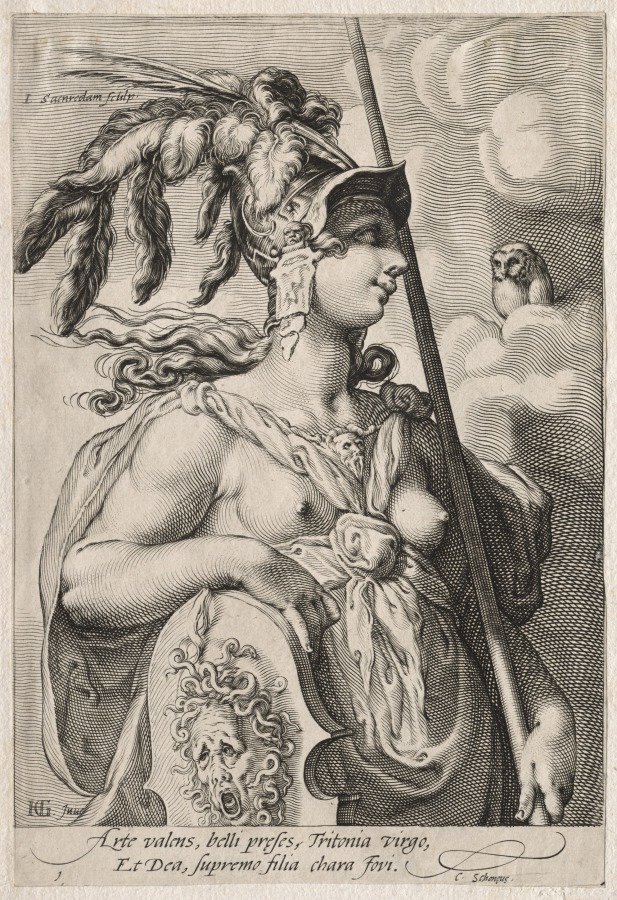
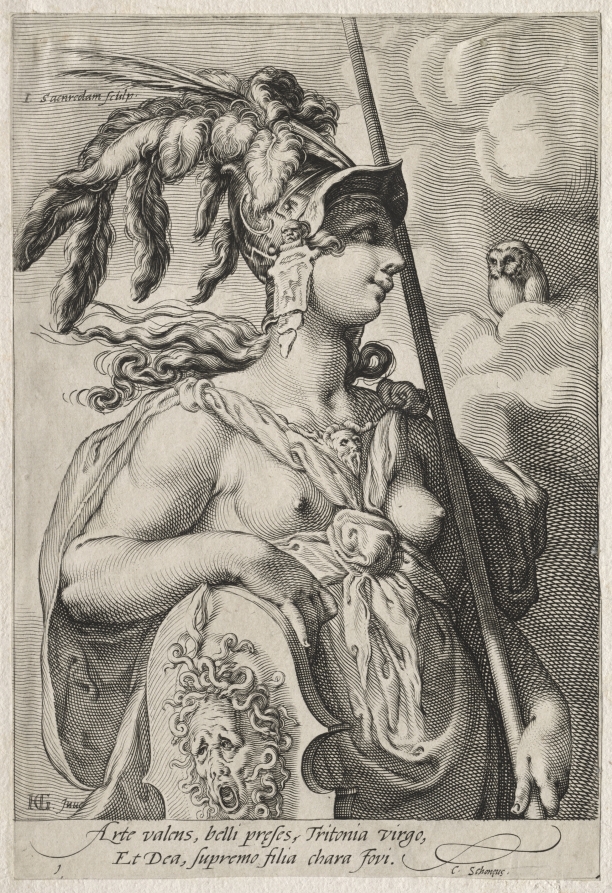
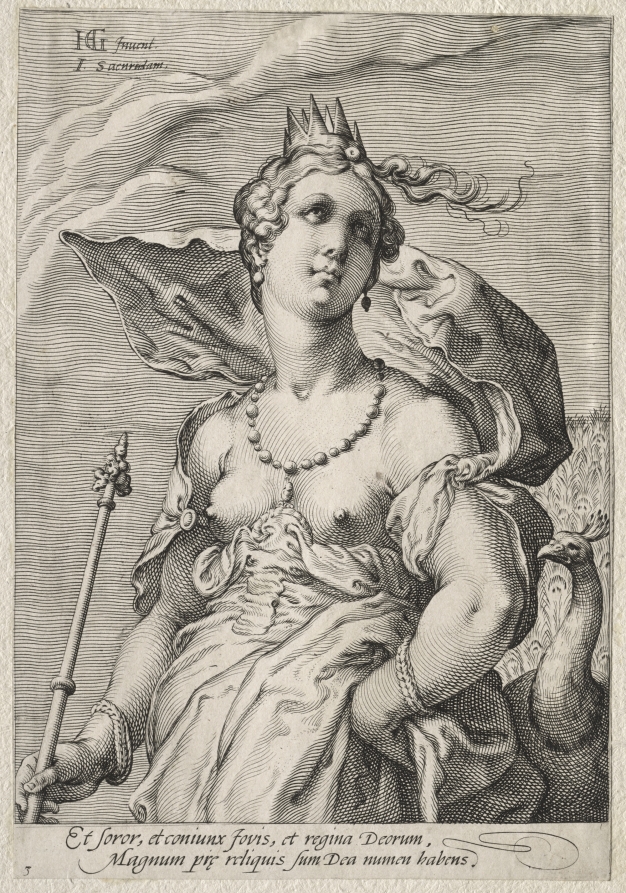
Goltzius popularized a style of engraving with mesmerizing patterns of curving, tapering, and crisscrossing lines; it was especially appreciated in the late 1500s. Designed for his pupil Saenredam to engrave, these prints depict the three goddesses from the tale of The Judgment of Paris , in which each claimed the golden apple awarded to the most beautiful. Jupiter deferred judgment to Paris, a mortal esteemed for his fair-mindedness. Juno and Athena tried to bribe Paris with an empire and skill in war, but Venus made him an offer he could not resist: Helen, the world’s most beautiful woman. The peacock identifies Juno, queen of the gods and the jealous wife (and sister) of Jupiter. Clad in armor, Pallas Athena is the goddess of wisdom, the arts, and warfare; an owl is her sage companion. The presentation of the deities in separate prints suggests that viewers may also play Paris’s role and decide themselves which goddess the artists made most beautiful.
Be the first to share your thoughts.
Sign in to join the discussion.
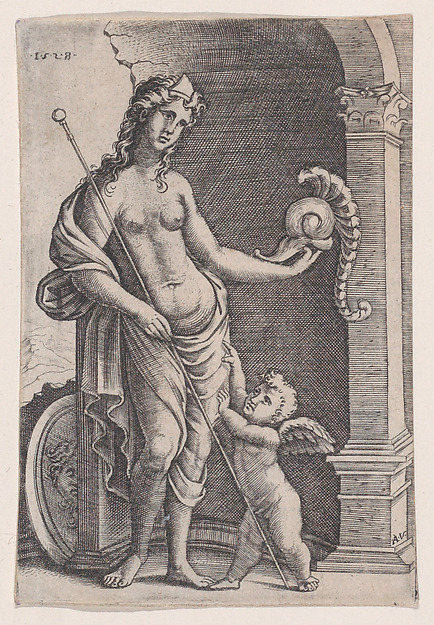 Agostino Veneziano (Agostino dei Musi)|Raphael (Raffaello Sa
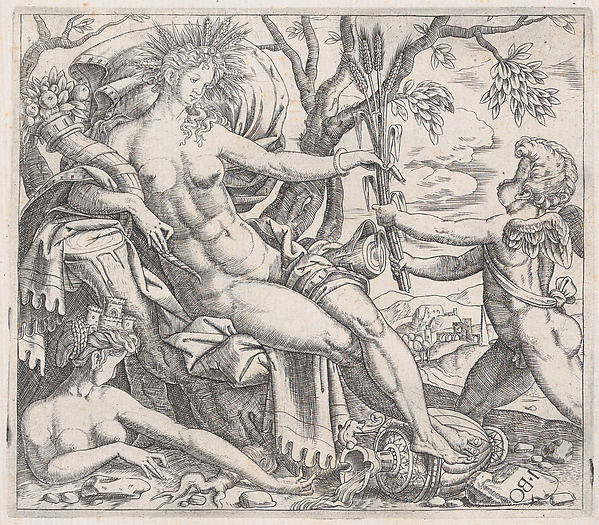 Giulio Bonasone|Anonymous — Speculum Romanae Magnificentiae:
 Giulio Romano|Marco Dente — Satyr carrying a nymph restraini
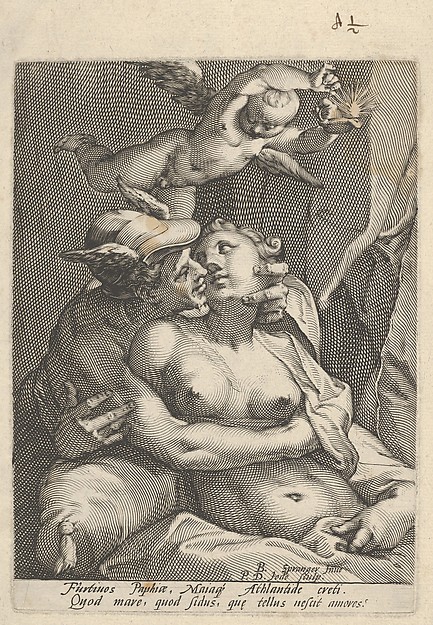 Pieter de Jode I|Bartholomeus Spranger — Mercury Embracing V
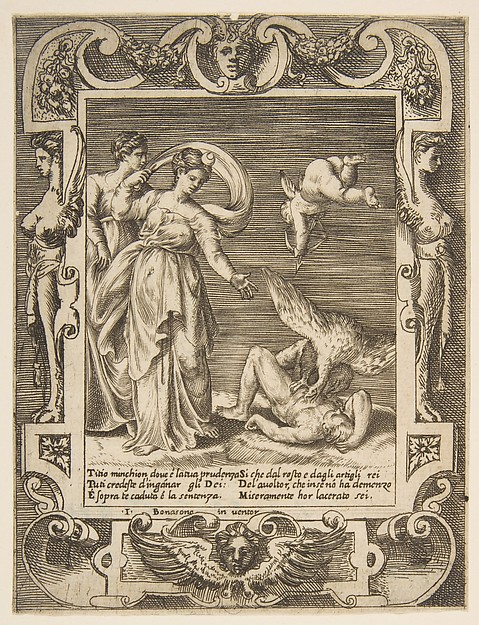 Giulio Bonasone — A vulture eating the innards of Titius, Cu
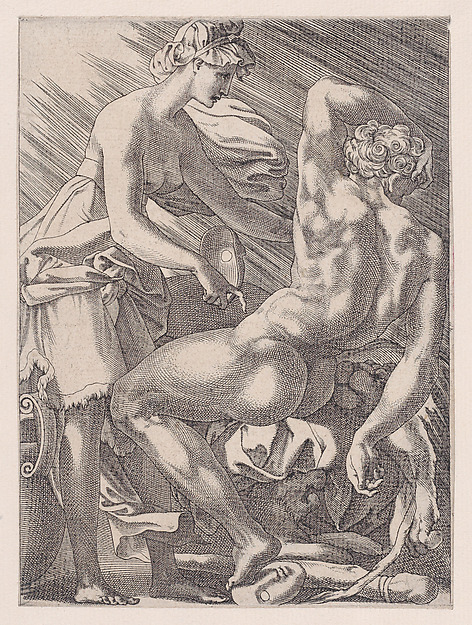 René Boyvin — Hercules and Deianira
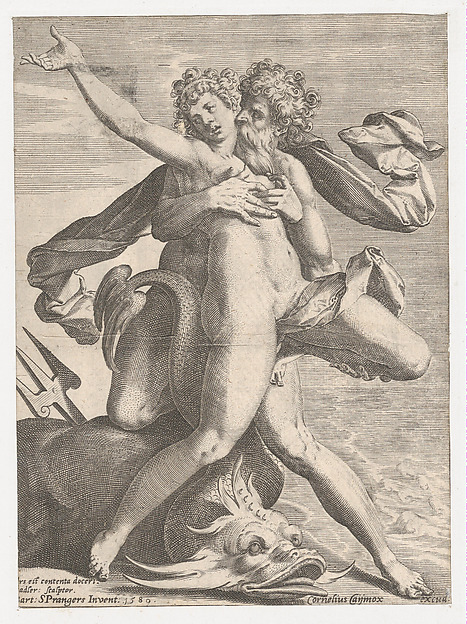 Johann Sadeler I|Cornelius Caymox|Bartholomeus Spranger — Ne
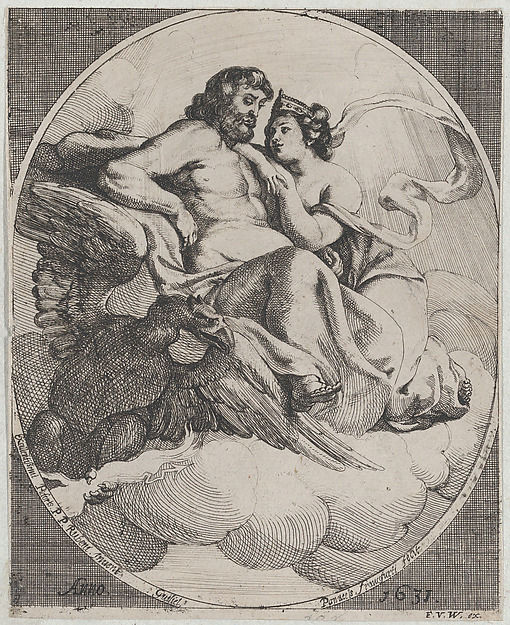 Willem Panneels|Frans van den Wyngaerde|Peter Paul Rubens —
 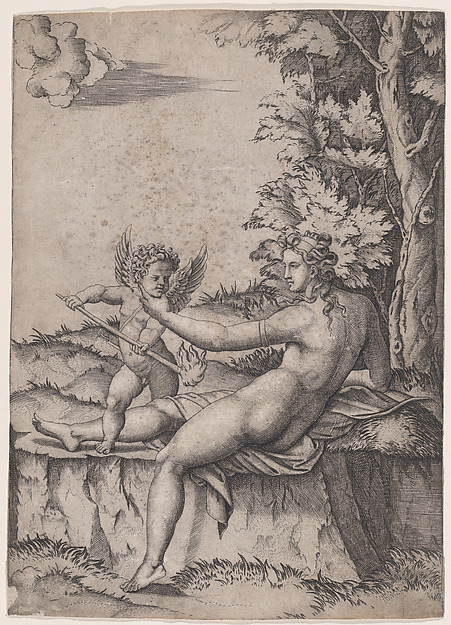 Agostino Veneziano (Agostino dei Musi)|Giulio Romano — Venus
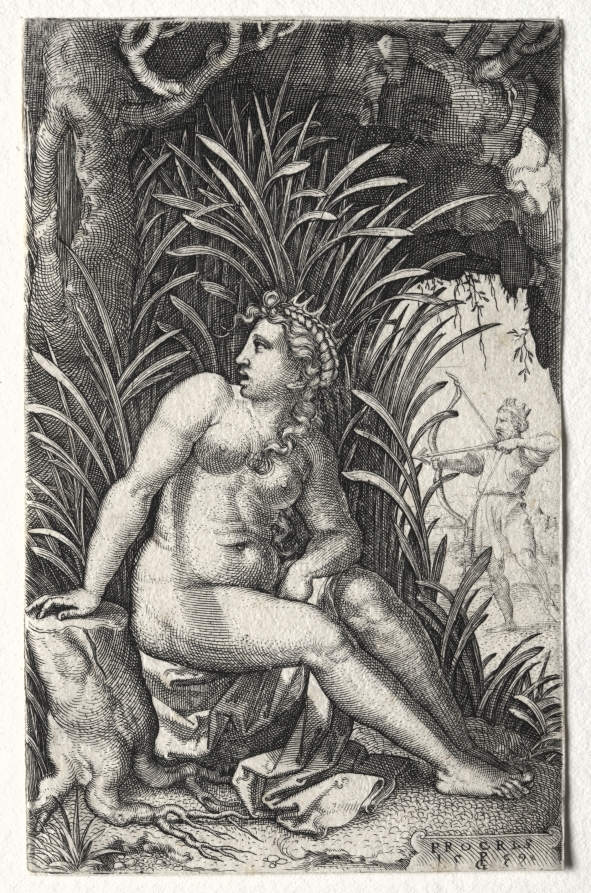 Georg Pencz (German, c. 1500–1550) — Procris
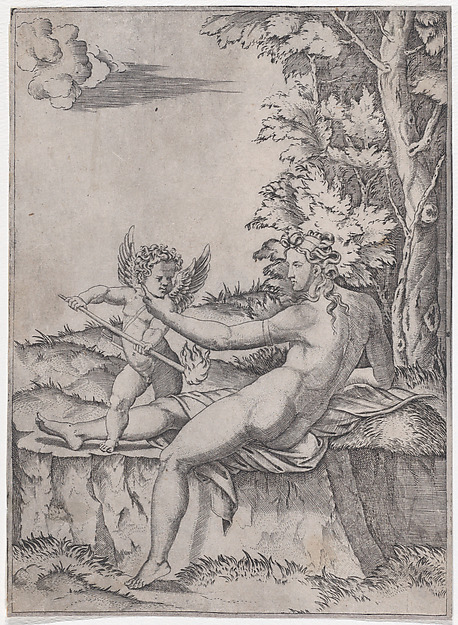 Agostino Veneziano (Agostino dei Musi)|Giulio Romano — Venus
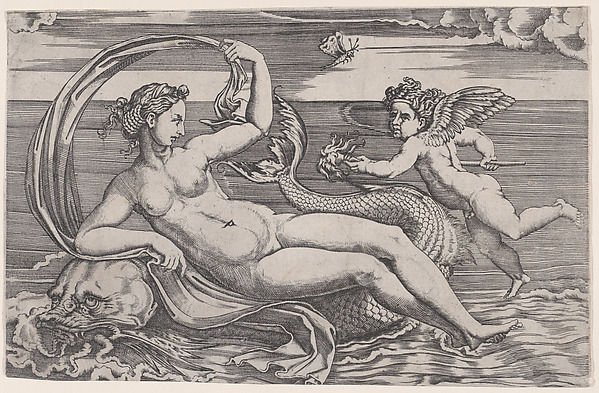 Agostino Veneziano (Agostino dei Musi)|Raphael (Raffaello Sa