FROM THE CLEVELAND MUSEUM OF ART’S CATALOG
Images like this one that depicts a demon in the guise of an itinerant monk intoning the name of the Buddha are called Otsu-e, or "Otsu paintings." Otsu-e were made as souvenirs for travelers passing through the station of Otsu along the Tokaido, the route stretching from Edo (modern-day Tokyo) to Kyoto. Realized through a combination of woodblock printing, rapid brushstrokes, embellishment with color and gold pigments by stencil or by hand, the earliest Otsu-e, produced in the 17th century, were Buddhist and Shinto icons. Later images included figures popular from Kabuki plays, as well as scenes illustrating parables.
Source ↗︎
Be the first to share your thoughts.
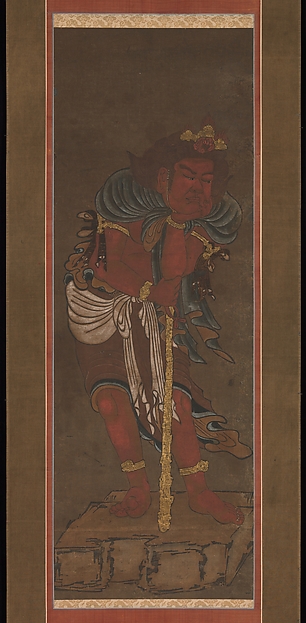 Ryūshū Shūtaku (Myōtaku) — 龍湫周沢写 不動明王二童子像|Fudō Myōō and Two
 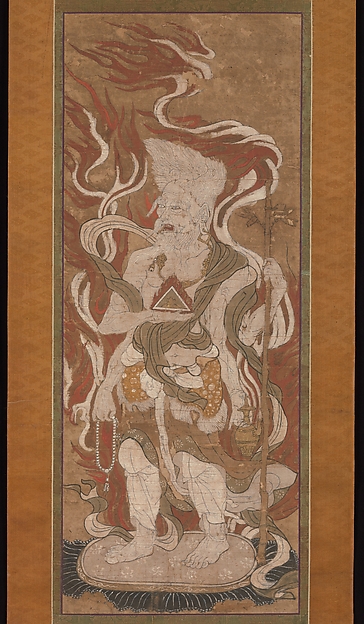 十二天像(火天)|One of the Twelve Devas: Katen
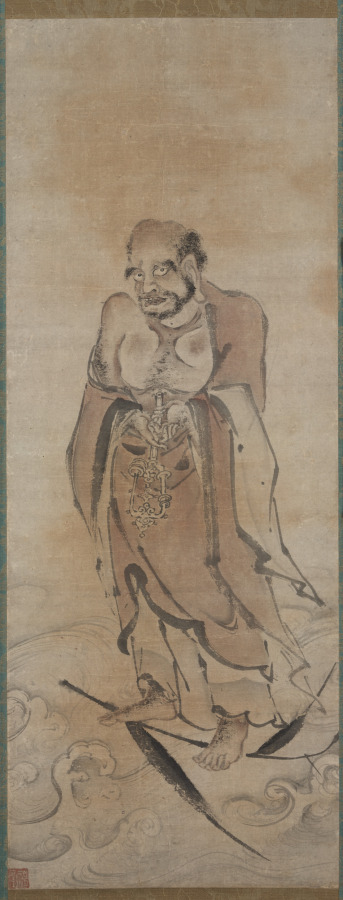 Shingo (Japanese) — Bodhidharma on a Reed
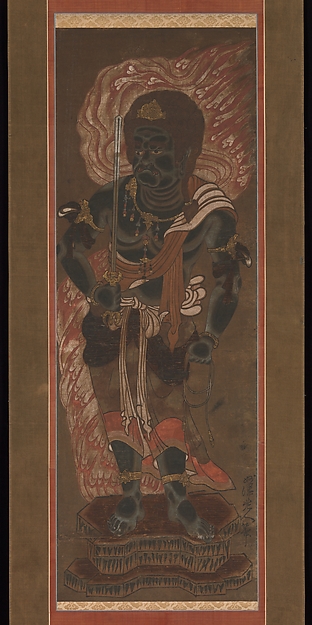 Ryūshū Shūtaku (Myōtaku) — 龍湫周沢写 不動明王二童子像|Fudō Myōō and Two
 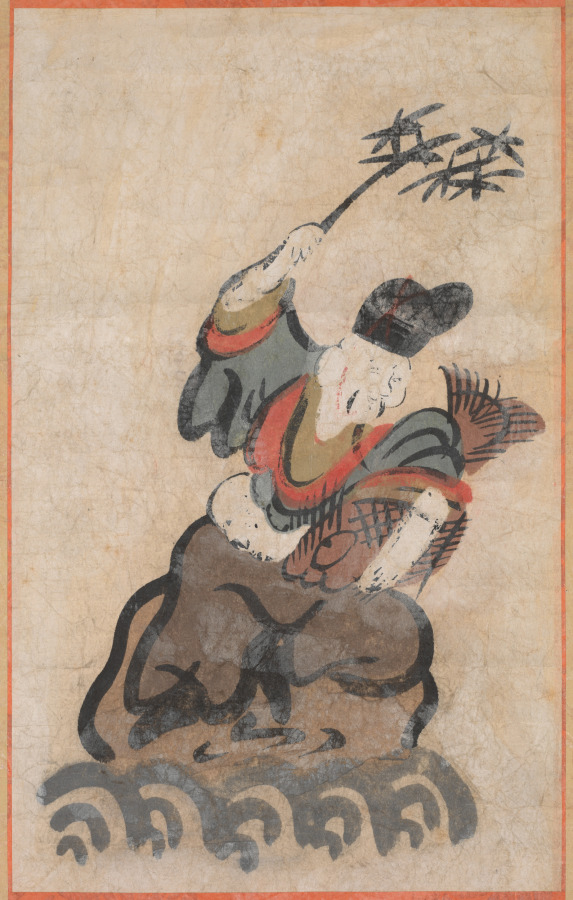 Ebisu
Ebisu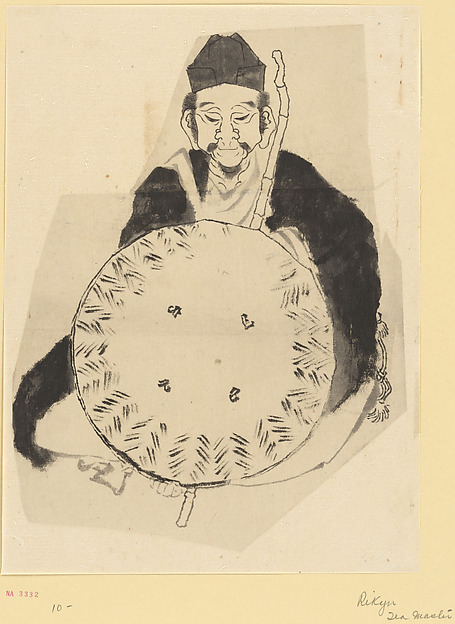 Katsushika Hokusai
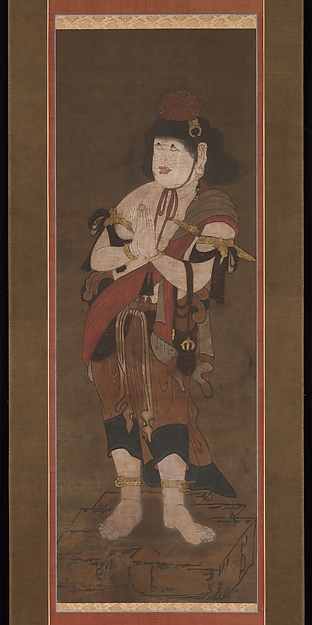 Ryūshū Shūtaku (Myōtaku) — 龍湫周沢写 不動明王二童子像|Fudō Myōō and Two
 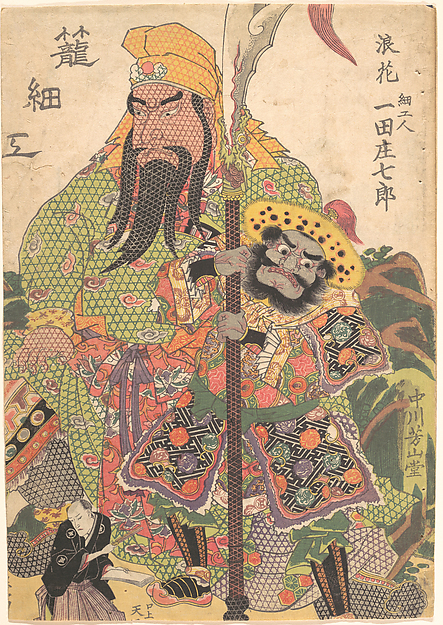 Utagawa Kunisada
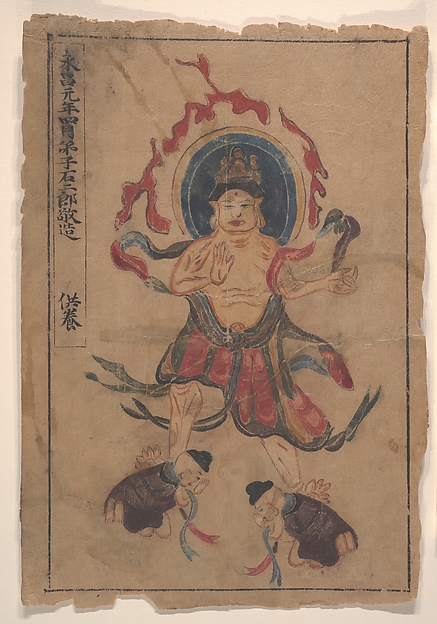 Unidentified artist — 唐(?) 佚名 佛畫八幅 散頁|Eight Buddhist Paintin
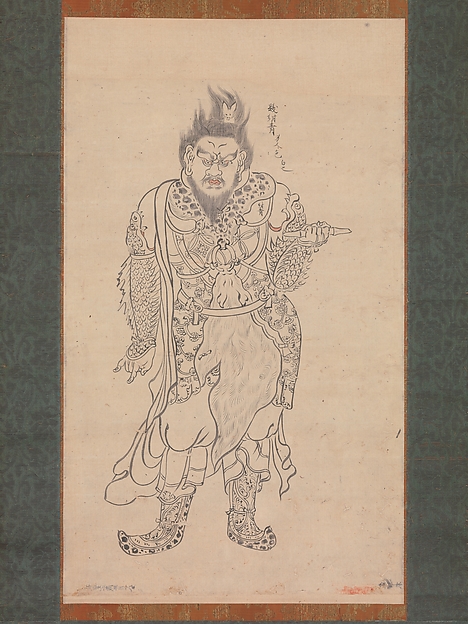 安底羅大将図像(付.裏書)|Anchira-taisho Jochi
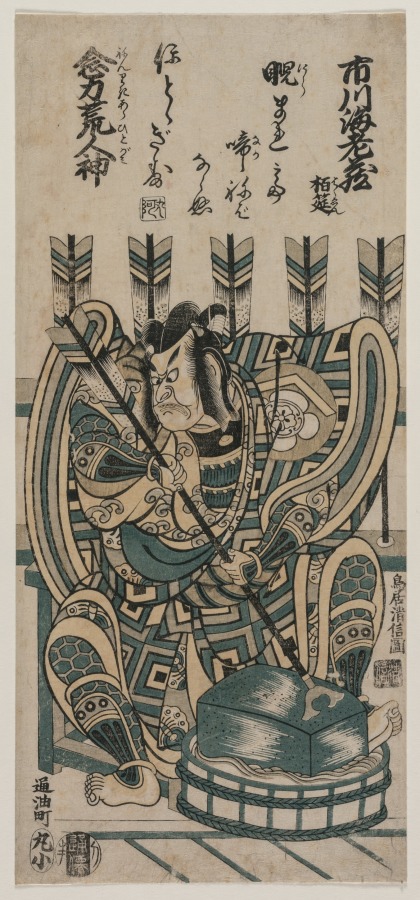 Torii Kiyonobu II (Japanese, 1706–1763) — Ichikawa Ebizo III
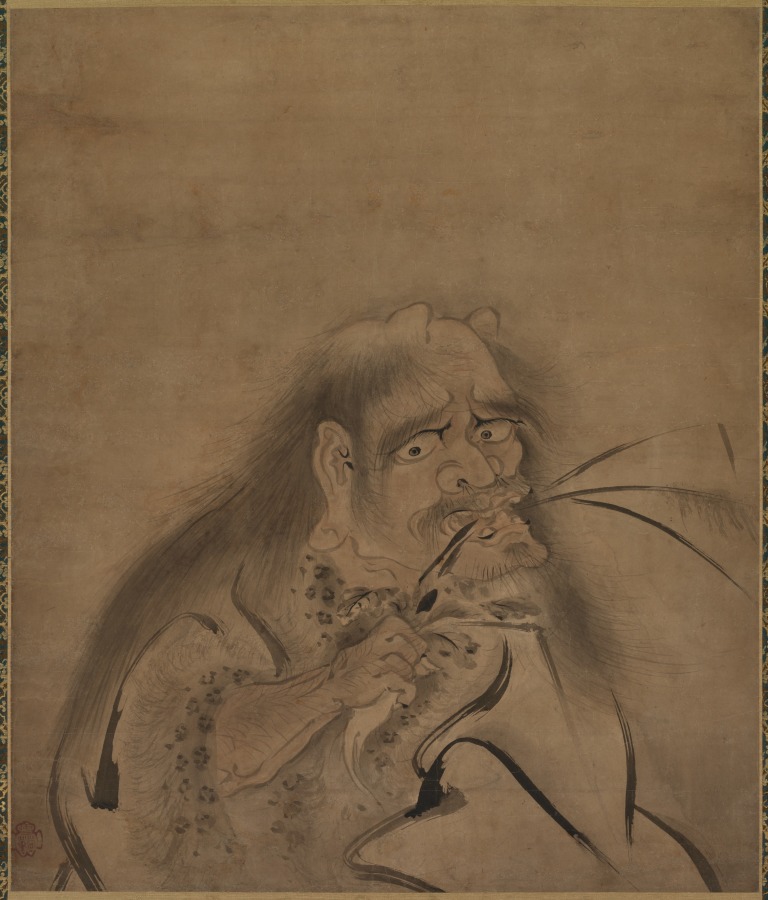 Shōryō (Japanese) — Shennong (Shinnō)