In the collection of Cleveland Museum of Art, Cleveland — check current display status with the museum.
FROM THE CLEVELAND MUSEUM OF ART’S CATALOG
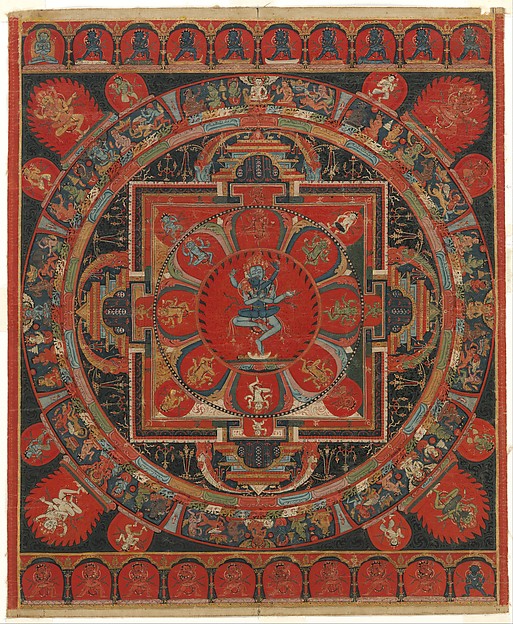
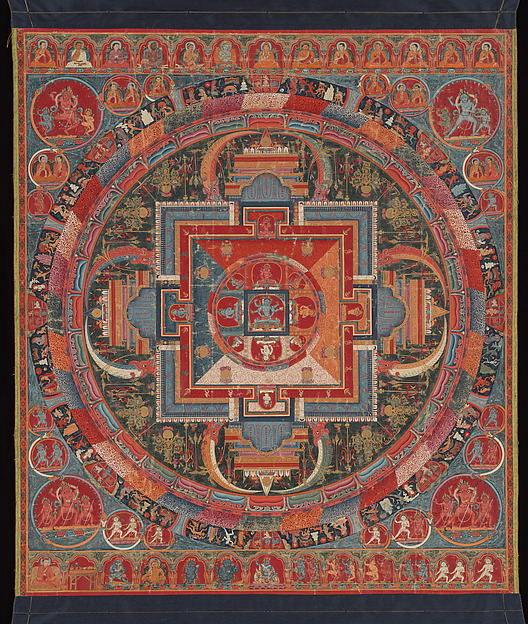
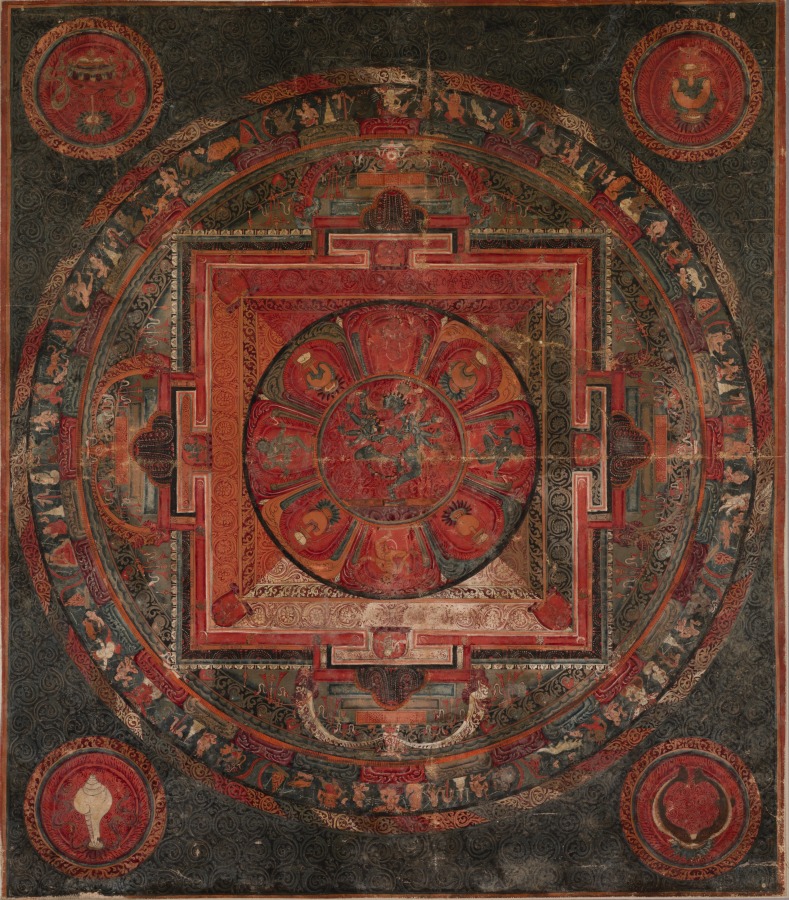
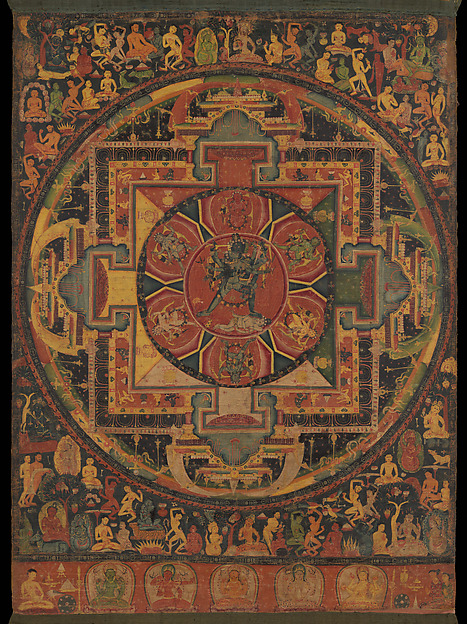
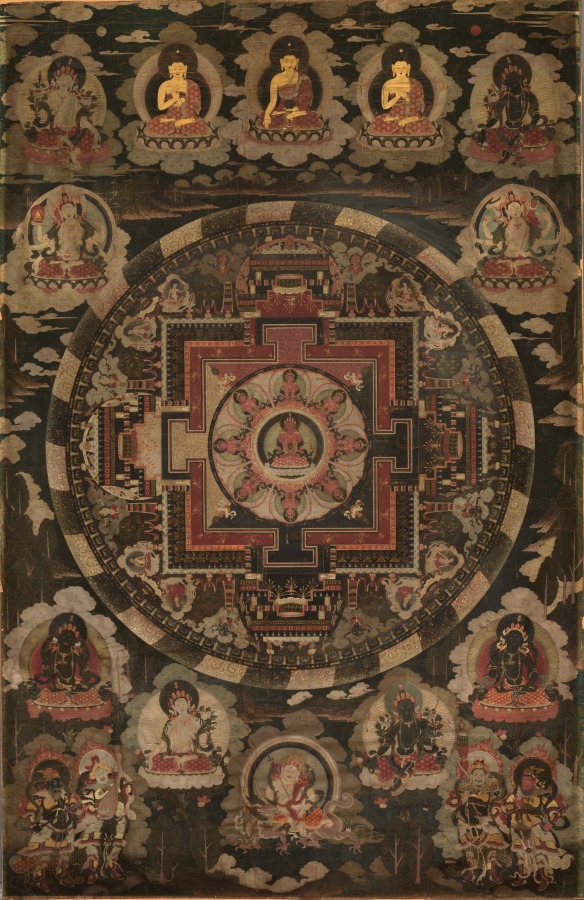
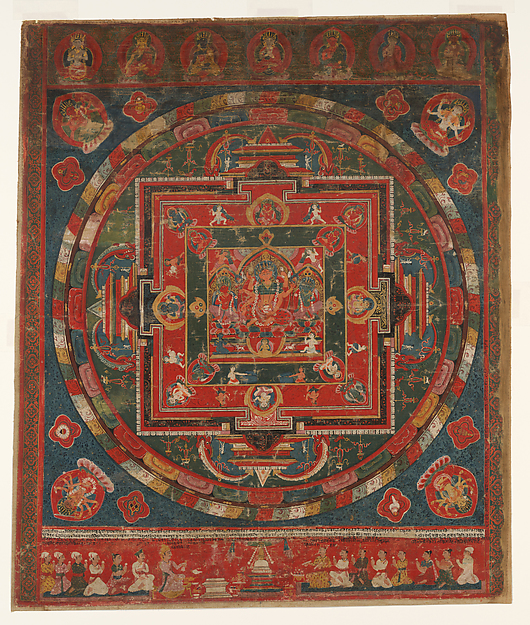
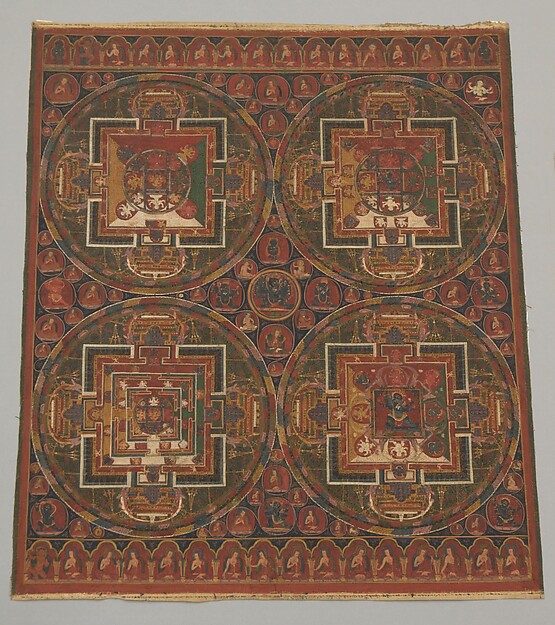
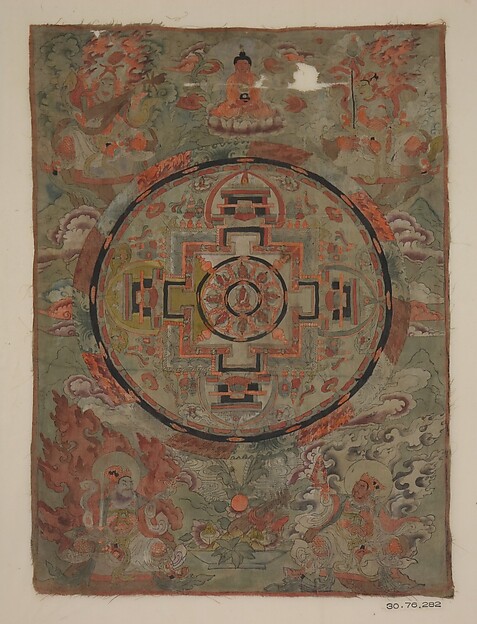
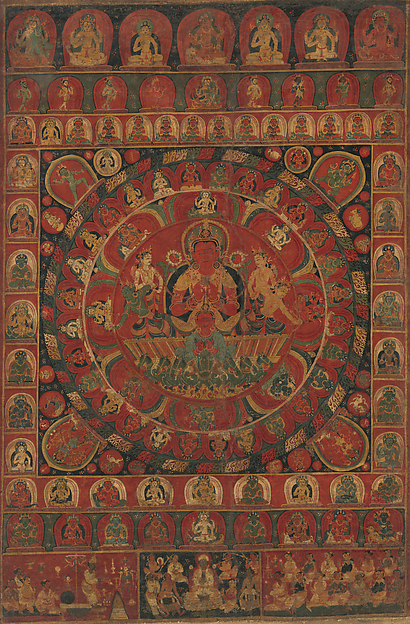
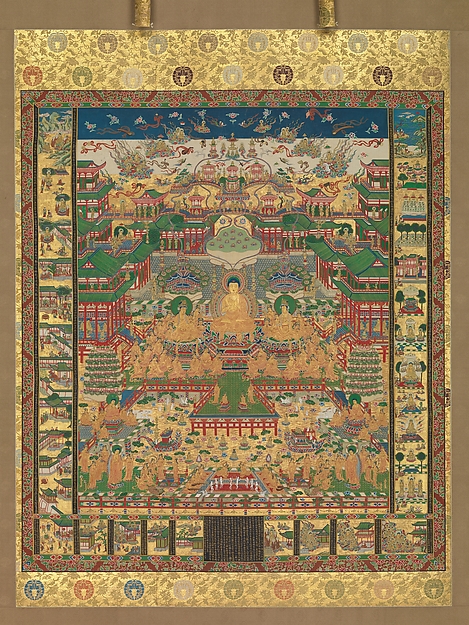
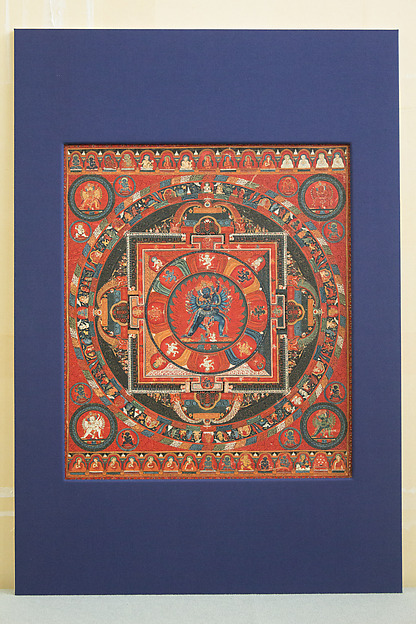
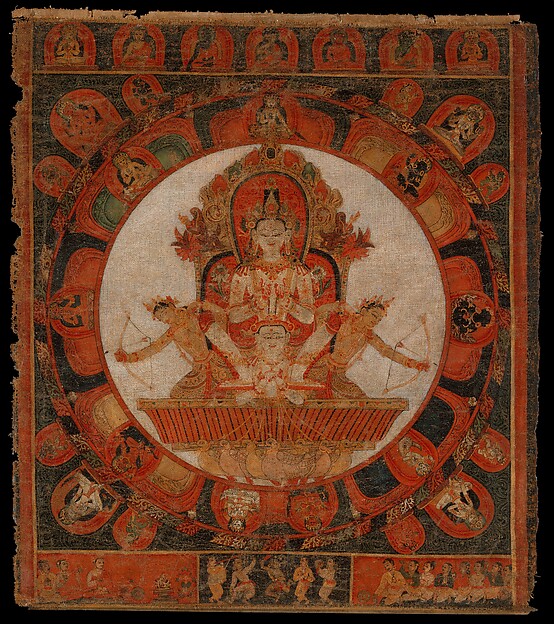
One of the main types of imagery in tantric Buddhist art is the mandala, a two-dimensional diagram of the realm of an enlightened being. This mandala depicts the palace of Nairatma, who dances in the center surrounded by her entourage. Using the painting as a guide, the tantric practitioner in meditation mentally projects the two-dimensional plan into three-dimensional space and enters into it. The outermost ring contains depictions of the cremation grounds, where corpses are being burned and consumed, as well as tantric yogis and masters who work there in order to understand the impermanence of the body, defeat their fear of death, and overcome irrational aversions to impure aspects of life. Virupa is depicted twice, always pointing to arrest the sun with his raised left hand. He sits among the row of lineage masters along the top edge, and is also depicted in the topmost segment of the ring of cremation grounds, being served a cup of liquor. Along with lineage masters at the top of this impressive painting, bodhisattvas and important masters are depicted in the spandrels, each identified by an inscription.
Be the first to share your thoughts.
Sign in to join the discussion.