In the collection of Cleveland Museum of Art, Cleveland — check current display status with the museum.
FROM THE CLEVELAND MUSEUM OF ART’S CATALOG
Unlike his contemporaries, Bayard was fascinated with ancient Greco-Roman statuary. From his inventory of over forty examples, he created a captivating still life of plaster casts that affirms his technical proficiency and sensitivity to subject matter. Bright, natural light illuminates the figures and bas reliefs. Their three-dimensionality is emphasized by the stark contrast of their white surfaces with the dark background. The composition is also embellished with gracefully flowing draperies, which frame the scene. Bayard appears not to have had any formal artistic or scientific training, but was a key figure and talented inventor in the early history of photography. Although his contributions were initially ignored, he went on to become a distinguished member of the photographic community in Paris. This rare print from a wet collodion negative is the outcome of Bayard's experimentation with the direct paper positive process, which he began around 1839.
Be the first to share your thoughts.
Sign in to join the discussion.
![[Still Life with Statuary]](https://images.metmuseum.org/CRDImages/ph/web-large/DP262089.jpg) Hippolyte Bayard — [Still Life with Statuary]
Hippolyte Bayard — [Still Life with Statuary]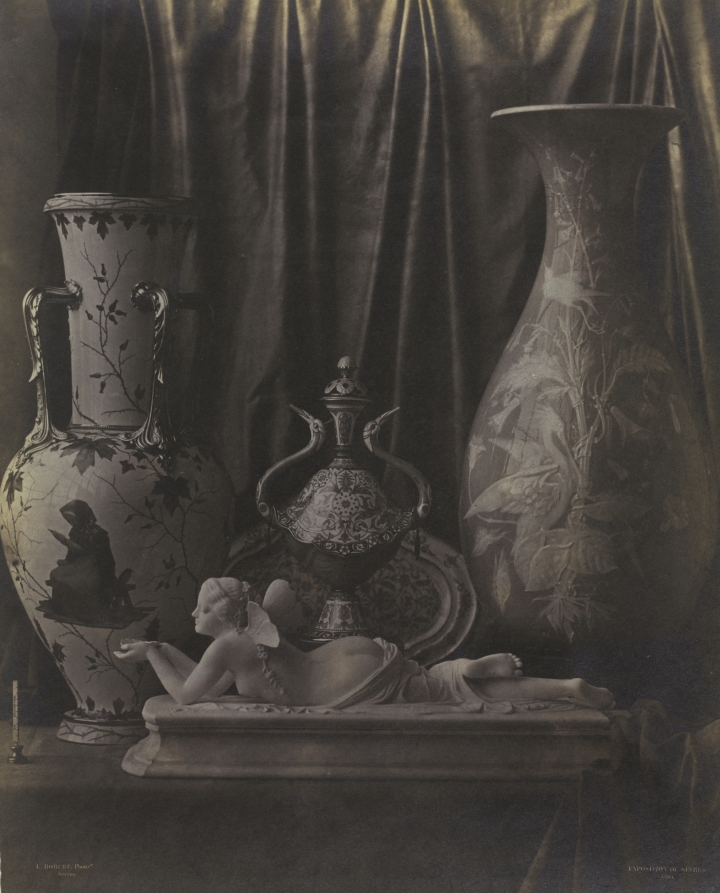 Louis-Rémy Robert (French, 1811–1882) — Still Life with Porc
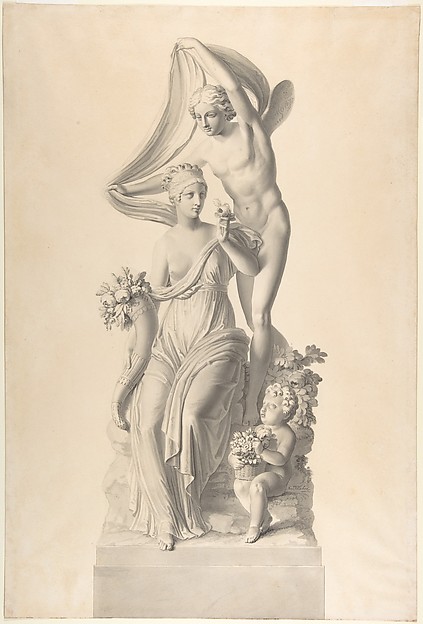 Josef Klieber — Flora and Zephyr
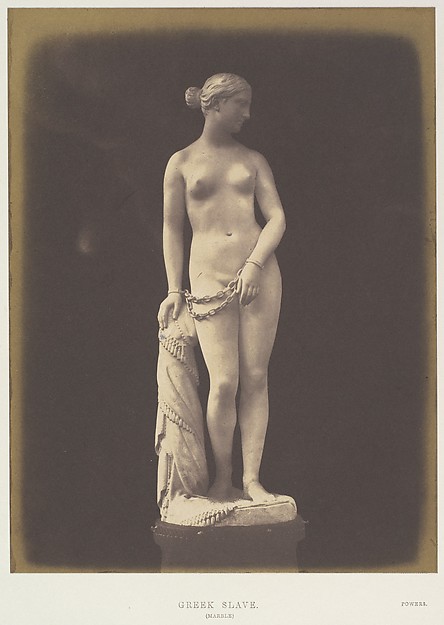 Hugh Owen|Nicolaas Henneman — Greek Slave
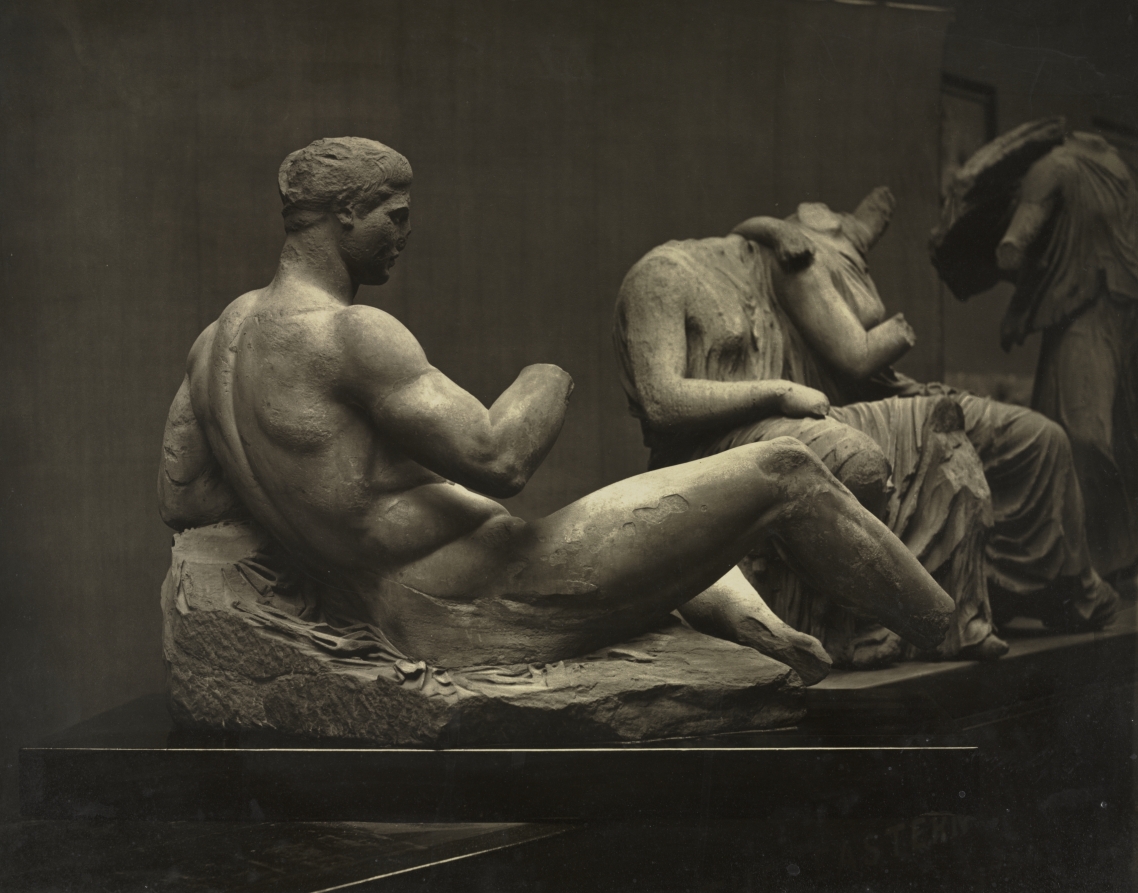 Adolphe Braun (French, 1812–1877) — Sculptures from the Part
![[Sculptures of Hylas and the Nymphs, Allegorical Figures of the Three Fates, Zephyr wooing Flora, and Michelangelo's Bacchus and Donatello's St. George]](https://images.metmuseum.org/CRDImages/ph/web-large/DP323124.jpg) Philip Henry Delamotte — [Sculptures of Hylas and the Nymphs
Philip Henry Delamotte — [Sculptures of Hylas and the Nymphs![[Sculptures of Andromeda, the Toilet of Atalanta, Corinna, and a Naiad]](https://images.metmuseum.org/CRDImages/ph/web-large/DP323119.jpg) Philip Henry Delamotte — [Sculptures of Andromeda, the Toile
Philip Henry Delamotte — [Sculptures of Andromeda, the Toile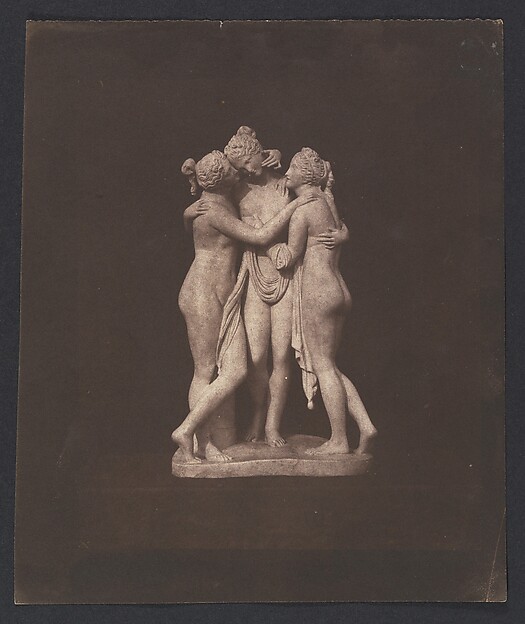 William Henry Fox Talbot — Statuette of the Three Graces
![[Sculptures of Abraham Duquesne; an Ancient Briton; David with his Slingshot; a Hunter]](https://images.metmuseum.org/CRDImages/ph/web-large/DP323115.jpg) Philip Henry Delamotte — [Sculptures of Abraham Duquesne; an
Philip Henry Delamotte — [Sculptures of Abraham Duquesne; an![[Sculptures of Minerva Protecting a Warrior, Una and the Lion, Children with a Pony and a Hound, and Child Play]](https://images.metmuseum.org/CRDImages/ph/web-large/DP323122.jpg) Philip Henry Delamotte — [Sculptures of Minerva Protecting a
Philip Henry Delamotte — [Sculptures of Minerva Protecting a![[Sculptures of the Medici Venus and Pomona, Venus, Esmeralda, and the Mourners]](https://images.metmuseum.org/CRDImages/ph/web-large/DP323121.jpg) Philip Henry Delamotte — [Sculptures of the Medici Venus and
Philip Henry Delamotte — [Sculptures of the Medici Venus and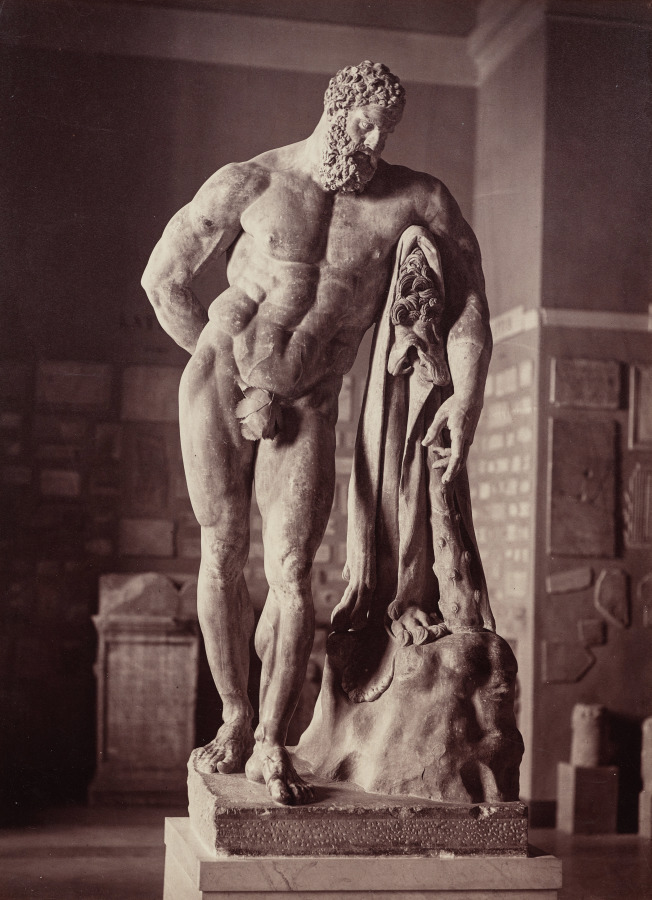 Giorgio Sommer (Italian, 1834–1914) — Farnese Hercules, Muse
![[Windmills, Montmartre]](https://images.metmuseum.org/CRDImages/ph/web-large/DP167356.jpg)
![[Classical Head]](https://images.metmuseum.org/CRDImages/ph/web-large/DP-18310-003.jpg)
![[Classical Head in Profile]](https://images.metmuseum.org/CRDImages/ph/web-large/DP-18311-003.jpg)