Landscape with Smokestacks
SEE IT IN PERSON
Not currently on view
In the collection of Art Institute of Chicago, Chicago · as of July 2026
Discussion
FROM THE ART INSTITUTE OF CHICAGO’S CATALOG
Degas is best known for his images of the ballet and other scenes from modern urban life. However, periodically he explored the landscape genre, with a trip in 1869 to the Normandy Coast, for example, that resulted in a number of pastel landscapes. During the peak years of Impressionism-the 1870s and 1880s, when landscape reigned supreme among France's avant-garde-Degas was notoriously averse to the practice of open-air landscape painting. Yet in the 1890s, he produced several groups of landscapes, combining observation and invention in various ways. The artist's renewed interest was prompted by a trip he took he took through Burgundy in 1890 that inspired him to treat its landscape using the technique of monotype. A monotype is made by painting or drawing an image in greasy printer 's ink on a metal plate and then printing the plate onto a sheet of paper. Only one strong impression can usually be pulled from the plate; on occasion, a second, paler impression known as a monotype cognate can be pulled as well. Degas sometimes completed pastels over monotypes or monotype, cognates, as in Landscape with Smokestacks. He pioneered this technique in the 1870s. He began some of his monoty
Be the first to share your thoughts.
Sign in to join the discussion.
More by Hilaire Germain Edgar Degas


More like this
 Paul Huet — Blue and Orange Sky
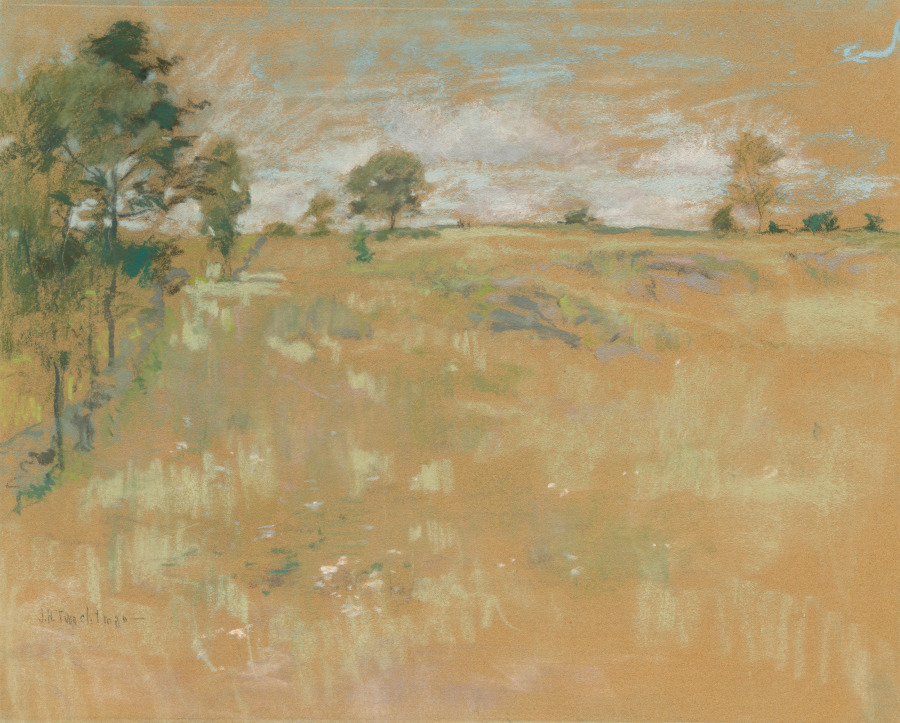 John Henry Twachtman (American, 1853–1902) — Pastures, Branc
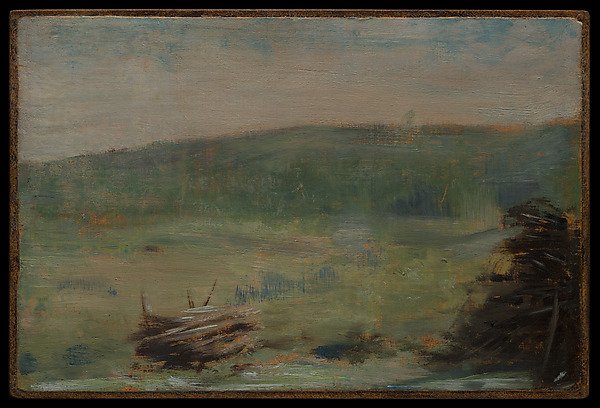 Georges Seurat — Landscape at Saint-Ouen
 George Inness — Threatening
 George Inness — The Home of the Heron
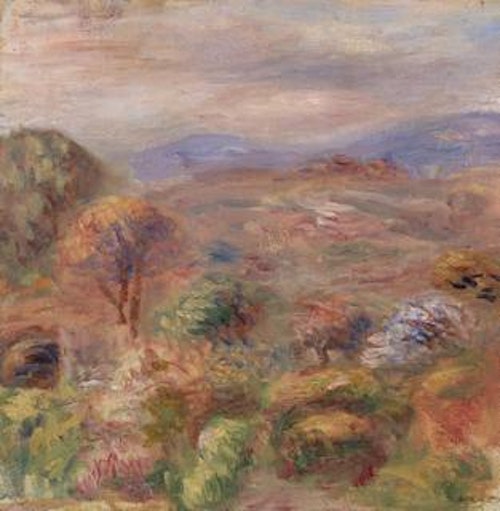 Pierre-Auguste Renoir — Landscape (Paysage)
 John Singer Sargent — Olive Trees, Corfu
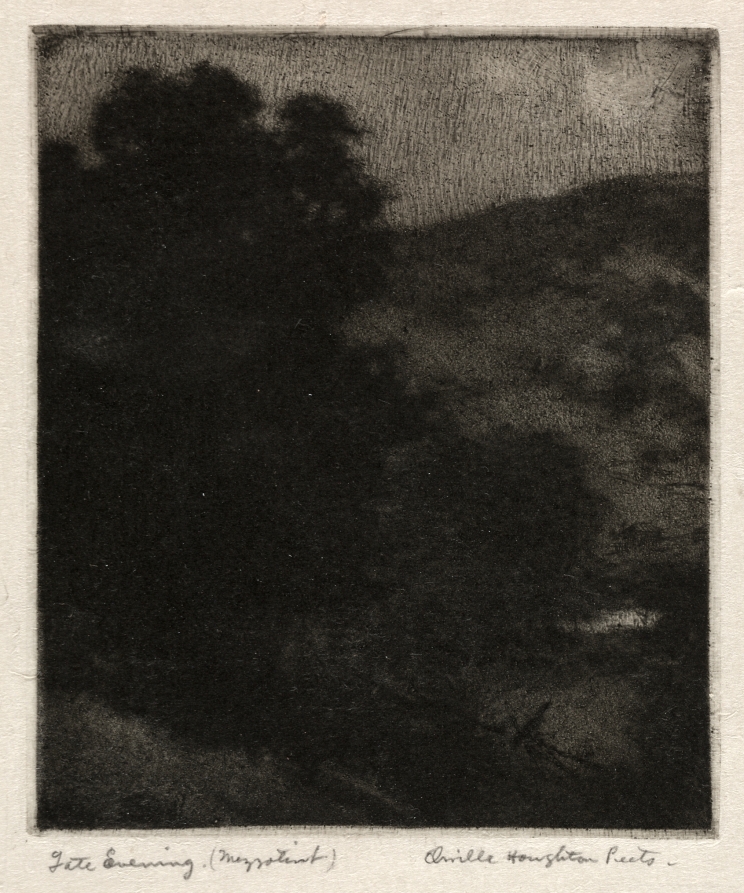 Orville Houghton Peets (American, 1884–1968) — Late Evening
 John Singer Sargent — Thistles
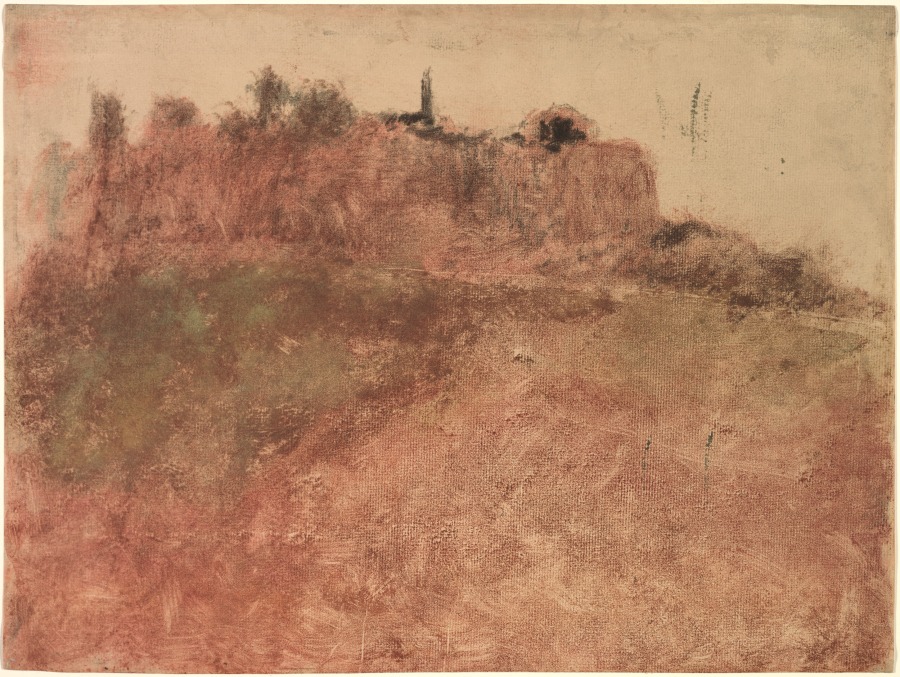 Edgar Degas (French, 1834–1917) — Estérel Village
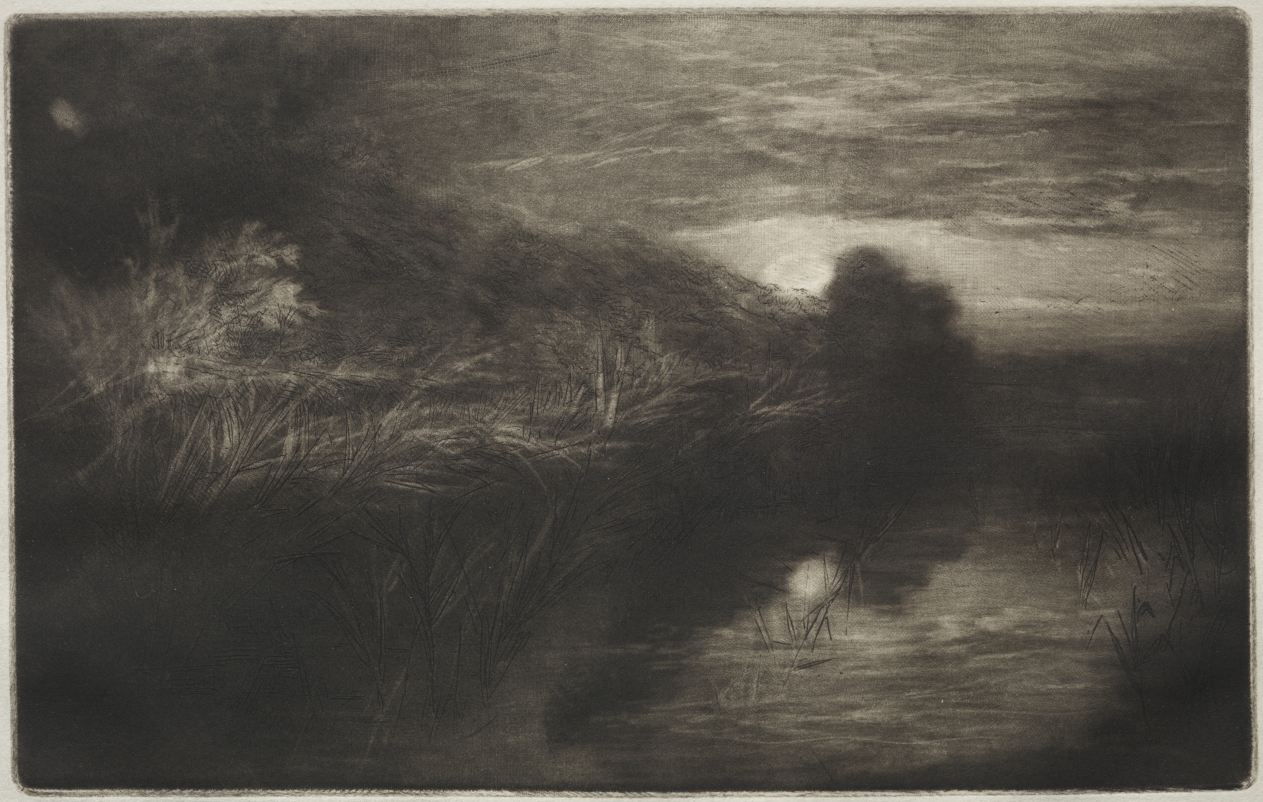 Francis Seymour Haden (British, 1818–1910) — Winchelsea Cana
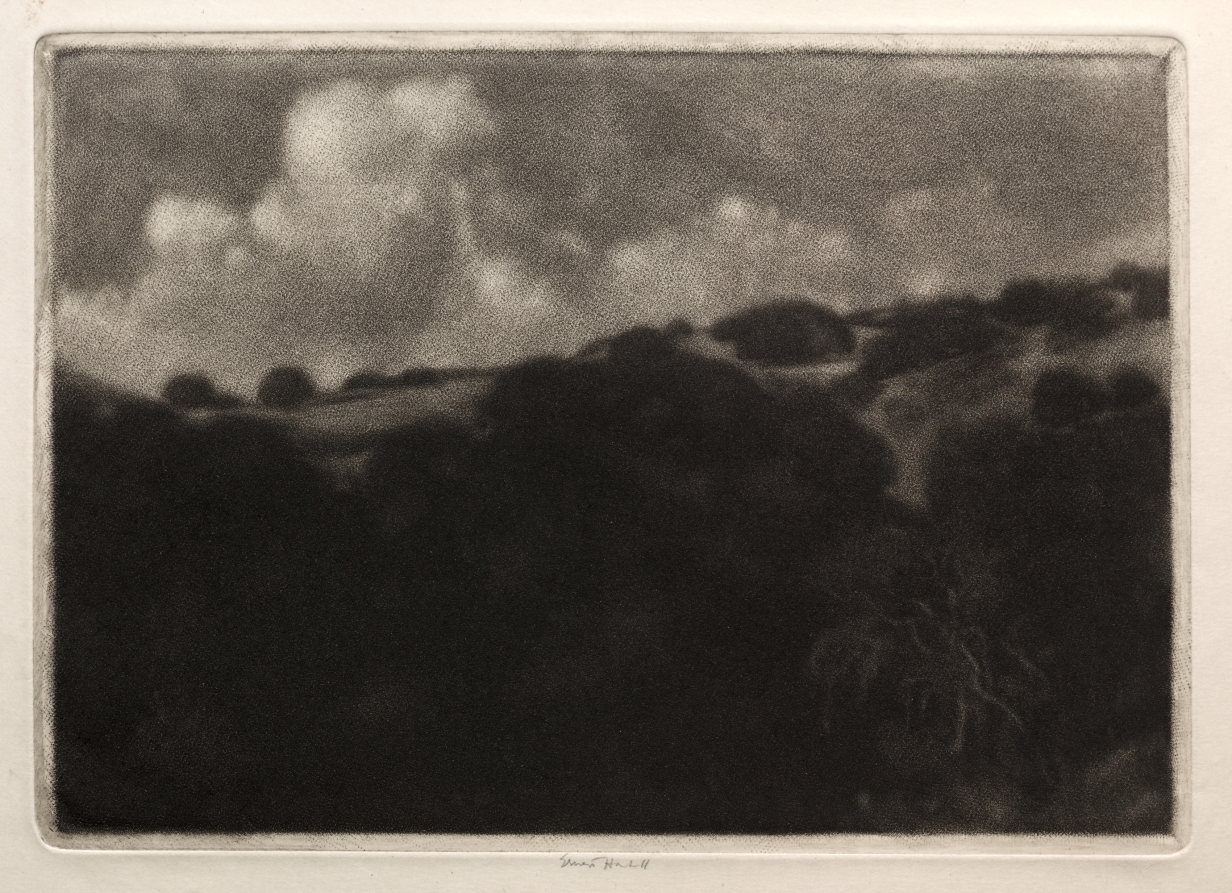 Ernest Haskell (American, 1876–1925) — Night - California Hi