Mosaic Fragment with Man Leading a Giraffe
SEE IT IN PERSON
● On view now — Gallery 153
Art Institute of Chicago, Chicago · verified July 2026
Discussion
FROM THE ART INSTITUTE OF CHICAGO’S CATALOG
This mosaic fragment was once part of a larger composition that paved the floor of a wealthy family villa in the Eastern Mediterranean. Composed of thousands of small tesserae, or stone cubes, it shows a giraffe and a human handler standing against a decorative backdrop of scallop-shaped semicircles. No doubt originally set amid a profusion of other wild and exotic animals, giraffes such as this one captivated the imagination of those who saw them in parades and public games. Writing around the turn of the third century, the historian Cassius Dio (about A.D. 150–235), among others, called this marvelous creature a Camelopardus because, in his opinion, the giraffe combined the physical traits of both the camel and the leopard.
Be the first to share your thoughts.
Sign in to join the discussion.
More by Byzantine


More like this
 Ancient Roman — Deer in Floral Field
 Ancient Roman — Lion and Bird with Other Animal Parts
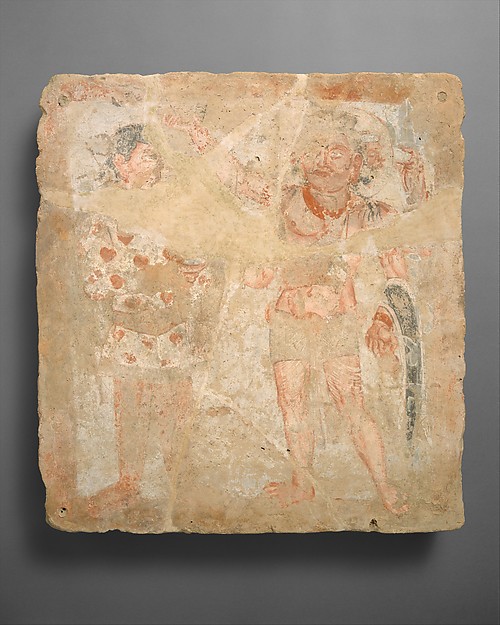 Panel with the god Shiva/Oesho and worshiper
 Ancient Roman — Leaping Feline in Floral Field
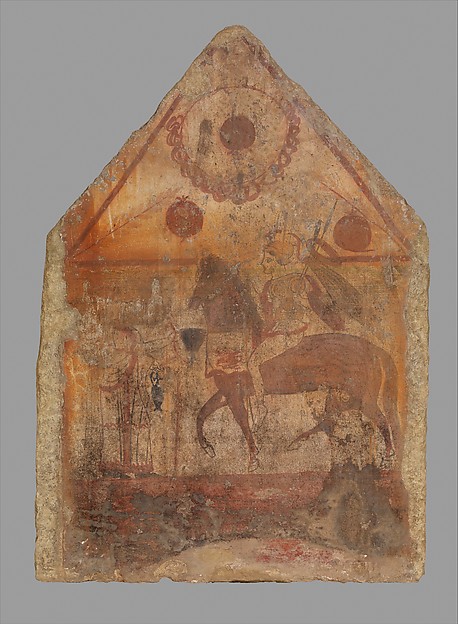 Wall painting
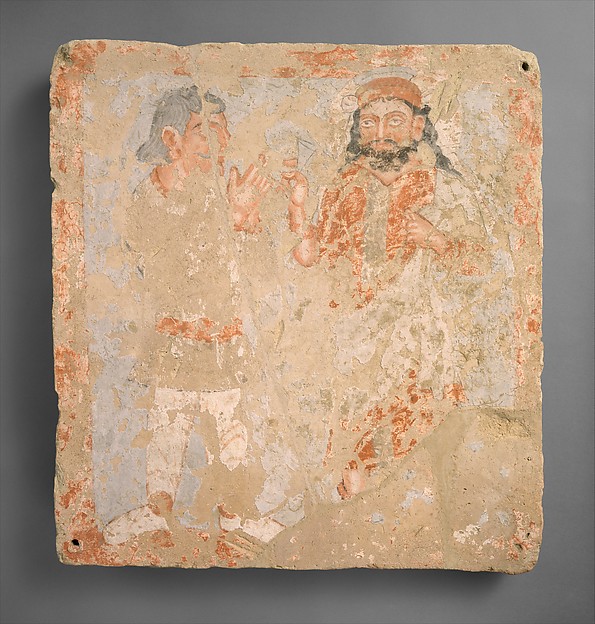 Panel with the god Zeus/Serapis/Ohrmazd and worshiper
 Ancient Roman — Relief Fragments Depicting a Winged Woman an
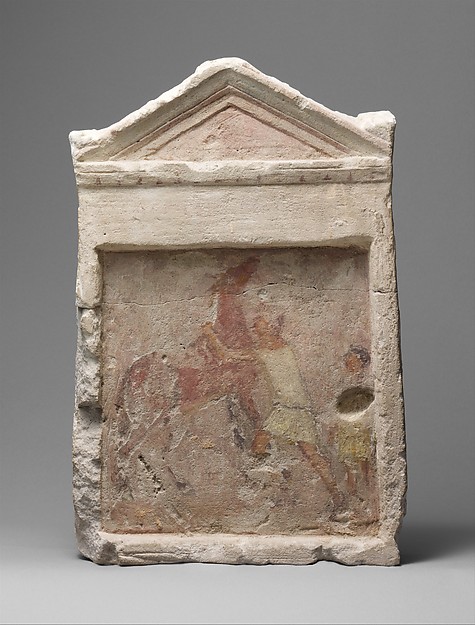 Painted limestone funerary slab with a man controlling a rea
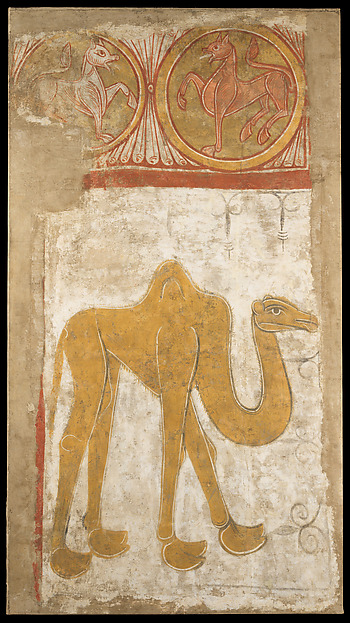 Camel
Camel Ancient Roman — Relief Fragments Depicting a Seated Woman an
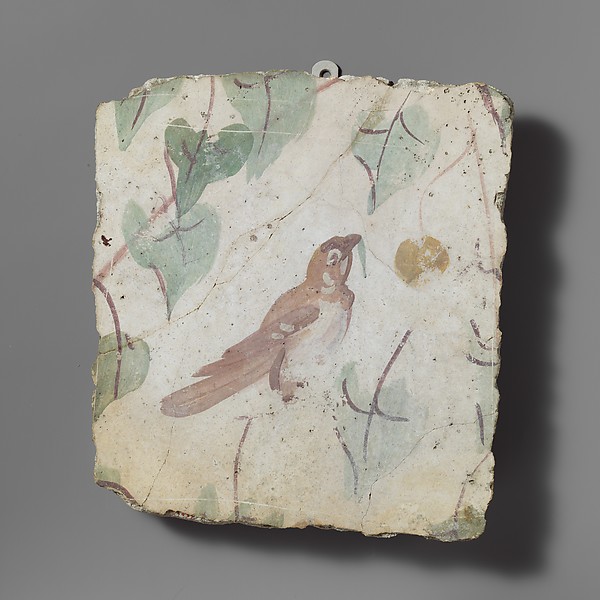 Wall painting fragment
 Ancient Roman — Mosaic Floor Panel Depicting a Personificati