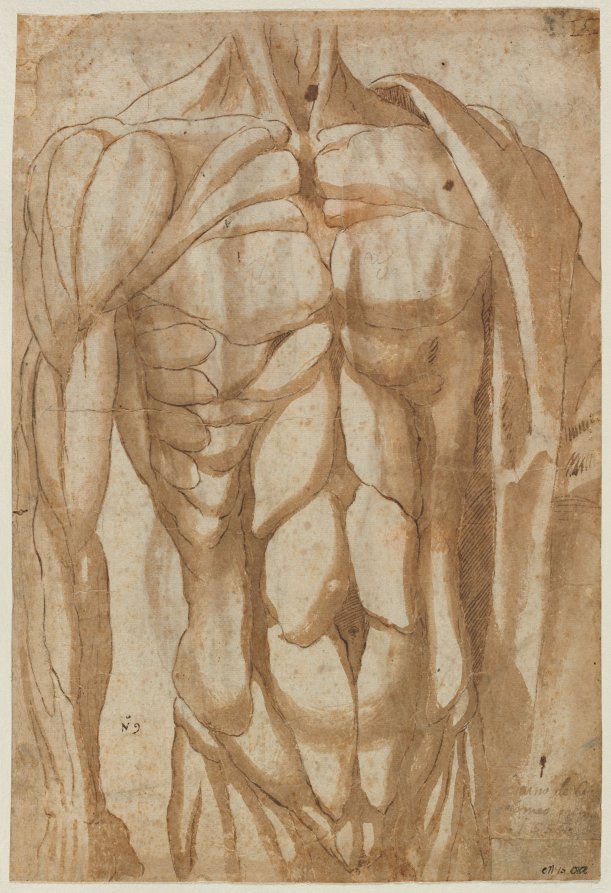
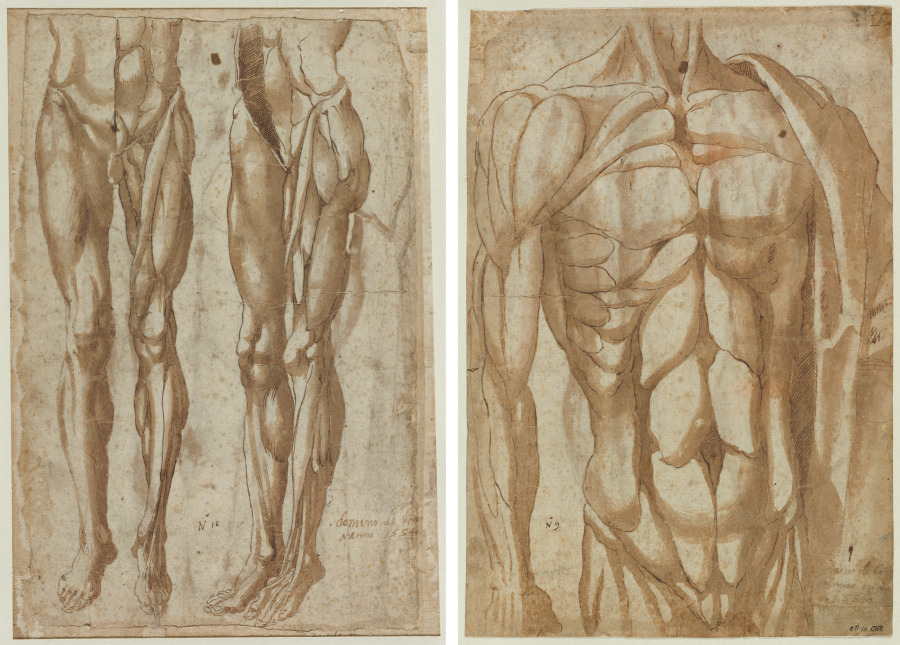
In the collection of Cleveland Museum of Art, Cleveland — check current display status with the museum.
FROM THE CLEVELAND MUSEUM OF ART’S CATALOG
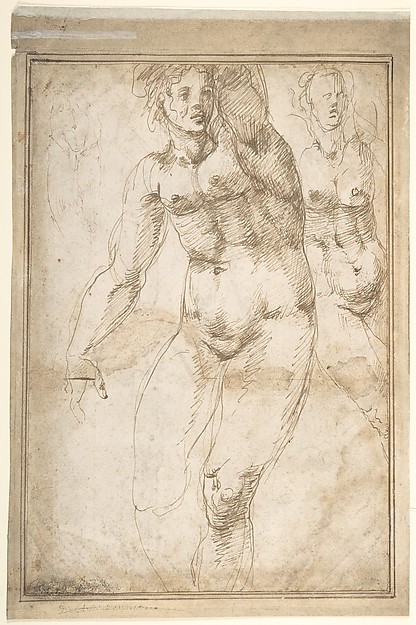
In order to understand the movement of the human form, Michelangelo was known to have studied flayed bodies (cadavers with their skin removed) and in fact made several drawings of them. Bartolommeo da Arezzo—a follower of Michelangelo working a generation after the master—became obsessed with studying corpses, even stealing them from local graveyards. On one side of this sheet (recto), he drew two views of the lower part of the same body, which is half flayed and shown hanging above the ground.
Be the first to share your thoughts.
 Baccio Bandinelli — Study of Two Men (recto); Study of the H
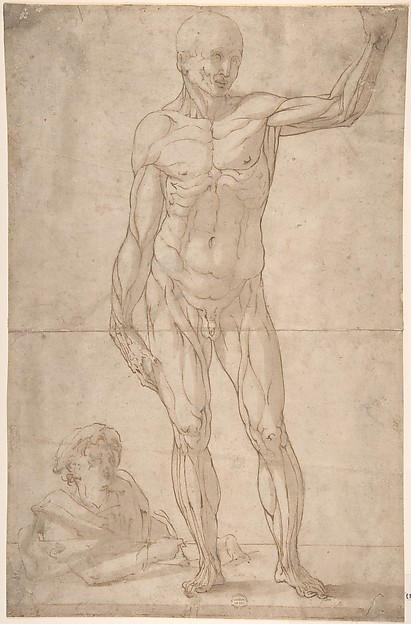 Anonymous, Italian, 16th to early 17th century — Study of An
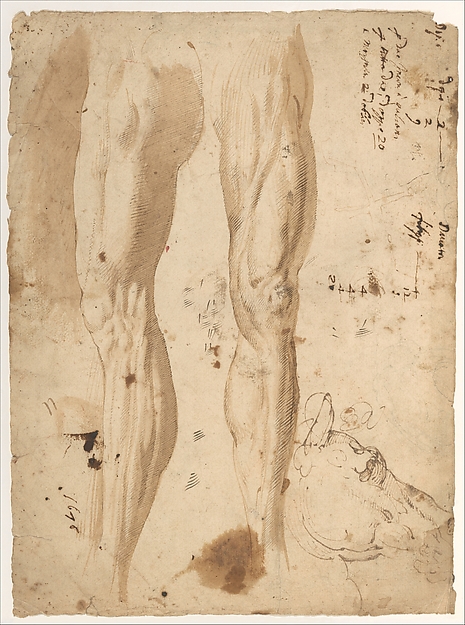 Central Italian — Studies of the Leg of a Man and a Horse's
 Peter Paul Rubens — Anatomical Studies
 Pontormo (Jacopo Carucci) — Seated Figure (recto); Reclining
 Polidoro da Caravaggio (Polidoro Caldara) — Study of a Man w
 Sodoma (Giovanni Antonio Bazzi) — Saint Sebastian (recto); s
 Bartolomeo Passarotti — Nude Studies
 Luzio Romano (Italian, active 1528–75) — Sketches of Five Ar
 Aniello Falcone — Male Nude with Left Arm Upraised, and a Fu
 Battista Franco — The Penitent Thief on the Cross
 Anonymous, Italian, 16th century — Nude Figure Studies (Rect