Cupid Advises Calypso to Set Fire to Mentor’s Ship, from The Adventures of Telemachus, Book 7
SEE IT IN PERSON
Not currently on view
In the collection of Art Institute of Chicago, Chicago · as of July 2026
Discussion
FROM THE ART INSTITUTE OF CHICAGO’S CATALOG
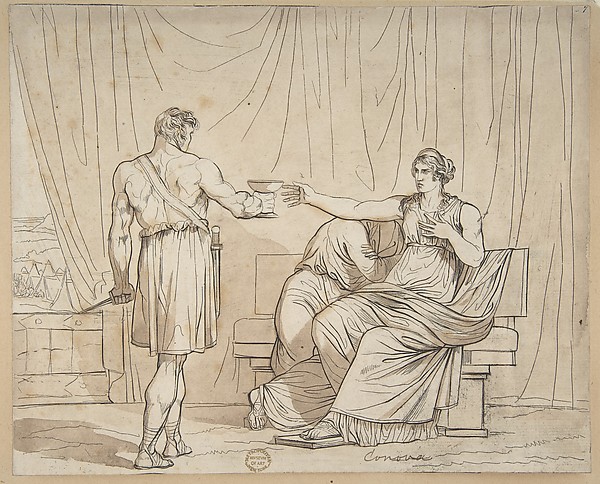
These twelve drawings depict scenes from the French novel The Adventures of Telemachus (Les aventures de Télémaque) by François Fénelon. First published in 1699, it was one of the most popular books of the 1700s and 1800s. Telemachus is the son of Ulysses from Homer’s Odyssey , the first four books of which describe the hero’s search for his father. Fénelon invented further adventures for Telemachus, in which he undergoes many trials while accompanied by his tutor, Mentor, who is actually the goddess Minerva (the embodiment of wisdom) in human disguise. A scathing critique of autocratic government and a diatribe against war, the book denounces luxury and decadence and calls for the simplicity and equality Fénelon believed ancient Greece best exemplified. Pinelli illustrated scenes from books 1–8 and one scene from book 18, and probably planned to illustrate more from the 24 books of the text. Throughout, he celebrates the heroic nude, displaying a deep knowledge of ancient Roman sculpture. His style, influenced by Jacques-Louis David and John Flaxman, is characterized by bold, almost cartoonish contours, monochromatic washes, and frieze-like arrangements of figures. To prevent Tele
Be the first to share your thoughts.
Sign in to join the discussion.
More by Bartolomeo Pinelli




More like this
 John Martin — Scene from Opera
 Jacopo Guarana — The shepherd Paris sitting on the right, ho
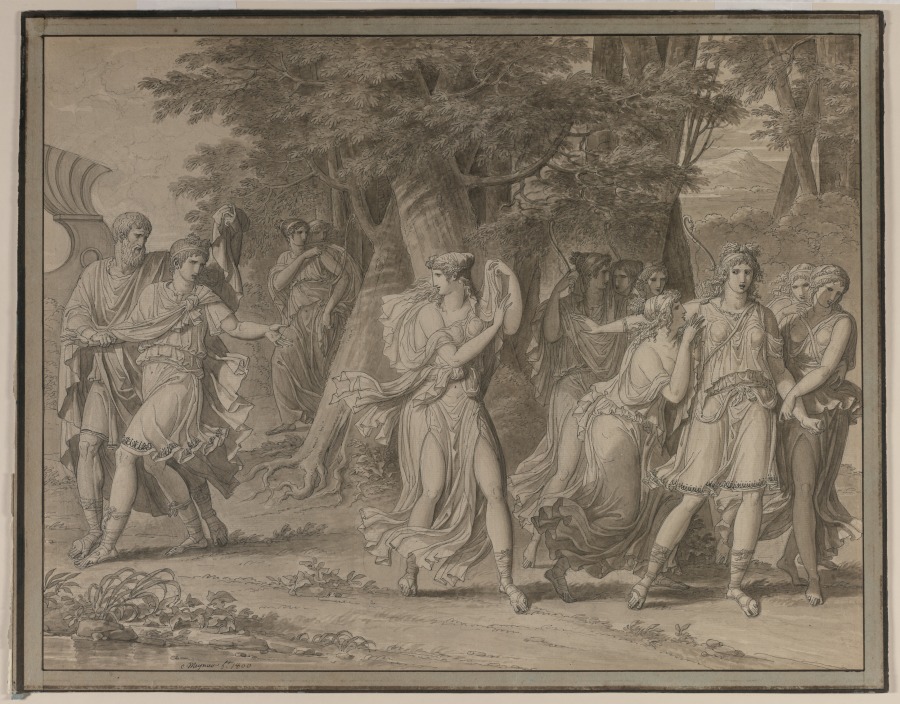 Charles Meynier (French, 1768–1832) — Telemachus, Urged by M
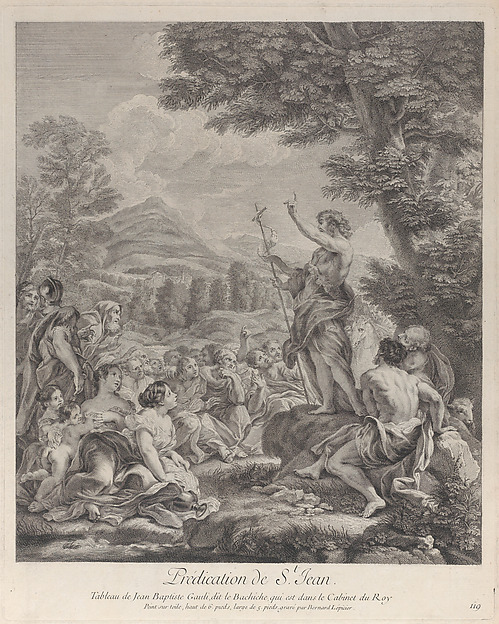 Giovanni Battista Gaulli (Il Baciccio)|Bernard Lepicié — Sai
 Unknown — Rape of Helen
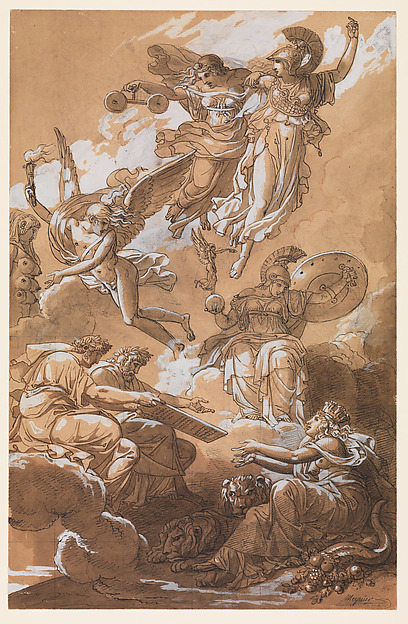 Charles Meynier — Earth Receiving the Code of Roman Law from
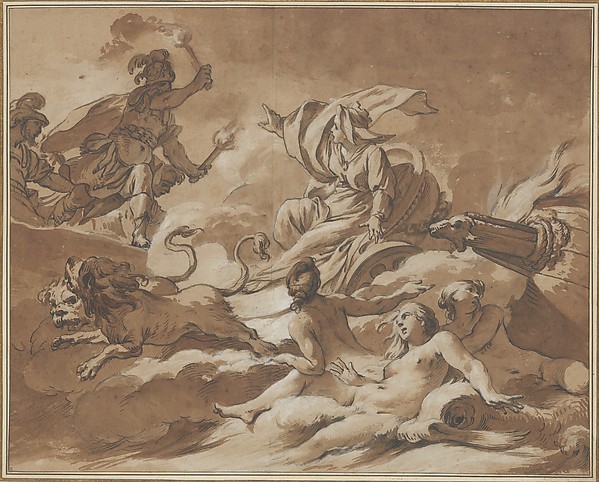 Jean-Baptiste Marie Pierre — Cybele Prevents Turnus from Set
 Samuel John Stump — Scene from Cymbeline
 Nicolas Poussin — Drunken Silenus Satyr and Nymphs
 Peter Paul Rubens|Pieter Soutman — The Abudction of Proserpi
 Giovanni Domenico Tiepolo — Armida Encounters the Sleeping R
 Alexander Runciman — Perseus and the Sleeping Medusa