More like this
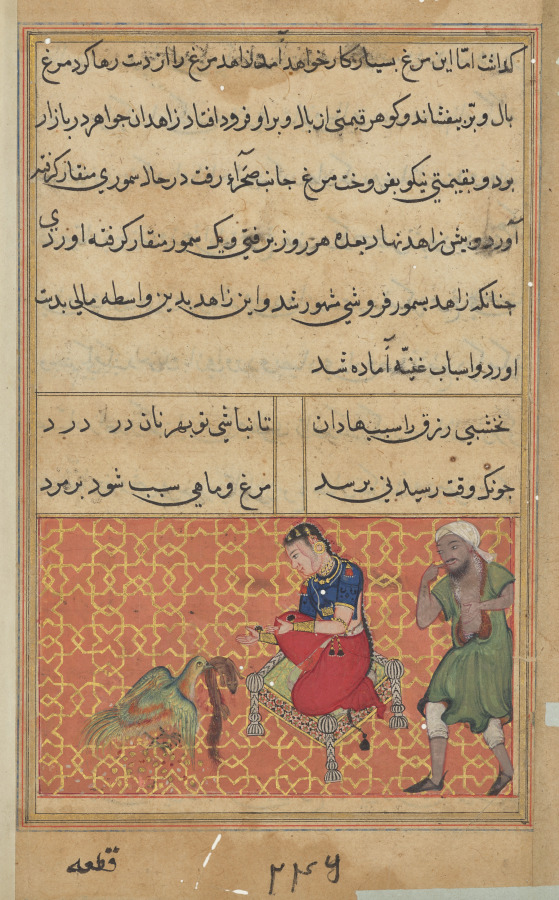 The bird of seven colors brings a sable to the pious man, fr
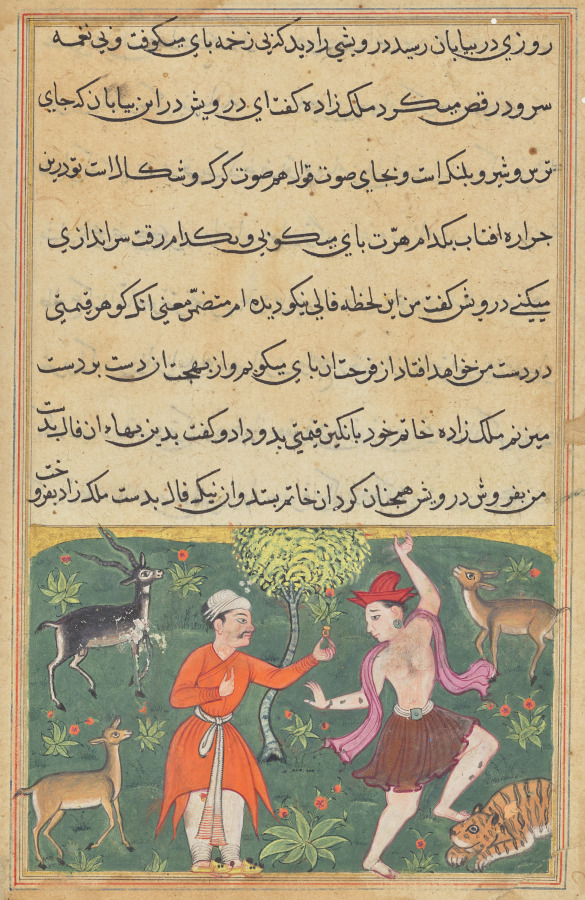 The prince meets a carefree dancing dervish whose good fortu
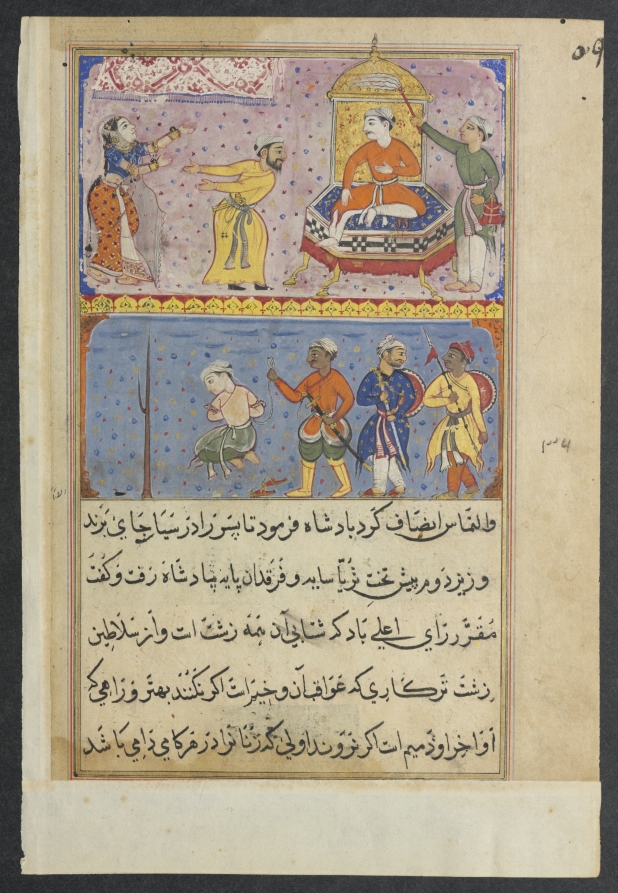 Gujarati (Indian, active 1550s-1590s) — The prince, once rep
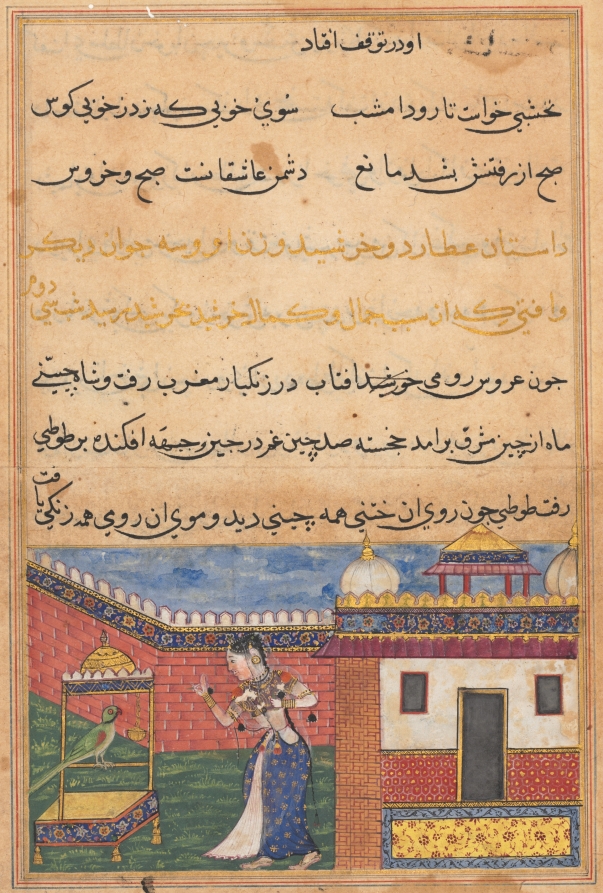 The parrot addresses Khujasta at the beginning of the thirty
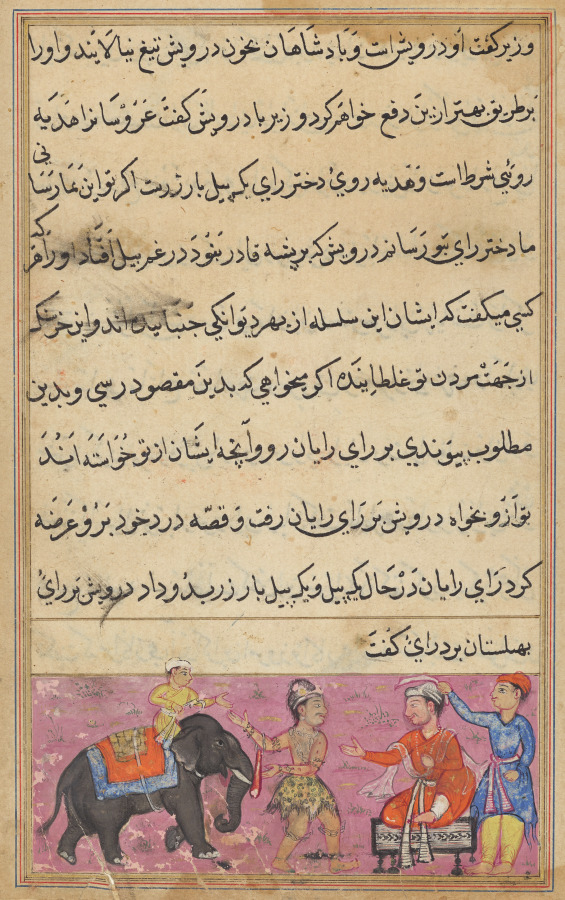 The dervish brings in as dowry an elephant laden with gold,
 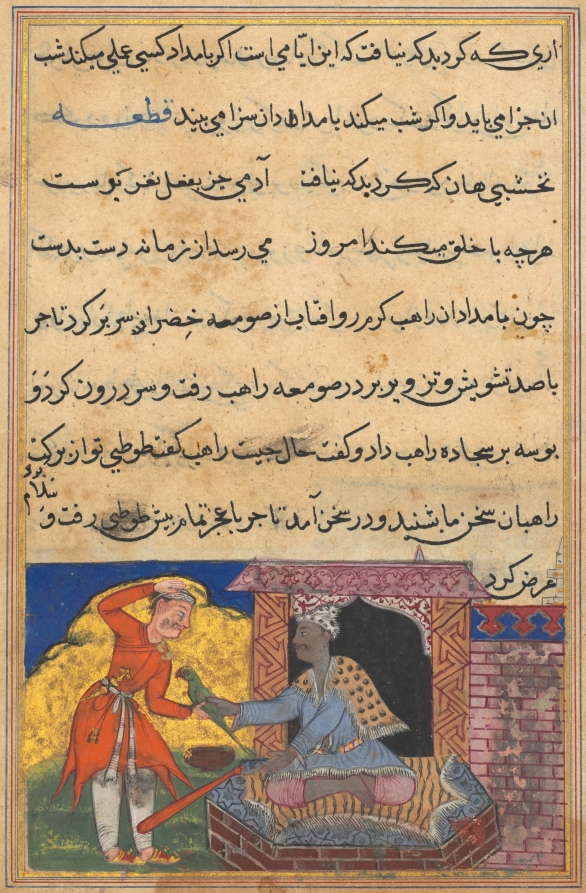 Lalu (Indian, active mid-1500s) — The monk returns the magic
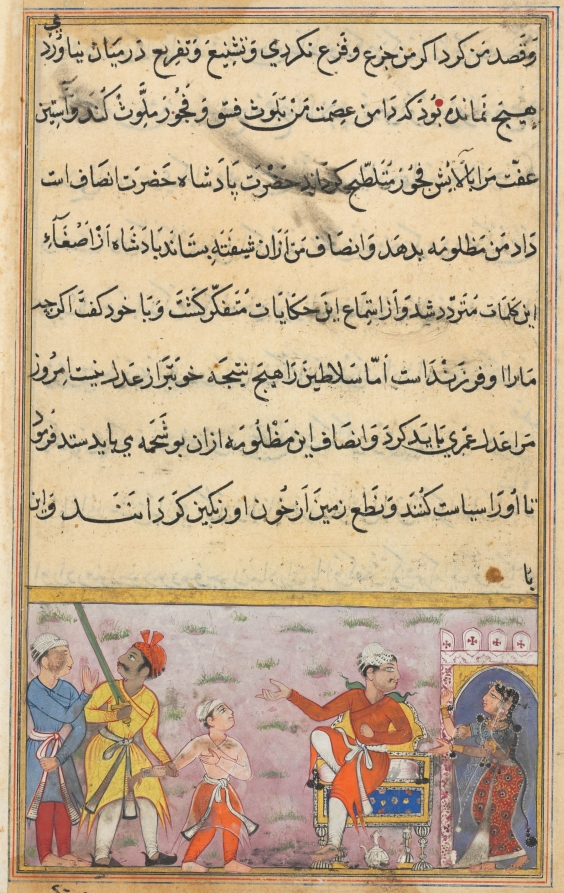 The prince being taken away for execution on the false compl
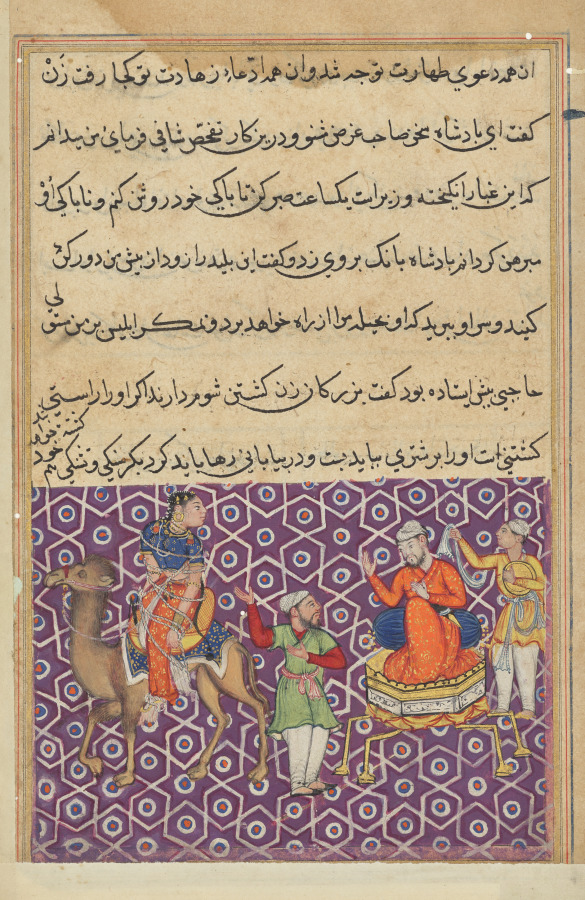 King Bahram, who has married Khassa’s daughter, has her tied
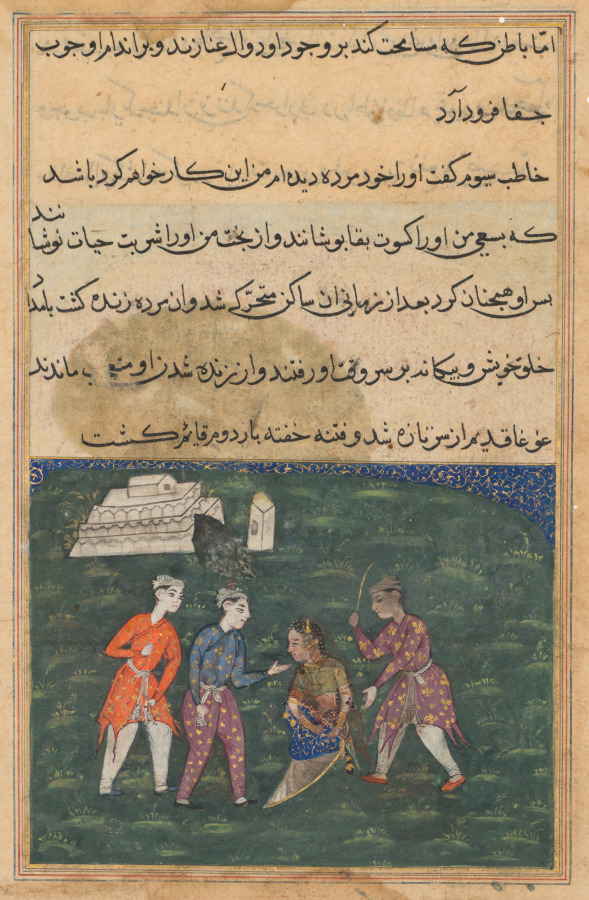 The third suitor strikes the devotee’s daughter and thus res
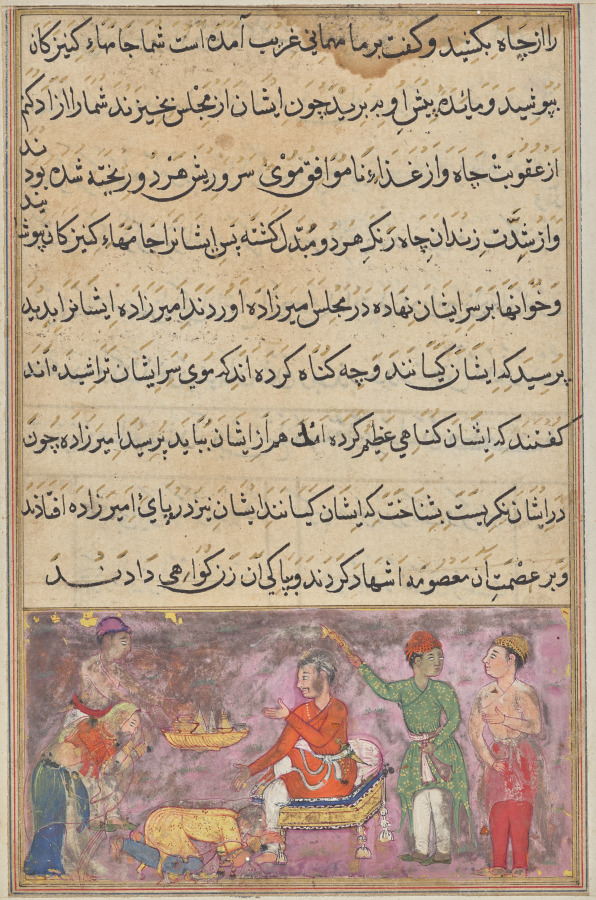 The two erring cooks, dressed as maidservants, fall at the p
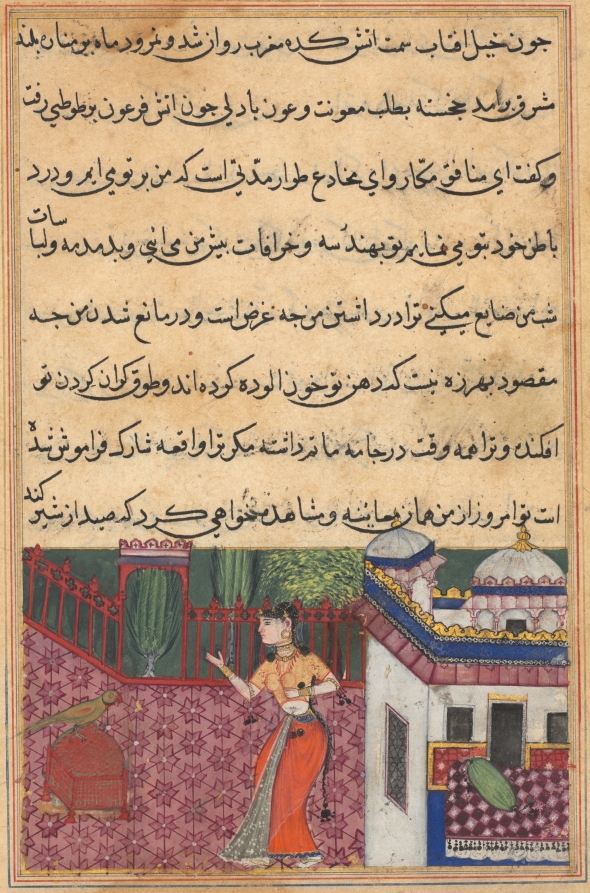 The parrot addresses Khujasta at the beginning of the thirty
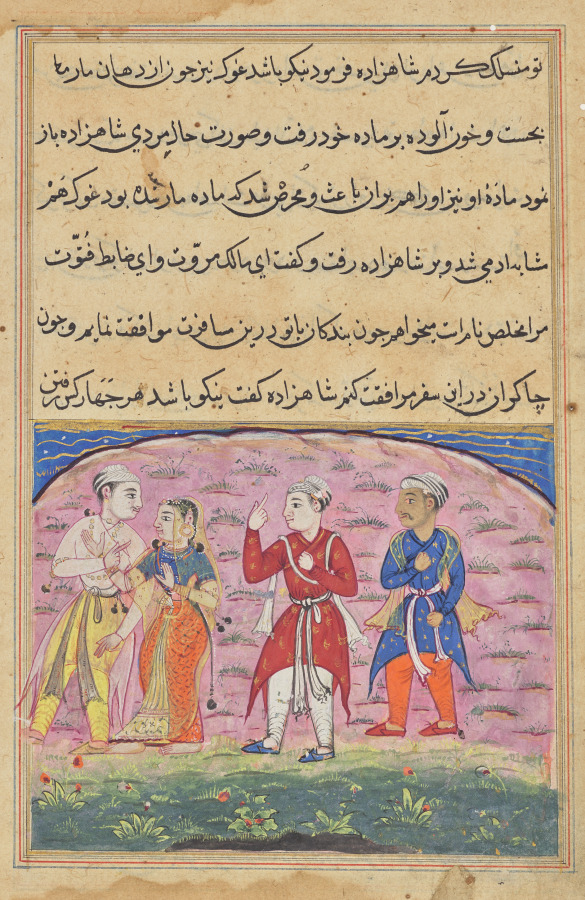 The prince and Nikfal are joined by Khalis and the Mukhlis w