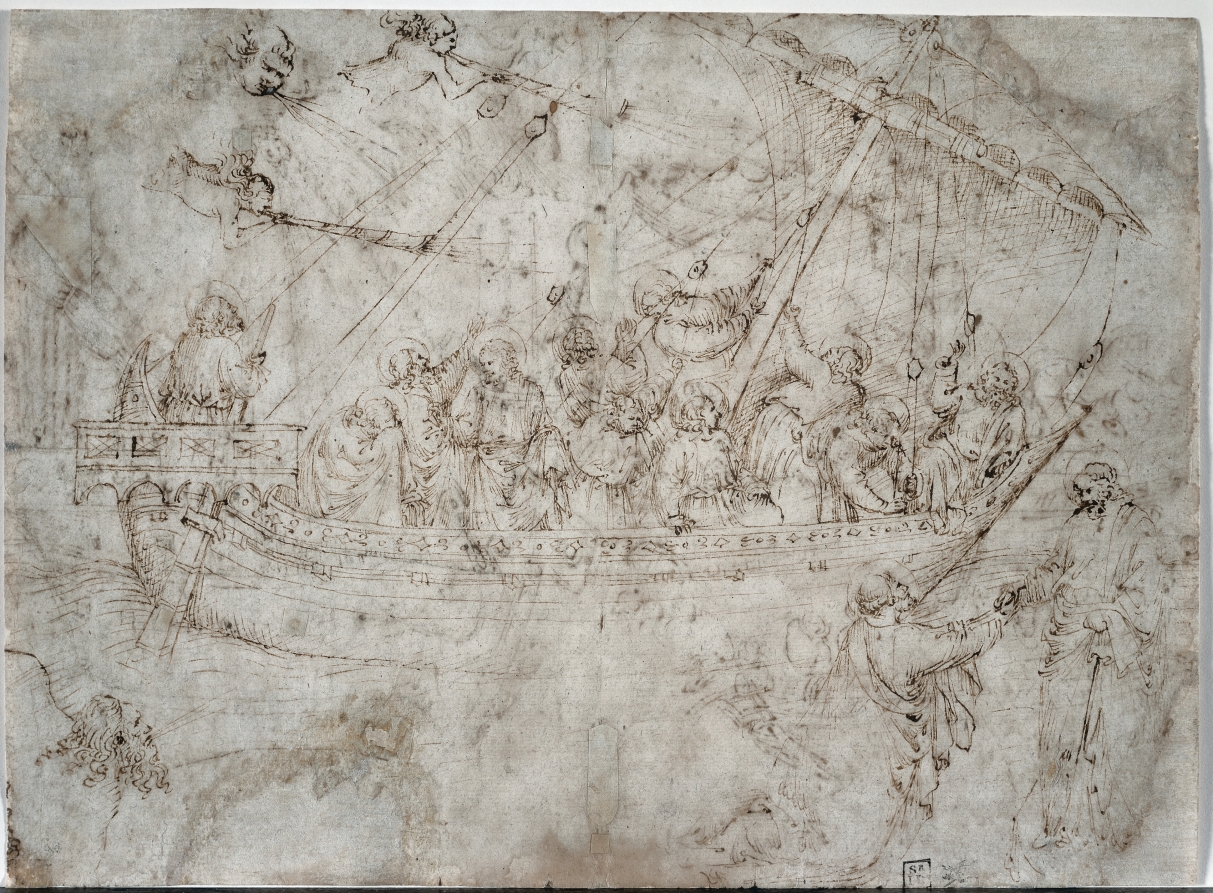
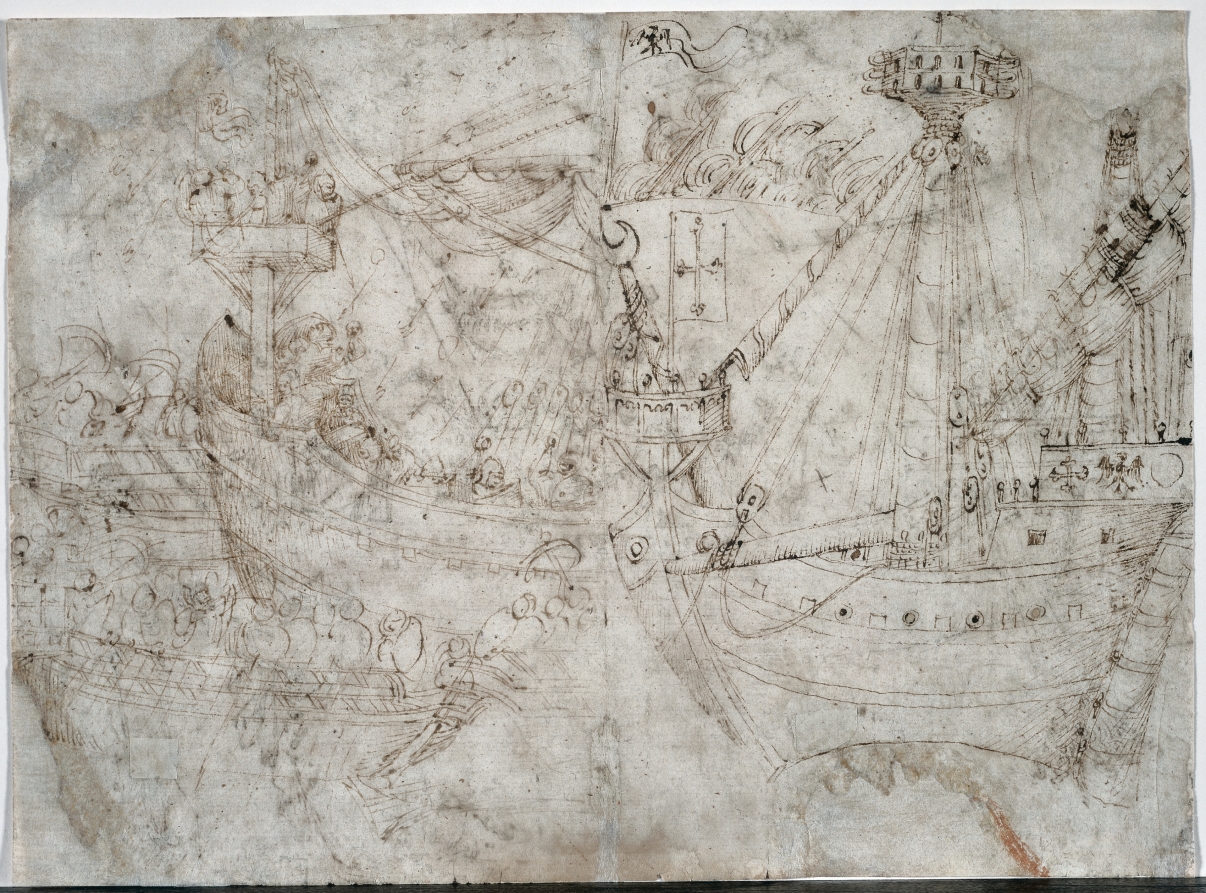
In the collection of Cleveland Museum of Art, Cleveland — check current display status with the museum.
FROM THE CLEVELAND MUSEUM OF ART’S CATALOG
Copying works of art in their original locations—for practice with composition or to record another’s ideas—was one of the main functions of drawing before 1450. In this example, Parri Spinelli used a quill pen and ink on a large sheet of paper to copy the composition of a monumental mosaic that adorned the portico of Old Saint Peter’s Basilica in Rome (since destroyed). In this scene from the Bible, Christ walks on water at right, while Saint Peter kneels before him in front of a ship filled with Christ’s disciples. Spinelli focused on the outlines of the figures, using a limited vocabulary of parallel and perpendicular lines to suggest shallow depth and shadow. Paper was rarely wasted. On the other side of the sheet, Spinelli continued the copy, rendering two large ships and two rowing boats full of people.
Be the first to share your thoughts.
Sign in to join the discussion.
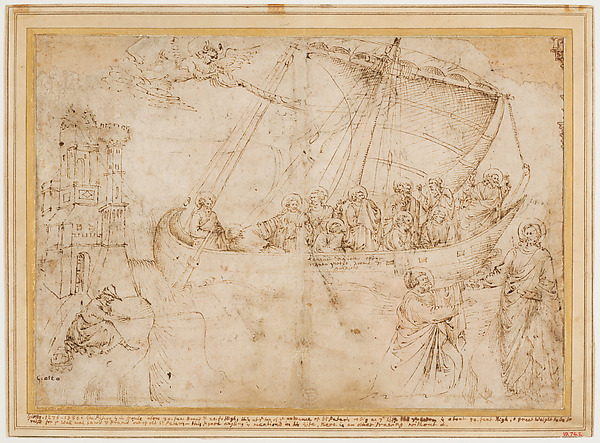 Giotto di Bondone|Parri Spinelli|Masaccio (Tommaso di Ser Gi
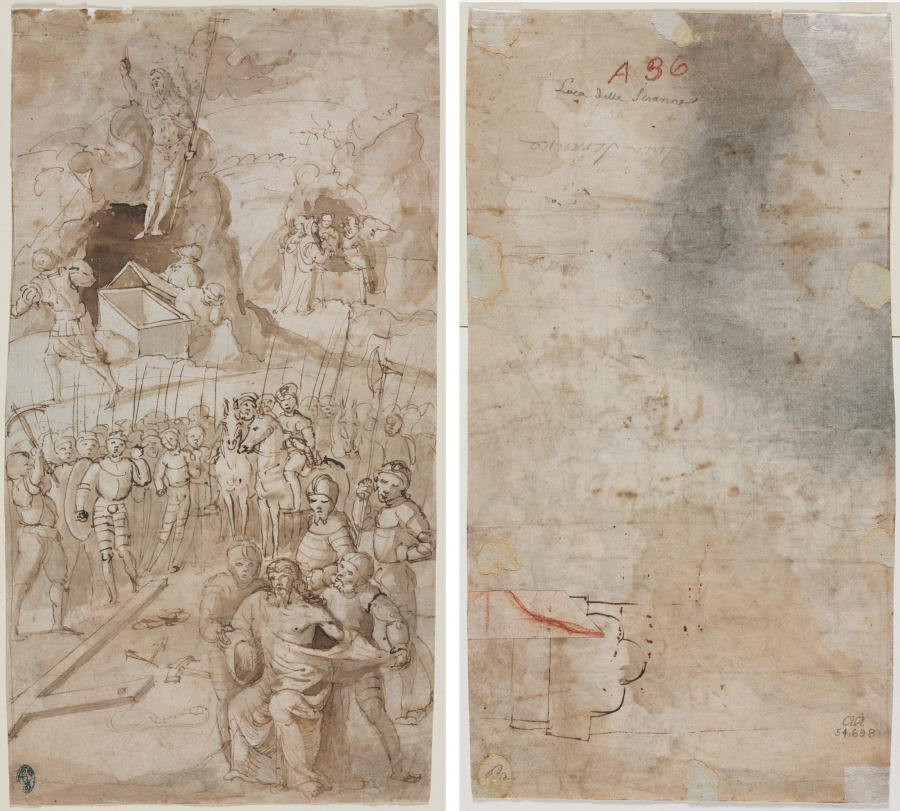 Three Scenes from the Passion of Christ (recto); Architectur
 Pierre Puget — Design for the decoration of a Warship
 Taddeo Zuccaro — The Sea Battle in the Gulf of Morbihan
 Seu Family|Manaku
 Alonso Cano — Three Putti Holding Cross Before Two Male Sain
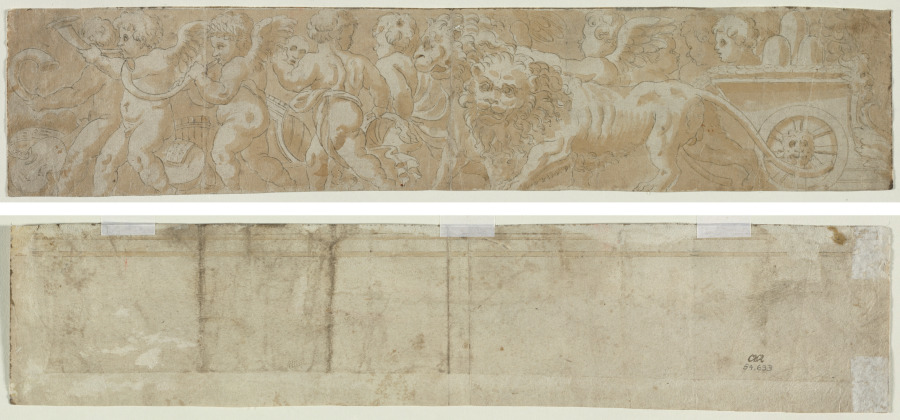 Chariot Drawn by Lions with Amorini (recto) Partial Architec
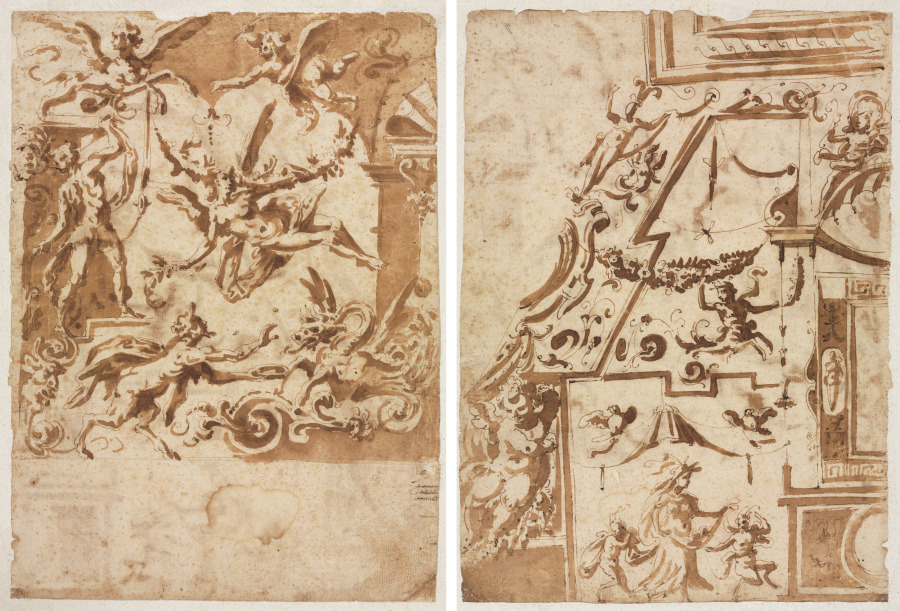 Marco Marchetti (Italian, 1565–1588) — Grotesque with a Saty
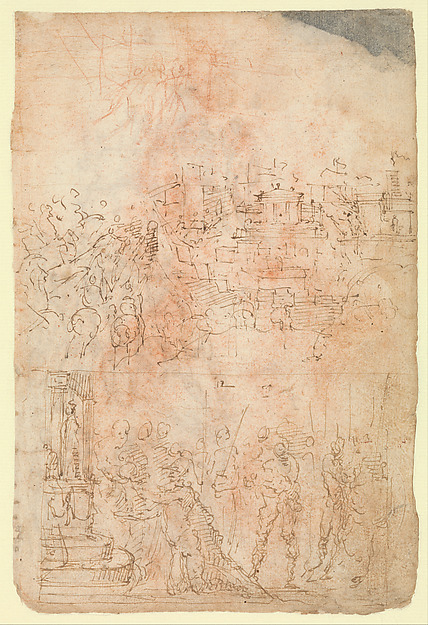 Domenico Beccafumi — Page from a Sketchbook Depicting a City
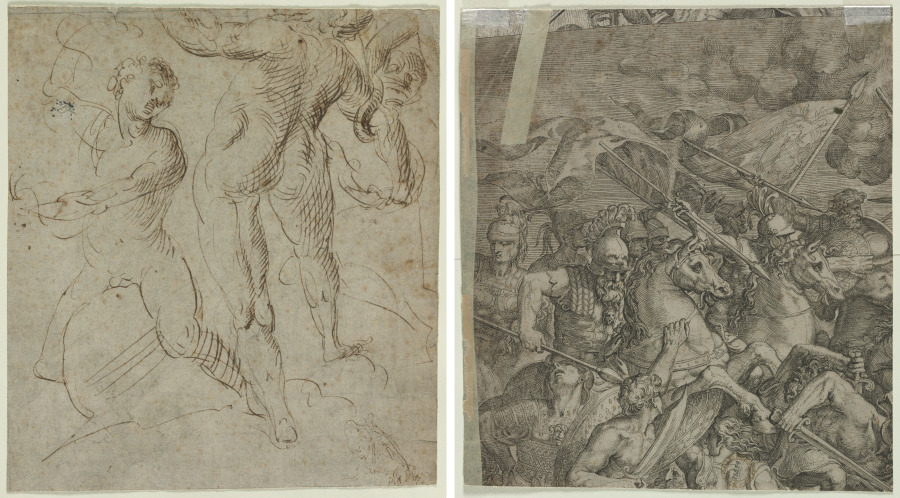 Laocoön (recto); Battle of the Milvian Bridge (fragment) (ve
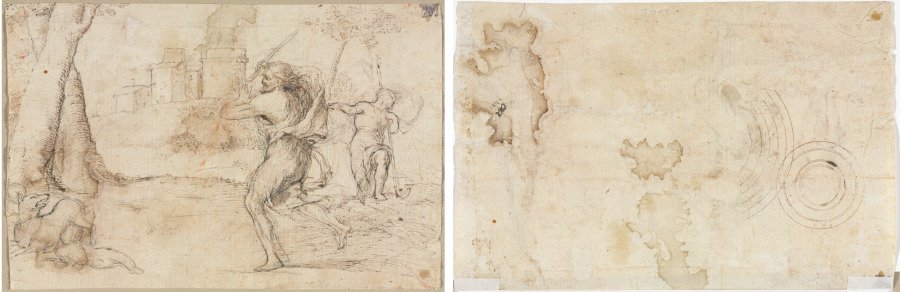 Romanino (Italian, 1484/87–1562) — Romulus and Remus Found b
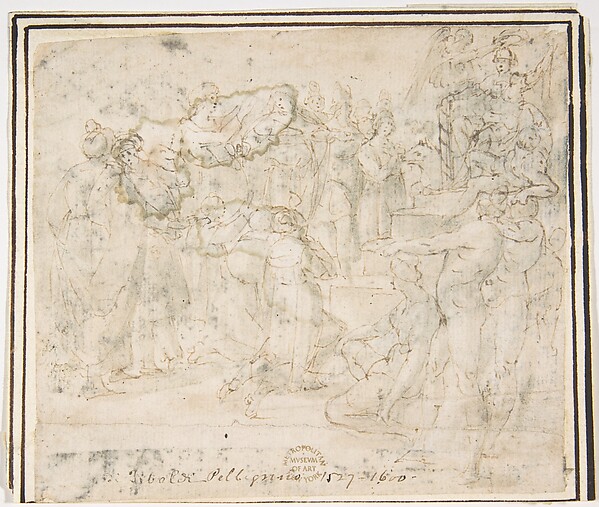 Francesco Allegrini — The Judgment of Solomon