Gorget
1590/1600
Steel, gilding, brass, translucent enamel, and leather
SEE IT IN PERSON
● On view now — Gallery 239
Art Institute of Chicago, Chicago · verified July 2026
Discussion
FROM THE ART INSTITUTE OF CHICAGO’S CATALOG
Intended to protect the neck, by the late 16th century the gorget had also become a symbol of rank, as men wore the pieces in civilian contexts as a fashionable allusion to military prowess or status. This example is painted with red and black translucent glass enamel, a rare and fragile decoration that has all but shattered off the fine interlace pattern.
Be the first to share your thoughts.
Sign in to join the discussion.
More by French
 Head of a Woman
 Altarpiece from Thuison-les-Abbeville: Saint Hugh of Lincoln
 Panels from the High Altar of the Charterhouse of Saint-Hono
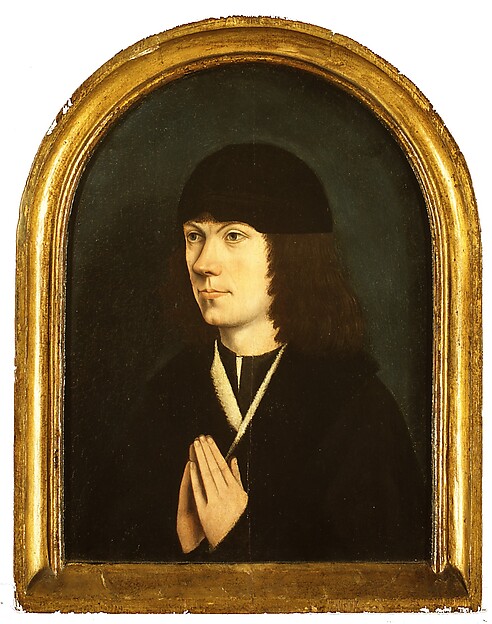 Portrait of a Young Man
 Altarpiece from Thuison-les-Abbeville: Saint Honoré
 Altarpiece from Thuison-les-Abbeville: The Ascension
 Panels from the High Altar of the Charterhouse of Saint-Hono
 The Nymph of Fontainebleau
More like this
 Italian; Milan — Demi Shaffron of an Infantry Garniture
 Italian; Milan — Waistcoat Cuirass
 Southern German, Augsburg — Peytral and Lower Neck Defense o
 German — Peytral of a Horse Armor
 Italian — Breastplate
 Northern Italian — Breastplate
 North Italian, probably Milan — Breastplate
 Italian; Milan — Cuirass from an Armor of Tsar Dmitry I
 North Italian, probably Milan — Breastplate
 Southern German, Nuremberg(?) — Backplate with Fauld
 Southern German — Crupper with Tail Guard
 Italian — Breastplate