FROM THE CLEVELAND MUSEUM OF ART’S CATALOG
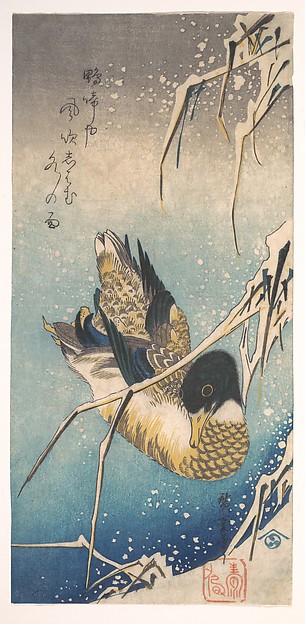
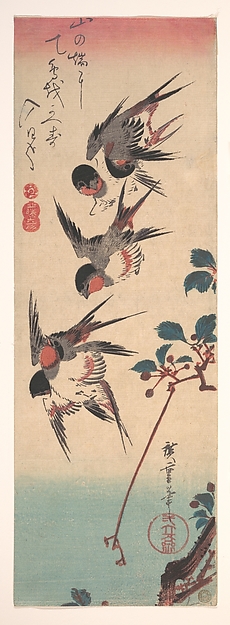
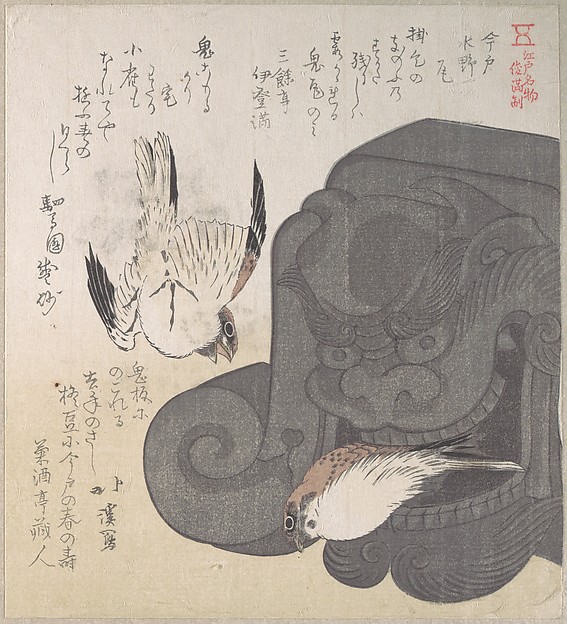
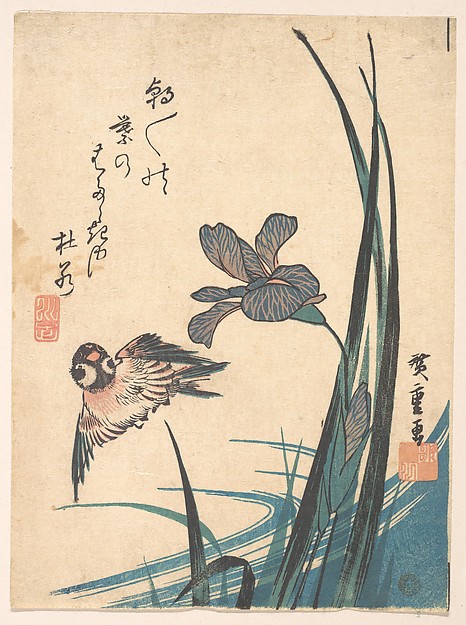
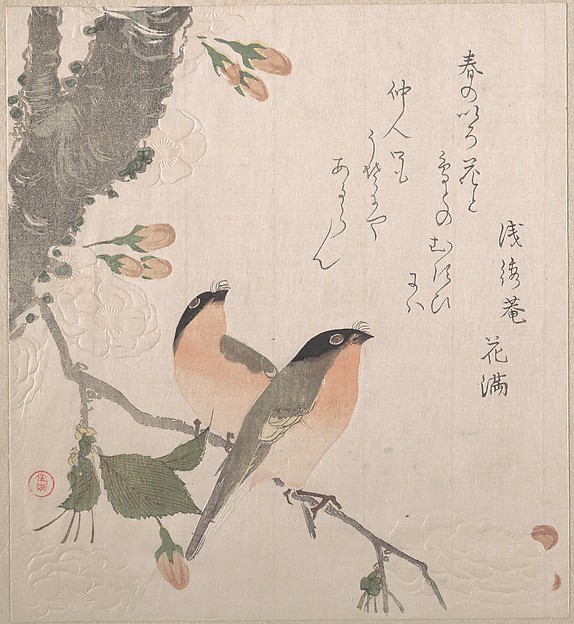
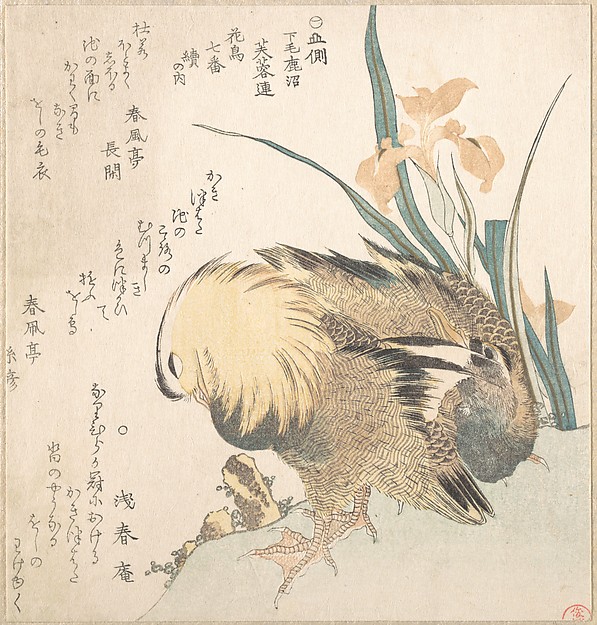
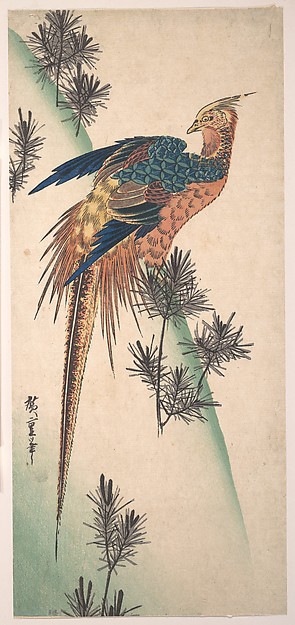
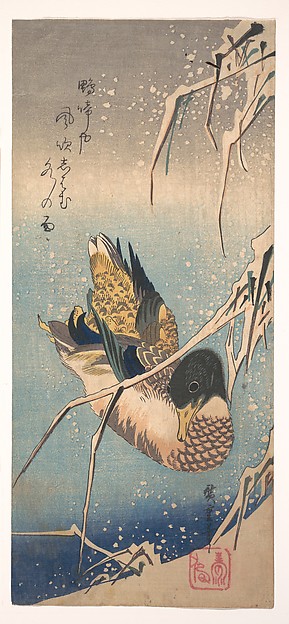
In Asian painting, ducks are usually shown in pairs because a male and female mate for life. They symbolize fidelity and tranquility. The presence of another duck is suggested here by the gesture of the bird's head. Notice the variety of brushstrokes and ink tones used to depict the duck's plumage. The bird and flower genre is a popular theme in the paintings and prints of the Kelvin Smith Collection. Kachoga, or bird and flower pictures, became popular among collectors in Japan during the 19th century, due in large part to Hiroshige. Although better known for his landscape prints, Hiroshige made several exceptional prints of birds, plants, and animals that reveal his keen observation of nature.
Source ↗︎
Be the first to share your thoughts.
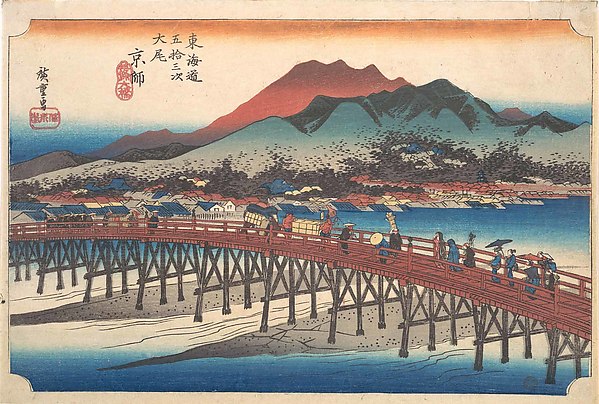 歌川広重画 「東海道五十三次 大尾 京師 三条大橋」|Kyoto: The Great Bridge at Sanjō
 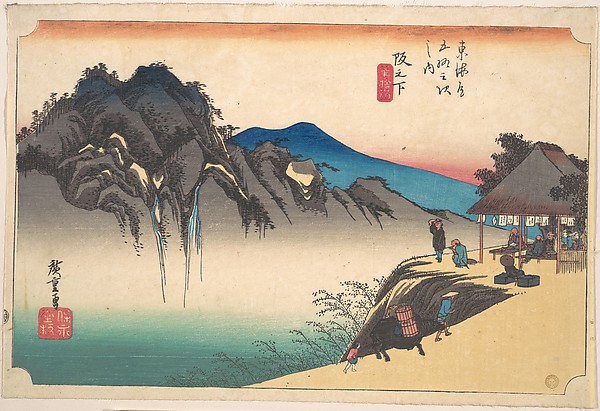 東海道五十三次之内 阪之下 筆捨嶺|Saka-no-shita, Fude-sute Mine
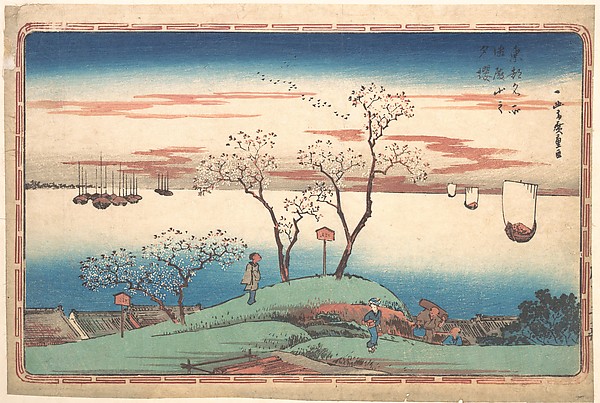 Gotenyama no yu-zakura|東都名所 御殿山之夕桜|Evening Cherry Blossoms a
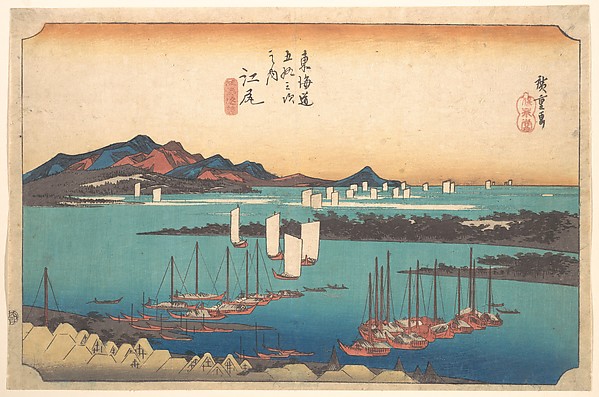 東海道五十三次之内 江尻 三保遠望|Panorama of Miwo Pine Wood from Ejiri
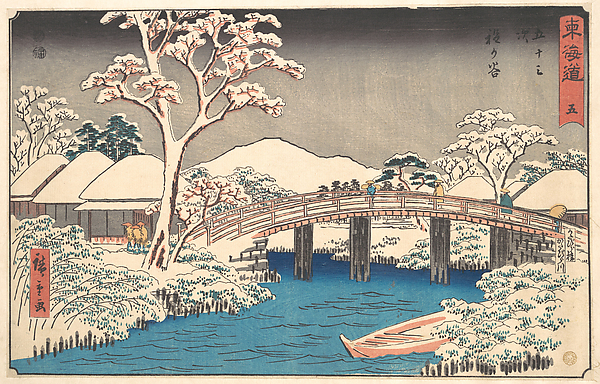 東海道五十三次 程ヶ谷 かたびら橋 かたびら川|Hodogaya
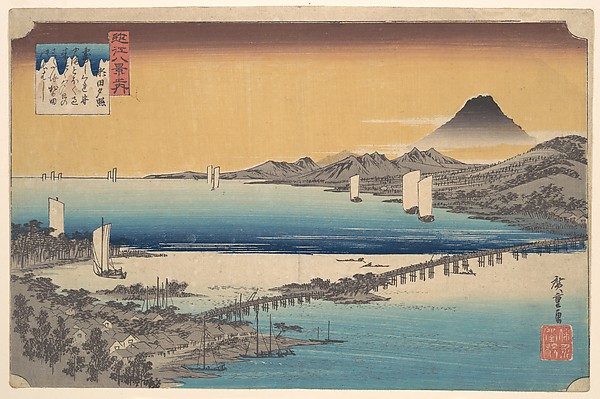 近江八景之内 瀬田夕照|Long Bridge of Seta
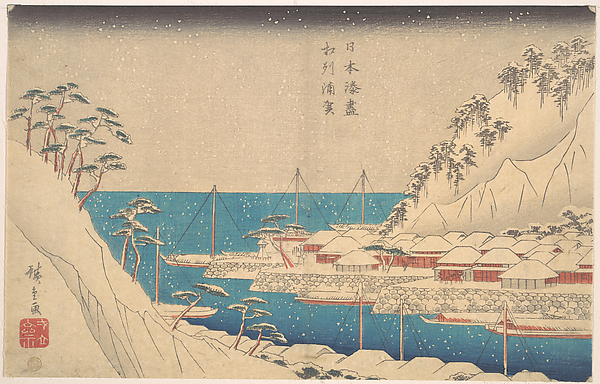 日本湊尽 相州浦賀|Uraga Harbor
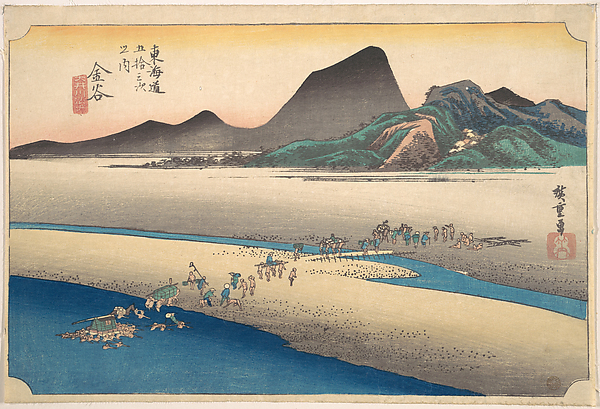 東海道五十三次之内 金谷 大井川遠岸|Kanaya, Oigawa Em Gan