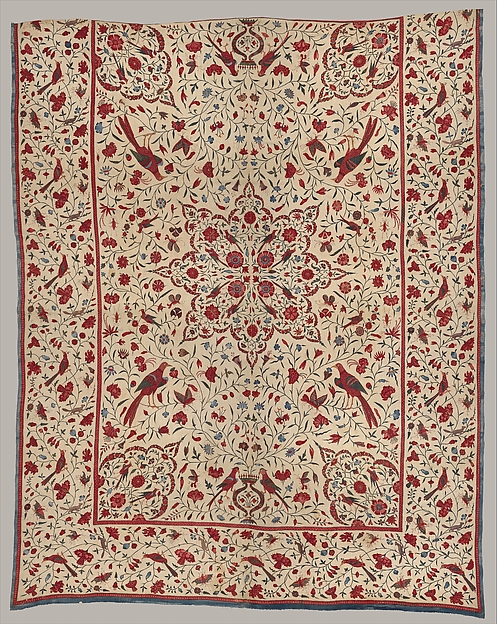
Uzbekistan, possibly Shakhrisabz or Shafirkhan
Suzani (large embroidered hanging or cover)
SEE IT IN PERSON
Not currently on view
In the collection of Art Institute of Chicago, Chicago · as of July 2026
Discussion
FROM THE ART INSTITUTE OF CHICAGO’S CATALOG
The term suzani comes from the Persian word for needle, but in Central Asia it specifically refers to large, spectacularly colorful textiles embroidered in silk. Suzanis were traditionally used as wall hangings or as covers to wrap bedding and clothing. Produced by women, they were an essential part of a wedding dowry. Because of their size, suzanis consist of several widths of narrower cloth. These ground (or base) fabrics were first laid out and the design drawn upon them. Each width of cloth was then embroidered separately, perhaps by several artists working together, before being assembled.
Be the first to share your thoughts.
Sign in to join the discussion.