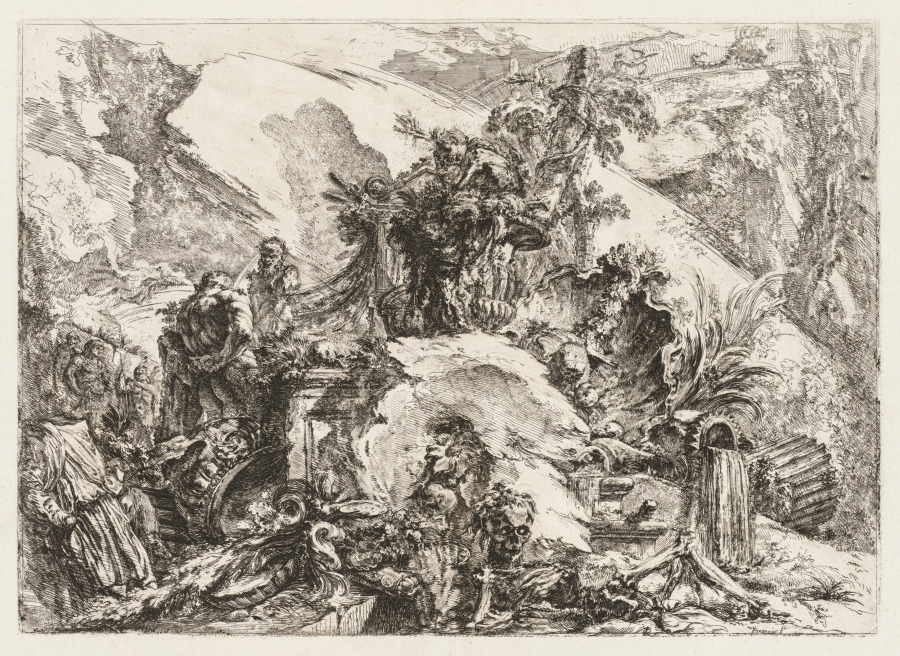
The Skeletons
SEE IT IN PERSON
Not currently on view
In the collection of Art Institute of Chicago, Chicago · as of July 2026
Discussion
FROM THE ART INSTITUTE OF CHICAGO’S CATALOG
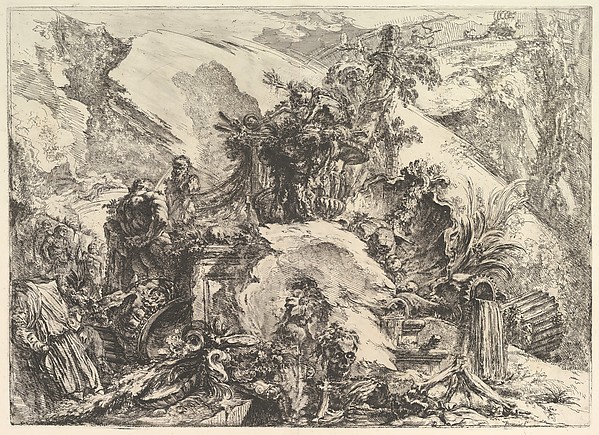
This print is one of four grotesques (decorative fantasies) included in Giovanni Battista Piranesi’s popular series of architectural views of Rome and its surroundings. This kind of composition was inspired by Roman wall decorations discovered during the Renaissance and was meant to incorporate dissimilar elements in a whimsical and ornamental manner. This particular etching includes, among other things, a back view of the often-copied Farnese Hercules, a large zodiac wheel partly visible at the upper right, and various fragmentary skeletons adorned with tufts of wavy hair.
Be the first to share your thoughts.
Sign in to join the discussion.
More by Giovanni Battista Piranesi
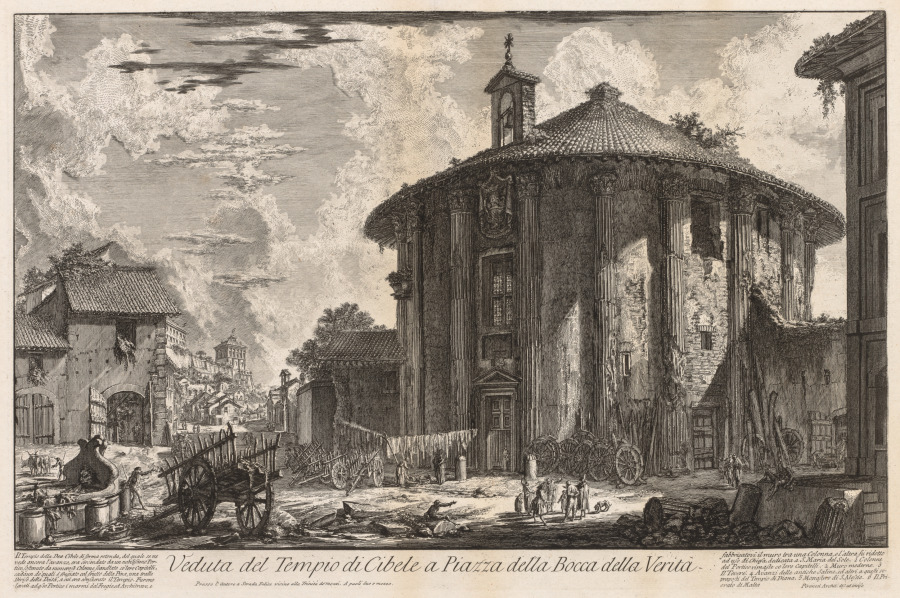 Views of Rome: Temple of Cybele
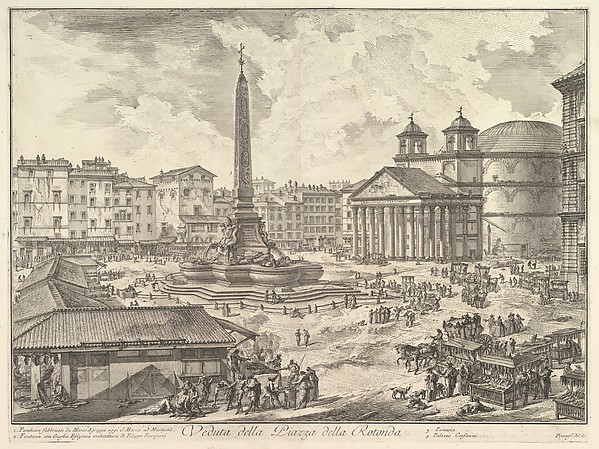 The Piazza della Rotonda, with the Pantheon and Obelisk (Ved
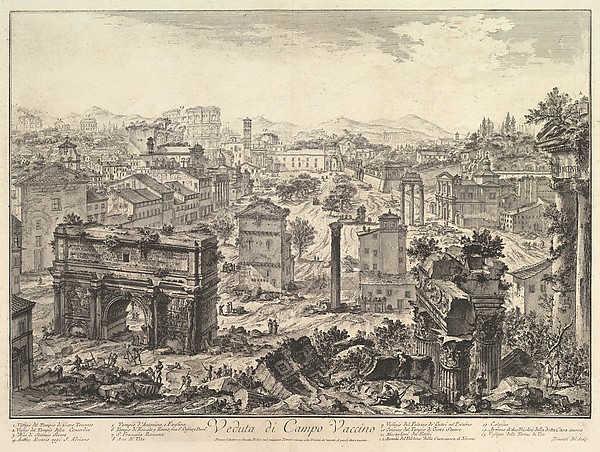 The Forum Romanum, or Campo Vaccino, from the Capitol, with
 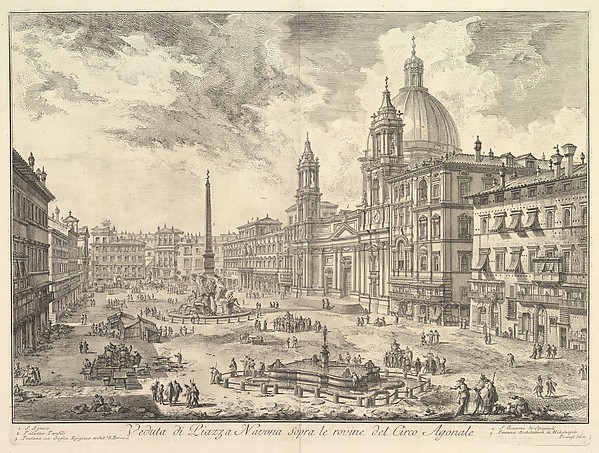 The Piazza Navona, Rome, above the ruins of the Circus of Do
 View of the Campo Vaccino (Roman Forum with the Temple of CaView of the Flavian Amphitheater, called the Colosseum, from
 The Forum Romanum, or Campo Vaccino, from the capitol, with
  View of the Temple of Cybele in the Piazza of the Bocca dell
More like this
 Giovanni Battista Piranesi (Italian, 1720–1778) — The Skelet
 Giovanni Battista Piranesi|Giovanni Bouchard — The Skeletons
 Giovanni Domenico Tiepolo — The Holy Family Resting in a Woo
 Giovanni Battista Tiepolo — Two Astrologers and a Boy, from
  Rodolphe Bresdin — Rider in the Mountains
 Giovanni Battista Tiepolo — A Shepherd with Two Magicians, f
 Léopold Flameng — Homeric Battle
 Giovanni Battista Tiepolo (Italian, 1696–1770) — Various Cap
 Giovanni Battista Tiepolo — A Woman with her Hands on a Vase
 Giovanni Battista Tiepolo — Two Soldiers and Two Women, from
 Christian Wilhelm Ernst Dietrich — Herd Coming through an Ar
 Giovanni Battista Tiepolo — The Discovery of the Tomb of Pun