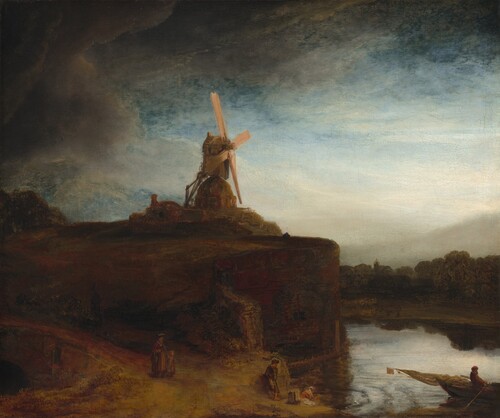
In the collection of Cleveland Museum of Art, Cleveland — check current display status with the museum.
FROM THE CLEVELAND MUSEUM OF ART’S CATALOG
Although 17th-century Holland produced neither noteworthy composers nor renowned performers, rarely has another culture produced so many visual images of music as the Dutch. In this depiction of a pair of itinerant musicians wearily shuffling from door to door, Rembrandt reveals his compassionate understanding of human frailties. The hurdy-gurdy and bagpipes, as depicted here, were frequently associated with itinerant beggars and blind street singers in paintings and prints of the period.
Be the first to share your thoughts.
Sign in to join the discussion.
 Rembrandt (Rembrandt van Rijn) — The Strolling Musicians
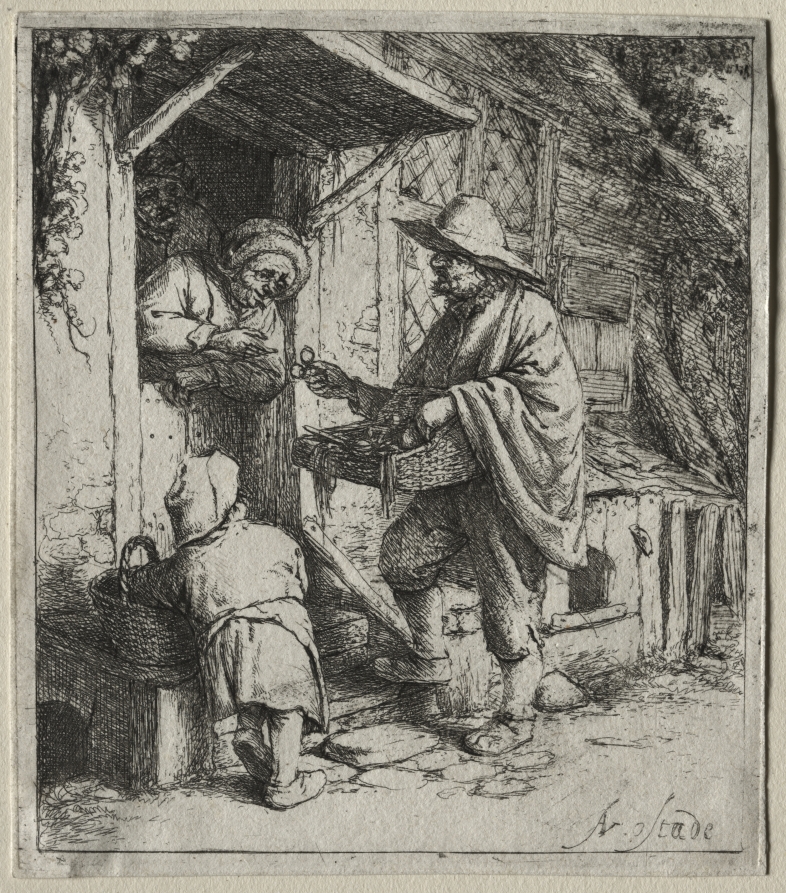 Adriaen van Ostade (Dutch, 1610–1684) — The Spectacle Seller
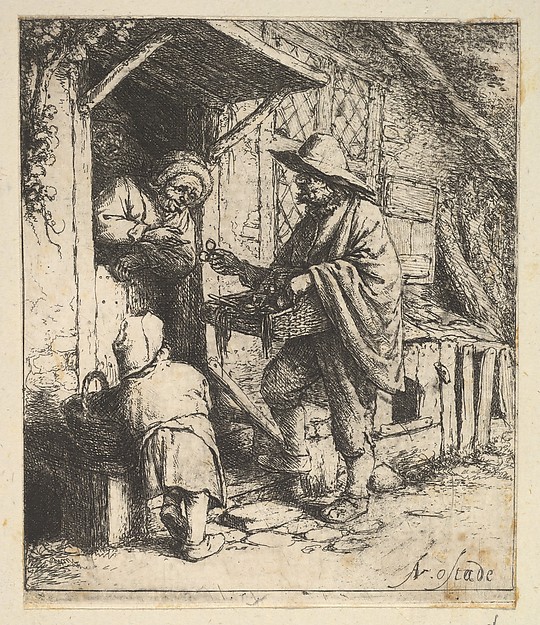 Adriaen van Ostade — The Spectacle Seller
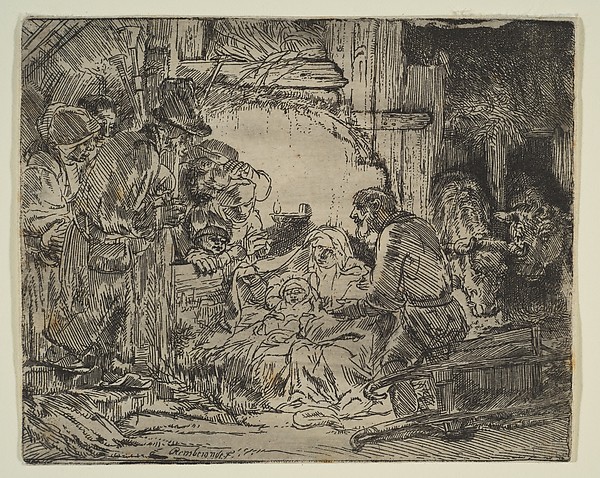 Rembrandt (Rembrandt van Rijn) — The Adoration of the Shephe
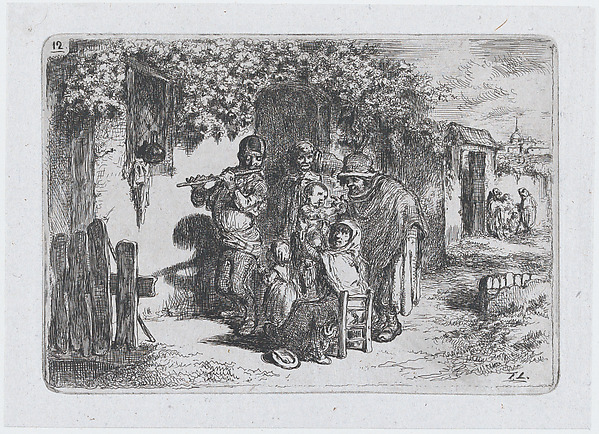 Francisco Lameyer y Berenguer — Plate 12: a group of people
 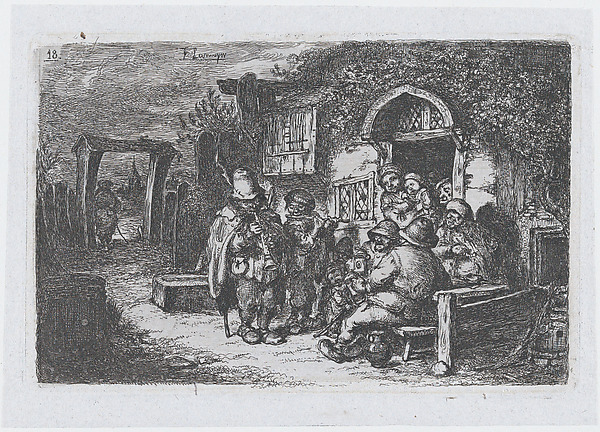 Francisco Lameyer y Berenguer — Plate 18: street musicians a
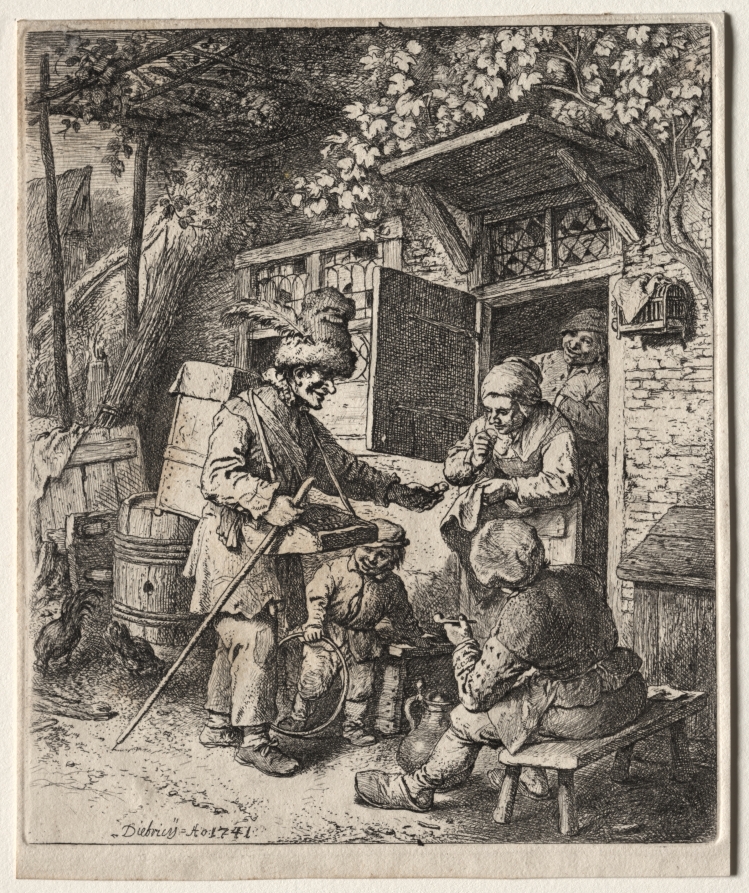 Christian Wilhelm Ernst Dietrich (German, 1712–1774) — The P
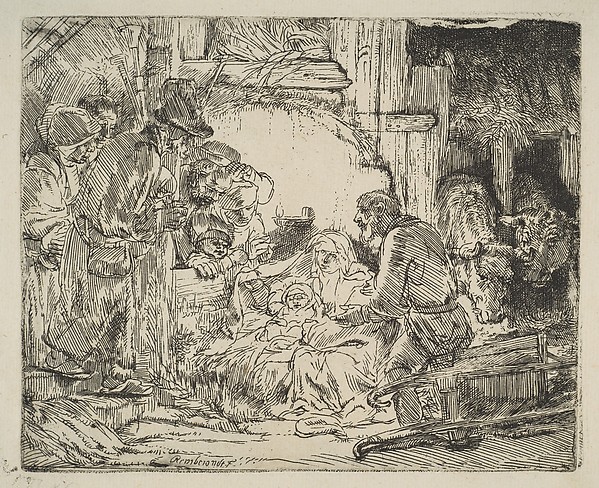 Rembrandt (Rembrandt van Rijn) — The Adoration of the Shephe
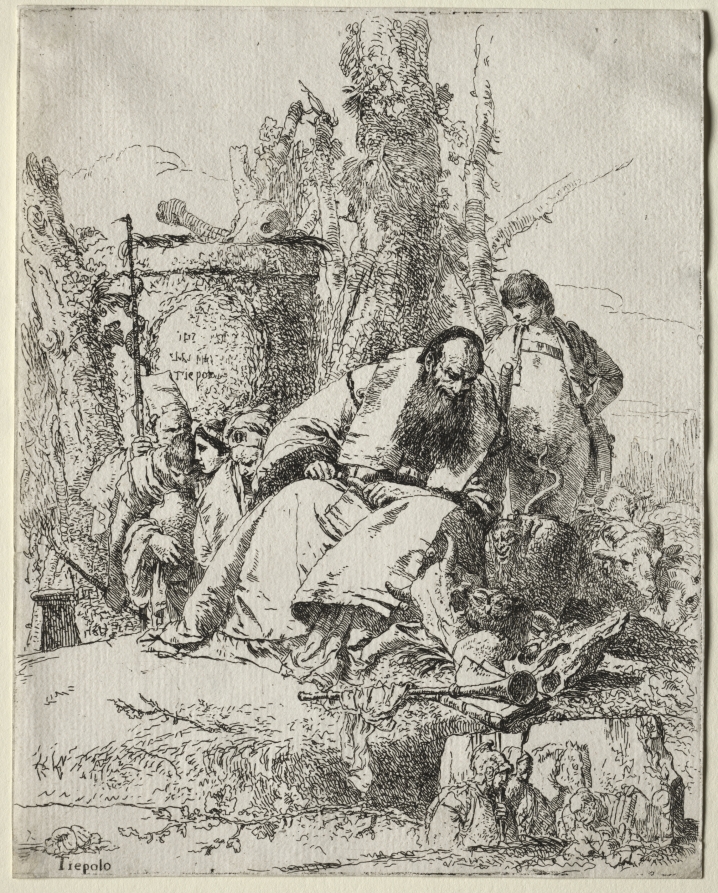 Giovanni Battista Tiepolo (Italian, 1696–1770) — Scherzi di
 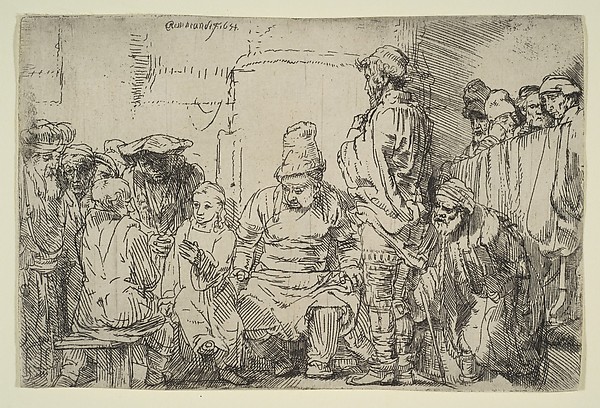 Rembrandt (Rembrandt van Rijn) — Christ Seated Disputing wit
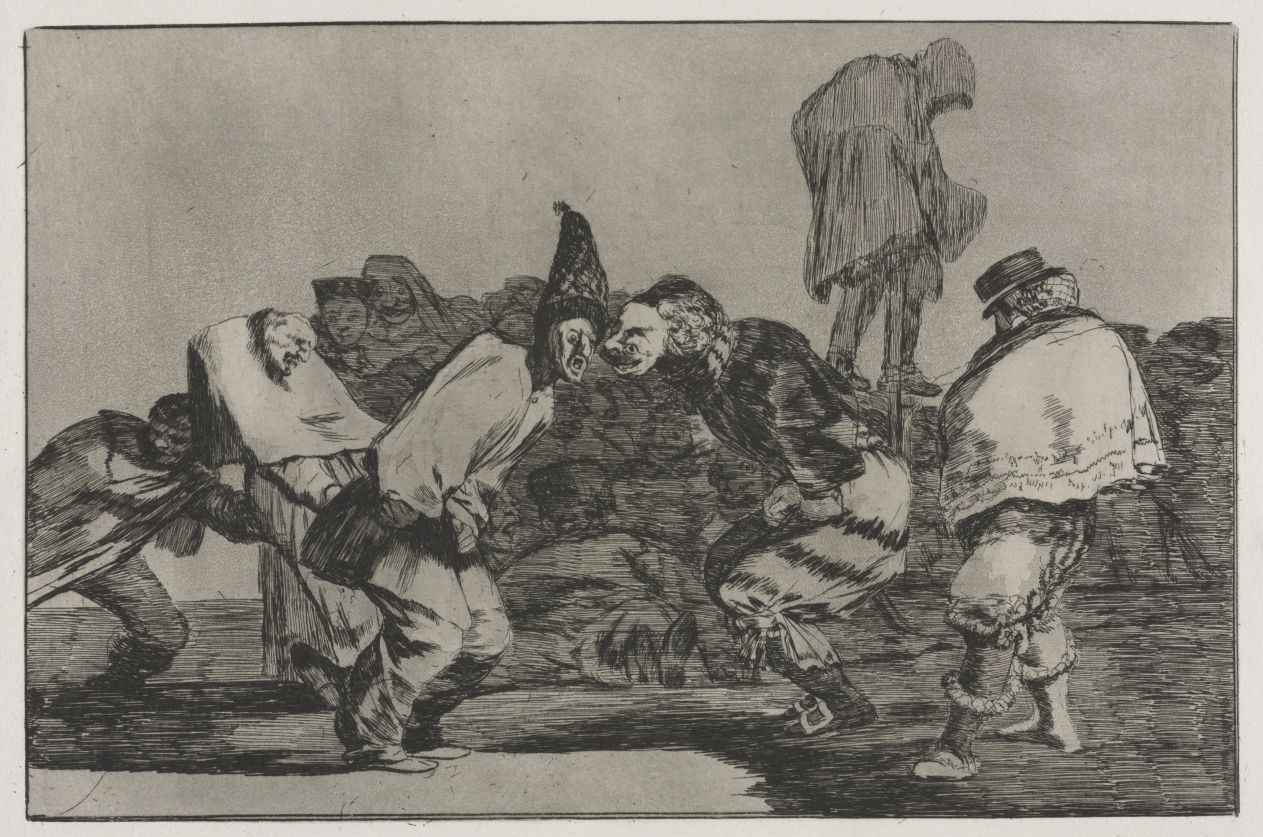 Francisco de Goya (Spanish, 1746–1828) — The Proverbs: Carn
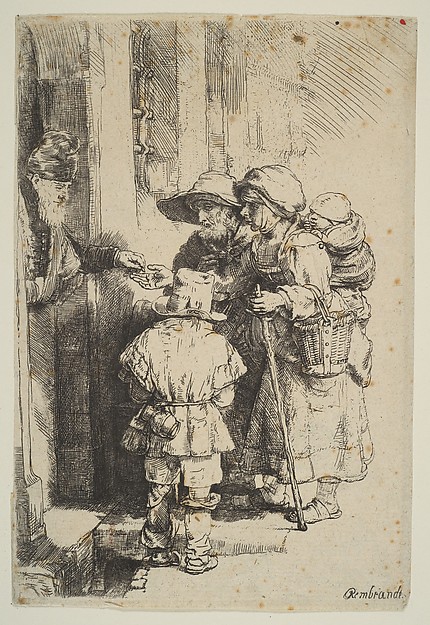 Rembrandt (Rembrandt van Rijn) — Beggars Receiving Alms at t