In the collection of Cleveland Museum of Art, Cleveland — check current display status with the museum.
FROM THE CLEVELAND MUSEUM OF ART’S CATALOG
Lithography proliferated rapidly in France so that by 1838 there were some 300 lithographic printing establishments in Paris alone. It became the most popular printmaking technique because lithographs could be printed relatively cheaply and easily in large editions. The technique was suitable for artists working in a variety of styles; its versatility can be used for spontaneous, rapid execution. Here Isabey exploited the ability of lithography to achieve diverse tones, from rich black to any shade of gray. The pale paper was utilized for highlights. The museum has an outstanding collection of early lithography that John Bonebrake enriched with these and many other examples.
Be the first to share your thoughts.
Sign in to join the discussion.
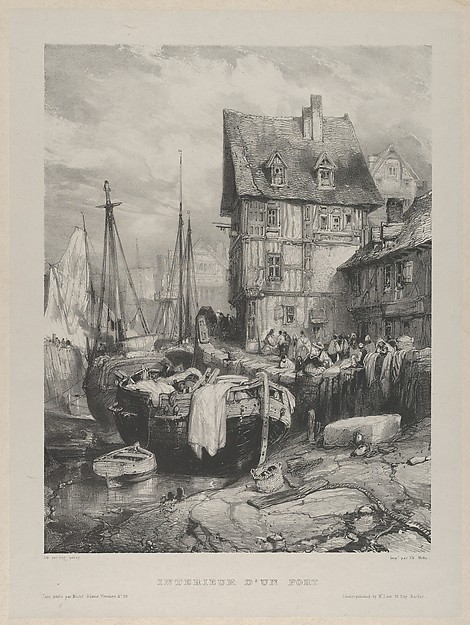 Victor Morlot|McLean & Co.|Charles Motte|Eugène Isabey — Int
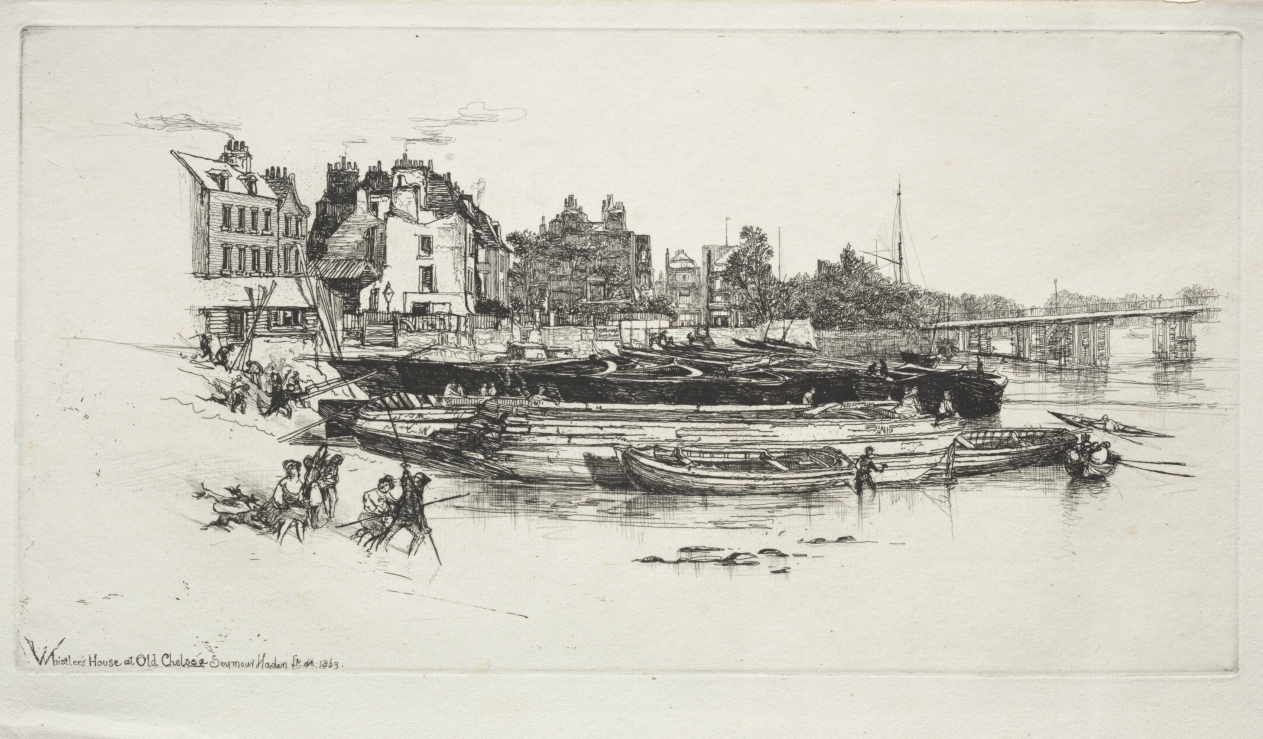 Francis Seymour Haden (British, 1818–1910) — Whistler's Hous
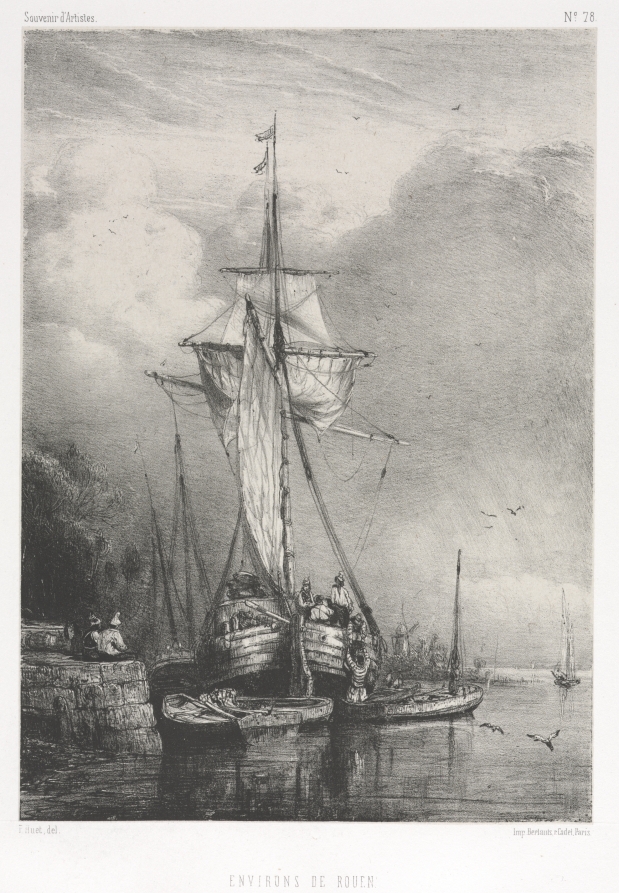 Paul Hüet (French, 1803–1869) — Souvenirs d' Artistes (No. 7
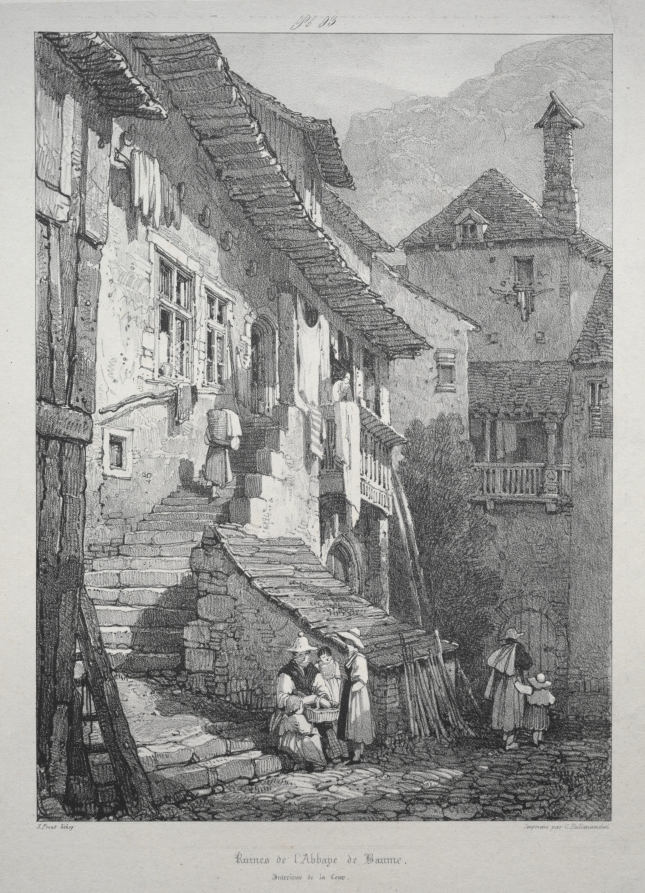 Samuel Prout (British, 1783–1852) — Ruins of the Abbey of Ba
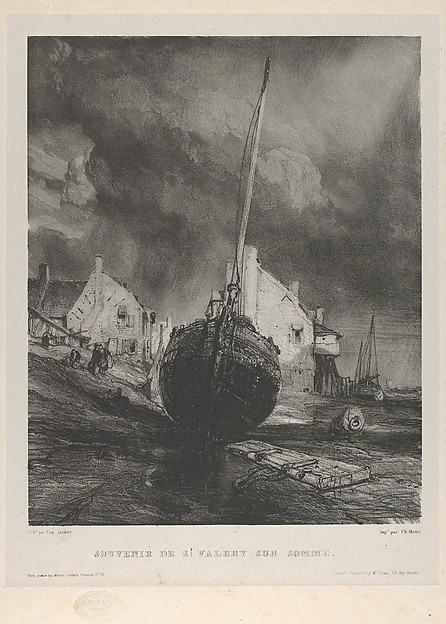 Victor Morlot|McLean & Co.|Charles Motte|Eugène Isabey — Mem
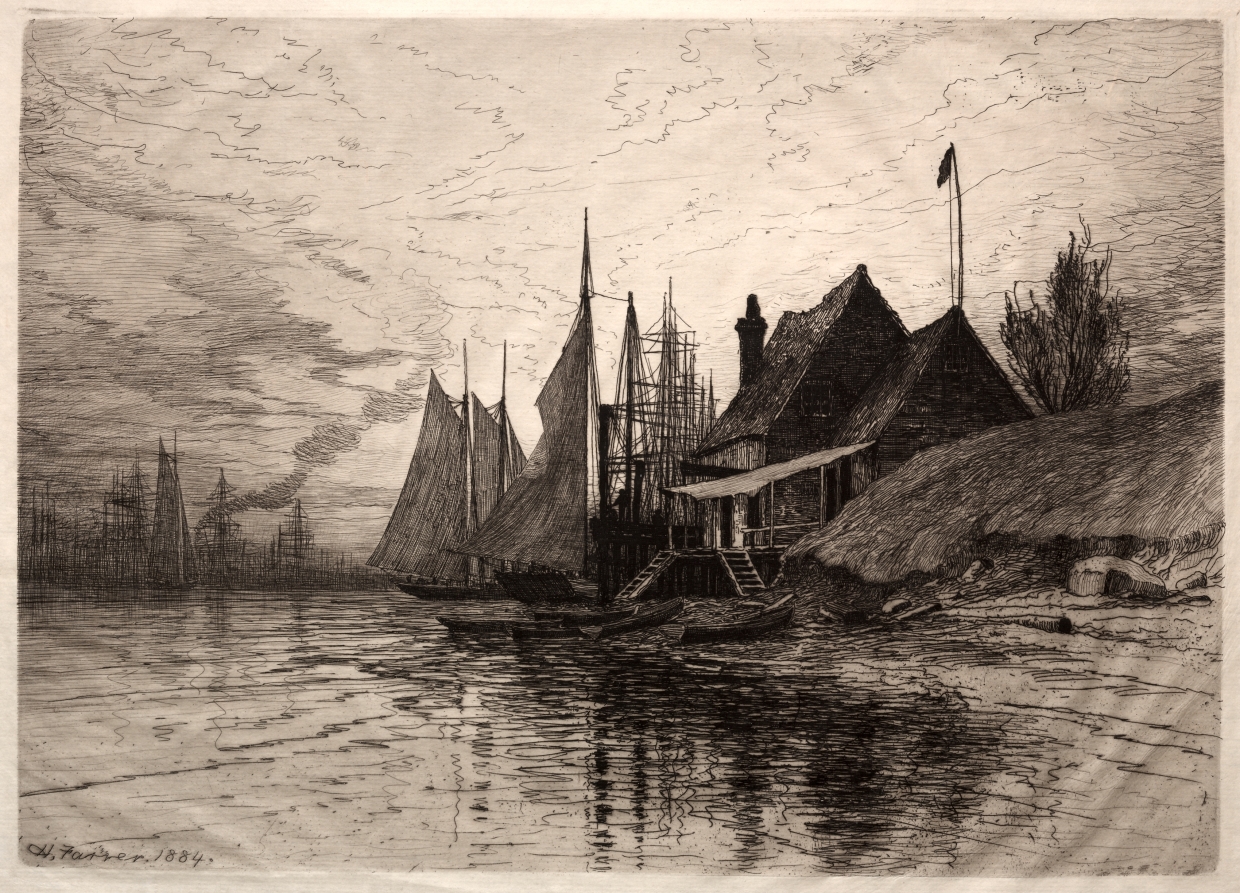 Henry Farrer (American, 1843–1903) — Evening, New York Harbo
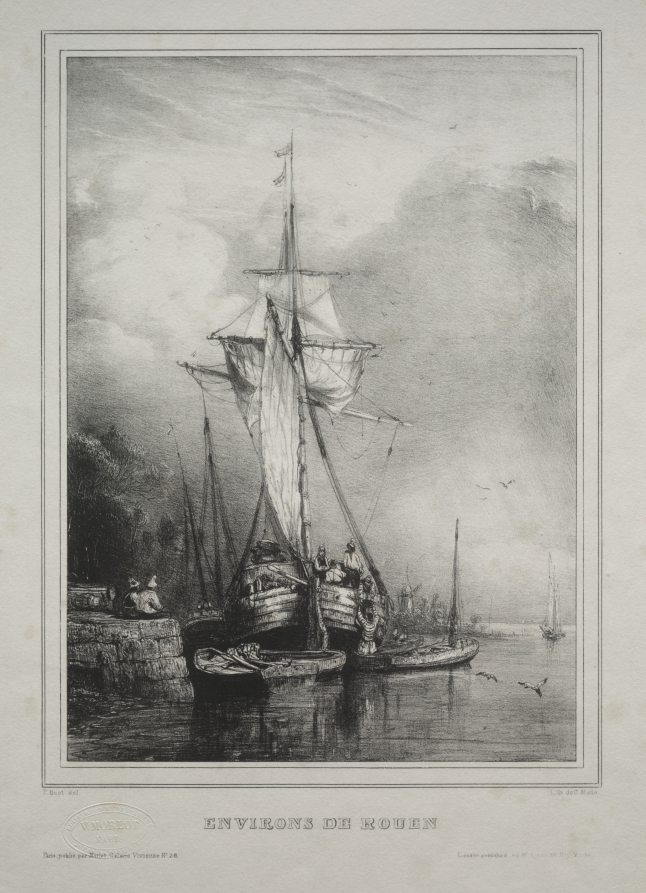 Paul Hüet (French, 1803–1869) — Six Marines: Environs of Ro
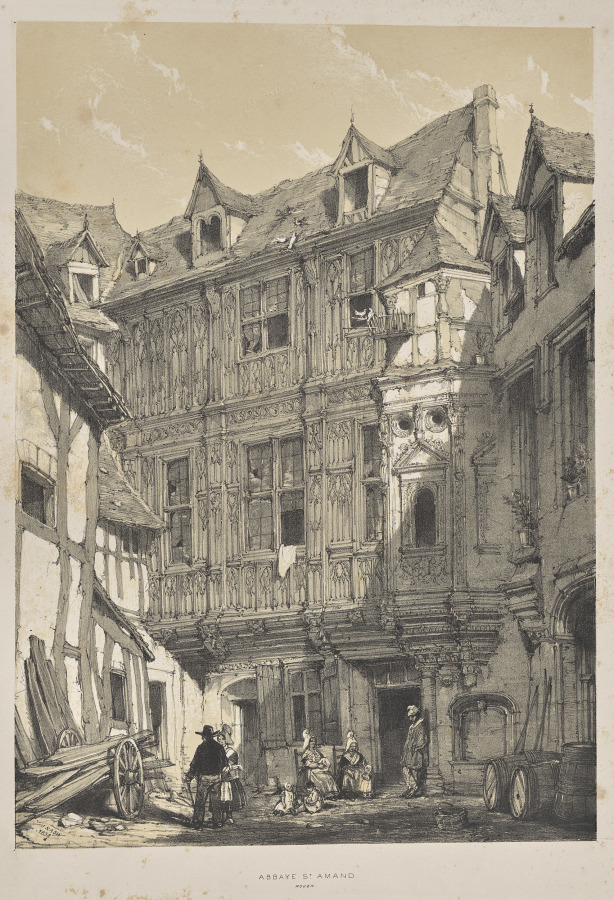 Joseph Nash (British, 1808–1878) — Architecture of the Middl
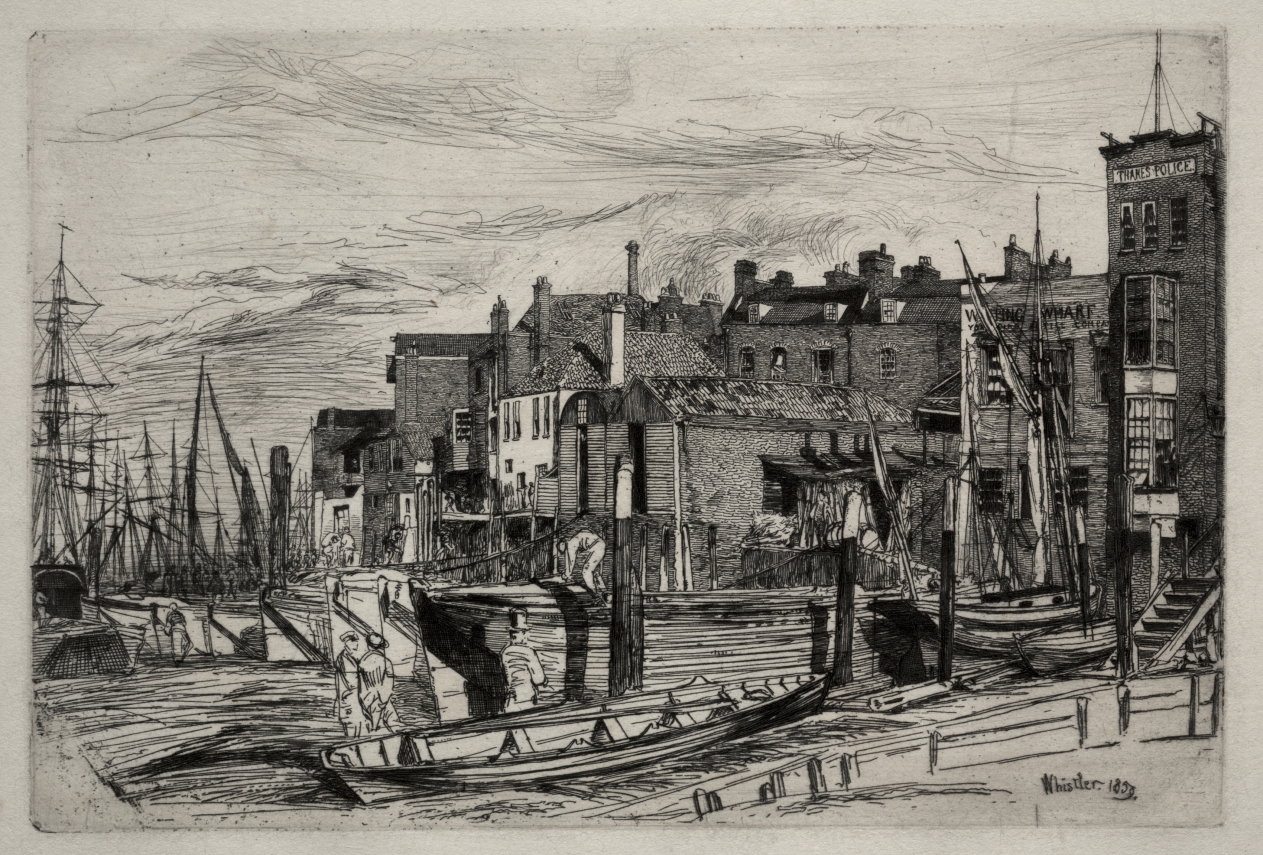 James McNeill Whistler (American, 1834–1903) — Thames Police
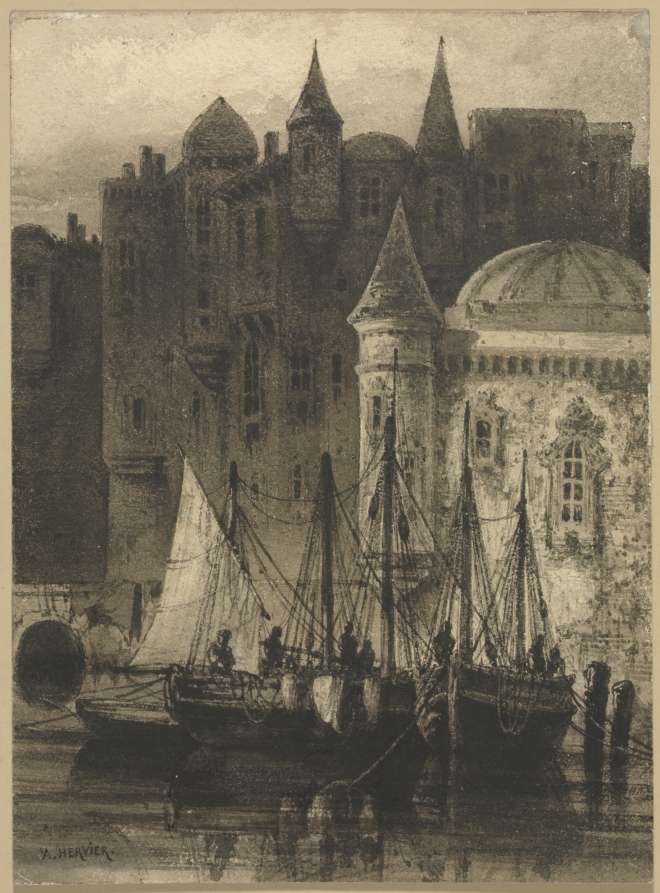 Auguste Hervier (American) — Harbor Scene with Boats and Cas
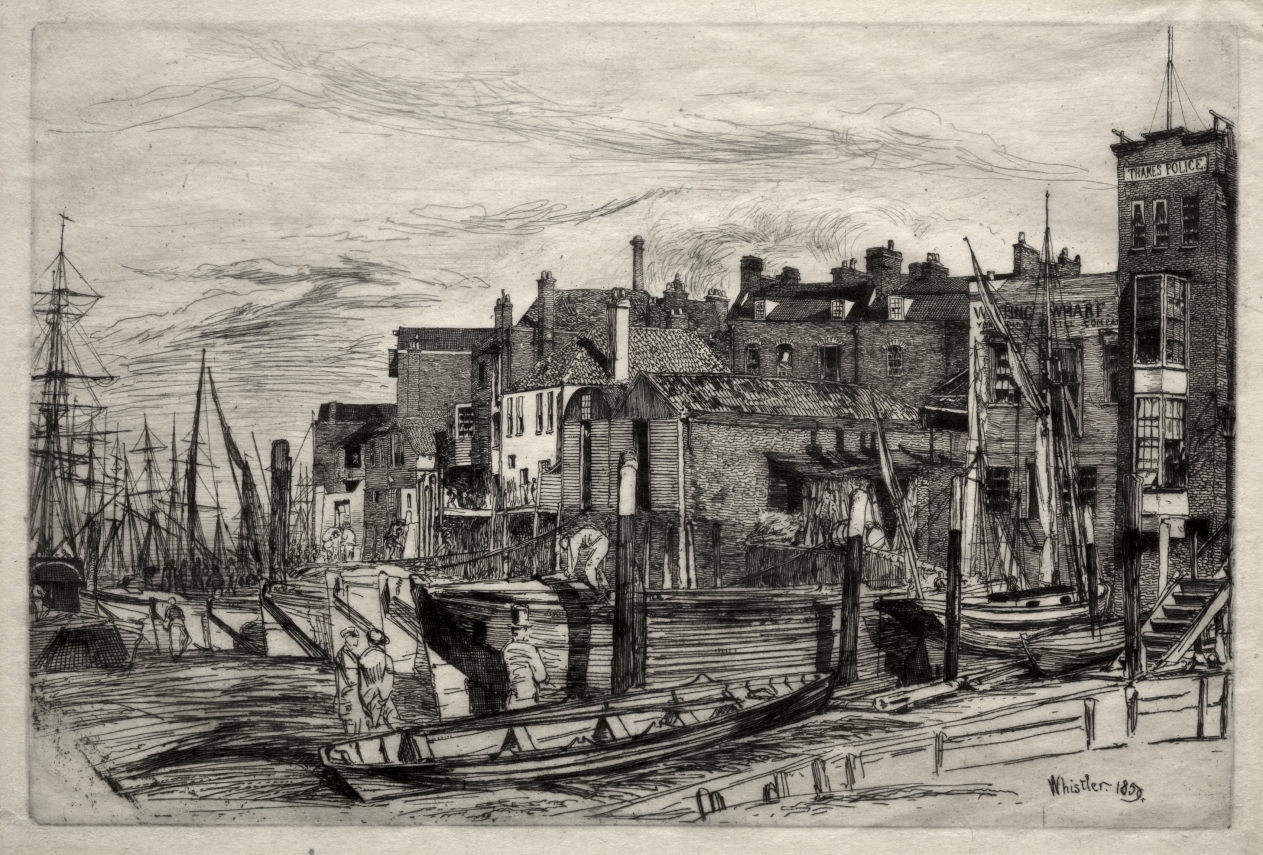 James McNeill Whistler (American, 1834–1903) — Thames Police
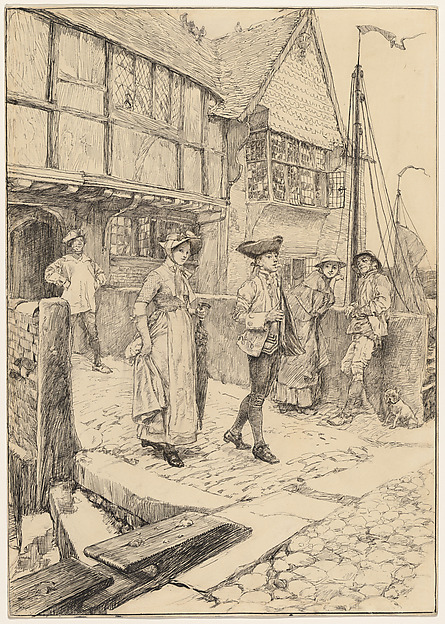 Edwin Austin Abbey — Sally in Our Alley, from Illustration f