The Two Disciples at the Tomb
SEE IT IN PERSON
● On view now — Gallery 273
Art Institute of Chicago, Chicago · verified July 2026
Discussion
FROM THE ART INSTITUTE OF CHICAGO’S CATALOG
Working in Paris, Henry Ossawa Tanner grounded his portrayal of a biblical scene in the thoughtful, individual expressions of the figures. The Two Disciples at the Tomb depicts an event from the Gospel of Saint John in which Peter and John arrive at Christ’s empty tomb. The bearded Peter looks downward with a somber gaze, but John appears transfixed, his face bathed in a golden light that signifies the presence of Christ’s spirit. The son of a prominent minister of the African Methodist Episcopal Church, Tanner was perhaps the most renowned American painter of religious works at the turn of the 20th century. After studying at the Pennsylvania Academy of the Fine Arts, Tanner expatriated to France in 1891 in an effort to escape the trenchant racism that limited his career in the United States.
Be the first to share your thoughts.
Sign in to join the discussion.
More by Henry Ossawa Tanner
More like this
 Style of Honoré Victorin Daumier — Street Musicians
 Albert Besnard (French, 1849–1934) — In the Ashes
 Alphonse Legros (French, 1837–1911) — Midnight Mass (Le Mess
 Max Liebermann (German, 1847–1935) — Studies for Saint Paul
 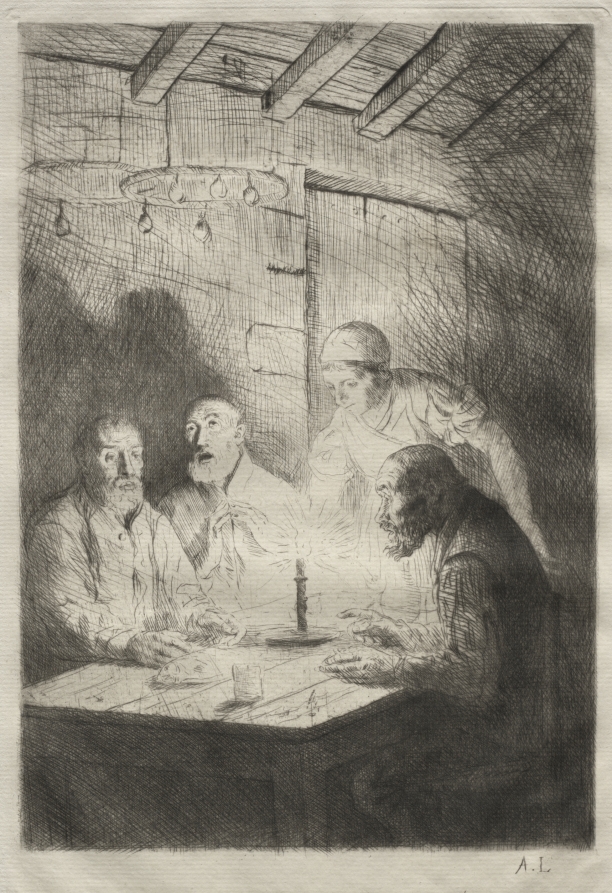 Alphonse Legros (French, 1837–1911) — Le Souper chez misère
 Honoré Daumier — The Reading
 Follower of Rembrandt van Rijn — The Raising of Lazarus
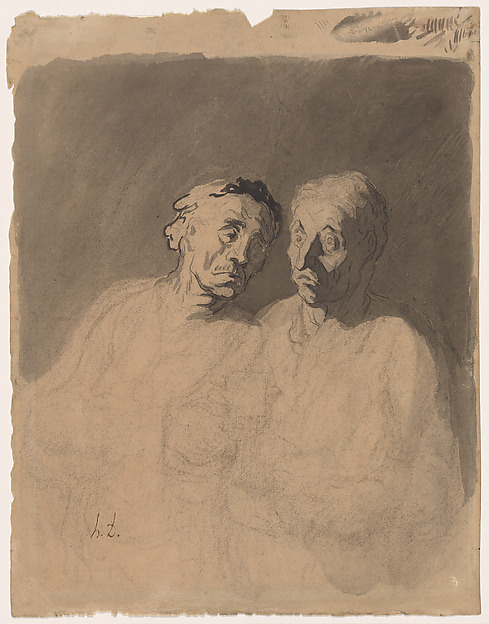 Honoré Daumier — Two Drinkers
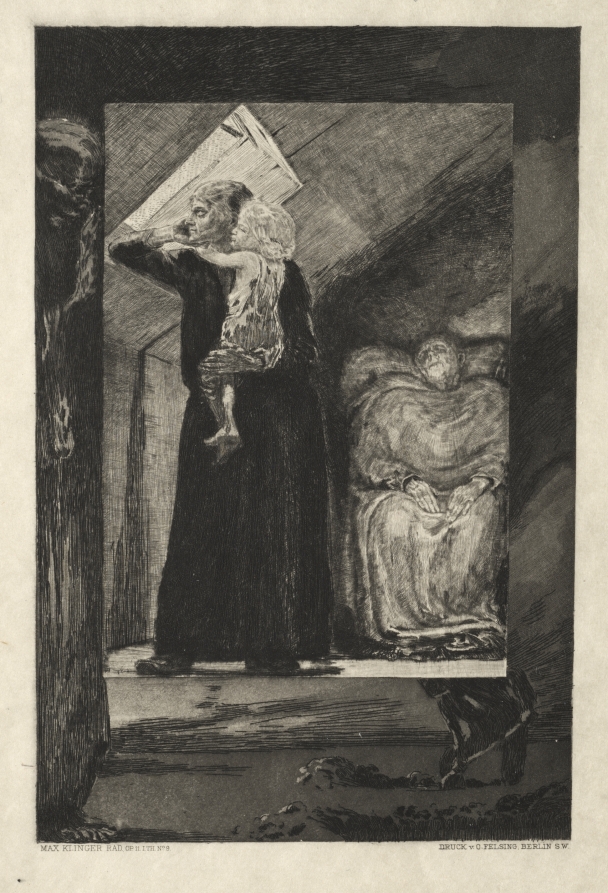 Max Klinger (German, 1857–1920) — Vom Tode I (Opus II, 1889)
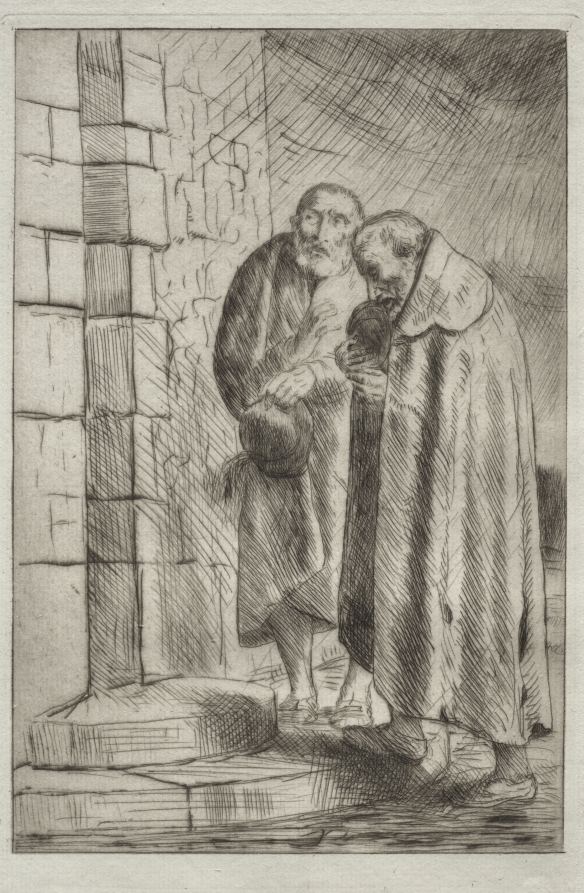 Alphonse Legros (French, 1837–1911) — St. Pierre et St. Paul
 Théodule-Augustin Ribot — Breton Fishermen and Their Familie
 Paul Gavarni (French, 1804–1866) — Baliverneries Parisiennes